28 Results for "

ventricular muscle

" in MedChemExpress (MCE) Product Catalog:
Products (28)

28 Results for "ventricular muscle" in MCE Product Catalog:

14
14 Publications Verification
Cat. No.: HY-18347A
CAS No.: 168626-94-6
Synonyms: YM 087
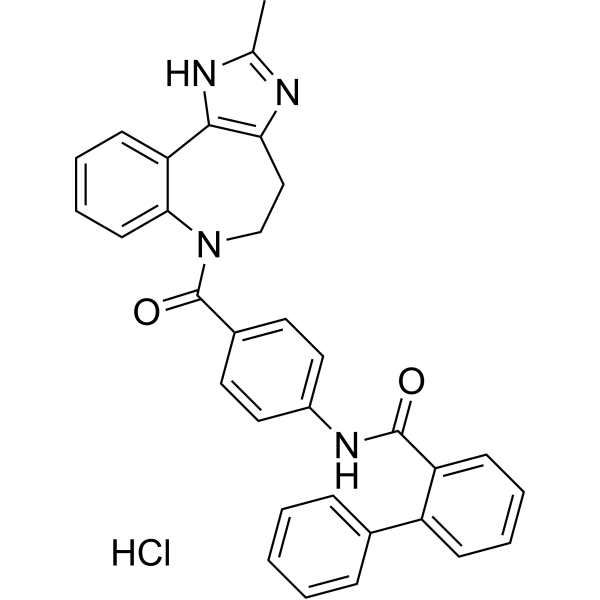
Conivaptan hydrochloride (YM 087) is an orally active dual vasopressin V1a/V2 receptor antagonist with Ki values of 0.48 nM and 3.04 nM for vasopressin V1a receptor and V2 receptor, respectively. Conivaptan hydrochloride competitively and reversibly blocks vasopressin-mediated antidiuresis, vasoconstriction, and cellular hypertrophy, while inhibiting CYP3A4. Conivaptan hydrochloride inhibits vasopressin-induced intracellular calcium, cAMP, and mitogen-activated kinase activation in vascular smooth muscle cells and cardiomyocytes. Conivaptan hydrochloride induces water diuresis while improving hemodynamics in heart failure models, reducing left ventricular end-diastolic pressure, vascular resistance, and organ weight. Conivaptan hydrochloride is used for research on hyponatremia and congestive heart failure .
loading...
    loading...
3
3 Cited Publications
Cat. No.: HY-12533
CAS No.: 3737-09-5
Purity:  99.93%
Synonyms: Dicorantil; SC-7031
Research Areas:  

Cardiovascular Disease

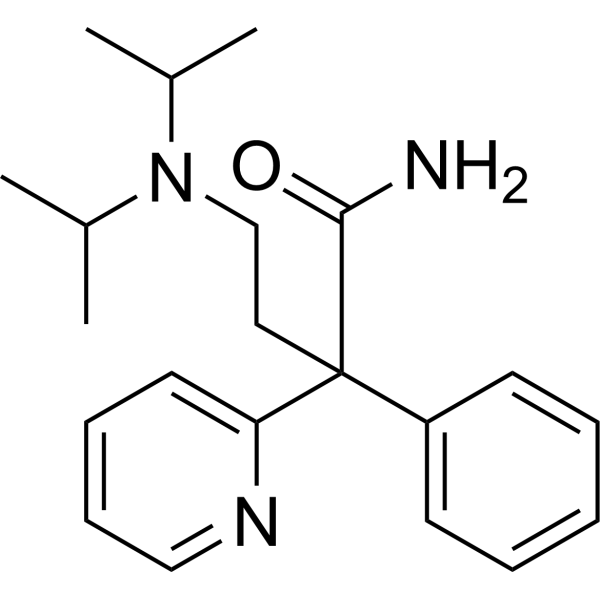
Disopyramide (Dicorantil) is a class IA antiarrhythmic agent with efficacy in ventricular and atrial arrhythmias. Disopyramide blocks the fast inward sodium current of cardiac muscle and prolongs the duration of cardiac action potentials. Disopyramide inhibits HERG encoded potassium channels. Disopyramide also exhibits complex protein binding, and has a potent negative inotropic action .
loading...
    loading...
3
3 Cited Publications
Cat. No.: HY-12533A
CAS No.: 22059-60-5
Purity:  99.85%
Synonyms: Dicorantil phosphate; SC-7031 phosphate
Research Areas:  

Cardiovascular Disease

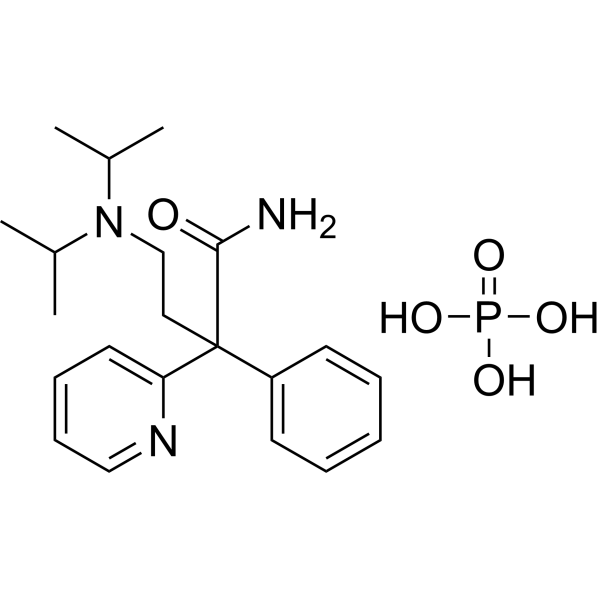
Disopyramide phosphate is a class IA antiarrhythmic agent with efficacy in ventricular and atrial arrhythmias. Disopyramide phosphate blocks the fast inward sodium current of cardiac muscle and prolongs the duration of cardiac action potentials. Disopyramide phosphate inhibits HERG encoded potassium channels. Disopyramide phosphate also exhibits complex protein binding, and has a potent negative inotropic action .
loading...
    loading...
Cat. No.: HY-18740A
CAS No.: 78416-81-6
Synonyms: HL 725
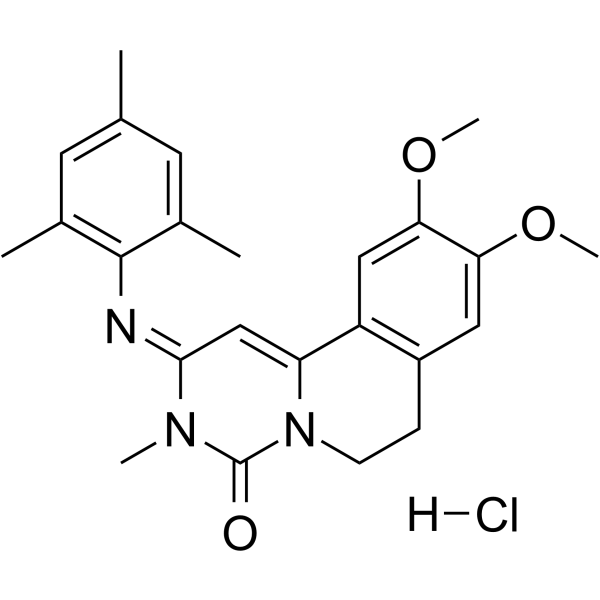
Trequinsin hydrochloride (HL 725) is a PDE inhibitor, CatSper channel activator, and sperm potassium channel modulator. Trequinsin hydrochloride targets PDE3 with an IC50 of <1 nM. Trequinsin hydrochloride enhances currents and elevates intracellular calcium and cGMP levels via direct activation of the CatSper channel, while inhibiting the outward current conductance of sperm potassium channels. Without inducing premature acrosome reaction, Trequinsin hydrochloride significantly enhances sperm hyperactivated motility, forward motility, and the ability to penetrate viscous media. Trequinsin hydrochloride exerts age-specific positive inotropic and positive lusitropic effects on rabbit ventricular papillary muscles. Trequinsin hydrochloride has been used in studies on the mechanisms underlying male infertility (e.g., asthenozoospermia) .
loading...
    loading...
Cat. No.: HY-W100287
CAS No.: 4532-33-6
Murrayafoline A is a carbazole alkaloid that can be extracted from Murraya tetramera. Murrayafoline A directly targets Specificity protein 1 (Sp1), thereby inhibiting NF-κB and MAPK signaling pathways. Murrayafoline a induces a G0/G1-phase arrest in platelet-derived growth factor (PDGF)-stimulated vascular smooth muscle cells. Murrayafoline A attenuates the Wnt/β-catenin pathway by promoting the degradation of intracellular β-catenin proteins. Murrayafoline A enhances the contraction of rat ventricular myocytes and L-type calcium current by activating protein kinase C. Murrayafoline A inhibits LPS (HY-D1056)-induced neuroinflammation in vivo. Murrayafoline A can be used for the study of inflammation, vascular complications and colon cancer .
loading...
    loading...
Cat. No.: HY-A0236
CAS No.: 37640-71-4
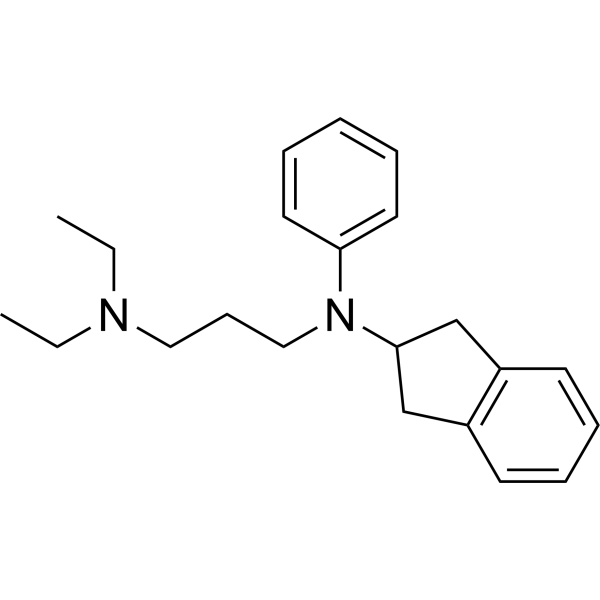
Aprindine is an Ib-class anti-arrhythmic agent. Aprindine mainly exerts its effect by blocking sodium channels (INa), thereby reducing the excitability and conduction velocity of cardiac muscle cells. Aprindine significantly inhibits delayed potassium currents, which helps to prolong the atrial effective refractory period (AERP) and inhibit the occurrence of atrial fibrillation. Aprindine can also regulate intracellular calcium ion concentration by inhibiting Na +/Ca 2+ exchange current (INCX), thereby further stabilizing cardiac electrical activity. Aprindine can be used for the study of atrial fibrillation (AF) and ventricular arrhythmias .
loading...
    loading...
Cat. No.: HY-A0236A
CAS No.: 33237-74-0
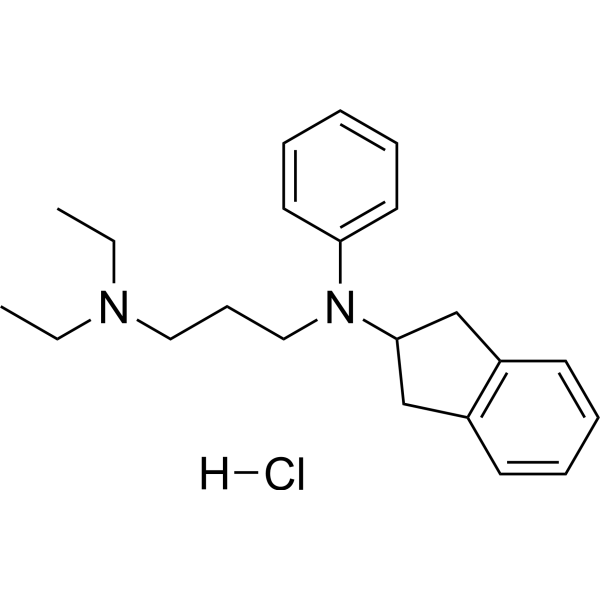
Aprindine hydrochloride is an Ib-class anti-arrhythmic agent. Aprindine hydrochloride mainly exerts its effect by blocking sodium channels (INa), thereby reducing the excitability and conduction velocity of cardiac muscle cells. Aprindine hydrochloride significantly inhibits delayed potassium currents, which helps to prolong the atrial effective refractory period (AERP) and inhibit the occurrence of atrial fibrillation. Aprindine hydrochloride can also regulate intracellular calcium ion concentration by inhibiting Na +/Ca 2+ exchange current (INCX), thereby further stabilizing cardiac electrical activity. Aprindine hydrochloride can be used for the study of atrial fibrillation (AF) and ventricular arrhythmias .
loading...
    loading...
Cat. No.: HY-18347
CAS No.: 210101-16-9
Synonyms: YM 087 free base
Conivaptan (YM 087 free base) is an orally active dual vasopressin V1a/V2 receptor antagonist with Ki values of 0.48 nM and 3.04 nM for vasopressin V1a receptor and V2 receptor, respectively. Conivaptan competitively and reversibly blocks vasopressin-mediated antidiuresis, vasoconstriction, and cellular hypertrophy, while inhibiting CYP3A4. Conivaptan inhibits vasopressin-induced intracellular calcium, cAMP, and mitogen-activated kinase activation in vascular smooth muscle cells and cardiomyocytes. Conivaptan induces water diuresis while improving hemodynamics in heart failure models, reducing left ventricular end-diastolic pressure, vascular resistance, and organ weight. Conivaptan is used for research on hyponatremia and congestive heart failure .
loading...
    loading...
Cat. No.: HY-106718
CAS No.: 79784-22-8
Target:  

Sodium Channel

Research Areas:  

Cardiovascular Disease

Barucainide is an Ib-class anti-arrhythmic agent (moderately blocking sodium channel). Barucainide exhibits concentration-dependent inhibitory effects on the maximum upstroke velocity (Vmax) of Purkinje fibers and ventricular muscle in dogs. Barucainide significantly shortens the action potential duration (APD). Barucainide significantly inhibits the pacemaker activity frequency of atrial tissue in rabbits and the enhanced automaticity of Purkinje fibers under normal resting potential in response to isoproterenol. Barucainide cannot inhibit the abnormal automaticity emission frequency of canine Purkinje fibers induced by barium. Barucainide can be used for research on arrhythmias .
loading...
    loading...
Cat. No.: HY-100952
CAS No.: 5704-60-9
Purity:  99.93%
Target:  

Adrenergic Receptor

Research Areas:  

Cardiovascular Disease

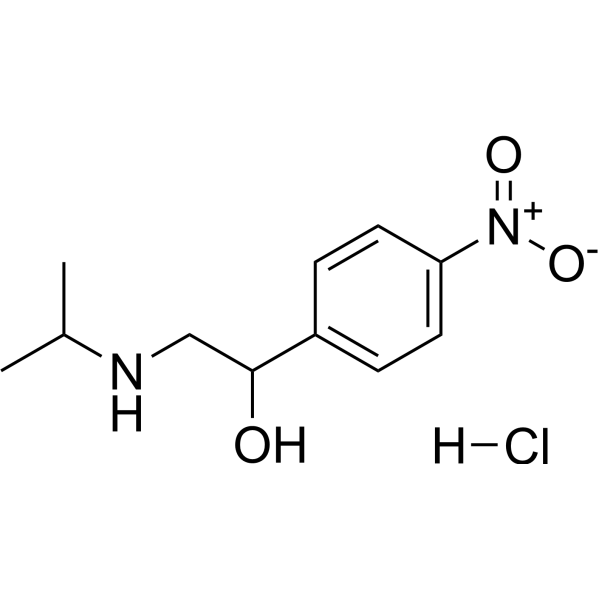
Nifenalol hydrochloride is a β-adrenergic receptor antagonist. Nifenalol hydrochloride induces the Early Afterdepolarization (EAD) effect. EAD is a phenomenon in cardiac electrophysiology that usually occurs during an action potential in ventricular muscle cells and can lead to arrhythmia. The EAD effect of Nifenalol hydrochloride can be blocked by Tetrodotoxin. Nifenalol hydrochloride is used in the study of conditions such as irregular heartbeat or high blood pressure .
loading...
    loading...
Cat. No.: HY-N13747
CAS No.: 23370-16-3
Chrysosplenol C is a type of flavonoid compound. Chrysosplenol C selectively activates cardiac myosin ATPase, with its EC50 being 45 µM. Chrysosplenol C enhances the release of intracellular calcium ions by activating protein kinase C (PKC), thereby increasing the contractility of rat ventricular muscle cells. Chrysosplenol C can be used in the research of heart failure .
loading...
    loading...
Cat. No.: HY-115839A
CAS No.: 33774-52-6
Synonyms: Detajmium bitartrate; Tachmalcor
Target:  

Sodium Channel

Research Areas:  

Cardiovascular Disease

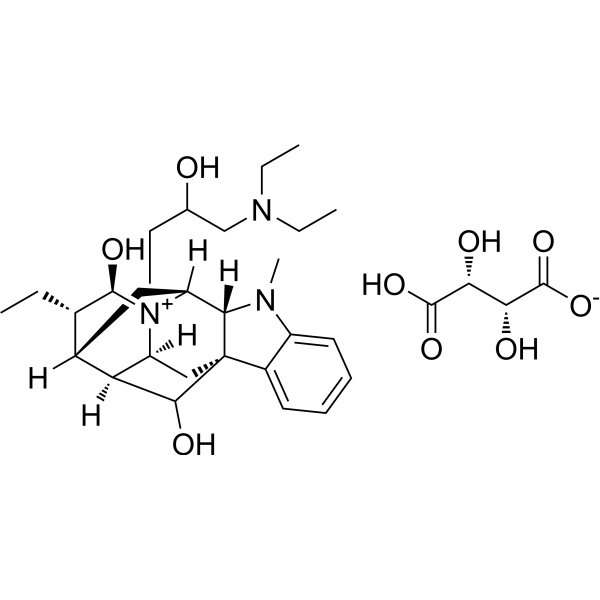
Detajmium (L-tartrate) is an antiarrhythmic compound. Detajmium has effect on V max in both dog ventricular muscle and Purkinje fibers was frequency dependent .
loading...
    loading...
Cat. No.: HY-W722221
CAS No.: 10255-14-8
Target:  

Adrenergic Receptor

Research Areas:  

Cardiovascular Disease

Colterol acetate is a selective inhibitor of β-adrenergic receptors. Colterol acetate can relax tracheal smooth muscle (primarily acting on β2 receptors), reduce subspastic contractions of tricholoma (acting on β2), and increase contractility of left ventricular papillary muscles (acting on β1) .
loading...
    loading...
Cat. No.: HY-12533B
CAS No.: 54687-36-4
Synonyms: Dicorantil hydrochloride; SC-7031 hydrochloride
Research Areas:  

Cardiovascular Disease

Disopyramide hydrochloride is a class IA antiarrhythmic agent with efficacy in ventricular and atrial arrhythmias. Disopyramide hydrochloride blocks the fast inward sodium current of cardiac muscle and prolongs the duration of cardiac action potentials. Disopyramide hydrochloride inhibits HERG encoded potassium channels. Disopyramide hydrochloride also exhibits complex protein binding, and has a potent negative inotropic action .
loading...
    loading...
Cat. No.: HY-136677
CAS No.: 118549-42-1
Target:  

Calcium Channel

Research Areas:  

Cardiovascular Disease

LND 796 is an aminosteroidal derivative with positive inotropic effects similar to those of digitalis. It exhibits electrophysiological, toxic, and inotropic effects in normal and partially potassium-depolarized ventricular muscles. LND 796 requires higher concentrations than digoxin to induce the same toxic symptoms. It exhibits a concentration-dependent positive inotropic effect on guinea pig papillary muscles in normal potassium solution. In partially potassium-depolarized papillary muscles, LND 796 enhances both components of contraction and increases the amplitude of slow action potentials. The mechanism of positive inotropic action of LND 796 involves enhanced calcium entry in calcium channels and inhibition of sodium-potassium ATPase. Due to its expanded positive inotropic range, LND 796 may have potential application in the treatment of congestive heart failure.
loading...
    loading...
Cat. No.: HY-12533AR
CAS No.: 22059-60-5
Synonyms: Dicorantil phosphate (Standard); SC-7031 phosphate (Standard)
Disopyramide (phosphate) (Standard) is the analytical standard of Disopyramide (phosphate). This product is intended for research and analytical applications. Disopyramide phosphate is a class IA antiarrhythmic agent with efficacy in ventricular and atrial arrhythmias. Disopyramide phosphate blocks the fast inward sodium current of cardiac muscle and prolongs the duration of cardiac action potentials. Disopyramide phosphate inhibits HERG encoded potassium channels. Disopyramide phosphate also exhibits complex protein binding, and has a potent negative inotropic action .
loading...
    loading...
Cat. No.: HY-12533R
CAS No.: 3737-09-5
Synonyms: Dicorantil (Standard); SC-7031 (Standard)
Disopyramide (Standard) is the analytical standard of Disopyramide. This product is intended for research and analytical applications. Disopyramide (Dicorantil) is a class IA antiarrhythmic agent with efficacy in ventricular and atrial arrhythmias. Disopyramide blocks the fast inward sodium current of cardiac muscle and prolongs the duration of cardiac action potentials. Disopyramide inhibits HERG encoded potassium channels. Disopyramide also exhibits complex protein binding, and has a potent negative inotropic action .
loading...
    loading...
Cat. No.: HY-W705705
CAS No.: 203002-58-8
NIP-142 is a benzopyran derivative with multiple ion channel-blocking effects. NIP-142 selectively blocks the potassium ion channels enriched in atrial muscle, prolonging the effective refractory period (ERP) and action potential duration (APD) of the atrium, while having minimal effect on ventricular repolarization. NIP-142 also inhibits L-type/T-type calcium channels and sodium channels, further contributing to its anti-arrhythmic effect. NIP-142 shows significant efficacy in various atrial fibrillation models. NIP-142 can be used for research on arrhythmias .
loading...
    loading...
Cat. No.: HY-18347AR
CAS No.: 168626-94-6
Synonyms: YM 087 (Standard)
Conivaptan hydrochloride (Standard) (YM 087 (Standard)) is the analytical standard of Conivaptan hydrochloride (HY-18347A). This product is intended for research and analytical applications. Conivaptan hydrochloride is an orally active dual vasopressin V1a/V2 receptor antagonist with Ki values of 0.48 nM and 3.04 nM for vasopressin V1a receptor and V2 receptor, respectively. Conivaptan hydrochloride competitively and reversibly blocks vasopressin-mediated antidiuresis, vasoconstriction, and cellular hypertrophy, while inhibiting CYP3A4. Conivaptan hydrochloride inhibits vasopressin-induced intracellular calcium, cAMP, and mitogen-activated kinase activation in vascular smooth muscle cells and cardiomyocytes. Conivaptan hydrochloride induces water diuresis while improving hemodynamics in heart failure models, reducing left ventricular end-diastolic pressure, vascular resistance, and organ weight. Conivaptan hydrochloride is used for research on hyponatremia and congestive heart failure .
loading...
    loading...
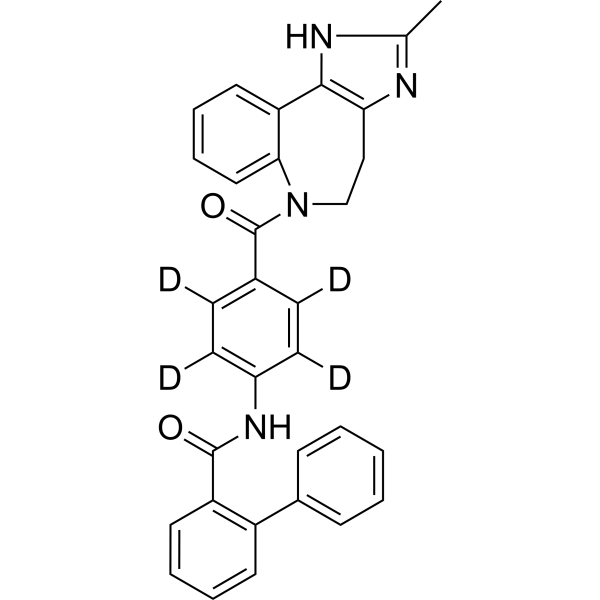
Cat. No.: HY-129511
CAS No.: 1129433-63-1
Synonyms: YM 087-d4
Conivaptan-d4 (YM 087-d4) is the deuterated-labeled Conivaptan (HY-18347). Conivaptan (YM 087 free base) is an orally active dual vasopressin V1a/V2 receptor antagonist with Ki values of 0.48 nM and 3.04 nM for vasopressin V1a receptor and V2 receptor, respectively. Conivaptan competitively and reversibly blocks vasopressin-mediated antidiuresis, vasoconstriction, and cellular hypertrophy, while inhibiting CYP3A4. Conivaptan inhibits vasopressin-induced intracellular calcium, cAMP, and mitogen-activated kinase activation in vascular smooth muscle cells and cardiomyocytes. Conivaptan induces water diuresis while improving hemodynamics in heart failure models, reducing left ventricular end-diastolic pressure, vascular resistance, and organ weight. Conivaptan is used for research on hyponatremia and congestive heart failure .
loading...
    loading...

