
15 Results for "

Accumulated concentration

" in MedChemExpress (MCE) Product Catalog:
Products (15)

15 Results for "Accumulated concentration" in MCE Product Catalog:

12
12 Cited Publications
Cat. No.: HY-172202
Clodronate liposomes, a mixture of Clodronate encapsulated by phospholipids, is a macrophage scavenger. Clodronate liposomes is engulfed by macrophages in the body. Under the action of lysosomal phosphatases in macrophages, Clodronate dissolved in liposomes will be gradually released and accumulated in cells. When a certain concentration is reached, macrophages will be irreversibly damaged and apoptosis will be induced .
loading...
    loading...
Cat. No.: HY-P5423
CAS No.: 107658-43-5
Target:  

Exosomes Liposome

Research Areas:  

Cancer

GALA is a pH-responsive amphipathic peptide consisting of 30 amino acids, which acts as a lung endothelium-targeting ligand. GALA undergoes a conformational transition from random coil to α-helix in an acidic environment at pH 5.0, thereby inducing endosomal membrane destabilization and fusion. GALA-modified liposomes traverse lung endothelial cells via clathrin-dependent endocytosis and transcytosis, and specifically accumulate in the lungs after intravenous injection. GALA significantly promotes the cytosolic release of cargos carried by exosomes, plasmids and liposomes, effectively enhances gene transfection efficiency, and drives gene knockdown of functional macromolecules (such as siRNA) in alveolar epithelial cells (with no significant cytotoxicity at effective concentrations). GALA serves as a critical tool for studies on lung cancer metastasis (e.g., melanoma lung metastasis) and lung-targeted drug delivery systems .
loading...
    loading...
Cat. No.: HY-DY1003
CAS No.: 3520-43-2
JC-1 (CBIC2) (solution) is an ideal fluorescent probe widely used to detect mitochondrial membrane potential. JC-1 accumulates in mitochondria in a potential dependent manner and can be used to detect the membrane potential of cells, tissues or purified mitochondria. In normal mitochondria, JC-1 aggregates in the mitochondrial matrix to form a polymer, which emits strong red fluorescence (Ex=585 nm, Em=590 nm) ; When the mitochondrial membrane potential is low, JC-1 cannot aggregate in the matrix of mitochondria and produce green fluorescence (ex=510 nm, em= 527 nm) .
Solvent and concentration: DMSO: 1.5 mM
loading...
    loading...
Cat. No.: HY-DY1032
CAS No.: 201860-17-5
Mito-Tracker Green (solution) is a green fluorescent dye that selectively accumulates in the mitochondrial matrix. MitoTracker Green FM covalently binds mitochondrial proteins by reacting with free mercaptan of cysteine residues, allowing staining of mitochondrial membrane potential independent of membrane potential. Excitation/emission wavelength 490/523 nm.
Solvent and concentration: DMSO: 1 mM
loading...
    loading...
Cat. No.: HY-126220
CAS No.: 1372642-77-7
Target:  

Fluorescent Dye

Research Areas:  

Others

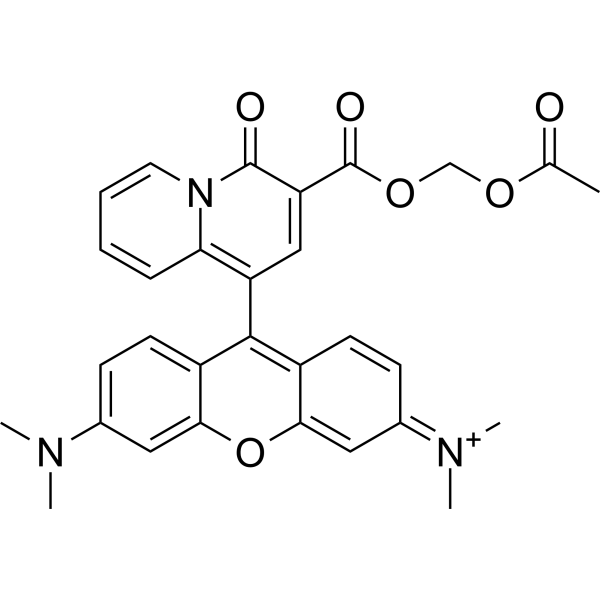
KMG-301AM is the acetoxy methyl esterified form of KMG-301. KMG-301AM successfully accumulates in mitochondria and then it is hydrolyzed to KMG-301. KMG-301 is an Mg 2+-selective fluorescent probe functional in mitochondria in intact cells. Since the mitochondrial membrane is impermeable to KMG-301, it is not released upon depolarization of the mitochondrial membrane potential. KMG-301 can indicate changes in mitochondrial Mg2+ concentration and shows Mg 2+ transport across the mitochondrial membrane in the early phases of a cellular model .
loading...
    loading...
Cat. No.: HY-126220A
CAS No.: 1372642-78-8
Purity:  95.02%
Target:  

Fluorescent Dye

Research Areas:  

Others

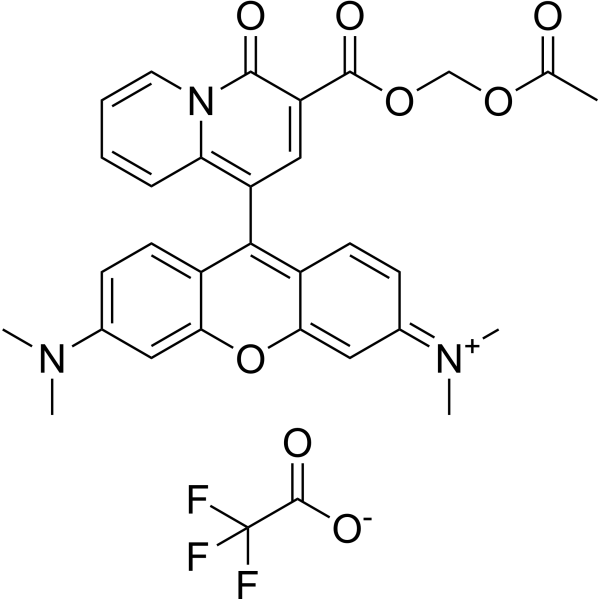
KMG-301AM TFA is the acetoxy methyl esterified form of KMG-301. KMG-301AM TFA successfully accumulates in mitochondria and then it is hydrolyzed to KMG-301. KMG-301 is an Mg 2+-selective fluorescent probe functional in mitochondria in intact cells. Since the mitochondrial membrane is impermeable to KMG-301, it is not released upon depolarization of the mitochondrial membrane potential. KMG-301 can indicate changes in mitochondrial Mg2+ concentration and shows Mg 2+ transport across the mitochondrial membrane in the early phases of a cellular model .
loading...
    loading...
Cat. No.: HY-121779
CAS No.: 3424-82-6
Synonyms: 2,4'-DDE; 2,4-Dichlorodiphenyldichloroethylene; 2,4'-DDE; o,p'-Dichlorodiphenyldichloroethylene
Target:  

Insecticide

Research Areas:  

Endocrinology

o,p'-DDE (2,4-Dichlorodiphenyldichloroethylene) is a metabolite and degradation product of the organochlorine pesticide DDT. It accumulates in smallmouth buffalo, channel catfish, and largemouth bass, and in sediments from DDT manufacturing plants around the Huntsville Spring Branch-Indian Creek tributary system, where it is considered a persistent organic pollutant (POP). o,p'-DDE inhibits estrogen binding to the rainbow trout estrogen receptor (rtER) with an IC50 value of 3.2 μM. It induces concentration-dependent estradiol secretion in co-cultures of granulosa and theca cells isolated from porcine follicles. In ovo exposure to o,p'-DDE increases follicular degeneration and reduces testis size in Japanese medaka (O. latipes).
loading...
    loading...
Cat. No.: HY-N1214A
CAS No.: 7683-64-9
Synonyms: (E/Z)-Super Squalene; (E/Z)-AddaVax
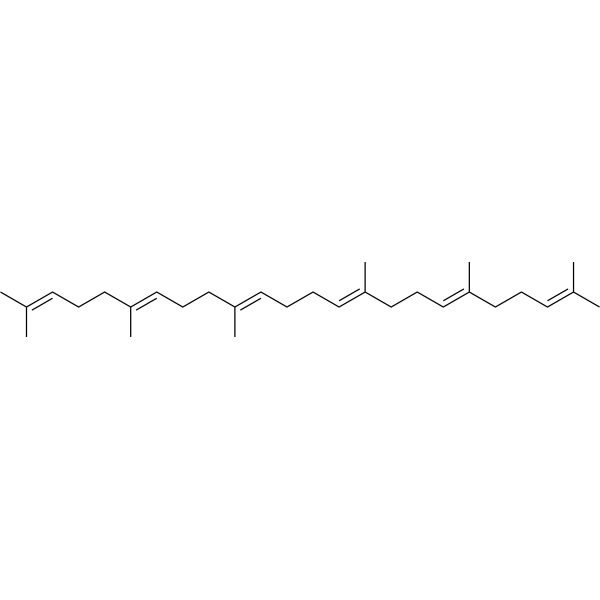
(E/Z)-Squalene ((E/Z)-Super Squalene; (E/Z)-AddaVax) is a triterpenic compound. (E/Z)-Squalene accumulates and reduces liver cholesterol and triglycerides in the liver. (E/Z)-Squalen regulates the production of intracellular active oxidants (ROS) and induces apoptosis and necrosis in a concentration-and time-dependent manner .
loading...
    loading...
Cat. No.: HY-14795
CAS No.: 180694-97-7
Synonyms: ZT-1
Target:  

Cholinesterase (ChE)

Research Areas:  

Neurological Disease

Mimopezil (ZT-1) is an cholinesterase (ChE) inhibitor that rapidly degrades into the active metabolite Huperzine A (HY-17388) in water or aqueous organic solvents. After oral administration, Mimopezil is rapidly absorbed but has low bioavailability (0.37%) in rats. However, after metabolism, it is converted into Huperzine A, which accumulates in the blood and exhibits strong activity. Following intravenous administration, Mimopezil reaches higher blood concentrations and is also rapidly metabolized into Huperzine A .
loading...
    loading...
Cat. No.: HY-171541
CAS No.: 354562-11-1
Target:  

Fungal

Research Areas:  

Infection

CDA-IN-1 (Compound vs#2-1) is an inhibitor of chitin deacetylase (CDA). CDA-IN-1 exhibits antifungal activity. It can inhibit fungal growth by suppressing the activity of fungal CDA, activating the plant immune response, and accumulating reactive oxygen species (ROS). At a concentration of 100 μM, CDA-IN-1 can achieve inhibition rates of 86.9% and 74.5% against PxCDA1 and PxCDA2 of P. xanthii, respectively. CDA-IN-1 can be applied to the research in the field of controlling plant fungal diseases, such as the research on diseases like cucurbit powdery mildew and tomato gray mold .
loading...
    loading...
Cat. No.: HY-DY1105
CAS No.: 873315-86-7
Synonyms: MTDR FM (solution)
Target:  

Fluorescent Dye

Research Areas:  

Others

MitoTracker Deep Red FM (solution) (MTDR FM (solution)) selectively accumulates in the mitochondrial matrix. MitoTracker Deep Red FM covalently binds mitochondrial proteins by reacting with free mercaptan of cysteine residues, allowing staining of mitochondrial membrane potential independent of membrane potential. The Ex/Em of MitoTracker Deep Red (MTDR) FM is 644/665 nm.
Solvent and concentration: DMSO: 1 mM
loading...
    loading...
Cat. No.: HY-164381
CAS No.: 74512-12-2
Target:  

Fungal

Research Areas:  

Infection

Omoconazole is an imidazole-derived azole antifungal agent. Omoconazole exhibits broad-spectrum in vitro activity against dermatophytes, yeasts, and dimorphic fungi, exerting fungistatic effects at low concentrations and fungicidal effects at high concentrations. Omoconazole accumulates in the skin, binds to keratin, and is slowly transferred from the stratum corneum to the viable epidermis. Omoconazole inhibits the growth of dermatophytes, impairs daughter cell separation in Candida albicans, induces cell wall thickening, disrupts intracellular cytoplasmic organelles, and leads to cell death. Omoconazole is used in studies related to dermatophytosis and superficial fungal infections .
loading...
    loading...
Cat. No.: HY-184280
CAS No.: 3128226-38-7
Research Areas:  

Cancer

Anticancer agent 329 is a mitochondria-targeted Podophyllotoxin (HY-15552) derivative conjugated with F16 (HY-100395), and also acts as an anticancer agent. Anticancer agent 329 accumulates in mitochondria and induces Apoptosis in a concentration-dependent manner. Anticancer agent 329 can be used in the research of liver cancer, colorectal cancer, non-small cell lung cancer and breast cancer .
loading...
    loading...
Cat. No.: HY-183716
CAS No.: 2489184-70-3
Target:  

Drug Derivative

Research Areas:  

Cancer

Mito-TP-2 is a triptolide (HY-32735) derivative. Mito-TP-2 exhibits concentration-dependent cytotoxicity in cancer cells. Mito-TP-2 is selectively driven and accumulated into the mitochondria of tumor cells by mitochondrial transmembrane potential and exerts specific mitochondrial toxicity. Mito-TP-2 can be used for the research of liver cancer, breast cancer, and non-small cell lung cancer .
loading...
    loading...
Cat. No.: HY-DY1114
CAS No.: 53213-81-3
DiOC5(3) (solution) is a mitochondrial Fluorescent dye that alters membrane potential, and it also acts as an inhibitor of NADH-ubiquinone reductase (respiratory complex I). DiOC5(3) (solution) increases the NADH/NAD ratio and induces excessive production of ROS. DiOC5(3) (solution) induces Apoptosis. DiOC5(3) accumulates in the mitochondria of leukemia stem-like cells via organic anion-transporting polypeptides, specifically labels these cells, and inhibits their proliferation. DiOC5(3) (solution) enhances the cellular uptake of Hoechst 33342 (HY-15559), reduces Hoechst 33342-associated cytotoxicity, and improves the resolution of DNA content analysis by flow cytometry. DiOC5(3) (solution) shows no detectable fluorescence signal when excited in the 400-500 nm ultraviolet light range. DiOC5(3) (solution) is applicable to leukemia-related research .
Solvent and concentration: DMSO: 10 mM
loading...
    loading...
  • 1

