8 Results for "

Alix

" in MedChemExpress (MCE) Product Catalog:
Products (8)

8 Results for "Alix" in MCE Product Catalog:

Cat. No.: HY-107030
CAS No.: 21721-92-6
Purity:  99.44%
Synonyms: EMD-15700
Research Areas:  

Cancer

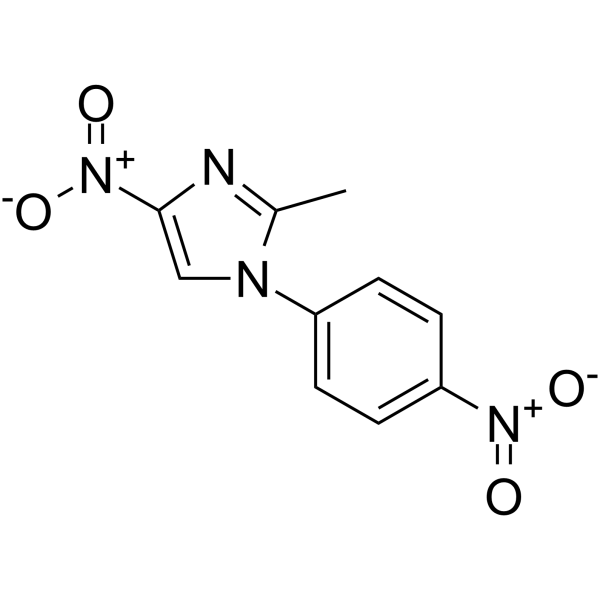
Nitrefazole (EMD-15700) is an aldehyde dehydrogenase (ALDH) inhibitor. Nitrefazole specifically inhibits human liver ALDH I and human erythrocyte ALDH isozymes, but does not alter the activity of human liver ALDH II or human placental ALDH. Nitrefazole effectively promotes exosome secretion in prostate cancer cells by increasing the levels of Alix, nSMase2, Rab27a and p-ERK . Nitrefazole can be used in studies related to prostate cancer .
loading...
    loading...
Cat. No.: HY-129751
CAS No.: 2315-20-0
Synonyms: Difurazon hydrochloride
Nitrovin (Difurazon) hydrochloride is an orally active inhibitor of thioredoxin reductase 1 (TrxR1) with both antibacterial and anticancer activities. Nitrovin hydrochloride induces ROS generation and endoplasmic reticulum stress by targeting and inhibiting TrxR1, which in turn induces cytoplasmic vacuolation, activates MAPK, and inhibits Alix. Nitrovin hydrochloride induces paraptosis-like non-apoptotic cell death, thereby exerting significant cytotoxicity against cancer cells. Nitrovin hydrochloride is used for research on glioblastoma, liver cancer, and bacterial infections .
loading...
    loading...
Cat. No.: HY-W504391
CAS No.: 804-36-4
Synonyms: Difurazon
Nitrovin (Difurazon) is an orally active inhibitor of thioredoxin reductase 1 (TrxR1) with both antibacterial and anticancer activities. Nitrovin induces ROS generation and endoplasmic reticulum stress by targeting and inhibiting TrxR1, which in turn induces cytoplasmic vacuolation, activates MAPK, and inhibits Alix. Nitrovin induces paraptosis-like non-apoptotic cell death, thereby exerting significant cytotoxicity against cancer cells. Nitrovin is used for research on glioblastoma, liver cancer, and bacterial infections .
loading...
    loading...
Cat. No.: HY-RS10195
Research Areas:  

Others

PDCD6IP Human Pre-designed siRNA Set A contains three designed siRNAs for PDCD6IP gene (Human), as well as a negative control, a positive control, and a FAM-labeled negative control.

loading...
    loading...
Cat. No.: HY-P703278
Purity:  ≥ 80%, as determined by reducing SDS-PAGE.
Synonyms: PDCD6IP; Dopamine Receptor Interacting Protein 4; Programmed Cell Death 6 Interacting Protein; ALG-2 Interacting Protein X; Programmed Cell Death 6-Interacting Protein; ALG-2 Interacting Protein 1; AIP1; ALG-2-Interacting Protein 1; Hp95; KIAA1375; Alix;
Species:  
Human
Source:  
E. coli
loading...
    loading...
Cat. No.: HY-P86637
Synonyms: Programmed cell death 6-interacting protein; PDCD6-interacting protein; ALG-2-interacting protein 1; Hp95;

Host:  

Rabbit

Application:  

WB, IHC-P, ICC/IF, IP, ELISA

Reactivity:  

Human, Mouse, Rat

loading...
    loading...
Cat. No.: HY-P810377
Synonyms: AIP1, ALG 2, ALG-2-interacting protein 1, ALG2, Alix, Apoptosis linked gene 2, Apoptosis linked gene 2 protein, Apoptosis-linked gene 2 protein, FLJ42309, FLJ46208

Host:  

Mouse

Application:  

WB, ICC/IF, FC

Reactivity:  

Human

loading...
    loading...
Cat. No.: HY-N20674
CAS No.: 76472-89-4
Chalcomoracin is an orally active anticancer agent. Chalcomoracin exhibits anticancer, antibacterial, and α-glucosidase inhibitory activities, with an IC50 of 14.23 µM against yeast α-glucosidase and an IC50 of 5.5 μM against FabI of Staphylococcus aureus. Chalcomoracin reduces the phosphorylation levels of ERK, JNK, and P38; enhances the phosphorylation level of ERK1/2; regulates the MAPK, mTOR, AKT, and p53 signaling pathways; upregulates the expression of Chop, Bip, PINK1, GRP78, and GADD153; and downregulates the expression of Alix. Chalcomoracin induces apoptosis (apoptosis), endoplasmic reticulum stress (endoplasmic reticulum stress), paraptosis (paraptosis), ROS production, mitophagy (mitophagy), and autophagy (autophagy); it inhibits cancer cell viability, colony-forming ability, migration, invasion, proliferation, tumorigenesis, fatty acid synthesis, S. aureus growth, vitreous-stimulated retinal cell activity, and cell cycle progression at the G0/G1 phase. Chalcomoracin can be used in research related to hepatocellular carcinoma, non-small cell lung cancer, triple-negative breast cancer, prostate cancer, proliferative vitreoretinopathy, pancreatic cancer, diabetes, and bacterial infections .
loading...
    loading...

