

7 Results for "

Bim peptide

" in MedChemExpress (MCE) Product Catalog:
Products (7)

7 Results for "Bim peptide" in MCE Product Catalog:

1
1 Cited Publications
Cat. No.: HY-P1527
CAS No.: 505070-06-4
Target:  

Bcl-2 Family

Research Areas:  

Others

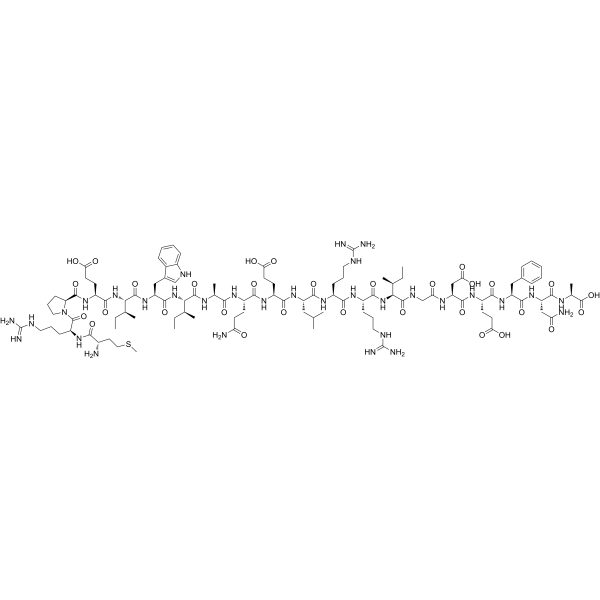
Bim BH3 is a biological active peptide. (This Bim peptide belongs to the pro-apoptotic Bcl-2 family of proteins.)
loading...
    loading...
1
1 Cited Publications
Cat. No.: HY-103277A
Purity:  96.20%
Target:  

Bombesin Receptor

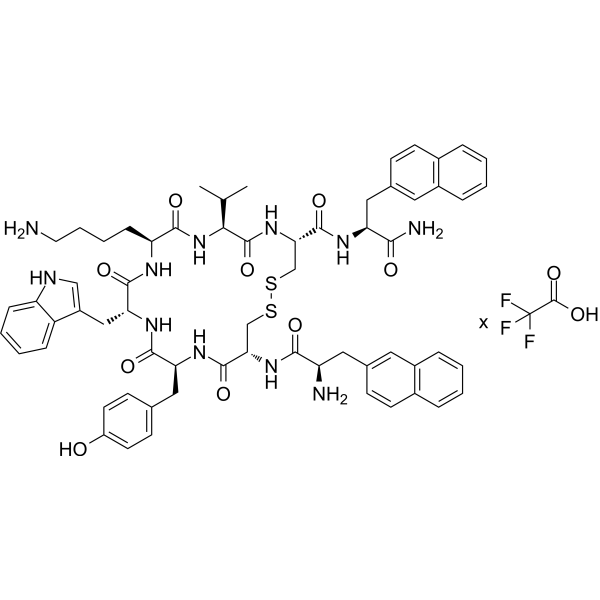
BIM 23042 TFA, a certain somatostatin (SS) octapeptide analogue, is a selective neuropeptide neuromedin B receptor (NMB-R, BB1) antagonist. BIM 23042 has 100-fold lower affinity for gastrin-releasing peptide (GRP) receptor (BB2). BIM 23042 inhibits Neuromedin?B?(HY-P0241), ICI 216140 and DPDM-bombesin ethylamide-induced Ca 2+ release .
loading...
    loading...
Cat. No.: HY-P1889
CAS No.: 721885-31-0
Target:  

Bcl-2 Family Amyloid-β

Research Areas:  

Neurological Disease

Bim BH3, Peptide IV is an Aβ42-binding peptide and the pro-apoptotic BH3 domain of the BIM protein. Bim BH3, Peptide IV binds Aβ42 with a Kd of 7.1 μM. Bim BH3, Peptide IV modulates Aβ42 structure, fibrillization pathways, aggregate morphology, and membrane interactions, inhibiting fibril formation while enhancing protofibril assembly. Bim BH3, Peptide IV promotes Aβ42 β-sheet formation and accelerates aggregation. Bim BH3, Peptide IV enhances Aβ42 membrane internalization and bilayer stiffening. Bim BH3, Peptide IV induces neuronal cell death by enhancing BH3-induced membrane interactions of Aβ42 prefibrillar species. Bim BH3, Peptide IV can be used for research on Alzheimer's disease .
loading...
    loading...
Cat. No.: HY-P0039
CAS No.: 136207-23-3
Target:  

Bombesin Receptor

Research Areas:  

Cancer

BIM-26226 is a selective gastrin-releasing peptide receptor (GRPR) (IC50 = 6 nM) and bombesin receptor (BN receptor) antagonist. BIM-26226 antagonizes BN- or GRP-stimulated amylase release with IC50 values of 0.3 nM and 0.2 nM, respectively. BIM-26226 is specific for the GRP-preferring BN receptor subtype with no interference with GRP receptor system. BIM-26226 can induce the synthesis of somatostatin receptor but has no significant effect on tumor growth .
loading...
    loading...
Cat. No.: HY-103277
CAS No.: 111857-96-6
Target:  

Bombesin Receptor

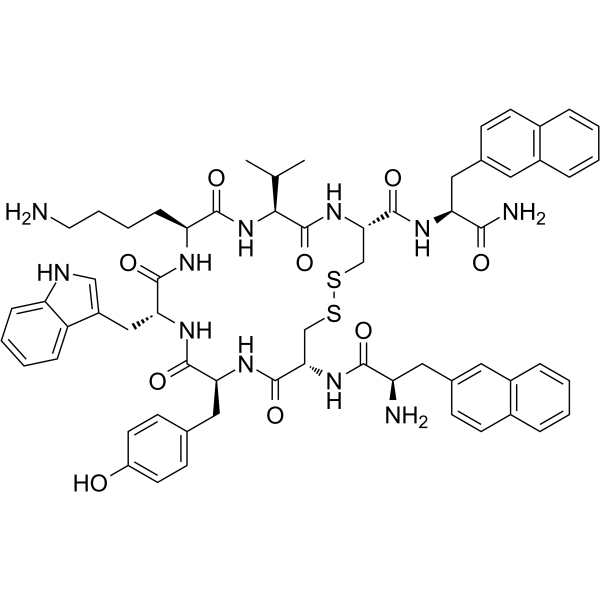
BIM 23042, a certain somatostatin (SS) octapeptide analogue, is a selective neuropeptide neuromedin B receptor (NMB-R, BB1) antagonist. BIM 23042 has 100-fold lower affinity for gastrin-releasing peptide (GRP) receptor (BB2). BIM 23042 inhibits Neuromedin?B?(HY-P0241), ICI 216140 and DPDM-bombesin ethylamide-induced Ca 2+ release .
loading...
    loading...
Cat. No.: HY-P1889A
Target:  

Bcl-2 Family Amyloid-β

Research Areas:  

Neurological Disease

Bim BH3, Peptide IV TFA is an Aβ42-binding peptide and the pro-apoptotic BH3 domain of the BIM protein. Bim BH3, Peptide IV TFA binds Aβ42 with a Kd of 7.1 μM. Bim BH3, Peptide IV TFA modulates Aβ42 structure, fibrillization pathways, aggregate morphology, and membrane interactions, inhibiting fibril formation while enhancing protofibril assembly. Bim BH3, Peptide IV TFA promotes Aβ42 β-sheet formation and accelerates aggregation. Bim BH3, Peptide IV TFA enhances Aβ42 membrane internalization and bilayer stiffening. Bim BH3, Peptide IV TFA induces neuronal cell death by enhancing BH3-induced membrane interactions of Aβ42 prefibrillar species. Bim BH3, Peptide IV TFA can be used for research on Alzheimer's disease .
loading...
    loading...
Cat. No.: HY-P10984
CAS No.: 206536-96-1
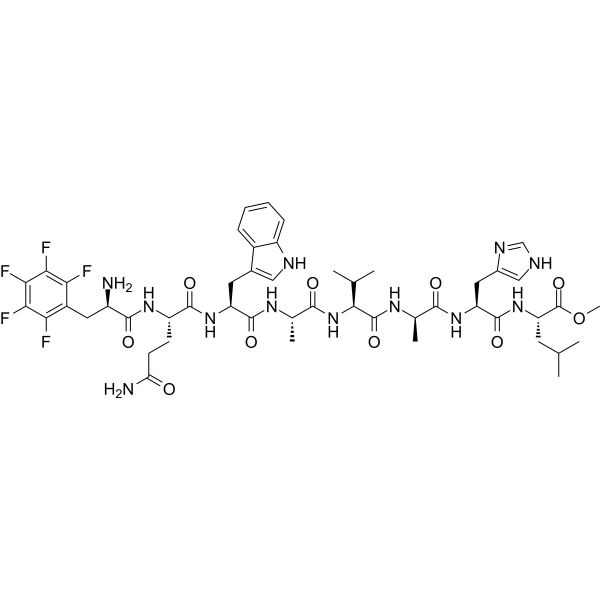
FNIII14 is a β1-integrin inhibitory peptide. FNIII14 induces the conformational shift of β1-integrin from the active form to the inactive form, blocks integrin-mediated signaling pathways, disrupts the interaction between VLA-4 and fibronectin, inhibits the phosphorylation of FAK/Akt, suppresses cell adhesion, fibronectin fibril formation and chondrocyte proliferation, induces chondrocyte apoptosis and cartilage degeneration, upregulates the pro-apoptotic protein Bim, and binds to membrane-bound eEF1A. FNIII14 reversibly disrupts cell adhesion without reducing cell viability, accelerates adipocyte differentiation, and loosens tumor matrix architecture to enhance the permeability of nanotherapeutic agents. FNIII14 can be used in research related to neuroblastoma, pancreatic cancer, acute myeloid leukemia, colitis-associated colorectal cancer, osteoarthritis, and atherosclerosis .
loading...
    loading...

