224 Results for "

Clinical trials

" in MedChemExpress (MCE) Product Catalog:
Products (224)

224 Results for "Clinical trials" in MCE Product Catalog:

Cat. No.: HY-16632
CAS No.: 1333990-84-3
Target:  

γ-secretase Amyloid-β

Research Areas:  

Metabolic Disease

ELND 006 (Compound 30) is a metabolically stable γ-secretase inhibitor designed to selectively inhibit amyloid beta (Aβ) generation while sparing Notch signaling. It was developed through a synthetic strategy emphasizing diversity and chirality. ELND 006, along with its analog ELND007 (Compound 34), progressed into human clinical trials. In preclinical studies, both compounds demonstrated effective reduction of Aβ levels in vitro and in vivo. Comparisons with other γ-secretase inhibitors like Semagacestat, Begacestat, and Avagacestat underscored their potency and specificity in lowering Aβ levels in cerebrospinal fluid (CSF) of healthy human volunteers, suggesting potential therapeutic efficacy in Alzheimer's disease .
loading...
    loading...
Cat. No.: HY-14955A
CAS No.: 347870-26-2
Synonyms: (Rac)-MB06322; (Rac)-CS-917
Target:  

Others

Research Areas:  

Others

(Rac)-Managlinat dialanetil ((Rac)-MB06322) is a compound for the inhibition of type 2 diabetes that is in Phase II clinical trials and works by inhibiting gluconeogenesis.
loading...
    loading...
Cat. No.: HY-19500
CAS No.: 215122-74-0
Target:  

COX

Research Areas:  

Others

SC-75416 is a selective cyclooxygenase-2 inhibitor. Its pharmacokinetic/pharmacodynamic (PK/PD) model was used for development and clinical trial simulation to design a study protocol to verify its analgesic effect in a post-oral surgery pain model. The simulation results showed that 360 mg of SC-75416 may provide better pain relief than 400 mg of ibuprofen. The actual clinical trial results confirmed this hypothesis, and 360 mg of SC-75416 was indeed superior to 400 mg of ibuprofen in pain relief. The PK/PD model of SC-75416 showed good predictive performance and successfully predicted its clinical effect. These research results show that SC-75416, as a new selective COX-2 inhibitor, has potential clinical application value in the management of post-oral surgery pain.
loading...
    loading...
Cat. No.: HY-125856A
CAS No.: 1802426-00-1
Synonyms: BMS-986177 TFA; JNJ-70033093 TFA
Target:  

Factor Xa

Research Areas:  

Cardiovascular Disease

Milvexian TFA (BMS-986177 TFA) is a factor XIa inhibitor with biological activity to prevent venous thromboembolism. Milvexian TFA was effective in reducing the occurrence of venous thromboembolism in patients undergoing knee replacement surgery. Milvexian TFA has good selectivity and shows significant inhibitory effects on plasma kallikrein and trypsin. Milvexian TFA has a bioavailability of 32%, which means it has a high absorption rate in the body. Milvexian TFA showed a relatively low risk of bleeding in clinical trials .
loading...
    loading...
Cat. No.: HY-14977
CAS No.: 840523-39-9
Target:  

LPL Receptor

Research Areas:  

Inflammation/Immunology

CS-0777-P, the phosphorylated form of CS-0777, acts as a potent and selective modulator of the S1P receptor-1 (S1P1). It exhibits approximately 320-fold higher agonist activity for human S1P1 compared to S1P3, with an EC50 of 1.1 nM. In pharmacological studies, CS-0777-P demonstrated significant effects in vitro as an S1P1 and S1P3 agonist, leading to lowered peripheral blood lymphocyte counts and suppressive effects on experimental autoimmune encephalomyelitis (EAE) in rats. Pharmacokinetic studies in rats revealed rapid lymphocyte count reductions following oral administration, making CS-0777 a promising candidate currently undergoing clinical trials for the treatment of multiple sclerosis (MS) .
loading...
    loading...
Cat. No.: HY-118557A
CAS No.: 210350-29-1
Synonyms: S-MPEC hydrochloride
Target:  

5-HT Receptor

Research Areas:  

Others

Iferanserin hydrochloride (S-MPEC hydrochloride) is a selective serotonin receptor antagonist with the potential to inhibit internal hemorrhoids. Iferanserin hydrochloride demonstrated efficacy and tolerability in ongoing Phase IIb clinical trials, with the ability to significantly reduce patient-reported symptoms of bleeding and pruritus .
loading...
    loading...
Cat. No.: HY-13550A
CAS No.: 70711-40-9
Synonyms: NSC 196473 acetate; NSC 290813 acetate
Target:  

DNA/RNA Synthesis

Research Areas:  

Cancer

Ametantrone acetate (NSC 196473 acetate) is an antineoplastic drug with topoisomerase II inhibitory activity. Ametantrone acetate causes covalent cross-linking of DNA. The pharmacokinetic profile of Ametantrone acetate has been confirmed in clinical trials, and its elimination pathway in the body indicates the existence of a major metabolic pathway .
loading...
    loading...
Cat. No.: HY-120046
CAS No.: 1803281-22-2
Target:  

HDAC

Research Areas:  

Cancer

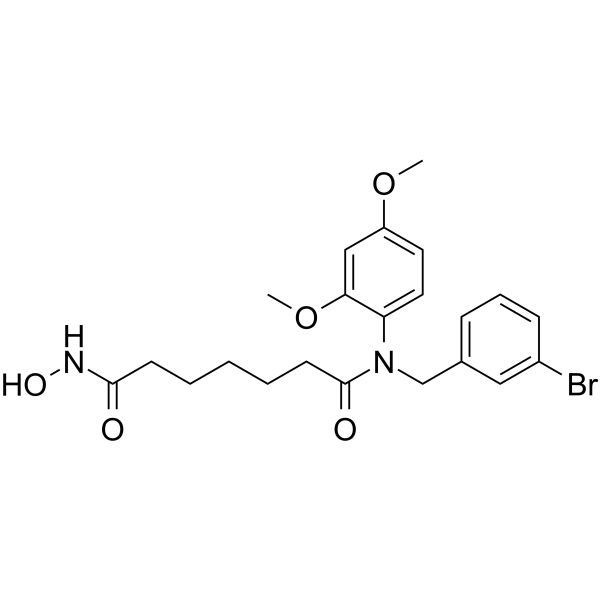
YF479 is a potent inhibitor of histone deacetylase. YF479 abates cell viability, suppresses colony formation and tumor cell motility. YF479 significantly inhibits breast tumor growth and metastasis. YF479 has the potential for the research of clinical trials for breast cancer .
loading...
    loading...
Cat. No.: HY-14915
CAS No.: 194785-19-8
Target:  

Adrenergic Receptor

Research Areas:  

Endocrinology

Bedoradrine is a highly selective β2-adrenergic agonist with activity in suppressing asthma and chronic obstructive pulmonary disease (COPD). Bedoradrine is administered by intravenous infusion and is specifically indicated for the suppression of acute asthma attacks. Bedoradrine has shown good safety and preliminary efficacy in clinical trials, especially in patients with stable moderate to severe asthma. The results of Bedoradrine studies have shown that it can provide clinical benefits without increasing clinical risks, especially for patients who are unable to use inhalation or nebulization suppression .
loading...
    loading...
Cat. No.: HY-P5496
CAS No.: 872141-80-5
Target:  

Inhibitory Antibodies

Research Areas:  

Others

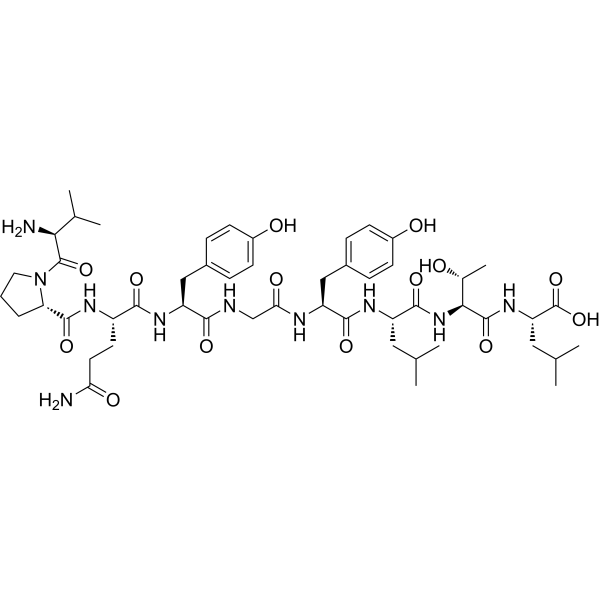
AAV2 Epitope is a biological active peptide. (This peptide is the capsid derived immunodominant adeno-associated virus 2 (AAV2), CD8 T cell epitope. Liver toxicity observed in a clinical trial of AAV2 delivered systemically to patients with hemophilia was ascribed to killing of vector-transduced hepatocytes by capsid-specific T-cells.)
loading...
    loading...
Cat. No.: HY-118326
CAS No.: 1190379-37-3
Target:  

Autophagy

Research Areas:  

Cancer

MRT 68601 is a potent TBK1 inhibitor with the activity of inhibiting autophagosome formation in lung cancer cells. MRT 68601 may have potential effects against targets associated with host-dependent factors identified in SARS-CoV-2 infection. The drug targets involved in MRT 68601 are related to existing FDA-approved drugs and compounds in clinical trials, which can provide support for the development of broad-spectrum antiviral therapies .
loading...
    loading...
Cat. No.: HY-19904A
CAS No.: 872260-47-4
Synonyms: (+/-)-LY2409021
Target:  

Endogenous Metabolite

Research Areas:  

Metabolic Disease

(+/-)-Adomeglivant ((+/-)-LY2409021) is a potent and selective glucagon receptor antagonist with hypoglycemic activity. (+/-)-Adomeglivant is effective in lowering blood sugar levels in both healthy people and people with type 2 diabetes. (+/-)-Adomeglivant is well tolerated by glucagon signaling blockade in patients with type 2 diabetes and significantly reduces fasting and postprandial blood glucose with a concomitant reversible elevation of aminotransferases. Glucagon signaling inhibition by (+/-)-Adomeglivant is a promising potential inhibitory approach for patients with type 2 diabetes and warrants further evaluation of its benefits and risks in longer clinical trials .
loading...
    loading...
Cat. No.: HY-16633
CAS No.: 1444006-79-4
Target:  

γ-secretase Amyloid-β

Research Areas:  

Metabolic Disease

ELND 007 (Compound 34) is a metabolically stable γ-secretase inhibitor designed to selectively inhibit amyloid beta (Aβ) generation while minimizing Notch inhibition. Developed alongside ELND 006 (Compound 30), it underwent human clinical trials following a synthetic strategy emphasizing diversity and chirality. In preclinical studies, ELND 007 showed promising in vitro and in vivo characteristics, effectively reducing Aβ levels. Comparative studies with other γ-secretase inhibitors like Semagacestat, Begacestat, and Avagacestat highlighted its efficacy in lowering Aβ production, particularly demonstrated by reduced Aβ levels in the cerebrospinal fluid (CSF) of healthy human volunteers, suggesting potential therapeutic benefit for Alzheimer's disease .
loading...
    loading...
Cat. No.: HY-13590
CAS No.: 402857-58-3
Target:  

VEGFR

Research Areas:  

Cancer

CEP-7055 (compound 21) is a novel vascular endothelial growth factor R2 (VEGF-R2) tyrosine kinase inhibitor with potent inhibitory activity. Studies have found that the inhibitor activity can be significantly improved by optimizing the R9 substituent. Compound 21 has potent low nanomolar inhibition of human VEGF-R tyrosine kinase and shows good selectivity against multiple tyrosine and serine/threonine kinases. N,N-dimethylglycine ester 40 was prepared to improve its water solubility and oral bioavailability. In animal pharmacokinetic studies, a significant increase in the plasma level of 21 was observed after oral administration of 40. Compound 21 showed significant in vivo antitumor activity in multiple tumor models and has entered phase I clinical trials as a water-soluble N,N-dimethylglycine ester proagent of 40 (CEP-7055).
loading...
    loading...
Cat. No.: HY-15334
CAS No.: 402857-39-0
Target:  

VEGFR

Research Areas:  

Cancer

CEP-5214, derived from a new indenopyrrolocarbazole template, is a potent inhibitor of vascular endothelial growth factor R2 (VEGF-R2) tyrosine kinase. Structurally, it features optimal substitutions at positions 9 (ethoxymethyl) and 12 (hydroxypropyl) on the indeno[2,1-a]pyrrolo[3,4-c]carbazole-5-one scaffold, leading to high potency against VEGF-R2 (IC50 8 nM). Compound 21 (CEP-5214) exhibits low-nanomolar inhibition of human VEGF-R tyrosine kinases (IC50 4 nM for VEGF-R2/KDR), with good selectivity over other kinases. The compound demonstrated significant cellular and in vivo antitumor activity across various models and advanced into phase I clinical trials as a water-soluble prodrug (CEP-7055) to enhance oral bioavailability .
loading...
    loading...
Cat. No.: HY-118156
CAS No.: 155238-60-1
Target:  

Others

Research Areas:  

Others

L-699333 is a 5-lipoxygenase (5-LO) inhibitor belonging to the thieno[2,3,4-cd]indole class. This compound has a 2-ethoxybutyric acid side chain and is a potent inhibitor of the biosynthesis of 5-HPETE and LTB4 produced from human 5-LO, with ICm values of 22 nM, 7 nM, and 3.8 pM for human neutrophils and whole blood, respectively. L-699333 has shown anti-inflammatory and antiasthmatic effects in a variety of animal models, including rat pleurisy models, antigen-induced wheezing models, and awake macaque and sheep asthma models. Its inhibition of 5-LO is highly selective, with higher ICm values or stronger competitive inhibition in FLAP binding assays compared to inhibition of human 15-LO, porcine 12-LO, and ram epididymal cyclooxygenase. The racemic enantiomer 14g of L-699333 is the most potent enantiomer to date, with inhibitory effects similar to those of the known MK-0591, which has been shown in clinical trials to inhibit the biochemical effects of LTB4 biosynthesis in vitro and LTE4 excretion in urine.
loading...
    loading...
Cat. No.: HY-L104
714 compounds

The lack of availability of appropriate medicines for children is an extensive and urgent problem. A variety of obstacles hinder children's drug development, including the limited commercial interest, lack of suitable infrastructure and competence for conducting paediatric clinical trials, difficulties in trial design, ethical worries and many others. Because of these factors, unlicensed and off-label prescribing is very common in children which may lead to safety concern.

MCE offers a unique collection of 714 Pediatric medicines, all of which have been approved or studied in clinical trials for children diseases. MCE children’s drug library is a useful tool for drug repurposing to discover new children’s indications.

Cat. No.: HY-106860
CAS No.: 109623-97-4
Target:  

Endogenous Metabolite

Research Areas:  

Neurological Disease

Gedocarnil is a compound used in research to explore central nervous system diseases and has potential anxiety-related activity. The use of gedocarnil provides an effective tool for further experimental research on anxiety. Gedocarnil may induce severe anxiety attacks in clinical trials .
loading...
    loading...
Cat. No.: HY-L023
115 compounds

Antibody-Drug Conjugates (ADCs), a new class of treatment for cancer, are composed with a monoclonal antibody, a linker and a cytotoxic agent also referred to as a payload. To date, several ADCs have received market approval and more than 60 ADCs are currently in clinical trials. ADCs are one of the fastest growing classes of oncology drugs worldwide.

The payload or cytotoxic agent is the most important unit in the ADC. ADC has the capability to kill cancer cell depending on the potency of the payload. MCE provides 115 highly potent cytotoxins that contain auristatin derivatives, maytansinoids, calicheamicin, duocarmycin, pyrrolobenzodiazepines (PBDs), etc.

Cat. No.: HY-18157
CAS No.: 1100361-36-1
Target:  

Amyloid-β

Research Areas:  

Neurological Disease

SCH 900229 is a potent γ-secretase inhibitor with selective activity against PS1. The Aβ40 IC50 value of SCH 900229 is 1.3 nM, showing its excellent ability in reducing Aβ. SCH 900229 has shown good Aβ-lowering effects after oral administration in preclinical animal models. SCH 900229 has been advanced to human clinical trials for further development of compounds for the inhibition of Alzheimer's disease .
loading...
    loading...

