10 Results for "

Cortical tissue

" in MedChemExpress (MCE) Product Catalog:
Products (10)

10 Results for "Cortical tissue" in MCE Product Catalog:

1
1 Cited Publications
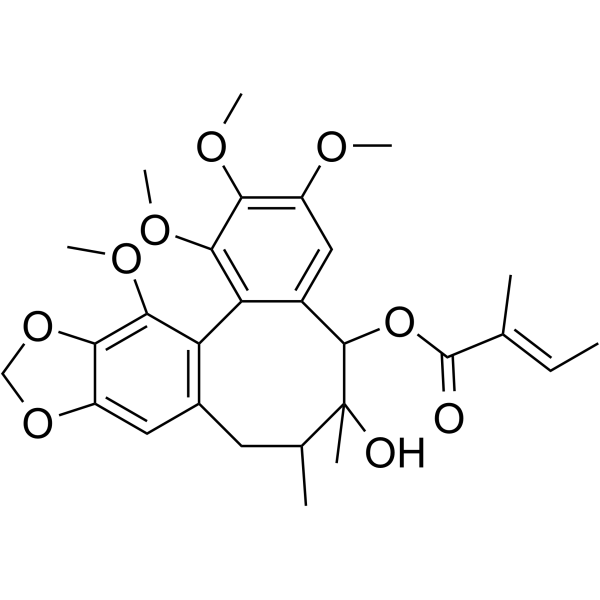
Cat. No.: HY-N0695
CAS No.: 58546-55-7
Synonyms: Gomisin-B; Wuweizi ester-B; Schisantherin-B
Schisantherin B (Gomisin-B) is a lignan compound and one of the active components of Schisandra chinensis. Schisantherin B activates the PI3K/AKT signaling pathway, restores the activity of GSK3β, and reduces the hyperphosphorylation of tau protein in hippocampal and cerebral cortical tissues. Schisantherin B upregulates the level of GLT-1, decreases the expression of pro-inflammatory cytokines TNF-α/IL-1β/IL-6, upregulates the expression of IL-10, and inhibits cell apoptosis. Schisantherin B is applicable to the research of spinal cord injury, Alzheimer's disease and depression .
loading...
    loading...
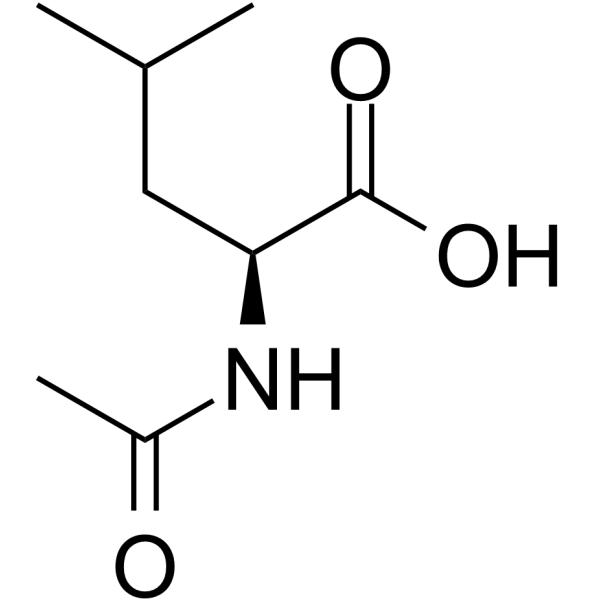
Cat. No.: HY-59291
CAS No.: 1188-21-2
Synonyms: N-Acetyl-L-leucine
Levacetylleucine (N-acetyl-L-leucine), an orally bioavailable and brain-penetrant compound, is an acetylated derivative of amino acid Leucine. Levacetylleucine is the active form of N-acetyl-leucine (NAL). Levacetylleucine attenuates neuronal death and neuroinflammation in the cortical tissue of mice. Levacetylleucine also potentially improves ameliorates lysosomal and metabolic dysfunction. Levacetylleucine improves compensation of postural symptoms after unilateral chemical labyrinthectomy (UL) in rats. Levacetylleucine is promising for research of neurological manifestations of Niemann-Pick disease type C, traumatic brain injury and neurodegeneration prevention .
loading...
    loading...
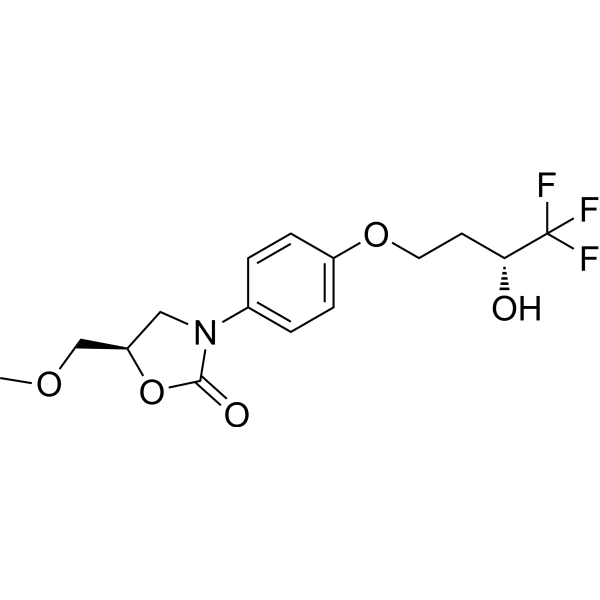
Cat. No.: HY-120017
CAS No.: 134564-82-2
Synonyms: MD-370503
Target:  

Monoamine Oxidase

Research Areas:  

Neurological Disease

Befloxatone (MD-370503) is an orally active, selective and reversible inhibitor of Monoamine Oxidase A (MAO-A) (IC50=4 nM). Befloxatone increases the tissue level of monoamine, striatal dopamine and cortical norepinephrine. Befloxatone has antidepressant potential .
loading...
    loading...
Cat. No.: HY-172419
CAS No.: 2881017-49-6
Synonyms: GM-1020
Target:  

iGluR

Research Areas:  

Neurological Disease

Blixeprodil (GM-1020) is an orally active, blood-brain barrier-penetrant NMDA receptor inhibitor with a Ki of 3.25 µM in rat cortical tissues. Blixeprodil binds to the MK-801 ion channel site and blocks NMDA receptor-mediated currents in hyperpolarized states in a voltage-dependent manner. Blixeprodil modulates the power of cortical EEG frequency bands, alters spontaneous motor activity, and induces ataxia at high doses. Blixeprodil can be used in the research of depression .
loading...
    loading...
Cat. No.: HY-105271
CAS No.: 120056-57-7
Synonyms: S-(+)-S-312-d
Target:  

Calcium Channel

Research Areas:  

Others

S-312-d (S-(+)-S-312-d) is a calcium channel blocker with the activity of protecting the kidney from ischemic acute renal failure. S-312-d (0.01-0.1mg/kg b.wt. iv) administered before ischemia has a dose-dependent protective effect on ischemia-induced renal damage, improves the survival rate of ischemic rats, and reduces renal cortical edema and the increase in renal tissue calcium content.
loading...
    loading...
Cat. No.: HY-N0695R
CAS No.: 58546-55-7
Synonyms: Gomisin-B (Standard); Wuweizi ester-B (Standard); Schisantherin-B (Standard)
Schisantherin B (Gomisin-B) (Standard) is the analytical standard of Schisantherin B. This product is intended for research and analytical applications. Schisantherin B is a lignan compound and one of the active components of Schisandra chinensis. Schisantherin B activates the PI3K/AKT signaling pathway, restores the activity of GSK3β, and reduces the hyperphosphorylation of tau protein in hippocampal and cerebral cortical tissues. Schisantherin B upregulates the level of GLT-1, decreases the expression of pro-inflammatory cytokines TNF-α/IL-1β/IL-6, upregulates the expression of IL-10, and inhibits cell apoptosis. Schisantherin B is applicable to the research of spinal cord injury, Alzheimer's disease and depression.
loading...
    loading...
Cat. No.: HY-172419A
CAS No.: 3048183-44-1
Synonyms: GM-1020 hydrochloride
Target:  

iGluR

Research Areas:  

Neurological Disease

Blixeprodil hydrochloride (GM-1020 hydrochloride) is an orally active, blood-brain barrier-penetrant NMDA receptor inhibitor with a Ki of 3.25 µM in rat cortical tissues. Blixeprodil hydrochloride binds to the MK-801 ion channel site and blocks NMDA receptor-mediated currents in hyperpolarized states in a voltage-dependent manner. Blixeprodil hydrochloride modulates the power of cortical EEG frequency bands, alters spontaneous motor activity, and induces ataxia at high doses. Blixeprodil hydrochloride can be used in the research of depression .
loading...
    loading...
Cat. No.: HY-187638
CAS No.: 192511-71-0
ALT-946 is an orally active inhibitor of the advanced glycation end product (AGE) formation pathway. ALT-946 blocks the formation of AGE-protein cross-links, reduces the accumulation of AGE in renal tissues, alleviates increased albuminuria and elevated glomerular filtration rate, prevents glomerulosclerosis, ameliorates medullary tubulointerstitial lesions, and reduces cortical tubular degeneration. ALT-946 can be used in research related to diabetic nephropathy and diabetic cardiovascular diseases .
loading...
    loading...
Cat. No.: HY-187638A
CAS No.: 727972-45-4
ALT-946 free base is an orally active inhibitor of the advanced glycation end product (AGE) formation pathway. ALT-946 free base blocks the formation of AGE-protein cross-links, reduces the accumulation of AGE in renal tissues, alleviates increased albuminuria and elevated glomerular filtration rate, prevents glomerulosclerosis, ameliorates medullary tubulointerstitial lesions, and reduces cortical tubular degeneration. ALT-946 free base can be used in research related to diabetic nephropathy and diabetic cardiovascular diseases .
loading...
    loading...
Cat. No.: HY-D3146
CAS No.: 1418017-91-0
Target:  

Fluorescent Dye

Research Areas:  

Others

Di-4-AN (F) EPPTEA is a voltage-sensitive dye used for membrane potential imaging and optical recording of electrical activity in excitable cells and tissues. Its detection mechanism is based on electrochromism (also known as the molecular Stark effect). The single-photon excitation/emission wavelengths measured in ethanol solution are Ex/Em = 444/610 nm, and it can be excited via 1064 nm two-photon excitation in optical recording applications. Di-4-AN (F) EPPTEA can be used to record backpropagating action potentials in individual dendritic spines of brain cortical slices, map subcellular action potential characteristics of single cardiomyocytes, and perform real-time recording of multicellular action potentials in cerebellar slices .
loading...
    loading...

