
34 Results for "

DNA template

" in MedChemExpress (MCE) Product Catalog:
Products (34)

34 Results for "DNA template" in MCE Product Catalog:

10
10 Cited Publications
Cat. No.: HY-14776
CAS No.: 865311-47-3
Purity:  99.87%
Synonyms: CX-3543
Target:  

DNA/RNA Synthesis

Research Areas:  

Cancer

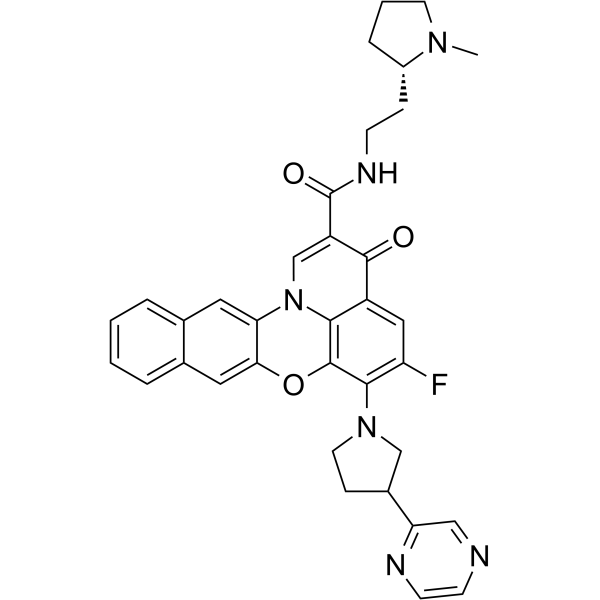
Quarfloxin (CX-3543), a fluoroquinolone derivative with antineoplastic activity, targets and inhibits RNA pol I activity, with IC50 values in the nanomolar range in neuroblastoma cells. Quarfloxin disrupts the interaction between the nucleolin protein and a G-quadruplex DNA structure in the ribosomal DNA (rDNA) template .
loading...
    loading...
9
9 Cited Publications
Cat. No.: HY-109517
CAS No.: 91080-16-9
Synonyms: DNA from calf thymus, Thymonucleic acid
Calf thymus DNA (DNA from calf thymus) is high quality double-stranded template DNA isolated from the thymus of male and female calves. Calf thymus DNA can be used for the research of the interaction between DNA and agents .
loading...
    loading...
9
9 Cited Publications
Cat. No.: HY-153118
CAS No.: 73049-39-5
Synonyms: ctDNA sodium, Type I, fibers; DNA sodium, from calf thymus, Type I, fibers; Thymonucleic acid sodium, Type I, fibers
Research Areas:  

Others Cancer

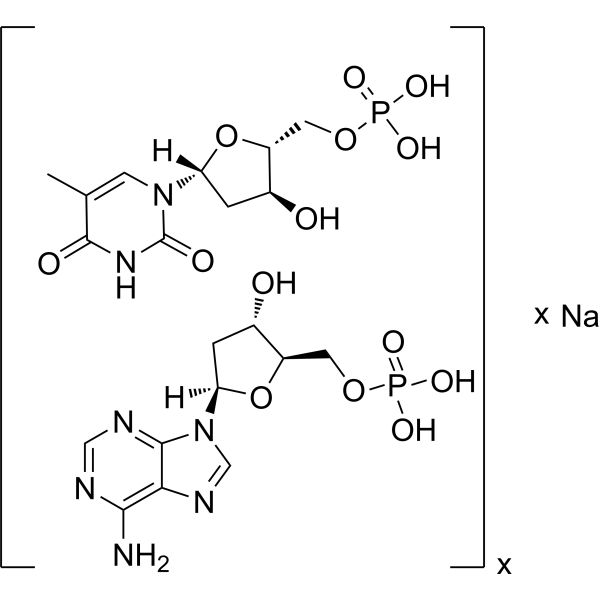
Deoxyribonucleic acid sodium, from calf thymus, Type I, fibers is the sodium salts form of Calf thymus DNA (HY-109517). Calf thymus DNA is a double-stranded template DNA isolated from calf thymus. It can be used to study the interaction between DNA and DNA binding agents, as well as the structure and function of DNA, for DNA quantification and used as a substrate for DNA polymerase analysis, etc​ .
loading...
    loading...
7
7 Cited Publications
Cat. No.: HY-138646
CAS No.: 86828-69-5
Synonyms: Poly(dA:dT) sodium
Research Areas:  

Inflammation/Immunology

Poly(deoxyadenylic-thymidylic) acid (Poly(dA:dT)) sodium is a double-stranded DNA stimulant. Poly(deoxyadenylic-thymidylic) acid sodium is recognized by the intracellular DNA sensor DDX41 and activates the innate immune pathway via the adaptor protein STING, inducing the production of cytokines such as type I interferons. Poly(deoxyadenylic-thymidylic) acid sodium also serves as an in vitro transcription template for free RNA polymerase .
loading...
    loading...
1
1 Cited Publications
Cat. No.: HY-117664
CAS No.: 1633660-76-0
Target:  

DNA/RNA Synthesis

Research Areas:  

Cancer

PNR-7-02 is a dual Rev1 and human DNA polymerase η (hpol η) inhibitor, with an IC50 value of 8 μM against hpol η. PNR-7-02 binds to hpol η to disrupt the orientation of template DNA and block the catalytic function of hpol η. When used in combination with Cisplatin (HY-17394), PNR-7-02 induces DNA damage and replication stress in cells with intact hpol η function. PNR-7-02 can be used in mechanism studies related to chronic myeloid leukemia and ovarian cancer .
loading...
    loading...
Cat. No.: HY-E70094
Target:  

DNA/RNA Synthesis

Research Areas:  

Others

T4 UvsX Recombinase helps initiate DNA replication on a double-stranded DNA template by catalyzing synapsis between the template and a homologous DNA single strand that serves as primer. T4 UvsX Recombinase greatly amplifies the snap-back (hairpin-primed) DNA synthesis that is catalyzed by the T4 DNA polymerase holoenzyme on linear, single-stranded DNA templates .
loading...
    loading...
Cat. No.: HY-103694
CAS No.: 550-33-4
Purity:  98.44%
Synonyms: 9-β-D-Ribofuranosylpurine
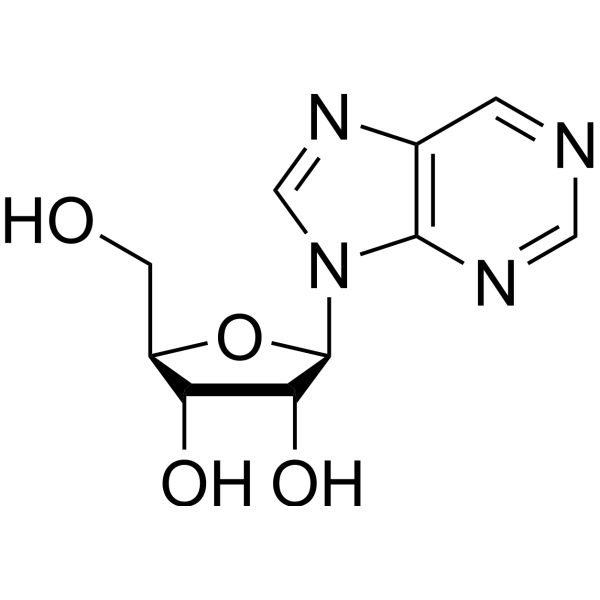
Nebularine (9-β-D-Ribofuranosylpurine) is a naturally occurring cytotoxic purine riboside antibiotic. Nebularine competitively inhibits adenine deaminase and xanthine oxidase, and acts as a template for thymine insertion during DNA elongation and replication. Nebularine serves as a cytokinin antagonist and induces mitotic aberrations in plant cells. Nebularine exhibits cytotoxicity against plants, mammals, fungal organisms and cancer cells. Nebularine can be used in research related to fungal infections, plant growth, as well as chronic myeloid leukemia, acute lymphoblastic leukemia and breast cancer .
loading...
    loading...
Cat. No.: HY-E70090
CAS No.: 9014-24-8
Target:  

DNA/RNA Synthesis

Research Areas:  

Infection

T7 RNA polymerase is a polymerase expressed by Escherichia coli from the RNA polymerase gene of T7 bacteriophage. T7 RNA polymerase is highly specific and involved in in vitro transcription (IVT) of mRNA. In the presence of Mg 2+, T7 RNA polymerase only uses the single-stranded or double-stranded DNA containing the T7 promoter sequence as a template, and uses NTP as a substrate to synthesize RNA complementary to the single-stranded DNA downstream of the promoter .
loading...
    loading...
Cat. No.: HY-105846
CAS No.: 1404-15-5
Purity:  97.2%
Research Areas:  

Cancer

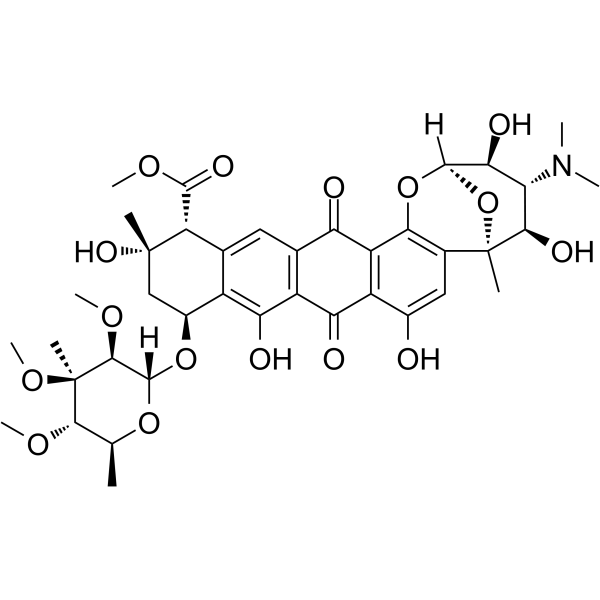
Nogalamycin is an anthracyclinone antibiotic. Nogalamycin is a potent antibiotic against Gram-positive bacteria, also has cytotoxicity against certain tumor cells. Nogalamycin is produced by Streptomyces nogalater var. Nogalater. Nogalamycin selectively inhibits RNA synthesis after binding to DNA template. Nogalamycin can be used for researching anticancer .
loading...
    loading...
Cat. No.: HY-100513
CAS No.: 34279-44-2
(±)-Dehydroaltenusin, an antibiotic, is a selective eukaryotic DNA polymerase α (pol α) inhibitor with an IC50 of 0.68 μM. (±)-Dehydroaltenusin can be isolated from fungus Alternaria tenuis. (±)-Dehydroaltenusin competitively inhibits the DNA template primer (Ki: 0.23 μM) and non-competitively suppresses the 2'-deoxyribonucleoside 5'-triphosphate substrate (Ki: 0.18 μM). (±)-Dehydroaltenusin induces the cancer cell S-phase cycle arrest and apoptosis. (±)-Dehydroaltenusin can be used for cancers like human adenocarcinoma research .
loading...
    loading...
Cat. No.: HY-148781
CAS No.: 2413192-92-2
Target:  

HBV

Research Areas:  

Infection

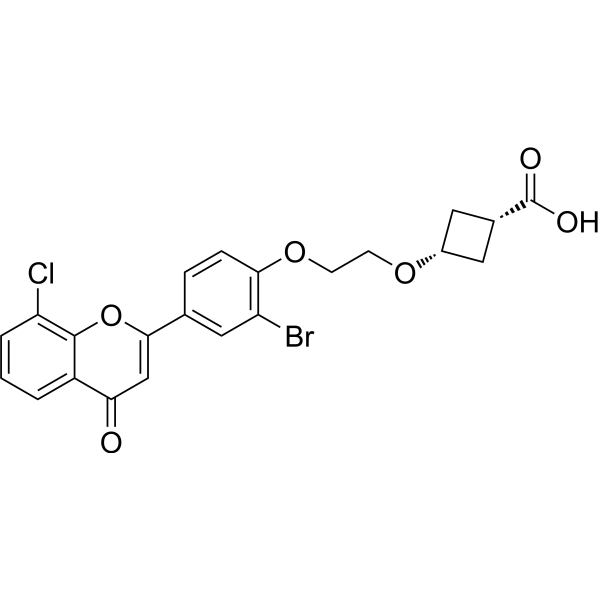
HBV-IN-30 (ex44), a flavone derivative, is a potent covalently closed circular DNA (cccDNA) inhibitor. cccDNA serves as the template for viral RNA transcription and subsequent viral DNA generation. HBV-IN-30 has the potential for the research of HBV infection .
loading...
    loading...
Cat. No.: HY-P2937
CAS No.: 9012-90-2
Target:  

DNA/RNA Synthesis

Research Areas:  

Cancer

DNA polymerase is a polymerase agent targeting DNA templates. DNA polymerase catalyzes the polymerization of deoxyribonucleotides (dNTPs) to extend DNA strands with high fidelity and processivity. DNA polymerase is promising for research of cancers .
loading...
    loading...
Cat. No.: HY-106872
CAS No.: 126347-69-1
Synonyms: 9-Cl-TIBO
Research Areas:  

Infection

R82913 (9-Cl-TIBO) is a potent and high selective inhibitor of HIV-1 reverse transcriptase with antiviral activity on both an RNA template (negative strand synthesis) and a DNA template (positive strand synthesis). R82913 inhibits the replication of different strains of HIV-I in CEM cells with a median IC50 value of of 0.15 μM .
loading...
    loading...
Cat. No.: HY-148780
CAS No.: 2413192-59-1
Target:  

HBV

Research Areas:  

Infection

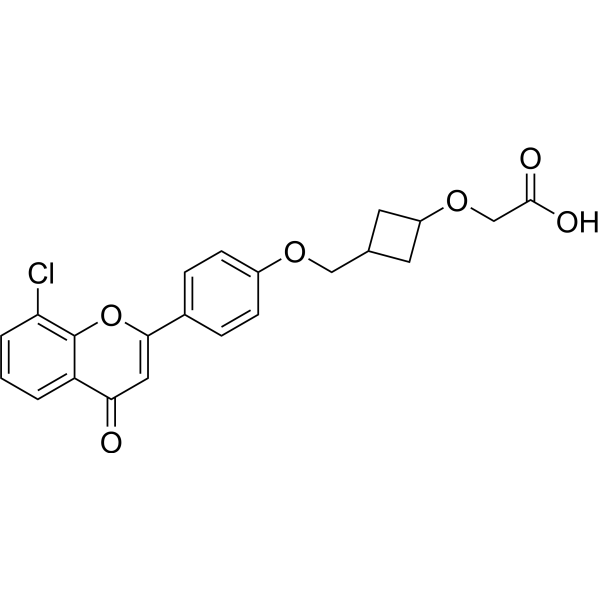
HBV-IN-29 (ex8), a flavone derivative, is a potent covalently closed circular DNA (cccDNA) inhibitor. cccDNA serves as the template for viral RNA transcription and subsequent viral DNA generation. HBV-IN-29 has the potential for the research of HBV infection .
loading...
    loading...
Cat. No.: HY-144045
CAS No.: 2712529-19-4
Target:  

HBV DNA/RNA Synthesis

Research Areas:  

Infection

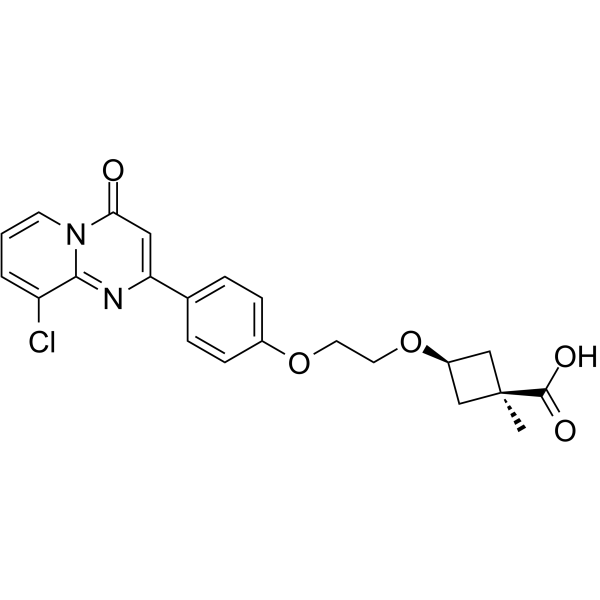
HBV-IN-14 is a potent inhibitor of covalently closed circular DNA (cccDNA). cccDNA serves as the template for viral RNA transcription and subsequent viral DNA generation. HBV-IN-14 is a pyridinopyrimidinones compound. HBV-IN-14 has the potential for the research of HBV infection (extracted from patent WO2021190502A1, compound 5) .
loading...
    loading...
Cat. No.: HY-144046
CAS No.: 2413192-50-2
Target:  

HBV DNA/RNA Synthesis

Research Areas:  

Infection

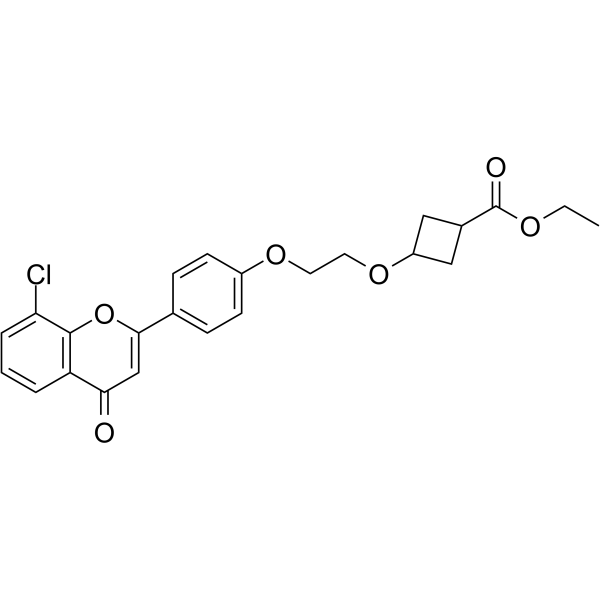
HBV-IN-15 is a potent inhibitor of covalently closed circular DNA (cccDNA). cccDNA serves as the template for viral RNA transcription and subsequent viral DNA generation. HBV-IN-15 is a flavone derivative. HBV-IN-16 has the potential for the research of HBV infection (extracted from patent WO2020052774A1, compound 2) .
loading...
    loading...
Cat. No.: HY-144047
CAS No.: 2355225-38-4
Target:  

HBV DNA/RNA Synthesis

Research Areas:  

Infection

HBV-IN-16 is a potent inhibitor of covalently closed circular DNA (cccDNA). cccDNA serves as the template for viral RNA transcription and subsequent viral DNA generation. HBV-IN-16 is a quinoline derivative. HBV-IN-16 has the potential for the research of HBV infection (extracted from patent WO2019121357A1, compound 1) .
loading...
    loading...
Cat. No.: HY-120750
CAS No.: 111783-54-1
Target:  

Endogenous Metabolite

Research Areas:  

Cancer

A 62176 hydrochloride is a compound that targets DNA topoisomerase II and has the activity of inhibiting purine synthesis in cancer cells. A 62176 hydrochloride interferes with c-MYC mRNA expression by interacting with G-quadruplex. The main mechanism of action of A 62176 hydrochloride is by displacing nucleosomes from the quadruplex of non-template strand rDNA, resulting in rapid redistribution of nucleosomes. The application potential of A 62176 hydrochloride is that it causes DNA damage and relies on BRCA1/2-mediated homologous recombination and DNA-PK-mediated non-homologous end-joining pathways to repair the damage .
loading...
    loading...
Cat. No.: HY-122532
CAS No.: 52259-64-0
Research Areas:  

Cancer

Fagaronine chloride is an alkaloid with inhibitory activity against reverse transcriptase and topoisomerase I. Fagaronine chloride can effectively inhibit the reverse transcriptase of RSii tumor virus at a concentration of 6-60 μg/mL. Fagaronine chloride rapidly blocks the synthesis of DNA polymerase by interacting with the template primer. Fagaronine chloride has shown anti-tumor potential, especially in the study of retroviral infection .
loading...
    loading...
Cat. No.: HY-W110138
CAS No.: 23833-97-8
Research Areas:  

Cancer

Chloroxoquinoline is an anticancer agent. Chloroxoquinoline damages the DNA templates of cancer cells, inducing DNA breaks and cell death, and inhibits cell invasion via down-regulating Rho/Rho kinase signaling pathway. Chloroxoquinoline enhances the radiation sensitivity of Lewis lung cancer cells and xenograft tumors in tumor-bearing mouse models but decreases efficacy after long term exposure in rat models by auto-induction effects on CYP1A and CYP3A. Chloroxoquinoline has a broad-spectrum anticancer activity, such as non-small-cell lung carcinoma (NSCLC), breast cancer and gastric cancer .
loading...
    loading...

