194 Results for "

Drug discovery

" in MedChemExpress (MCE) Product Catalog:
Products (194)

194 Results for "Drug discovery" in MCE Product Catalog:

Cat. No.: HY-D2415
CAS No.: 2411845-57-1
BODIPY-FL staurosporine (Compound 8a) is a fluorescence probe based on staurosporine, exhibiting high specificity towards tyrosine kinases (TK) and tyrosine kinase-like (TKL) family kinases. BODIPY-FL staurosporine has the potential to develop binding assays for kinases that are not recommended for use with Kinase Tracer 236, such as PIM3, CDC42BPG, MAP2K7, TXK, and SIK3. BODIPY-FL staurosporine can be a powerful tool for analyzing kinase selectivity in kinase drug discovery .
loading...
    loading...
Cat. No.: HY-W800659
CAS No.: 29248-48-4
Target:  

ADC Linkers

Research Areas:  

Others

Boc-Gly-Gly-NHS ester can be used to selectively attach small molecules to specific amino acid residues on proteins, creating conjugates that can be used for a variety of applications in drug discovery and diagnostic assays.
loading...
    loading...
Cat. No.: HY-124081
CAS No.: 107743-37-3
Purity:  ≥99.0%
Target:  

Apoptosis

Research Areas:  

Metabolic Disease

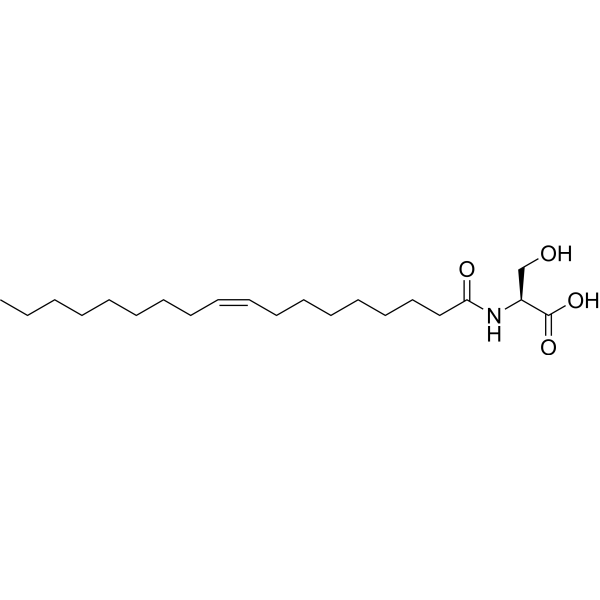
N-Oleoyl-L-Serine is an endogenous amide of long-chain fatty acids with ethanolamine (N-acyl amides). N-Oleoyl-L-Serine is a lipid regulator of bone remodeling and stimulates osteoclast apoptosis. N-Oleoyl-L-Serine can be used for antiosteoporotic drug discovery development .
loading...
    loading...
Cat. No.: HY-W190956
CAS No.: 2172820-12-9
Target:  

Others

Research Areas:  

Cancer

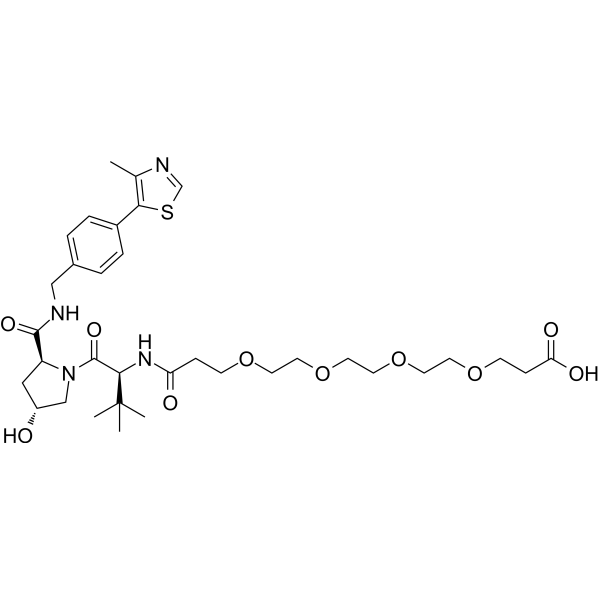
(S,R,S)-AHPC-PEG4-acid is a synthetic PROTAC ligand that binds the E3 ligase ligand to the PEG4 arm, thereby enhancing PROTAC drug research and discovery .
loading...
    loading...
Cat. No.: HY-153756
CAS No.: 749212-56-4
Purity:  ≥95.0%
Target:  

Prion Protein

Research Areas:  

Infection

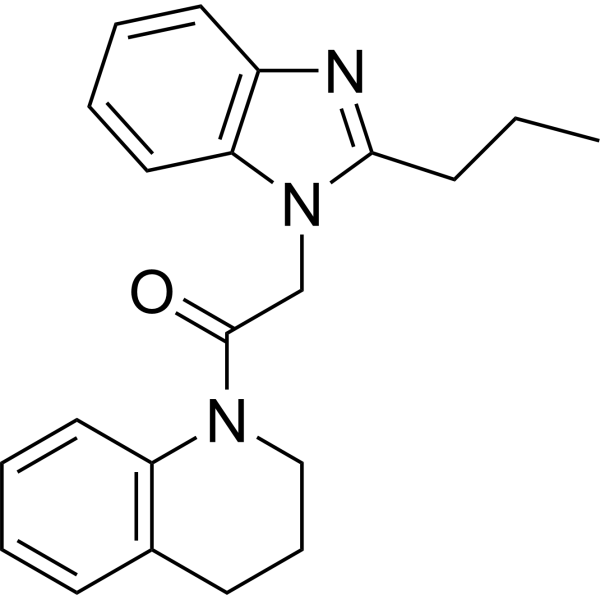
GFP16 is a low affinity antiprion compound. GFP16 can be used for research of antiprion drug discovery .
loading...
    loading...
Cat. No.: HY-158861
CAS No.: 2933215-86-0
Purity:  98.5%
Synonyms: G1-nPr-C14E
Target:  

Liposome

Research Areas:  

Others

C3-K2-E14 is a multi-ionizable amino-lipid featuring a central tertiary amine with two identical branches and an n-propyl group. Each branch features a propanamide linking to a branched amine, each with two C14 arms and a hydroxyl. Ionizable lipids such as this may be applied in the development of lipid nanoparticles for drug discovery.
loading...
    loading...
Cat. No.: HY-P10220
CAS No.: 2914099-35-5
Research Areas:  

Cancer

NOTA-COG1410 forms triggering receptor expressed on myeloid cells 2 (TREM2) targeting ligand. NOTA-COG1410 is capable of being labelled with 68Gallium ( 68Ga) for discovery and diagnosis of digestive system tumors through positron emission tomography/computed tomography (PET/CT). NOTA-COG1410 can be used for the synthesis/research of Radionuclide-Drug Conjugates (RDCs) .
loading...
    loading...
Cat. No.: HY-W017393
CAS No.: 2362-62-1
Synonyms: 4-Methylbenzenecarbothioamide; 4-Methylbenzenethioamide
Target:  

Drug Intermediate

Research Areas:  

Others

thio-p-Toluamide is a cyclic thioamide building block used in drug discovery chemistry.
loading...
    loading...
Cat. No.: HY-124317
CAS No.: 1621585-17-8
Target:  

Fluorescent Dye

Research Areas:  

Others

PF-06649283 is a drug with potential intracellular activity. The effects of PF-06649283 may be affected by factors such as cellular metabolism, protein-protein interactions, post-translational modifications, and asymmetric intracellular localization. The potency of PF-06649283 at the cellular level may show different activity compared to the recombinant enzyme, and this difference needs to be considered in the drug discovery process. Increased intracellular potency of PF-06649283 may be critical for the development of this drug as a probe or drug .
loading...
    loading...
Cat. No.: HY-W800652
CAS No.: 2839806-91-4
Target:  

PROTAC Linkers

Research Areas:  

Cancer

(S, R, S)-AHPC-PEG4-tosyl is a PROTAC linker that incorporatess an E3 ligase ligand with a PEG4 linker to empower PROTAC drug research & discovery. PEG4 spacer increases the compound's hydrophility. Tosyl group is reactive with amine or other nucleophiles.
loading...
    loading...
Cat. No.: HY-123759
CAS No.: 1883803-09-5
Target:  

Endogenous Metabolite

Research Areas:  

Others

sEH-IN-12 is a potent soluble epoxide hydrolase (sEH) inhibitor with the property of inhibiting sEH activity. sEH-IN-12 was successfully used in the construction and selection of small molecule libraries, showing excellent biological activity. The development of sEH-IN-12 provides a new tool for drug discovery targeting sEH .
loading...
    loading...
Cat. No.: HY-130670
CAS No.: 149936-58-3
Target:  

GABA Receptor

Research Areas:  

Neurological Disease

CGP 54626 is a GABAB receptor modulator, which is essential in the central and peripheral nervous systems. It is used as a tool to identify and characterize GABAB receptor agonists and antagonists, which will aid in the development of drugs targeting diseases related to these systems. This discovery involves purified GABAB receptors, receptor proteins and their encoding nucleic acids, facilitating the study of new members of the GABAB receptor family through DNA cloning technology and sequence-derived probes .
loading...
    loading...
Cat. No.: HY-120181
CAS No.: 1448346-43-7
Research Areas:  

Cancer

AGI-14100 is a metabolically stable and orally available mIDH1 inhibitor (IC50=6 nM). The pharmacochemical optimization of AGI-14100 is aimed at eliminating hPXR activation, resulting in the final drug candidate AG-120. AG-120 can be used in the study of cancers carrying IDH1 mutations. The discovery and development of AGI-14100 can be used for further studies of mutant isocitrate dehydrogenase 1 (mIDH1) inhibitors .
loading...
    loading...
Cat. No.: HY-L236
20,086 compounds

Fragment-based drug discovery (FBDD) offers a strategic advantage by categorizing fragment hits according to their functional groups. This approach facilitates both the further optimization of these hits and the rational design of larger compounds through fragment combination. The amine functional group plays a vital role in drug development, as evidenced by its presence in many marketed drugs like Galantamine, Tacrine, and Rivastigmine. It is instrumental in enhancing solubility, improving bioavailability, and ensuring shelf-life stability—all critical factors for drug efficacy.

MCE offers a collection of 20,086 amine fragments for drug discovery. All of these compounds adhere to the Rule of Three (RO3) criteria for drug-likeness, which MCE offers a collection of 20,086 amine fragments for drug discovery, all of which stipulates a molecular weight ≤ 300 Da, ≤ 3 hydrogen bond donors, ≤ 3 hydrogen bond acceptors, and a cLogP ≤ 3.

Cat. No.: HY-L041
473 compounds

Macrocycles, molecules containing 12-membered or larger rings, are receiving increased attention in small-molecule drug discovery. The reasons are several, including providing access to novel chemical space, challenging new protein targets, showing favorable ADME- and PK-properties. Macrocycles have demonstrated repeated success when addressing targets that have proved to be highly challenging for standard small-molecule drug discovery, especially in modulating macromolecular processes such as protein–protein interactions (PPI). Otherwise, the size and complexity of macrocyclic compounds make possible to ensure numerous and spatially distributed binding interactions, thereby increasing both binding affinity and selectivity.

MCE offers a unique collection of 473 macrocyclic compounds which can be used for drug discovery for high throughput screening (HTS) and high content screening (HCS). MCE Macrocyclic Compound Library is a useful tool for discovering new drugs, especially for “undruggable” targets and protein–protein interactions.

Cat. No.: HY-L021M
20,652 compounds

From the discovery of traditional Chinese medicine to modern antibiotics, natural products have played an important role in the drug development process. A review of all FDA-approved drugs shows that natural products and natural product-like compounds account for more than one-third of all approved drugs. Nearly half of that came from mammals, a quarter from microbes, and a quarter from plants. Over time, the proportion of microbial natural products and natural product derivatives in approved drugs has increased. Natural products have natural advantages in drug development and can be used as lead compounds in drug discovery for drug identification and mechanism research.

MCE provides a unique collection of 20,652 natural compounds and natural product-like compounds that contain saccharides and glycosides, phenylpropanoids, quinones, flavonoids, terpenoids and glycosides, steroids, alkaloid, phenols, acids and aldehydes. Natural product and natural product-like compounds library is a useful tool for drug discovery that can be used for high-throughput screening (HTS) and high-content screening (HCS).

Cat. No.: HY-L138
6,552 compounds

Heterocyclic compounds are cyclic organic compounds which contain at least one hetero atom, the most common heteroatoms are nitrogen, oxygen ,and sulfur. Heterocycles are common in biology, featuring a wide range of structures from enzyme co-factors to amino acids and proteins. On the one hand, heterocycles are common structural units in approved drugs and in medicinal chemistry targets in the drug discovery process. In addition, heterocycles have been found as a key structure in medical chemistry and also they are frequently found in large percent of biomolecules such as vitamins, natural products ,and biologically active compounds including antifungal, anti-inflammatory, antibacterial, antioxidant, antiallergic, anti-HIV, antidiabetic, anticancer activity.

MCE offers a unique collection of 6,552 heterocyclic compounds which can be used for drug discovery for high throughput screening (HTS) and high content screening (HCS). MCE heterocyclic compound library is critical for drug discovery and development.

Cat. No.: HY-L0113V
1,000,000 compounds
A diversity compound library contains 1,000,000 compounds with drug fragments. Each compound has at least one drug fragment. These selected molecules have 702,902 Bemis-Murcko Scaffolds (BMS) with drug-like chemical space. This library is highly recommended for AI-based lead discovery, ultra-large virtual screening and novel lead discovery.
Cat. No.: HY-L0086V
200,382 compounds
A unique collection contains 200,382 diverse chemical compounds to pharmaceutical and biotechnology scientists for drug discovery.
Cat. No.: HY-L084
943 compounds

Nature has been a source of medicinal products for millennia, with many useful active substances developed from plant sources. In the 20th century, the discovery of the penicillin was the starting point for drug discovery from microbial sources. Microorganisms, which have been considered to be a rich source of unique bioactive compounds, play an important role in the development of the chemistry of natural products and medical therapy. Microbial metabolites have proved to be affective antimicrobial agents, anti-tumor agents, enzyme inhibitors, anti-inflammatory agents, etc. Today, many microbial-originated antibiotics are available in the mark, and a large number of bioactive metabolites are used in medicine.

MCE provides a unique collection of 943 microbial metabolites, which is an important source of lead compounds and can be used for drug discovery.

