28 Results for "

Enterococcus faecium

" in MedChemExpress (MCE) Product Catalog:
Products (28)

28 Results for "Enterococcus faecium" in MCE Product Catalog:

2
2 Cited Publications
Cat. No.: HY-N0656A
CAS No.: 7562-61-0
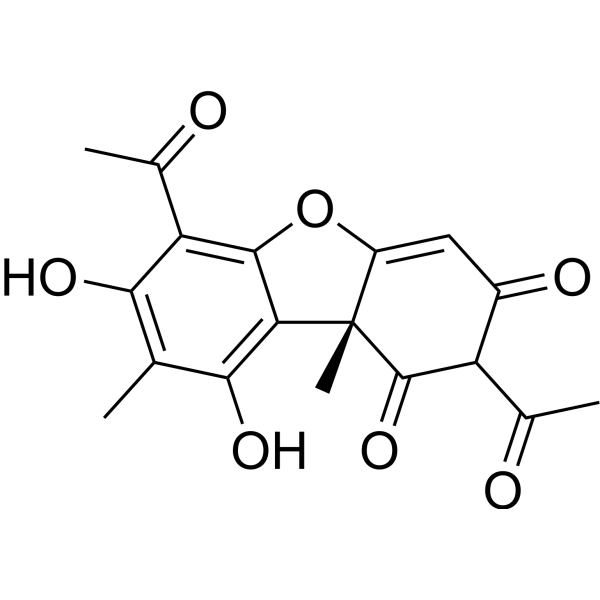
(+)-Usnic acid is isolated from isolated from lichens, binds at the ATP-binding pocket of mTOR, and inhibits mTORC1/2 activity. (+)-Usnic acid inhibits the phosphorylation of mTOR downstream effectors: Akt (Ser473), 4EBP1, S6K, induces autophay, with anti-cancer and anti-inflammatory activity. (+)-Usnic acid possesses antimicrobial activity against a number of planktonic gram-positive bacteria, including Staphylococcus aureus, Enterococcus faecalis, and Enterococcus faecium .
loading...
    loading...
1
1 Cited Publications
Cat. No.: HY-135813
CAS No.: 877950-01-1
Purity:  95.05%
Target:  

Bacterial

Research Areas:  

Infection

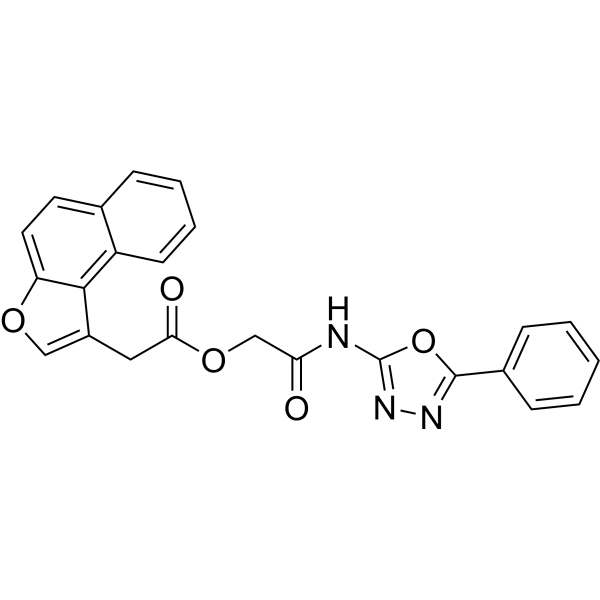
LtaS-IN-1 (compound 1771) is a potent small-molecule inhibitor of Lipoteichoic acid (LTA) synthesis in multidrug-resistant (MDR) E. faecium and by altering the cell wall morphology. LtaS-IN-1 alone inhibits Enterococcus.spp 28 strains with varying MIC values ranging from 0.5 μg/mL to 64 μg/mL. LtaS-IN-1 combination with antibiotics abolishs multidrug-resistant E. faecium growth almost completely .
loading...
    loading...
Cat. No.: HY-A0279
CAS No.: 270076-60-3
Synonyms: Pristinamycine
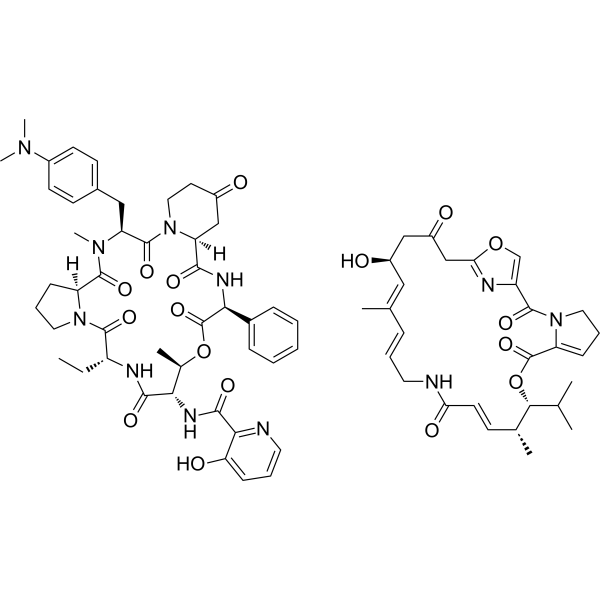
Pristinamycin, produced by Streptomyces pristinaespiralis, is an orally active streptogramin-like antibiotic consisting of two chemically unrelated components: Pristinamycin I (PI) and Pristinamycin II (PII). Pristinamycin is highly active against many antibiotic-resistant pathogens, particularly Gram-positive bacteria, including Methicillin-resistant Staphylococcus aureus (MRSA), Vancomycin-resistant S. aureus (VRSA) and Enterococcus faecium (VREF) .
loading...
    loading...
Cat. No.: HY-116863
CAS No.: 865285-47-8
Purity:  95.70%
Target:  

Bacterial

Research Areas:  

Infection

KKL-40 is a small molecule inhibitor that targets the trans-transcription process and is effective against methicillin-sensitive and -resistant Staphylococcus aureus (S. aureus) as well as other Gram-positive pathogens including vancomycin-resistant Enterococcus faecium, Bacillus subtilis, and Streptococcus pyogenes. KKL-40 synergizes with the human antimicrobial peptide LL-37 to inhibit S. aureus, but does not synergize with other antibiotics such as daptomycin, kanamycin, or erythromycin. Trans-transcription is an extreme form of recoding, and KKL-40 inhibits trans-transcription but is nontoxic to HeLa cells .
loading...
    loading...
Cat. No.: HY-14849
CAS No.: 426253-04-5
Synonyms: Razupenem; SM 216601; SMP 601
Target:  

Antibiotic Bacterial

Research Areas:  

Others

PTZ601 (SMP 601) is an antibiotic, which inhibits the gram-positive bacteria, including the Vancomycin (HY-B0671)-resistant Enterococcus faecium (VREF) and Methicillin (HY-121544)-resistant Staphylococcus aureus (MRSA). PTZ601 exhibits antimicrobial activity in infected mouse models .
loading...
    loading...
Cat. No.: HY-W436428
CAS No.: 69570-95-2
Target:  

Na+/K+ ATPase Bacterial

Research Areas:  

Infection

V-161 is the orally active inhibitor for Na +-V-ATPase with an IC50 of 144 nM. V-161 inhibits Enterococcus hirae and Vancomycin-resistant Enterococcus faecium (VRE) under alkaline condition with MIC of 4 µg/mL and 4 µg/mL. V-161 inhibits colonization of VRE in mouse small intestine .
loading...
    loading...
Cat. No.: HY-178952
Target:  

Bacterial

Research Areas:  

Infection

Anti-infective agent 12 (Compound A09) is a competitive inhibitor of type I signal peptidease (SPase I), with an IC50 of 4.475 μM and a Kd of 16.3 μM. Anti-infective agent 12 has the ability to disrupt bacterial membranes and remove biofilms. Anti-infective agent 12 exhibits potent bactericidal activity against Gram-positive bacteria, with MIC values of 4, 4, 8, and 8 μg/mL for Staphylococcus aureus, Enterococcus faecalis, Enterococcus faecium, and Streptococcus suis, respectively. Anti-infective agent 12 remains effective against multi-drug resistant strains, but has weaker activity against Gram-negative bacteria (such as Escherichia coli and Salmonella), with MIC values > 64 μg/mL. Anti-infective agent 12 has low hemolytic activity and shows significant efficacy in mouse skin infection models .
loading...
    loading...
Cat. No.: HY-163197
CAS No.: 3032932-67-2
Target:  

Bacterial

Research Areas:  

Infection

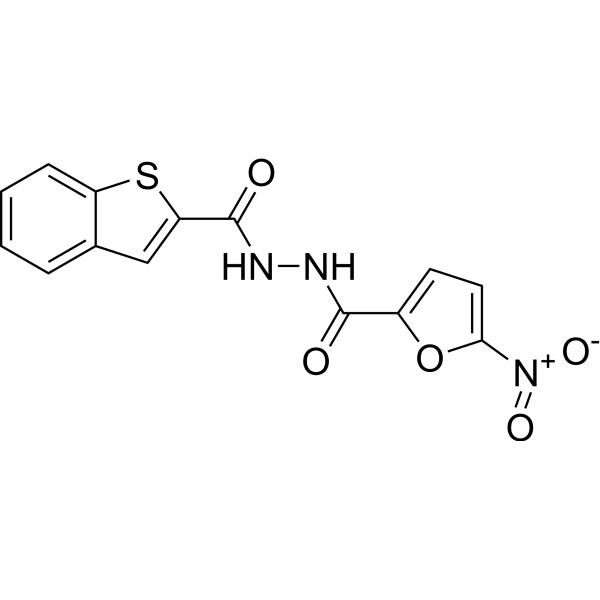
JSF-2827 is a benzothiophene with antibacterial activity against Enterococcus faecium .
loading...
    loading...
Cat. No.: HY-N14316
CAS No.: 213338-47-7
Hongoquercin B is a sesquiterpene antibiotic. Hongoquercin B is only resistant to Vancomycin-resistant Enterococcus faecium at high concentrations .
loading...
    loading...
Cat. No.: HY-178056
Research Areas:  

Infection

Carbonic anhydrase-IN-2 is an orally active carbonic anhydrase inhibitor. Carbonic anhydrase-IN-2 shows antibacterial effect against various vancomycin-resistant Enterococcus (VRE) strains. Carbonic anhydrase-IN-2 can be used for the research of infection, such as E. faecium .
loading...
    loading...
Cat. No.: HY-N0656AR
CAS No.: 7562-61-0
(+)-Usnic acid (Standard) is the analytical standard of (+)-Usnic acid. This product is intended for research and analytical applications. (+)-Usnic acid is isolated from isolated from lichens, binds at the ATP-binding pocket of mTOR, and inhibits mTORC1/2 activity. (+)-Usnic acid inhibits the phosphorylation of mTOR downstream effectors: Akt (Ser473), 4EBP1, S6K, induces autophay, with anti-cancer activity . (+)-Usnic acid possesses antimicrobial activity against a number of planktonic gram-positive bacteria, including Staphylococcus aureus, Enterococcus faecalis, and Enterococcus faecium .
loading...
    loading...
Cat. No.: HY-N16446
CAS No.: 345295-46-7
Stromemycin is a stromelysin inhibitor. Stromemycin exhibits weak antibacterial activity against Staphylococcus aureus, vancomycin-resistant Enterococcus faecium, and Bacillus subtilis when used alone. Stromemycin shows a significant increase in antibacterial efficacy when combined with Compound 5. Stromemycin does not possess a significant cell-killing effect on HCT-116 cells .
loading...
    loading...
Cat. No.: HY-141648
CAS No.: 1649473-91-5
Target:  

Bacterial

Research Areas:  

Infection

Antibacterial agent 219 (Compound 2/75c) exhibits antibacterial activity by targeting cell wall biosynthesis. Antibacterial agent 219 inhibits methicillin-resistant Staphylococcus aureus (MRSA) strains (MIC=0.5-32 µg/mL), Enterococcus faecium (MIC=2 µg/mL) and S. aureus (MIC=2 µg/mL) .
loading...
    loading...
Cat. No.: HY-N10561
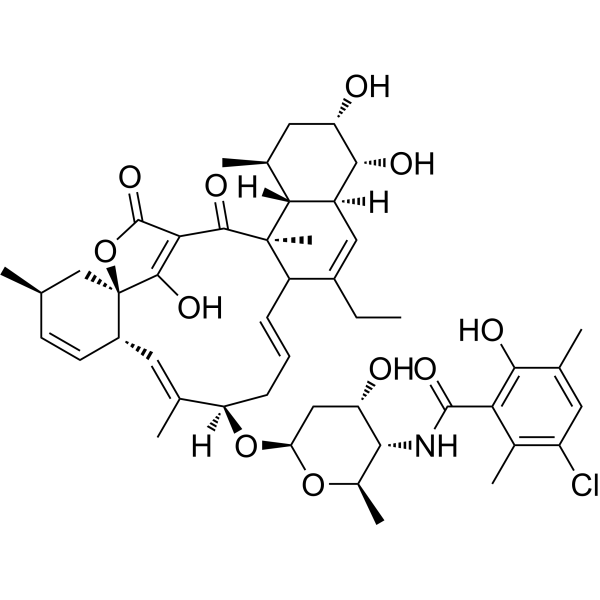
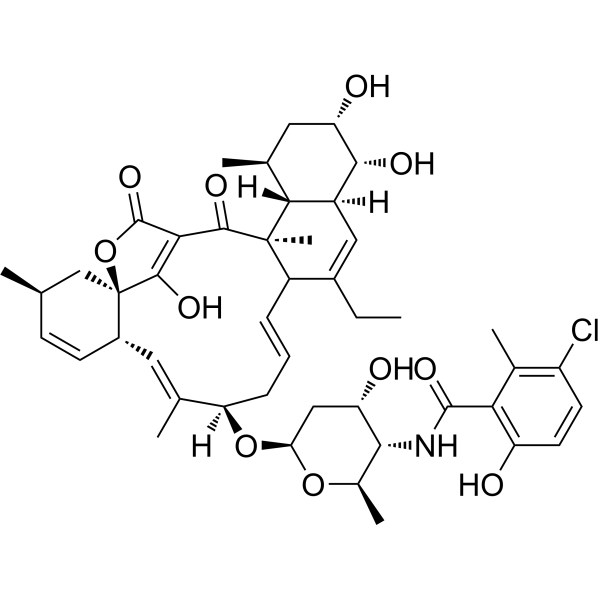
Wychimicin A is a spirotetronate polyketide, can be isolated from the rare actinomycete Actinocrispum wychmicini strain MI503-AF4. Wychimicin A shows strong antibacterial activity against methicillin-resistant Staphylococcus. aureus (IC50=0.125-0.5 μg/mL) and Enterococcus. faecalis/faecium (IC50=0.125-0.25 μg/mL) .
loading...
    loading...
Cat. No.: HY-N10560
Wychimicin C is a spirotetronate polyketide, can be isolated from the rare actinomycete Actinocrispum wychmicini strain MI503-AF4. Wychimicin C shows strong antibacterial activity against methicillin-resistant Staphylococcus. aureus (IC50=0.125-0.5 μg/mL) and Enterococcus. faecalis/faecium (IC50=0.125-0.25 μg/mL) .
loading...
    loading...
Cat. No.: HY-175795
Research Areas:  

Infection

Tyrosinase activator-1 (Compound 7A) is a Tyrosinase activator. Tyrosinase activator-1 significant antibacterial activity against gram-positive bacteria, such as MRSA, Staphylococcus aureus ATCC653 and Enterococcus faecium with MICs of 12.5-20  μM. Tyrosinase activator-1 activates tyrosinase by competitively occupying the binding site of L-DOPA on the surface of tyrosinase without interfering with the substrate binding at the active center. Tyrosinase activator-1 can be used for bacterial infections and antibiotics development research .
loading...
    loading...
Cat. No.: HY-116863R
CAS No.: 865285-47-8
Research Areas:  

Infection

KKL-40 (Standard) is the analytical standard of KKL-40 (HY-116863). This product is intended for research and analytical applications. KKL-40 is a small molecule inhibitor that targets the trans-transcription process and is effective against methicillin-sensitive and -resistant Staphylococcus aureus (S. aureus) as well as other Gram-positive pathogens including vancomycin-resistant Enterococcus faecium, Bacillus subtilis, and Streptococcus pyogenes. KKL-40 synergizes with the human antimicrobial peptide LL-37 to inhibit S. aureus, but does not synergize with other antibiotics such as daptomycin, kanamycin, or erythromycin. Trans-transcription is an extreme form of recoding, and KKL-40 inhibits trans-transcription but is nontoxic to HeLa cells .
loading...
    loading...
Cat. No.: HY-184759
CAS No.: 98-75-9
Synonyms: Propazolamide
Research Areas:  

Infection

Methyl acetazolamide (Propazolamide) is a carbonic anhydrase inhibitor with Ki values of 37.5 nM against Enterococcus faecium α-CA, 250.1 nM against Enterococcus faecium γ-CA, 235.4 nM against human CA I, and 37.2 nM against human CA II. Methyl acetazolamide can be used for the research of enterococcus infections .
loading...
    loading...
Cat. No.: HY-187563
Research Areas:  

Infection

RNP-11 is a selective COX-2 inhibitor with an IC50 of 42.85 μg/mL against human COX-2, and also acts as a bactericide and anti-inflammatory agent. RNP-11 inhibits the production of pro-inflammatory cytokines (IL-6, TNF-α, IL-1β, disrupts bacterial cell membranes and induces bacterial cell death. RNP-11 exhibits activity against strains of Staphylococcus and Enterococcus, including Methicillin (HY-121544)-resistant Staphylococcus aureus and Vancomycin (HY-B0671)-resistant Enterococcus faecium. RNP-11 reduces the load of Staphylococcus aureus, exerting dual effects of pathogen clearance and inflammatory response alleviation in a mouse skin infection model,. RNP-11 can be used in research related to infections caused by Staphylococcus, Staphylococcus aureus and Enterococcus faecium .
loading...
    loading...
Cat. No.: HY-187554
CAS No.: 1091682-50-6
Target:  

Antibiotic Bacterial

Research Areas:  

Infection

IDP-73152 is an orally active bacterial Peptide deformylase inhibitor and Antibiotic. IDP-73152 exhibits activity against Gram-positive bacteria. IDP-73152 can be used in the research of infections caused by Streptococcus pneumoniae, Enterococcus faecium and Staphylococcus aureus .
loading...
    loading...

