17 Results for "

Genomic instability

" in MedChemExpress (MCE) Product Catalog:
Products (17)

17 Results for "Genomic instability" in MCE Product Catalog:

36
36 Publications Verification
Cat. No.: HY-15176B
CAS No.: 1472611-44-1
Purity:  99.54%
Synonyms: RR82 TFA
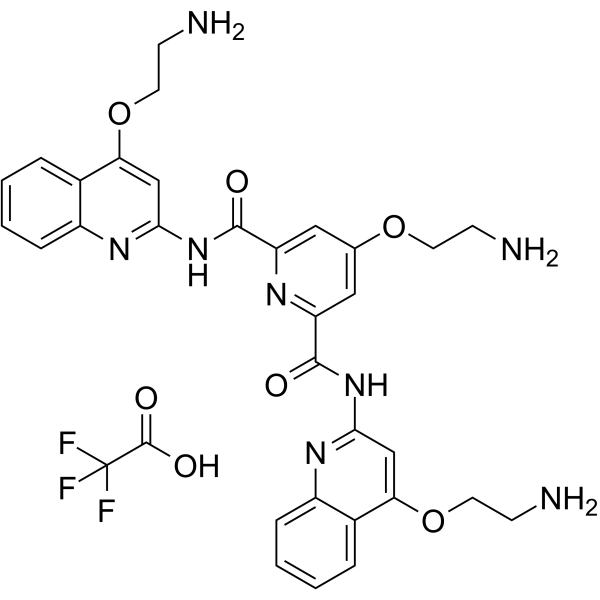
Pyridostatin (RR82) TFA is a G-quadruplex (G4) inducer/stabilizer with a Kd of 490 nM. Pyridostatin TFA also acts as an inhibitor of Zika virus (ZIKV) NS2B-NS3 protease, with an IC50 of 11.0 μM. Pyridostatin TFA interacts with G-quadruplex structures, regulates the expression of SRC and SUB1, and induces replication- and transcription-dependent DNA damage, growth arrest, and genomic instability. Pyridostatin TFA exhibits antiproliferative and antiviral activities. Pyridostatin TFA can be used in studies related to breast cancer, cervical cancer, and Zika virus infection .
loading...
    loading...
36
36 Publications Verification
Cat. No.: HY-15176C
CAS No.: 2517456-88-9
Synonyms: RR82 trihydrochloride
Pyridostatin (RR82) trihydrochloride is a G-quadruplex (G4) inducer/stabilizer with a Kd of 490 nM. Pyridostatin trihydrochloride also acts as an inhibitor of Zika virus (ZIKV) NS2B-NS3 protease, with an IC50 of 11.0 μM. Pyridostatin trihydrochloride interacts with G-quadruplex structures, regulates the expression of SRC and SUB1, and induces replication- and transcription-dependent DNA damage, growth arrest, and genomic instability. Pyridostatin trihydrochloride exhibits antiproliferative and antiviral activities. Pyridostatin trihydrochloride can be used in studies related to breast cancer, cervical cancer, and Zika virus infection .
loading...
    loading...
14
14 Cited Publications
Cat. No.: HY-B0425
CAS No.: 303-81-1
Synonyms: Albamycin; Cathomycin
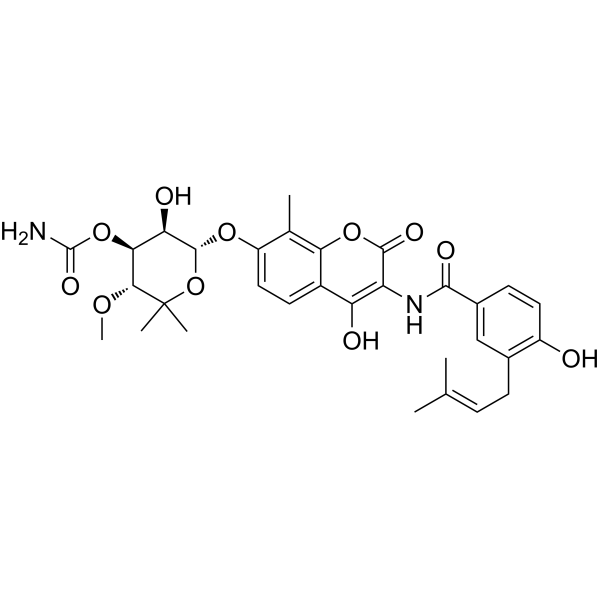
Novobiocin (Albamycin; Cathomycin) is an orally active antibiotic and Hsp-90 antagonist that also inhibits the Polθ helicase/ATPase domain with IC50 values of 24 μM and 15-17 μM, respectively. Novobiocin binds to Hsp90, GyrB, and POLθ, inhibiting their ATPase activity and ssDNA binding. Novobiocin inhibits molecular chaperone function and DNA repair, and induces apoptosis and genomic instability. Novobiocin exhibits bactericidal and antiparasitic activities. Novobiocin inhibits tumor growth in vivo. Novobiocin is used for research on equine piroplasmosis, ovarian cancer, breast cancer, anthrax, and melioidosis .
loading...
    loading...
14
14 Cited Publications
Cat. No.: HY-B0425A
CAS No.: 1476-53-5
Synonyms: Albamycin sodium; Cathomycin sodium
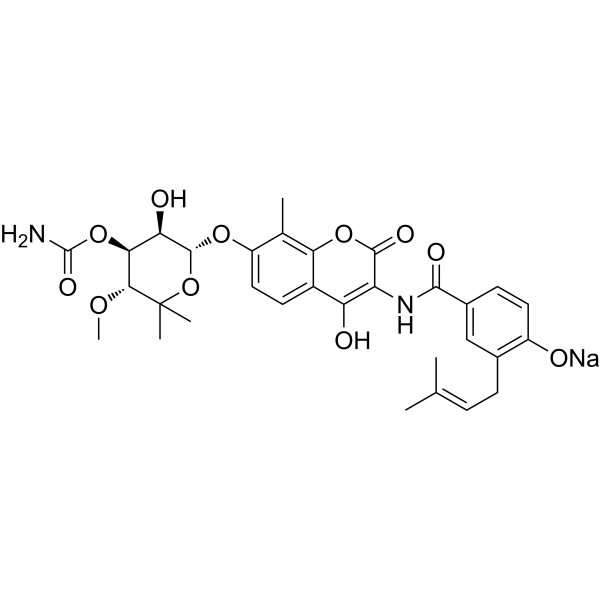
Novobiocin (Albamycin; Cathomycin) sodium is an orally active antibiotic and Hsp-90 antagonist that also inhibits the Polθ helicase/ATPase domain with IC50 values of 24 μM and 15-17 μM, respectively. Novobiocin sodium binds to Hsp90, GyrB, and POLθ, inhibiting their ATPase activity and ssDNA binding. Novobiocin sodium inhibits molecular chaperone function and DNA repair, and induces apoptosis and genomic instability. Novobiocin sodium exhibits bactericidal and antiparasitic activities. Novobiocin sodium inhibits tumor growth in vivo. Novobiocin sodium is used for research on equine piroplasmosis, ovarian cancer, breast cancer, anthrax, and melioidosis .
loading...
    loading...
13
13 Cited Publications
Cat. No.: HY-109566
CAS No.: 2089288-03-7
Purity:  99.22%
Synonyms: AZD1390
Research Areas:  

Cancer

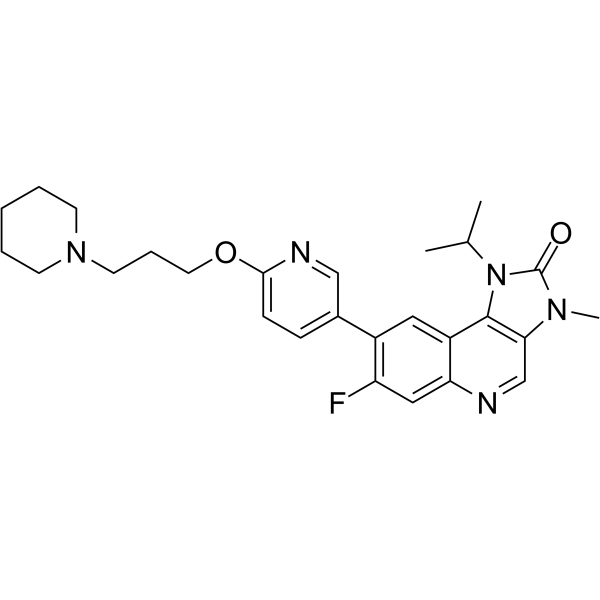
Elrelesertib (AZD1390) is an orally active, brain-penetrant ATM kinase inhibitor with IC50 values of 0.78 nM. Elrelesertib blocks ATM-dependent DNA damage response, inhibits ATM autophosphorylation and downstream Chk2, Rad50 phosphorylation, and accumulates at DNA breaks. Elrelesertib acts as a radiosensitizer, induces apoptosis, genomic instability, G2-M cell cycle arrest, ROS elevation, and mitochondrial membrane potential alteration. Elrelesertib has low efflux liability against P-gp and BCRP. Elrelesertib can be used for the research of central nervous system malignancies, glioblastoma multiforme, glioma, lung cancer brain metastases, and breast cancer .
loading...
    loading...
Cat. No.: HY-170430
CAS No.: 3055558-98-7
Research Areas:  

Cancer

HGC652 is a molecular glue degrader targeting TRIM21 with a TRIM21-dependent nuclear membrane disruption effect. HGC652 binds to the PRY-SPRY domain of TRIM21 with high affinity (Ka=0.061 μM), mediates the interaction between TRIM21 and NUP98, and redirects E3 ligase activity. By triggering the polyubiquitination and proteasomal degradation of nucleoporins (such as NUP155 and GLE1), HGC652 disrupts nuclear membrane integrity, alters nuclear morphology, induces genomic instability, and thereby induces cancer cell death .
loading...
    loading...
Cat. No.: HY-168555
CAS No.: 3053716-98-3
Target:  

PROTACs CDK Apoptosis Akt mTOR

Research Areas:  

Cancer

YJ1206 is an orally active selective CDK12/CDK13 PROTAC degrader. YJ1206 induces DNA damage and genomic instability, activates the AKT pathway, and triggers apoptosis. YJ1206 reduces tumor cell viability, inhibits tumor growth, and attenuates tumor cell dissemination. YJ1206 is applicable to research related to prostate cancer and high-grade serous tubo-ovarian cancer .
loading...
    loading...
Cat. No.: HY-112817
CAS No.: 139307-94-1
Synonyms: 8-Oxo-Deoxyguanosine triphosphate
8-Oxo-dGTP (8-Oxo-Deoxyguanosine triphosphate) is an oxidized guanine nucleotide formed by ROS-mediated oxidative modification of dGTP, and it also serves as a key substrate for 8-oxo-dGTP pyrophosphohydrolases (such as hMTH1 and E. coli MutT). 8-Oxo-dGTP acts as a DNA mutagen, inserts into nascent DNA and pairs with adenine and cytosine, inducing A:T to C:G transversion mutations. Furthermore, 8-Oxo-dGTP causes oxidative DNA base modification, strand breakage and S-phase arrest, and ultimately triggers AIF-mediated apoptosis and promotes spontaneous carcinogenesis in mth1-deficient mice. Accumulation of 8-Oxo-dGTP in cells induces genomic instability, but it exhibits a tumor-suppressive effect that reduces tumor incidence in mouse models instead. 8-Oxo-dGTP is widely used in studies related to spontaneous carcinogenesis, Parkinson's disease, Alzheimer's disease, heart failure and tumor mechanisms .
loading...
    loading...
Cat. No.: HY-P991517
BI-836858 is a fully human anti-CD33 monoclonal antibody. BI-836858 reduces CD33+ cells via antibody-dependent cellular cytotoxicity (ADCC), blocks downstream signaling of S100A9/CD33, decreases the secretion of immunosuppressive cytokines and reactive oxygen species-induced genomic instability, and restores bone marrow hematopoietic function. BI-836858 is applicable to the research of myelodysplastic syndrome (MDS) and AML .
loading...
    loading...
Cat. No.: HY-P11334
CAS No.: 850131-23-6
Cyanostatin B, a cyanobacterial lipopeptide, is a leucine aminopeptidase M (LAP) inhibitor (IC50 = 12 ng/mL). Cyanostatin B is a weak inhibitor of protein phosphatase (PP2A) and also exhibits weak inhibitory activity against angiotensin-converting enzyme (ACE), with an IC50 value of 130 μg/mL. Cyanostatin B demonstrates both cytotoxic and genotoxic effects on human hepatocytes, although non-toxic to Artemia salina. Cyanostatin B inhibits the proliferation of HepG2 cells, induces DNA single-strand breaks, and causes genomic instability. .
loading...
    loading...
Cat. No.: HY-168555A
Target:  

PROTACs CDK Apoptosis Akt mTOR

Research Areas:  

Cancer

YJ1206 TFA is an orally active selective CDK12/CDK13 PROTAC degrader. YJ1206 TFA induces DNA damage and genomic instability, activates the AKT pathway, and triggers apoptosis. YJ1206 TFA reduces tumor cell viability, inhibits tumor growth, and attenuates tumor cell dissemination. YJ1206 TFA is applicable to research related to prostate cancer and high-grade serous tubo-ovarian cancer .
loading...
    loading...
Cat. No.: HY-184293
Target:  

PROTACs ATM/ATR Apoptosis

Research Areas:  

Cancer

PROTAC ATR degrader-4 is a PROTAC-based ATR kinase degrader, with a DC50 of 6.18 μM and a Dmax of 71.42% in LoVo cells. PROTAC ATR degrader-4 downregulates ATR protein expression, inducing nuclear envelope rupture, genomic instability, DNA damage and apoptosis. PROTAC ATR degrader-4 exhibits anti-tumor activity in xenograft tumor mouse models and can be used for the research of atm-deficient cancers .
loading...
    loading...
Cat. No.: HY-181840
CAS No.: 1846587-13-0
Target:  

Endonuclease

Research Areas:  

Cancer

MU262 is a MUS81 inhibitor with an IC50 value of 0.87 μM. MU262 directly inhibits the catalytic activity of MUS81 without interfering with DNA binding, induces genomic instability in tumor cells, and specifically inhibits the HR/BIR repair pathway. The combination of MU262 with Cisplatin (HY-17394) significantly enhances the chemotherapeutic killing effect. MU262 serves as a chemical biology tool for studying MUS81 function, and also acts as a lead compound for the development of anticancer therapies that exploit DNA repair defects in cancer cells .
loading...
    loading...
Cat. No.: HY-109566R
CAS No.: 2089288-03-7
Synonyms: AZD1390 (Standard)
Elrelesertib (Standard) (AZD1390 (Standard)) is the analytical standard of Elrelesertib (AZD1390) (HY-109566). This product is intended for research and analytical applications. Elrelesertib (AZD1390) is an orally active, brain-penetrant ATM kinase inhibitor with IC50 values of 0.78 nM. Elrelesertib blocks ATM-dependent DNA damage response, inhibits ATM autophosphorylation and downstream Chk2, Rad50 phosphorylation, and accumulates at DNA breaks. Elrelesertib acts as a radiosensitizer, induces apoptosis, genomic instability, G2-M cell cycle arrest, ROS elevation, and mitochondrial membrane potential alteration. Elrelesertib has low efflux liability against P-gp and BCRP. Elrelesertib can be used for the research of central nervous system malignancies, glioblastoma multiforme, glioma, lung cancer brain metastases, and breast cancer .
loading...
    loading...
Cat. No.: HY-182037
Research Areas:  

Cancer

Multi-target kinase-IN-9 is a multi-target enzyme inhibitor with antiproliferative and antiangiogenic activities, and exhibits remarkable selectivity against hepatocellular carcinoma cells. By broadly binding to the active sites or ATP-binding regions of multiple key enzymes including DNA polymerase β, Pyruvate Kinase M2 (PKM2), Multi-target kinase-IN-9 comprehensively disrupts DNA repair and replication, glycolysis, chromatin dynamics and transcriptional programs, and blocks the self-renewal of cancer stem cells. Multi-target kinase-IN-9 induces genomic instability, lysosomal dysfunction and autophagic flux impairment, thereby triggering tumor cell death, effectively inhibiting tumor proliferation, invasion, metastasis and angiogenesis, and significantly reducing tumor volume in xenograft models. Multi-target kinase-IN-9 is applicable to hepatocellular carcinoma-related research .
loading...
    loading...
Cat. No.: HY-L034
7,843 compounds

Aging is a complex biological process characterized by functional decline of tissues and organs, structural degeneration, and reduced adaptability and resistance, all of which contribute to an increase in morbidity and mortality caused by multiple chronic diseases, such as Alzheimer's disease, cancer, and diabetes. Many theories, which fall into two main categories: programmed and error theories, have been proposed to explain the process of aging, but neither of them appears to be fully satisfactory. The programmed theories imply that aging relies on specific gene regulation, and the error theories emphasize the internal and environmental damages accumulated to living organisms. The damage theories proposed the nine hallmarks that were generally considered to contribute to the aging process: genomic instability, telomere attrition, epigenetic alterations, loss of proteostasis, deregulated nutrient-sensing, mitochondrial dysfunction, cellular senescence, stem cell exhaustion, and altered intercellular communication.

MCE Anti-Aging Compound Library contains 7,843 compounds, mainly targeting Sirtuin, mTOR, IGF-1R, AMPK, p53, Telomerase, Mitophagy, Mitochondrial Metabolism, COX, Cytochrome P450, Oxidase, etc. This library is a useful tool for anti-aging research.

Cat. No.: HY-112817A
Synonyms: 8-Oxo-Deoxyguanosine triphosphate trisodium
Target:  

Apoptosis

Research Areas:  

Others

8-Oxo-dGTP (8-Oxo-Deoxyguanosine triphosphate) trisodium solution (100mM) is an oxidized guanine nucleotide formed by ROS-mediated oxidative modification of dGTP, and it also serves as a key substrate for 8-oxo-dGTP pyrophosphohydrolases (such as hMTH1 and E. coli MutT). 8-Oxo-dGTP trisodium solution (100mM) acts as a DNA mutagen, inserts into nascent DNA and pairs with adenine and cytosine, inducing A:T to C:G transversion mutations. Furthermore, 8-Oxo-dGTP trisodium solution (100mM) causes oxidative DNA base modification, strand breakage and S-phase arrest, and ultimately triggers AIF-mediated apoptosis and promotes spontaneous carcinogenesis in mth1-deficient mice. Accumulation of 8-Oxo-dGTP trisodium solution (100mM) in cells induces genomic instability, but it exhibits a tumor-suppressive effect that reduces tumor incidence in mouse models instead. 8-Oxo-dGTP trisodium solution (100mM) is widely used in studies related to spontaneous carcinogenesis, Parkinson's disease, Alzheimer's disease, heart failure and tumor mechanisms .
loading...
    loading...
  • 1

