6 Results for "

HAC

" in MedChemExpress (MCE) Product Catalog:
Products (6)

6 Results for "HAC" in MCE Product Catalog:

2
2 Cited Publications
Cat. No.: HY-141866
CAS No.: 2415225-30-6
Purity:  99.21%
Target:  

Ceramidase

Research Areas:  

Neurological Disease

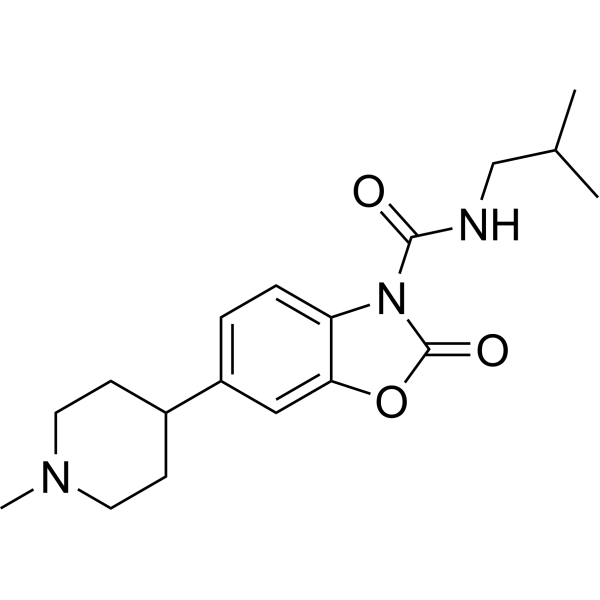
Acid Ceramidase-IN-1 is orally active and blood-brain barrier penetrant acid ceramidase (AC, ASAH-1) inhibitor (hAC IC50=0.166 μM). Acid Ceramidase-IN-1 reduces AC activity, accumulates ceramide species (Cer (d18:0/16:0), Cer (d18:1/16:0)), and decreases sphingosine levels. Acid Ceramidase-IN-1 can be used for the study of severe neurological lysosomal storage diseases (LSDs) such as Gaucher’s disease (GD) and Krabbe’s disease (KD) .
loading...
    loading...
Cat. No.: HY-177136
CAS No.: 3009136-86-8
ACLY-IN-2 (Compound 7) has inhibitory effect against human ATP citrate lyase (hACLY), with an IC50 of less than 1 nM. ACLY-IN-2 can be studied in research on liver-related diseases, type-2 diabetes, autoimmunity, and cancer .
loading...
    loading...
Cat. No.: HY-P4827
CAS No.: 521986-14-1
Target:  

PTHR

Research Areas:  

Metabolic Disease

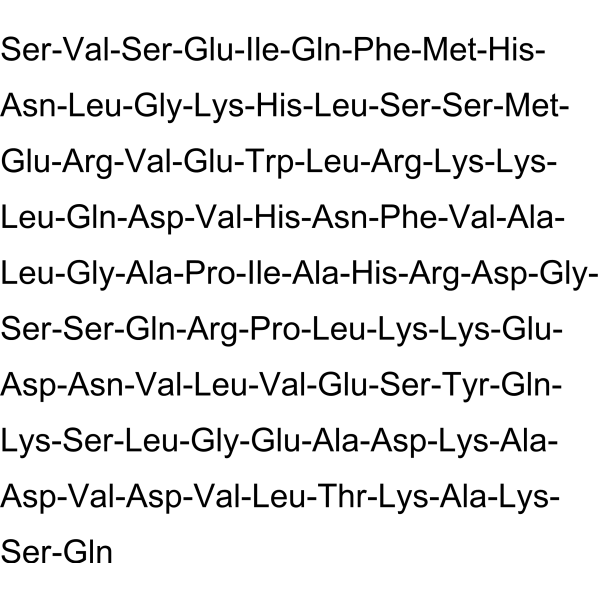
pTH (1-84) dog is a biologically active full-length canine parathyroid hormone, as well as an agonist of PTHR. pTH (1-84) dog can be detected by the "intact" PTH (W-PTH) assay, thus effectively distinguishing inactive C-terminal fragments. In terms of metabolic regulation, it rapidly and persistently stimulates hepatic glucose release, hepatic alanine uptake, and alanine-based gluconeogenesis in conscious fasted dogs, and causes a secondary increase in circulating canine insulin levels due to enhanced glucose release. However, high doses of pTH (1-84) (dog) may induce adverse reactions such as hypercalcemia in dogs. Based on the above characteristics, this hormone can be widely used in studies related to canine hyperadrenocorticism (HAC) .
loading...
    loading...
Cat. No.: HY-117465
CAS No.: 1331959-78-4
Target:  

Apoptosis

Research Areas:  

Cancer

HAC-Y6 has anticancer activity via cell cycle arrest. HAC-Y6 induces apoptosis in COLO 205 cells with an IC50 of 0.52 µM .
loading...
    loading...
Cat. No.: HY-186084
CAS No.: 3098298-20-2
Target:  

ACSL Family

Research Areas:  

Metabolic Disease Cancer

ACSL5-IN-4 (the 9th compound in Table 115) is an ACS5 inhibitor, with its IC50 value for hACS5 being less than 100 nM. ACSL5-IN-4 can be used for research in digestive and oncological diseases .
loading...
    loading...
Cat. No.: HY-P706236
Purity:  ≥ 90%, as determined by reducing SDS-PAGE.
Synonyms: TRIM3; BERP; RNF22; RNF97; Tripartite motif-containing protein 3; EC 2.3.2.27; Brain-expressed RING finger protein; RING finger protein 22; RING finger protein 97; Alternative Protein TRIM3; Brain Expressed Ring Finger; Tripartite Motif Containing 3; Tripartite Motif Protein TRIM3; HAC1
Species:  
Human
Source:  
E. coli
loading...
    loading...

