

18 Results for "

Human genome

" in MedChemExpress (MCE) Product Catalog:
Products (18)

18 Results for "Human genome" in MCE Product Catalog:

2
2 Cited Publications
Cat. No.: HY-19627A
CAS No.: 1345728-04-2
Synonyms: S-297995 tosylate
Target:  

Opioid Receptor

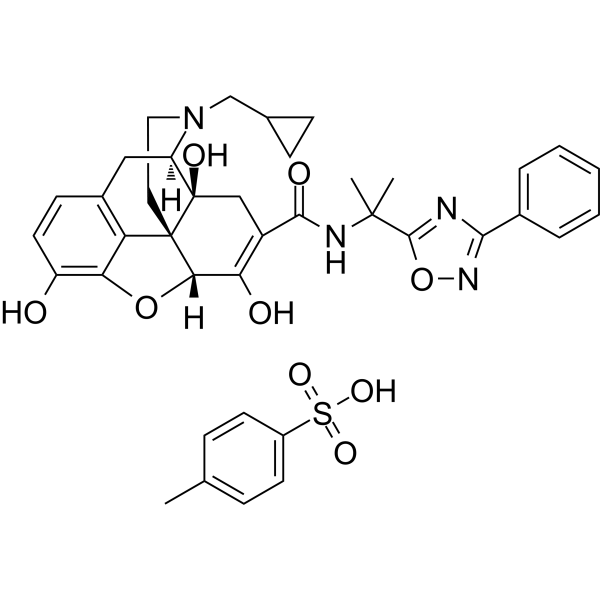
Naldemedine (S-297995) tosylate is an orally active μ-opioid receptor antagonist (PAMORA) . Naldemedine tosylate shows potent binding affinities (Ki=0.34, 0.43, 0.94 nM, respectively) and antagonist activities (IC50=25.57, 7.09, 16.1 nM, respectively) for recombinant human μ-, δ-, and κ- opioid receptors . Naldemedine can be used in opioid-induced constipation (OIC) research . Naldemedine tosylate is predicted to bind to 3CL pro encoded by SARS-CoV2 genome .
loading...
    loading...
1
1 Cited Publications
Cat. No.: HY-N0620
CAS No.: 102841-43-0
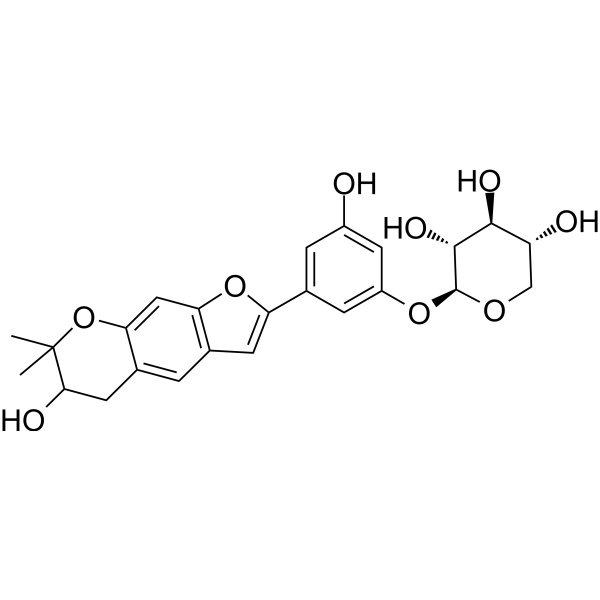
Mulberroside C is one of the main bioactive components in white mulberry (Morus alba L.). Mulberroside C exhibits antiplatelet, antiviral and neutrophil-regulating activities, and binds to EV-A71 VP1 with a Kd value of 1.289 nM. Mulberroside C reduces the phosphorylation level of ERK, promotes the phosphorylation of IP3RI at the Ser 1756 site, and decreases calcium influx and calcium mobilization. Mulberroside C inhibits the expression of P-selectin (P-selectin). Mulberroside C upregulates the cyclic nucleotide signaling pathway in human platelets. Mulberroside C binds to IL-23R, upregulates the expression of G-CSF, GM-CSF and RASGRP1, and activates the RAS/ERK signaling pathway. Mulberroside C promotes neutrophil maturation, accelerates the recovery of leukopenia, and enhances the antibacterial activity of neutrophils. Mulberroside C inhibits the replication of hepatitis C virus in replicon cells. Mulberroside C prevents the uncoating and genome release of EV-A71, and inhibits the synthesis of viral proteins and RNA. Mulberroside C can be used in studies related to thrombosis-mediated cardiovascular diseases, chemotherapy- and radiotherapy-induced leukopenia, hepatitis C virus infection, and hand, foot and mouth disease .
loading...
    loading...
Cat. No.: HY-P5307
Synonyms: INF7-A5K-TAT
Research Areas:  

Others

Peptide A5K (INF7-A5K-TAT) is an amphiphilic peptide derived from the HA2-TAT fusion scaffold. Peptide A5K can non-covalently bind to CRISPR ribonucleoproteins and efficiently deliver them to cells, such as primary human T cells, B cells, and NK cells. Peptide A5K enables low-toxicity, precise, and multiplex genome editing, holding great application potential in the field of cell therapy .
loading...
    loading...
Cat. No.: HY-E70098
Target:  

Others

Research Areas:  

Cancer

RNase H2 is the predominant source of RNase H activity in mammalian and human cells. RNase H2 protects genome integrity. RNase H2 has been associated with ribonucleotide removal from genomic DNA in yeast and mouse, where it is required for embryonic development .
loading...
    loading...
Cat. No.: HY-19627
CAS No.: 916072-89-4
Synonyms: S-297995
Target:  

Opioid Receptor

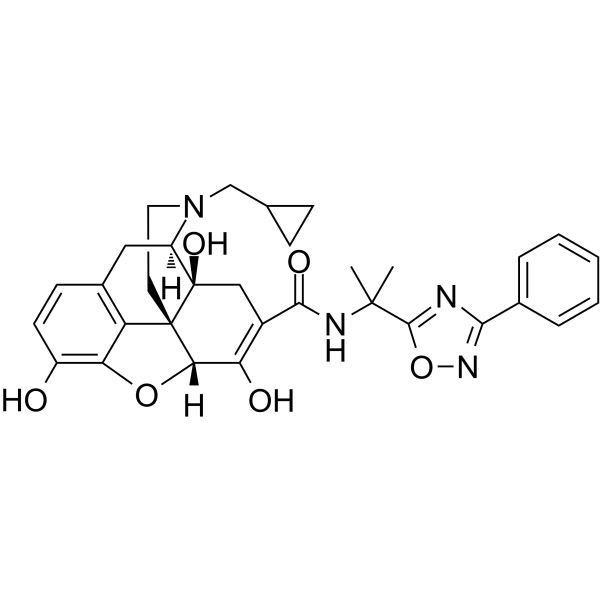
Naldemedine (S-297995) is an orally active μ-opioid receptor antagonist (PAMORA) . Naldemedine shows potent binding affinities (Ki=0.34, 0.43, 0.94 nM, respectively) and antagonist activities (IC50=25.57, 7.09, 16.1 nM, respectively) for recombinant human μ-, δ-, and κ- opioid receptors . Naldemedine can be used in opioid-induced constipation (OIC) research . Naldemedine is predicted to bind to 3CL pro encoded by SARS-CoV2 genome .
loading...
    loading...
Cat. No.: HY-P11000
Research Areas:  

Others

INF7TAT is an amphipathic cell-penetrating peptide that mediates intracellular delivery of CRISPR ribonucleoproteins. INF7TAT achieves endosomal escape via the INF7 fragment and cell binding via the TAT fragment. It enables intracellular delivery into primary human T cells and hematopoietic stem and progenitor cells, facilitating gene knockout and AAV-mediated homology-directed repair. INF7TAT can be used for genome editing-related research .
loading...
    loading...
Cat. No.: HY-P5307A
Synonyms: INF7-A5K-TAT acetate
Research Areas:  

Others

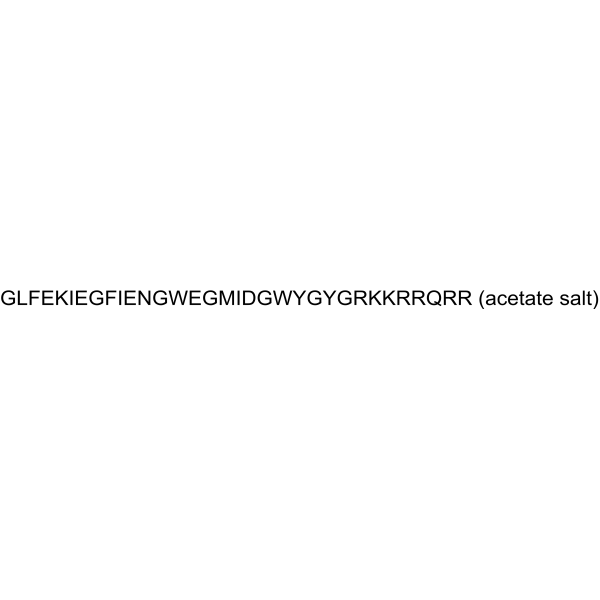
Peptide A5K (INF7-A5K-TAT) acetate is an amphiphilic peptide derived from the HA2-TAT fusion scaffold. Peptide A5K acetate can non-covalently bind to CRISPR ribonucleoproteins and efficiently deliver them to cells, such as primary human T cells, B cells, and NK cells. Peptide A5K acetate enables low-toxicity, precise, and multiplex genome editing, holding great application potential in the field of cell therapy .
loading...
    loading...
Cat. No.: HY-174252
CAS No.: 3016396-78-1
Target:  

DNA/RNA Synthesis HSV

Research Areas:  

Infection

HSV-1/HSV-2-IN-3 inhibits the herpes-simplex-virus (HSV) helicase-primase complex, blocking the coordinated DNA-unwinding and primer-synthesis steps required for viral genome replication. HSV-1/HSV-2-IN-3 exhibits an EC50 of 7.0 nM against HSV-2 in a gD-immunofluorescence cell assay containing 2 % FBS and 57.5 nM when 10 % human serum is present. HSV-1/HSV-2-IN-3 achieves an EC50 of 1.1 nM in a qPCR replication assay. HSV-1/HSV-2-IN-3 shows strong selectivity over human carbonic-anhydrase off-targets (IC50 ≈ 2.9 µM for hCA II and > 35 µM for hCA I). HSV-1/HSV-2-IN-3 can be studied in anti-HSV research .
loading...
    loading...
Cat. No.: HY-120106
CAS No.: 1628784-50-8
Target:  

HDAC

Research Areas:  

Others

BG14 is a chemical optical modulation of epigenetic regulation of transcription (COMET) probe. BG14 enables high-resolution optical control of epigenetic mechanisms using visible light and can photochromically inhibit human histone deacetylases (HDACs). BG14 can be used to study the dynamic regulation of the human genome .
loading...
    loading...
Cat. No.: HY-P701920
Purity:  ≥ 90%, as determined by reducing SDS-PAGE.
Synonyms: genome polyprotein
Species:  
Virus
Source:  
E. coli
loading...
    loading...
Cat. No.: HY-P701921
Purity:  ≥ 90%, as determined by reducing SDS-PAGE.
Synonyms: genome polyprotein
Species:  
Virus
Source:  
E. coli
loading...
    loading...
Cat. No.: HY-P11000A
Research Areas:  

Others

INF7TAT acetate is an amphipathic cell-penetrating peptide that mediates intracellular delivery of CRISPR ribonucleoproteins. INF7TAT acetate achieves endosomal escape via the INF7 fragment and cell binding via the TAT fragment. It enables intracellular delivery into primary human T cells and hematopoietic stem and progenitor cells, facilitating gene knockout and AAV-mediated homology-directed repair. INF7TAT acetate can be used for genome editing-related research .
loading...
    loading...
Cat. No.: HY-189387
Target:  

SARS-CoV PIKfyve

Research Areas:  

Infection

PIKfyve-IN-5 is a PIKfyve inhibitor (IC50 = 32 nM) with selective antiviral activity. PIKfyve-IN-5 inhibits PIKfyve and blocks the release of the viral genome from endosomes into the cytosol by sequestering viral particles within swollen spherical vacuoles. PIKfyve-IN-5 exhibits antiviral activity against SARS-CoV-2 in human lung epithelial cells. PIKfyve-IN-5 can be used for research on SARS-CoV-2 infection .
loading...
    loading...
Cat. No.: HY-L030
760 compounds

The composition of endogenous metabolite compounds is affected by the upstream influence of the proteome and genome as well as environmental factors, lifestyle factors, medication, and underlying disease. Therefore, metabolites have been described as proximal reporters of disease because their abundances in biological specimens are often directly related to pathogenic mechanisms. In more recent years, metabolomics approach has been adopted or suggested to be used in various research areas including drug discovery, neurosciences, agriculture, food and nutrition, and environmental sciences.

MCE owns a unique collection of 760 human endogenous metabolites, all of which are derived from human issues. This library is a powerful tool for metabonomics research and metabolism-related drug discovery.

Cat. No.: HY-L006
3,545 compounds

GPCRs are a large family of cell surface receptors that respond to a variety of external signals. Binding of a signaling molecule to a GPCR results in G protein activation, which in turn triggers the production of any number of second messengers. GPCRs play an important role in the human body, and increased understanding of these receptors has greatly affected modern medicine. In fact, researchers estimate that between one-third to one-half of all approved drugs act by binding to GPCRs. GPCRs are a large group of drug targets in drug discovery.

MCE provides a unique collection of 3,545 small molecules targeting GPCRs that can be used in the screening for various GPCRs-related research and drug development projects.

Cat. No.: HY-L149
8,052 compounds

A membrane protein is a protein molecule that is attached to or associated with the membrane of a cell or an organelle. Membrane proteins can be classified into two groups based on how the protein is associated with the membrane: integral membrane proteins and peripheral membrane proteins. In humans, about 30% genome encodes membrane proteins. Membrane proteins perform a variety of functions vital to the survival of organisms, for example, signal transduction, molecules or ion transportation, enzymatic catalysis, and intercellular communication. Membrane proteins also play important roles in drug discovery. As reported, more than 60% of current drug targets are membrane proteins.

MCE supplies a unique collection of 8,052 compounds targeting a variety of membrane proteins. MCE Membrane Protein-targeted Compound Library can be used for membrane protein-focused screening and drug discovery.

Cat. No.: HY-L230
331 compounds

Kinases are enzymes that catalyze the addition of phosphate groups to substrate molecules, a process known as phosphorylation. Protein phosphorylation serves as a critical regulatory mechanism for numerous cellular processes, including cell division, metabolism, and signal transduction. The human genome encodes over 500 kinases, which collectively regulate approximately 50% of cellular functions. Due to their pivotal roles, kinases represent one of the most important target classes in drug development.

Kinase inhibitors can selectively block the activity of disease-associated kinases, making them valuable therapeutics for conditions such as cancer and inflammatory diseases. FDA-approved kinase inhibitors have undergone extensive preclinical and clinical studies, demonstrating high bioactivity, favorable safety profiles, and good bioavailability, rendering them suitable for investigating new therapeutic indications.

Cat. No.: HY-L009
4,033 compounds

Kinase is an enzyme that adds phosphate groups to other molecules. This process is known as phosphorylation. Protein phosphorylation is a key aspect in the regulation of a large number of cellular processes including cellular division, metabolism, signal transduction, and so on. There are over 500 kinases encoded by the human genome and it has been estimated that kinases regulate approximately 50% of cellular functions. Kinases are a large group of drug targets in drug discovery. Kinase inhibitors are an important class of drugs that block certain enzymes involved in diseases such as cancer and inflammatory disorders.

Kinase inhibitor library designed by MCE contains 4,033 kinase inhibitors and regulators mainly targeting protein kinases (VEGFR, EGFR, BTK, CDK, Akt, etc.), lipid kinases (PI3K, PI4K, SK, etc.) and carbohydrate kinases (Hexokinase), and is a useful tool for kinase drug discovery and related research.

  • 1

