24 Results for "

KDR cells

" in MedChemExpress (MCE) Product Catalog:
Products (24)

24 Results for "KDR cells" in MCE Product Catalog:

6
6 Publications Verification
Cat. No.: HY-151361
CAS No.: 2417674-27-0
Purity:  98.00%
Target:  

AMPK

Research Areas:  

Cancer

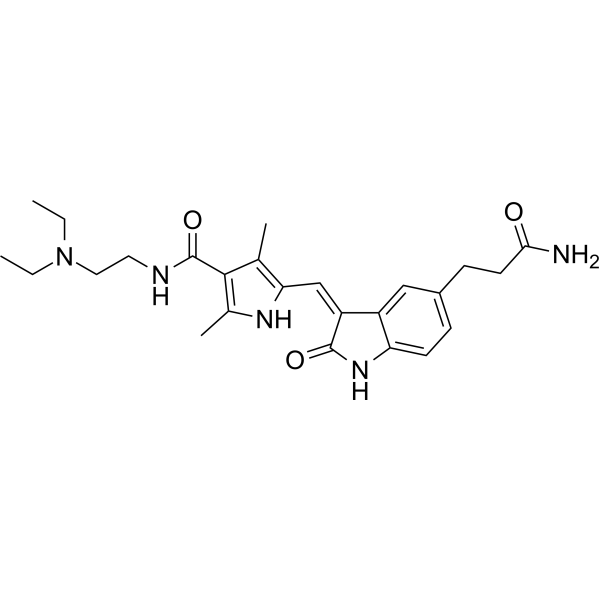
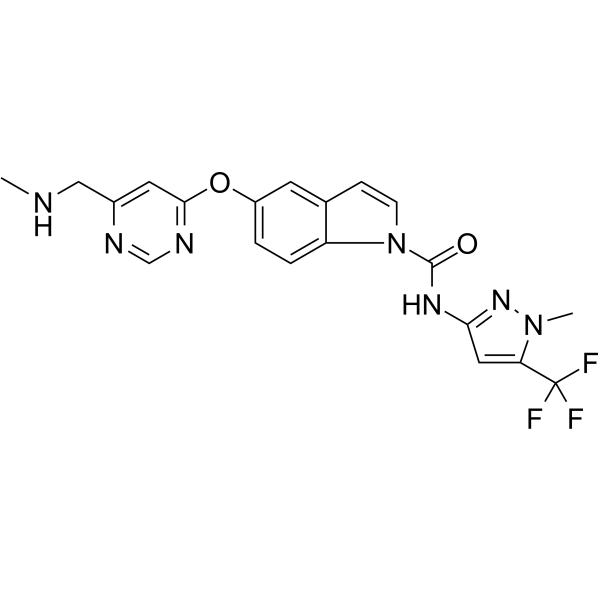
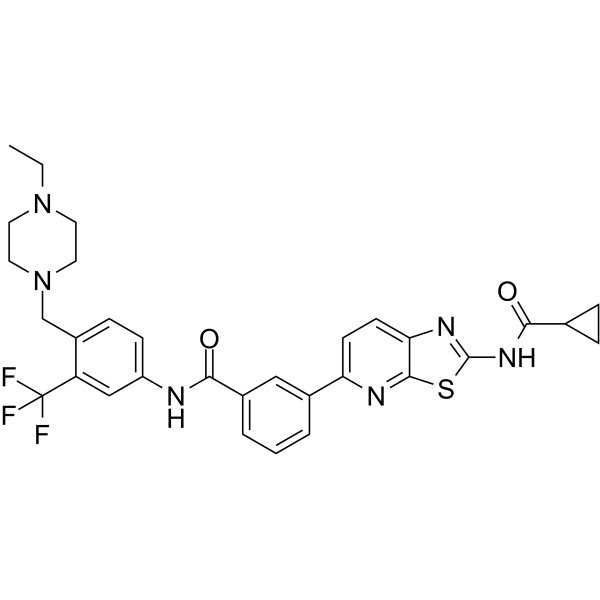
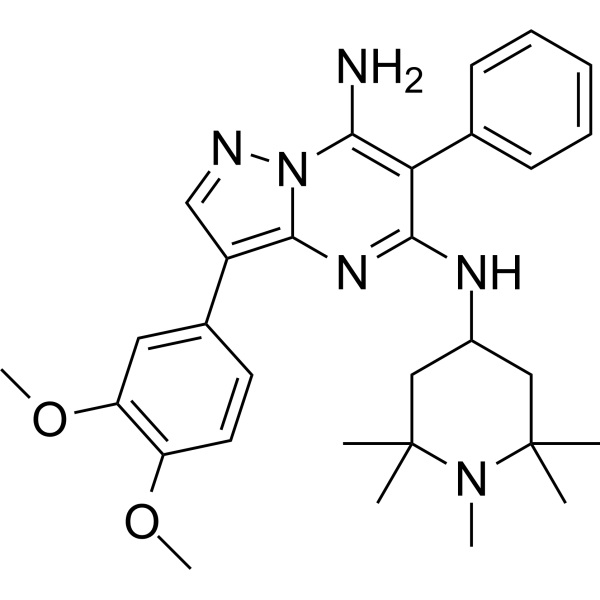
AMPK-IN-3 (compound 67) is a potent and selective AMPK inhibitor with IC50s of 60.7, 107 and 3820 nM for AMPK (α2), AMPK (α1) and KDR, respectively. AMPK-IN-3 inhibits AMPK does not affect cell viability or cause significant cytotoxicity in K562 cells. AMPK-IN-3 can be used in study of cancer .
loading...
    loading...
4
4 Cited Publications
Cat. No.: HY-10332
CAS No.: 194413-58-6
Synonyms: (Z)-SU5416
Target:  

VEGFR

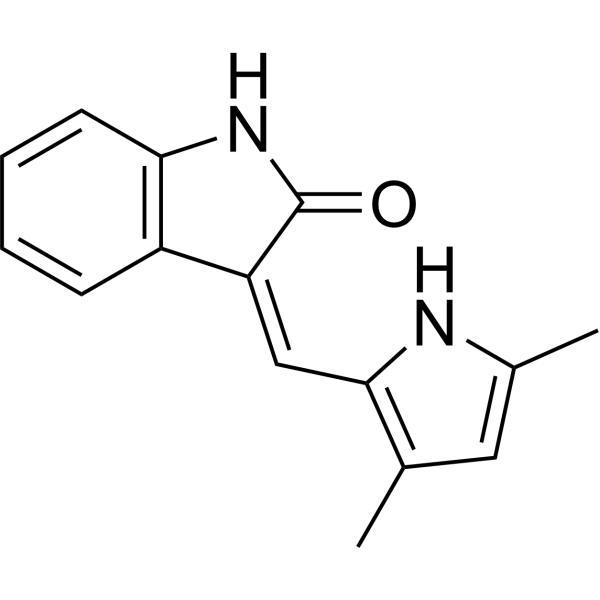
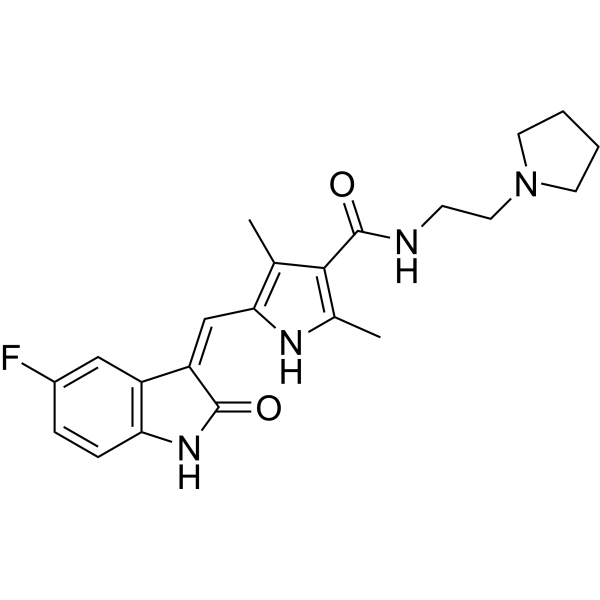
(Z)-Semaxanib ((Z)-SU5416) is a VEGF receptor tyrosine kinase inhibitor that blocks VEGF signaling through Flk-1/KDR. (Z)-Semaxanib inhibits angiogenesis by preventing new blood vessel formation. (Z)-Semaxanib induces cytotoxicity in liver cancer cells. (Z)-Semaxanib can be used in research on metastatic renal cell carcinoma, gastrointestinal stromal tumors, well-differentiated pancreatic neuroendocrine tumors, and solid tumors .
loading...
    loading...
2
2 Cited Publications
Cat. No.: HY-P1663
CAS No.: 272121-15-0
Target:  

VEGFR

Research Areas:  

Others

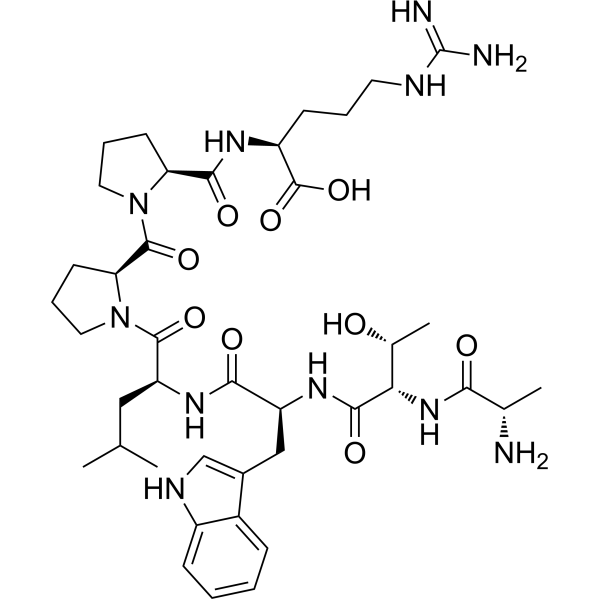
ATWLPPR Peptide is a biological active peptide. (This peptide is a specific VEGFR2/KDR heptapeptide antagonist, it binds VEGFR2 (KDR/flk), completely inhibiting VEGF binding to KDR and preventing VEGF-induced angiogenesis in-vivo. It specifically inhibits human endothelial cell proliferation in-vitro and totally abolishes VEGF-induced angiogenesis in-vivo.)
loading...
    loading...
1
1 Cited Publications
Cat. No.: HY-18302
CAS No.: 1003311-62-3
Target:  

c-Kit

Research Areas:  

Inflammation/Immunology

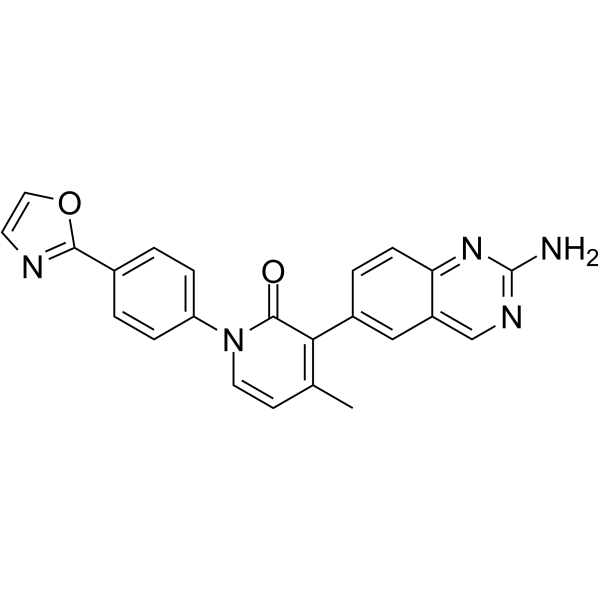
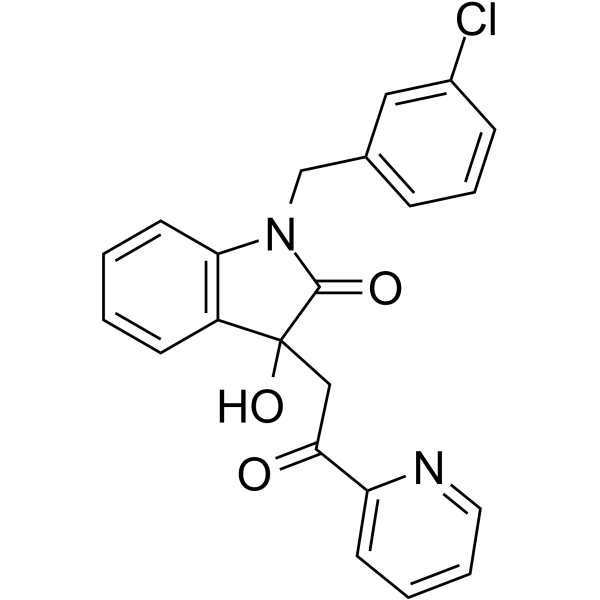
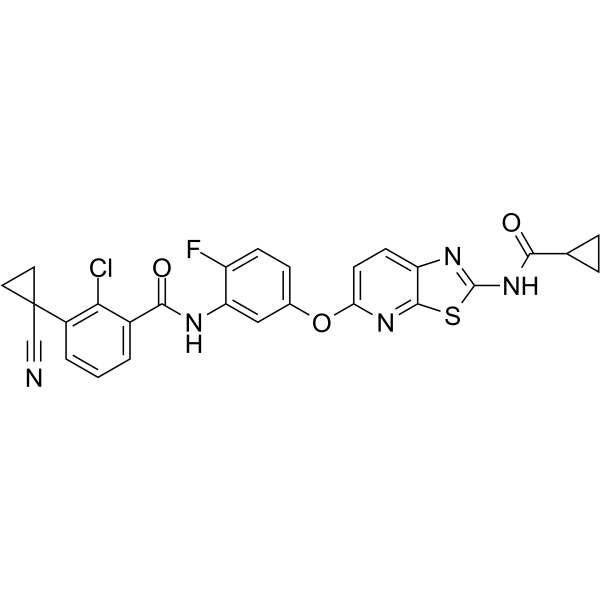
c-Kit-IN-5 is potent inhibitor of c-Kit, with IC50s of 22 nM and 16 nM in kinase assay and cell assay, respectively. c-Kit-IN-5 shows more than 200-fold selectivity for c-Kit over KDR, p38, Lck, and Src. c-Kit-IN-5 also exhibits desirable pharmacokinetic properties .
loading...
    loading...
1
1 Cited Publications
Cat. No.: HY-109020
CAS No.: 1229453-99-9
Purity:  99.84%
Synonyms: LHA510
Target:  

VEGFR

Research Areas:  

Cardiovascular Disease

Acrizanib (LHA510) is a small-molecule vascular endothelial growth factor receptor 2 (VEGFR-2, KDR) inhibitor. Acrizanib inhibits the proliferation of BaF3-Tel-KDR cells dependent on VEGFR-2 activity, with an IC50 of 17.4 nM. Acrizanib can be used in research related to choroidal neovascularization and neovascular age-related macular degeneration .
loading...
    loading...
Cat. No.: HY-10330A
CAS No.: 874819-74-6
Purity:  98.54%
Synonyms: SU11654 phosphate; PHA 291639E phosphate
Target:  

PDGFR VEGFR c-Kit

Research Areas:  

Cancer

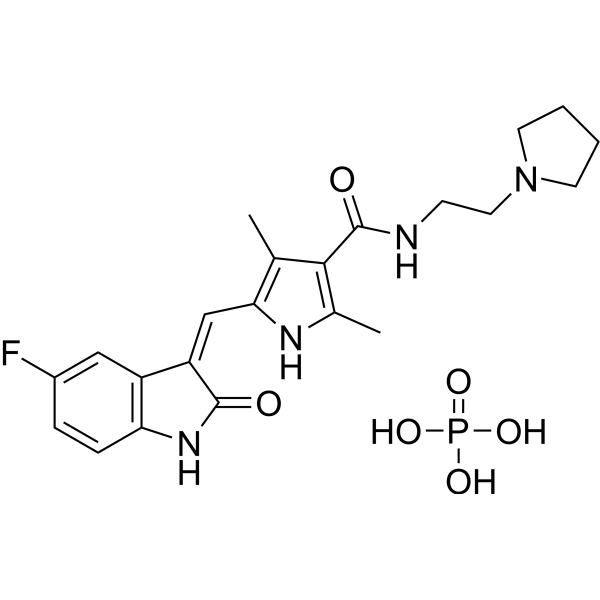
Toceranib phosphate (SU11654 phosphate) is an orally active receptor tyrosine kinase (RTK) inhibitor, and it potently inhibits PDGFR, VEGFR, and Kit with Kis of 5 and 6 nM for PDGFRβ and Flk-1/KDR, respectively. Toceranib phosphate (SU11654 phosphate) has antitumor and antiangiogenic activity, and used in the treatment of canine mast cell tumors .
loading...
    loading...
Cat. No.: HY-10330
CAS No.: 356068-94-5
Purity:  97.32%
Synonyms: SU11654; PHA 291639E
Target:  

PDGFR VEGFR c-Kit

Research Areas:  

Cancer

Toceranib phosphate (SU11654 phosphate) is an orally active receptor tyrosine kinase (RTK) inhibitor, and it potently inhibits PDGFR, VEGFR, and Kit with Kis of 5 and 6 nM for PDGFRβ and Flk-1/KDR, respectively. Toceranib phosphate (SU11654 phosphate) has antitumor and antiangiogenic activity, and used in the treatment of canine mast cell tumors .
loading...
    loading...
Cat. No.: HY-144707
CAS No.: 1227045-76-2
Purity:  98.82%
Target:  

Apoptosis VEGFR MMP PTEN

Research Areas:  

Cancer

AK-778-XXMU is a potent DNA binding inhibitor 2 (ID2) antagonist with a KD of 129 nM. AK-778-XXMU can inhibit cell migration and invasion of glioma cell lines, induce apoptosis, and exhibits significant cancer-suppressing potency. AK-778-XXMU inhibits the ID2-KDR signaling axis, thereby down-regulating the downstream angiogenic factors (VEGFA) and invasion-related proteins (MMP2/9), and up-regulating the tumor suppressor factor (PTEN). AK-778-XXMU can be used for the study of glioma .
loading...
    loading...
Cat. No.: HY-15814
CAS No.: 1258391-13-7
Purity:  99.94%
Research Areas:  

Cancer

HG-7-85-01 is a type II ATP competitive inhibitor of wild-type and gatekeeper mutations forms of Bcr-Abl, PDGFRα, Kit, and Src kinases. HG-7-85-01 inhibits T315I mutant Bcr-Abl kinase, KDR and RET with IC50s of 3 nM, 20 nM and 30 nM, and is only weak or no inhibition of other kinases (IC50>2 μM). HG-7-85-01 inhibits the cell proliferation, which is mediated by the induction of apoptosis, and inhibition of cell-cycle progression .
loading...
    loading...
Cat. No.: HY-N10379
CAS No.: 132923-06-9
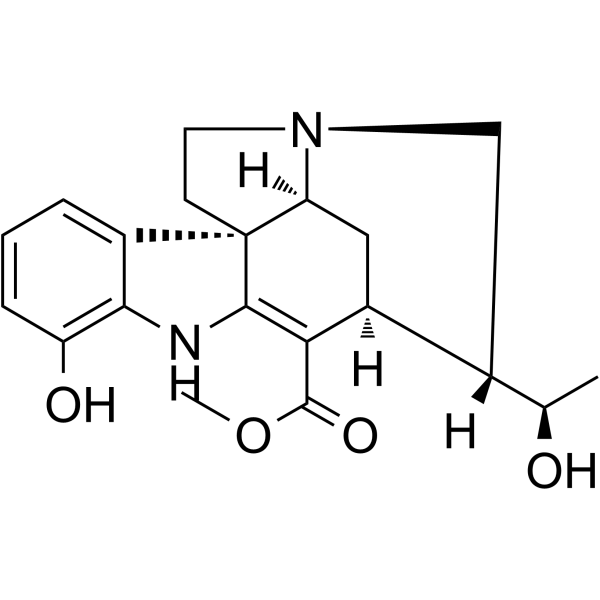
19-epi-Scholaricine is an orally active indole alkaloid. 19-epi-Scholaricine downregulates the expression of profibrotic/apoptotic proteins (HRAS, HSP90AA1, KDR) and upregulates the expression of cell cycle-related protein (CDK2). 19-epi-Scholaricine suppresses ROS production and reduces the release of inflammatory mediators, thereby attenuating podocyte apoptosis, renal inflammation and oxidative stress by inhibiting AKT/mTOR. 19-epi-Scholaricine can be used in the research of chronic glomerulonephritis and membranous nephropathy .
loading...
    loading...
Cat. No.: HY-10330S
CAS No.: 1795134-78-9
Purity:  99.08%
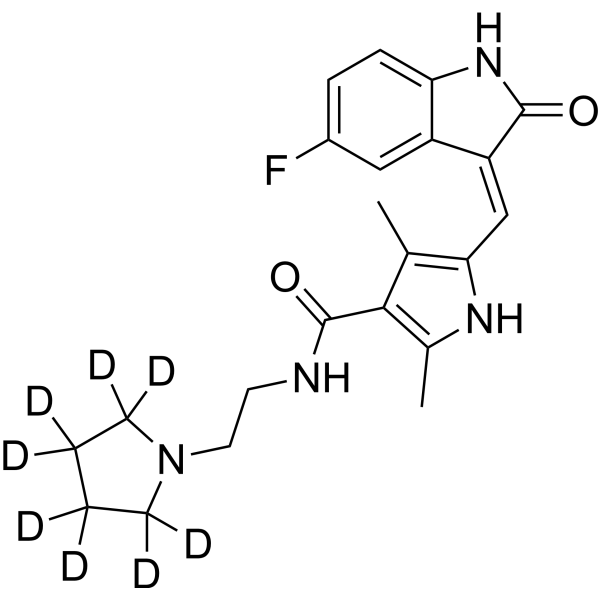
Toceranib-d8 is the deuterium labeled Toceranib. Toceranib (SU11654) is an orally active receptor tyrosine kinase (RTK) inhibitor, and it potently inhibits PDGFR, VEGFR, and Kit with Kis of 5 and 6 nM for PDGFRβ and Flk-1/KDR, respectively. Toceranib (SU11654) has antitumor and antiangiogenic activity, and used in the treatment of canine mast cell tumors .
loading...
    loading...
Cat. No.: HY-50751G
CAS No.: 796967-16-3
Synonyms: ABT-869 (GMP); AL-39324 (GMP)
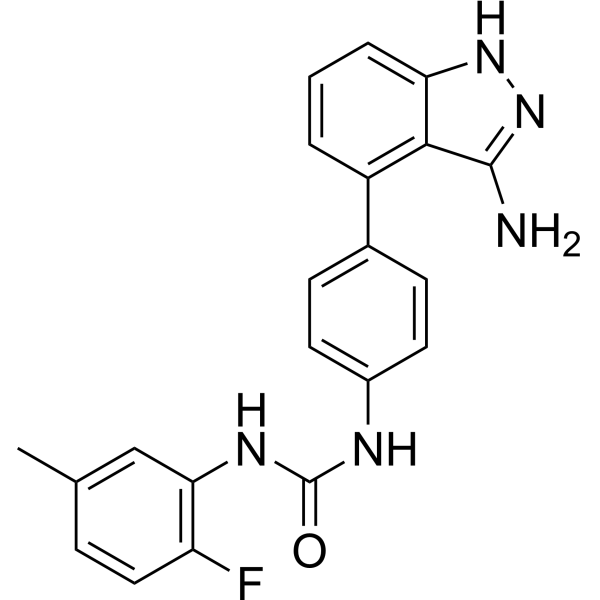
Linifanib (ABT-869) (GMP) is Linifanib (HY-50751) produced by using GMP guidelines. GMP small molecules work appropriately as an auxiliary reagent for cell therapy manufacture. Linifanib is a potent and orally active multi-target inhibitor of VEGFR and PDGFR family with IC50s of 4, 3, 66, and 4 nM for KDR, FLT1, PDGFRβ, and FLT3, respectively. Linifanib (GMP) promotes the generation and reprogramming of iPSCs from somatic cells .
loading...
    loading...
Cat. No.: HY-133551
CAS No.: 2561413-77-0
Purity:  99.63%
Target:  

RET

Research Areas:  

Neurological Disease Cancer

WF-47-JS03 is a potent, selective and brain-penetrantRET kinase inhibitor with IC50s of 1.7 nM and 5.3 nM for KIF5B-RET transfected Ba/F3 cells and CCDC6-RET transfected LC-2/ad lung cancer cells, respectively. WF-47-JS03 demonstrates >500-fold selectivity against kinase insert domain receptor (KDR) .
loading...
    loading...
Cat. No.: HY-123586
CAS No.: 791807-02-8
Target:  

MEK VEGFR FLT3 PDGFR

Research Areas:  

Cancer

L-783277 (Compound 4) is a MEK inhibitor (IC50 = 4 nM). L-783277 has potent inhibitory activity against a variety of kinases, including VEGFR2/3, FLT1/3/4, MEK1/2, KDR, and PDGFRα, but has low selectivity for the kinase community. L-783277 inhibits viability (IC50 = 22 mM) and cell proliferation (IC50 = 21 mM) of H295R cells. L-783277 could be used in research on cancers such as adrenocortical carcinoma .
loading...
    loading...
Cat. No.: HY-P990543

Target:  

VEGFR

Research Areas:  

Inflammation/Immunology

The Anti-VEGFR2/KDR/CD309 Antibody (AT001) is a humanized antibody expressed in CHO cells that targets VEGFR2/KDR/CD309. The Anti-VEGFR2/KDR/CD309 Antibody (AT001) contains a huIgG1 heavy chain and a huκ light chain, with a predicted molecular weight (MW) of 145 kDa. The isotype control for the Anti-VEGFR2/KDR/CD309 Antibody (AT001) can be referenced as Human IgG4 kappa, Isotype Control (HY-P99003).
loading...
    loading...
Cat. No.: HY-18318
CAS No.: 1125632-93-0
Target:  

Raf VEGFR PERK

Research Areas:  

Cancer

Takeda-6D (compound 6d) is an orally active and potent BRAF/VEGFR2 inhibitor, with IC50 values of 7.0 and 2.2 nM, respectively. Takeda-6D shows antiangiogenesis by suppressing the VEGFR2 pathway in 293/KDR and VEGF-stimulated HUVEC cells.Takeda-6D shows significant suppression of ERK1/2 phosphorylation. Takeda-6D shows antitumor activity .
loading...
    loading...
Cat. No.: HY-149451
CAS No.: 2760195-67-1
Target:  

RET VEGFR c-Myc

Research Areas:  

Cancer

SYHA1815 is an orally active RET inhibitor (IC50=0.9 nmol/L) with antitumor activity. SYHA1815 is more selective for RET than KDR (IC50=15.9 nmol/L). SYHA1815 arrests the G1 cell cycle and inhibits RET-driven cell proliferation by downregulating c-Myc .
loading...
    loading...
Cat. No.: HY-116190
CAS No.: 1430741-35-7
Target:  

Mps1 DNA/RNA Synthesis

Research Areas:  

Cancer

CFI-401870 is an orally active threonine tyrosine kinase (TTK (Mps1)) inhibitor with an IC50 of 3.1 nM. CFI-401870 exhibits IC50s against PLK4, KDR, AURKA and other kinases such as AURKB/INCENP were all greater than 1 μM.CFI-401870 inhibits the growth of various cancer cells, causing chromosome lag, an increase in aneuploidy and cell cycle arrest. CFI-401870 can be used for the study of cancers such as colon cancer .
loading...
    loading...
Cat. No.: HY-P991419

Target:  

VEGFR

Research Areas:  

Cancer

MSB-0254 is a human monoclonal antibody (mAb) targeting VEGFR2/KDR/CD309. MSB-0254 inhibits the invasion, migration, and vascular mimetic (VM) formation of U251 and primary glioma cells. MSB-0254 inhibits the growth of U251 and GL261 cell transplanted tumors. MSB-0254 reduces the expression of CD34, VEGFR2, Ki67, MMP2, MMP9, and CD34/PAS. MSB-0254 can be used in advanced solid tumors research .
loading...
    loading...
Cat. No.: HY-109020A
CAS No.: 1637434-72-0
Synonyms: LHA510 hydrochloride
Target:  

VEGFR

Research Areas:  

Cardiovascular Disease

Acrizanib hydrochloride (LHA510 hydrochloride) is a small-molecule vascular endothelial growth factor receptor 2 (VEGFR-2, KDR) inhibitor. Acrizanib hydrochloride inhibits the proliferation of BaF3-Tel-KDR cells dependent on VEGFR-2 activity, with an IC50 of 17.4 nM. Acrizanib hydrochloride can be used in research related to choroidal neovascularization and neovascular age-related macular degeneration .
loading...
    loading...

