15 Results for "

LCAT

" in MedChemExpress (MCE) Product Catalog:
Products (15)

15 Results for "LCAT" in MCE Product Catalog:

12
12 Cited Publications
Cat. No.: HY-153169
CAS No.: 2754428-18-5
Purity:  99.30%
Synonyms: 6PPD-Quinone
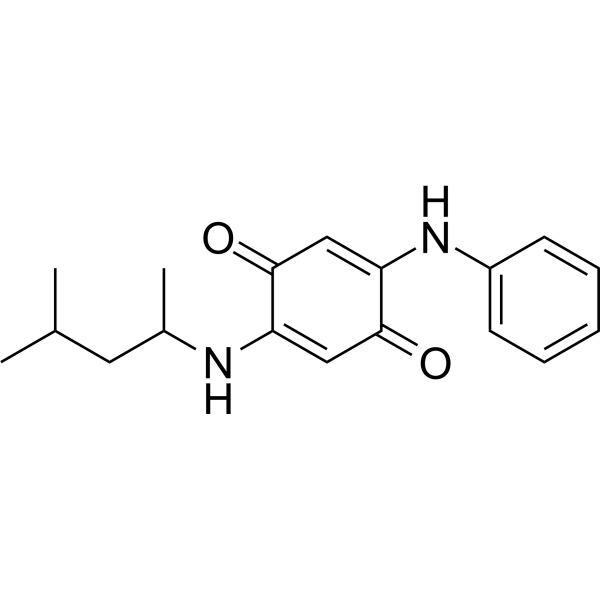
6PPD-Q (6PPD-Quinone) is an environmental pollutant that can be detected in human urine and is widely present in the environment. 6PPD-Q targets and binds to CNR2, CNR1, AA2AR, LCAT, and TRPA1, with CNR2 exhibiting the highest binding affinity, potentially acting as a CNR2 receptor agonist to activate cannabinoid receptors. 6PPD-Q induces intestinal inflammation and barrier damage by disrupting mitochondrial function, reducing neuronal glycolysis metabolites and TCA cycle intermediates, and exacerbating α-synuclein (α-syn) aggregation. 6PPD-Q is applicable in research on environmental toxicology, neurodegenerative diseases, and inflammation-related disorders .
loading...
    loading...
1
1 Cited Publications
Cat. No.: HY-113202
CAS No.: 25597-09-5
Purity:  99.91%
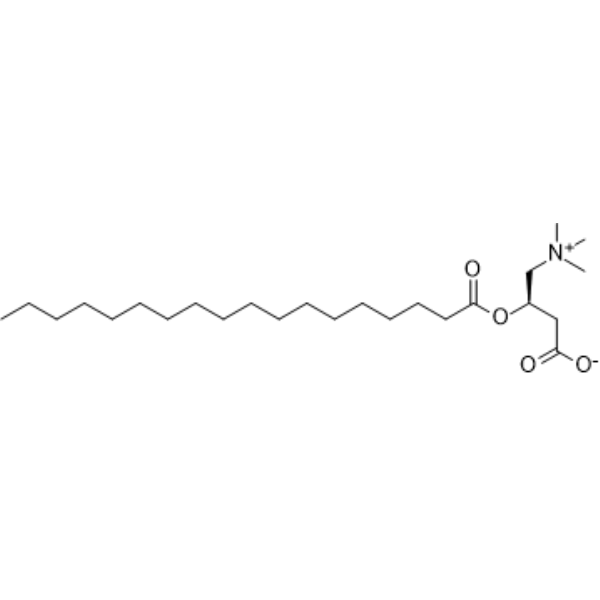
Stearoylcarnitine, a fatty ester lipid molecule, is an endogenous metabolite. Stearoylcarnitine can be used as PKC inhibitor. Stearoylcarnitine accumulates in β cells, leading to arrest of insulin synthesis and energy deficiency in type 2 diabetes mouse. Stearoylcarnitine inhibits lecithin cholesterol acyltransferase (LCAT) in rat and rabbits plasma. Stearoylcarnitine acts as a metabolomics biomarker for Parkinson’s disease. Stearoylcarnitine is a less potent inhibitor of GlyT2 .
loading...
    loading...
Cat. No.: HY-P5282
CAS No.: 221882-20-8
Target:  

Acyltransferase

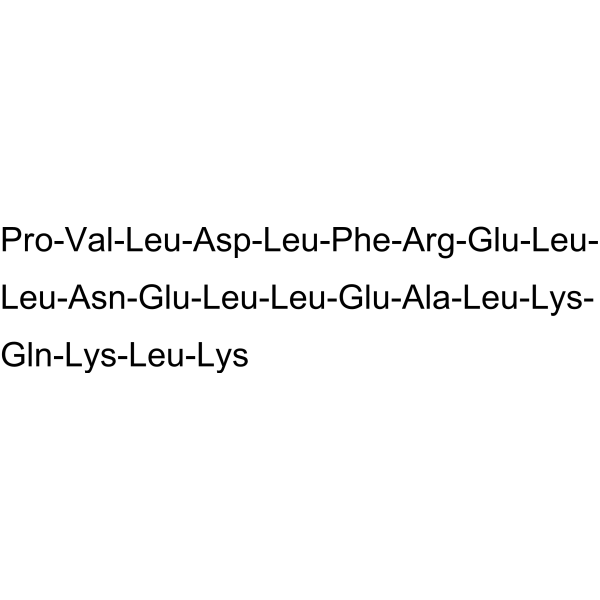
ApoA-I mimetic peptide is an ApoA-I mimetic peptide. ApoA-I mimetic peptide has good phosphatidylcholine: cholesterol acyltransferase (LCAT) activation activity. ApoA-I mimetic peptide can be used to synthesize peptide/lipid complexes. ApoA-I mimetic peptide can be used in atherosclerosis research. (The sequence is: PVLDLFRELLNELLEALKQKLK) .
loading...
    loading...
Cat. No.: HY-113202S
CAS No.: 1021439-31-5
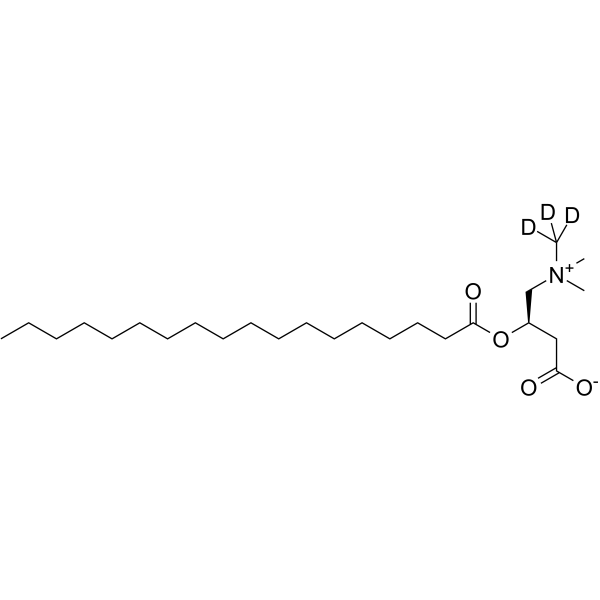
Stearoyl-L-carnitine-d3 is the deuterium labeled Stearoylcarnitine. Stearoylcarnitine, a fatty ester lipid molecule, is an endogenous metabolite. Stearoylcarnitine can be used as PKC inhibitor. Stearoylcarnitine accumulates in β cells, leading to arrest of insulin synthesis and energy deficiency in type 2 diabetes mouse. Stearoylcarnitine inhibits lecithin cholesterol acyltransferase (LCAT) in rat and rabbits plasma. Stearoylcarnitine acts as a metabolomics biomarker for Parkinson’s disease. Stearoylcarnitine is a less potent inhibitor of GlyT2 .
loading...
    loading...
Cat. No.: HY-RS07549
Research Areas:  

Others

LCAT Human Pre-designed siRNA Set A contains three designed siRNAs for LCAT gene (Human), as well as a negative control, a positive control, and a FAM-labeled negative control.

loading...
    loading...
Cat. No.: HY-RS17454
Research Areas:  

Others

Lcat Mouse Pre-designed siRNA Set A contains three designed siRNAs for Lcat gene (Mouse), as well as a negative control, a positive control, and a FAM-labeled negative control.

loading...
    loading...
Cat. No.: HY-W140439R
CAS No.: 19420-56-5
Synonyms: 18:1 Lyso PC (Standard)
Research Areas:  

Others

1-Oleoyl-sn-glycero-3-phosphocholine is an unsaturated 18:1 lysophosphatidylcholine formed in plasma by lecithin:cholesterol acyltransferase (LCAT).
loading...
    loading...
Cat. No.: HY-P992256

Target:  

Acyltransferase

Research Areas:  

Inflammation/Immunology

Anti-LCAT Antibody is a monoclonal antibody targeting LCAT. It can be used in ELISA, FACS, and functional assays. For isotype controls of Anti-LCAT Antibody, please refer to Human IgG2 kappa, Isotype Control (HY-P99002).
loading...
    loading...
Cat. No.: HY-113202S1
CAS No.: 2936622-19-2
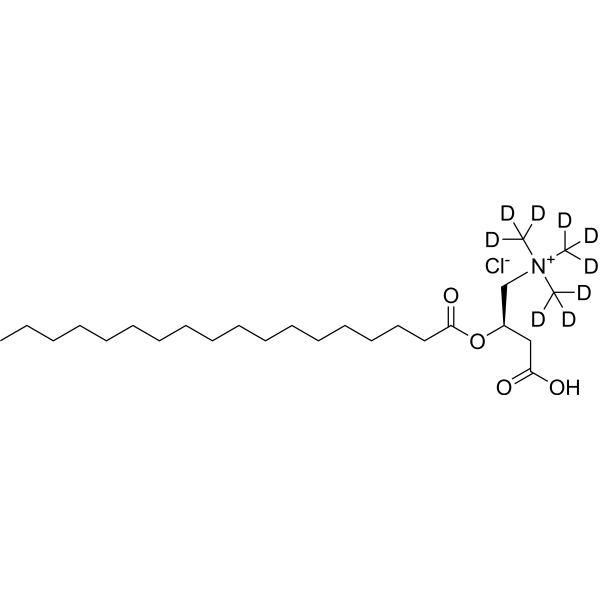
Stearoyl-L-carnitine-d9 chloride is the deuterium labeled Stearoyl-L-carnitine chloride. Stearoyl-L-carnitine chloride, a fatty ester lipid molecule, is an endogenous metabolite. Stearoyl-L-carnitine chloride can be used as PKC inhibitor. Stearoyl-L-carnitine chloride accumulates in β cells, leading to arrest of insulin synthesis and energy deficiency in type 2 diabetes mouse. Stearoyl-L-carnitine chloride inhibits lecithin cholesterol acyltransferase (LCAT) in rat and rabbits plasma. Stearoyl-L-carnitine chloride acts as a metabolomics biomarker for Parkinson’s disease. Stearoyl-L-carnitine chloride is a less potent inhibitor of GlyT2 .
loading...
    loading...
Cat. No.: HY-RS23910
Research Areas:  

Others

Lcat Rat Pre-designed siRNA Set A contains three designed siRNAs for Lcat gene (Rat), as well as a negative control, a positive control, and a FAM-labeled negative control.

loading...
    loading...
Cat. No.: HY-P77979
Purity:  ≥ 95%, as determined by Bis-Tris PAGE.
Synonyms: LCAT; Phosphatidylcholine--Sterol O-Acyltransferase; Lecithin-Cholesterol Acyltransferase; Platelet-Activating Factor Acetylhydrolase; Phosphatidylcholine-Sterol Acyltransferase; PAF Acetylhydrolase; Phospholipid-Cholesterol Acyltransferase; Testicular Se
Species:  
Mouse
Source:  
HEK293
loading...
    loading...
Cat. No.: HY-P83119
Synonyms: LCAT

Host:  

Rabbit

Application:  

WB, IHC-P, ICC/IF, IP

Reactivity:  

Human, Mouse, Rat

loading...
    loading...
Cat. No.: HY-P70252
Purity:  ≥ 95%, as determined by reducing SDS-PAGE.
Synonyms: LCAT; Phosphatidylcholine--Sterol O-Acyltransferase; Lecithin-Cholesterol Acyltransferase; Platelet-Activating Factor Acetylhydrolase; Phosphatidylcholine-Sterol Acyltransferase; PAF Acetylhydrolase; Phospholipid-Cholesterol Acyltransferase; Testicular Se
Species:  
Human
Source:  
HEK293
loading...
    loading...
Cat. No.: HY-186296
CAS No.: 59000-66-7
Target:  

Acyltransferase

Research Areas:  

Metabolic Disease

Cholestanol stearate serves as a substrate for plasma lecithin:cholesterol acyltransferase (LCAT), with an esterification rate of approximately 70% that of cholesterol. Cholestanol stearate contains both hydrophilic and lipophilic groups, and its components are related to the structural substances of natural products. Cholestanol stearate can be used in studies related to cerebrotendinous xanthomatosis and familial lecithin:cholesterol acyltransferase deficiency .
loading...
    loading...
Cat. No.: HY-153169R
CAS No.: 2754428-18-5
6PPD-Q (Standard) is the analytical standard of 6PPD-Q (HY-153169). This product is intended for research and analytical applications. 6PPD-Q (6PPD-Quinone) is an environmental pollutant that can be detected in human urine and is widely present in the environment. 6PPD-Q targets and binds to CNR2, CNR1, AA2AR, LCAT, and TRPA1, with CNR2 exhibiting the highest binding affinity, potentially acting as a CNR2 receptor agonist to activate cannabinoid receptors. 6PPD-Q induces intestinal inflammation and barrier damage by disrupting mitochondrial function, reducing neuronal glycolysis metabolites and TCA cycle intermediates, and exacerbating α-synuclein (α-syn) aggregation. 6PPD-Q is applicable in research on environmental toxicology, neurodegenerative diseases, and inflammation-related disorders .
loading...
    loading...
  • 1

