28 Results for "

LYTACs

" in MedChemExpress (MCE) Product Catalog:
Products (28)

28 Results for "LYTACs" in MCE Product Catalog:

  • Categories Recommended:
    More
Cat. No.: HY-148476
CAS No.: 2999748-27-3
Purity:  98.05%
Target:  

LYTACs

Research Areas:  

Metabolic Disease

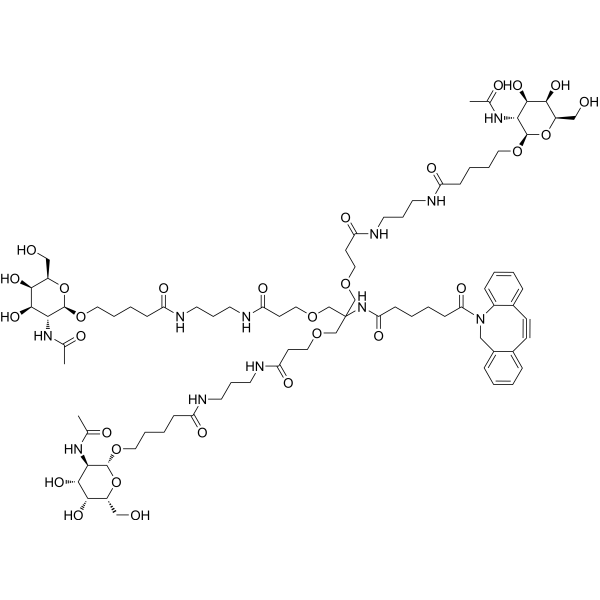
Tri-GalNAc-DBCO is a synthetic ligand composed of three GalNAc units connected to DBCO. Tri-GalNAc-DBCO can act as a ligand for the sialic acid-degrading protein receptor (ASGPR), and can be coupled with targeting proteins or small molecules to form GalNAc-LYTACs. Tri-GalNAc-DBCO specifically binds to ASGPR and, through receptor-mediated endocytosis, guides the coupled molecules to lysosomes for degradation .
loading...
    loading...
Cat. No.: HY-148118A
CAS No.: 1159408-65-7
Purity:  98.09%
Target:  

LYTACs

Research Areas:  

Cancer

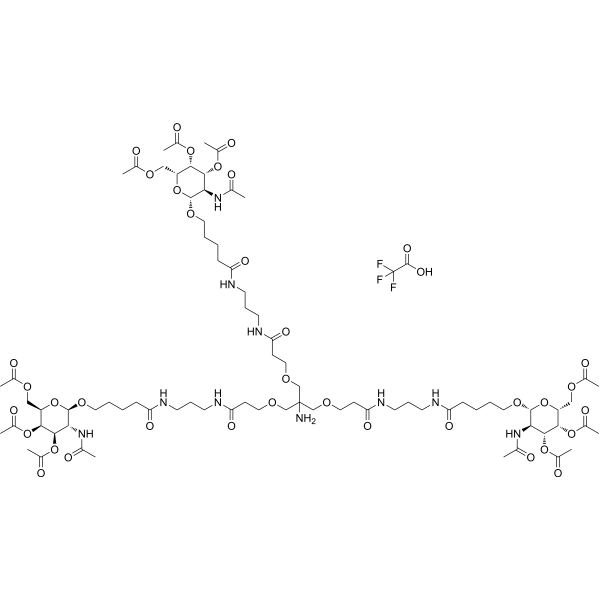
Tri-GalNAc(OAc)3 TFA is a trivalent N-acetylgalactosamine (GalNAc) derivative that can be used to synthesize GalNAc-LYTAC. Tri-GalNAc is a specific ligand targeting the asialoglycoprotein receptor (ASGPR), mediating the endocytosis and transport of cell surface proteins (such as EGFR, HER2) to lysosomes for degradation by lysosomal targeting chimeras (LYTACs). Tri-GalNAc significantly reduces the level of target proteins and inhibits downstream signaling pathways (such as EGFR-mediated Akt and MAPK signals). Tri-GalNAc(OAc)3 TFA can be used for hepatocyte targeting studies, and can degrade carcinogenic membrane proteins and inhibit tumor cell proliferation in liver cancer cell models .
loading...
    loading...
Cat. No.: HY-148118
CAS No.: 1159408-64-6
Purity:  98.09%
Target:  

LYTACs

Research Areas:  

Cancer

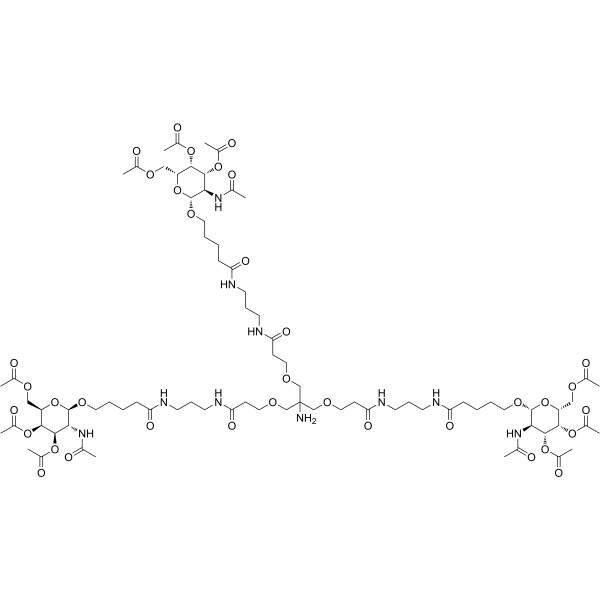
Tri-GalNAc(OAc)3 is a trivalent N-acetylgalactosamine (tri-GalNAc) derivative, which can be used as a linker to synthesize LYTACs .
loading...
    loading...
Cat. No.: HY-139482
CAS No.: 1953146-81-0
Purity:  98.43%
Target:  

LYTACs

Research Areas:  

Cancer

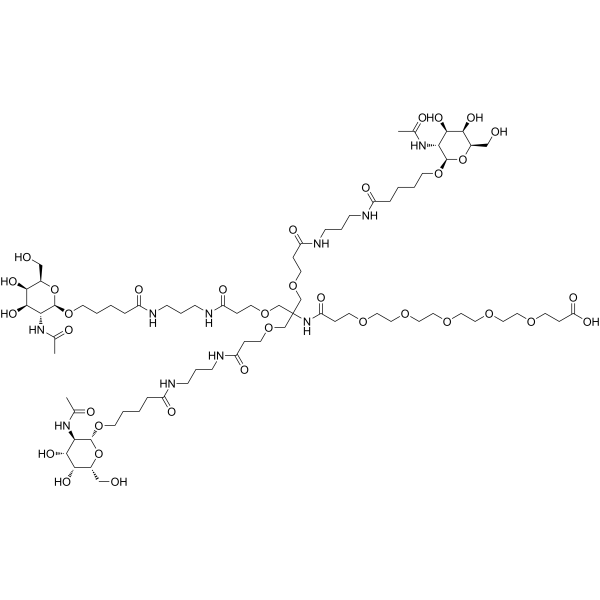
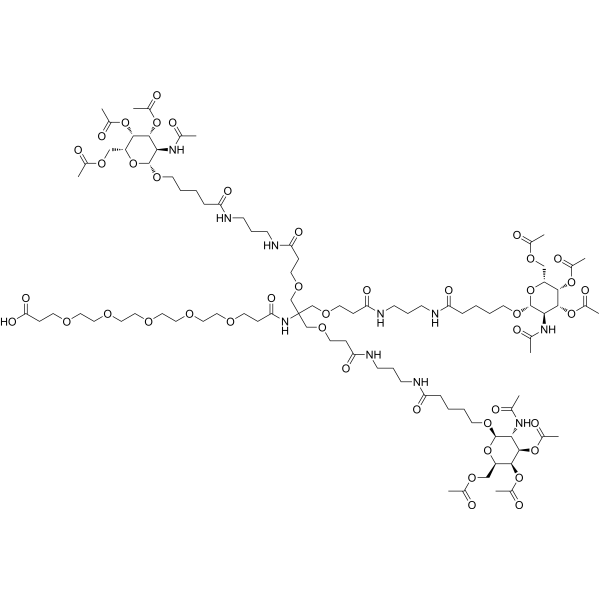
tri-GalNAc-COOH is an asialoglycoprotein receptor (ASGPR) ligand that can be used for LYsosome TArgeting Chimera (LYTAC) research .
loading...
    loading...
Cat. No.: HY-147354
CAS No.: 186613-57-0
Purity:  99.02%
Target:  

LYTACs

Research Areas:  

Cardiovascular Disease

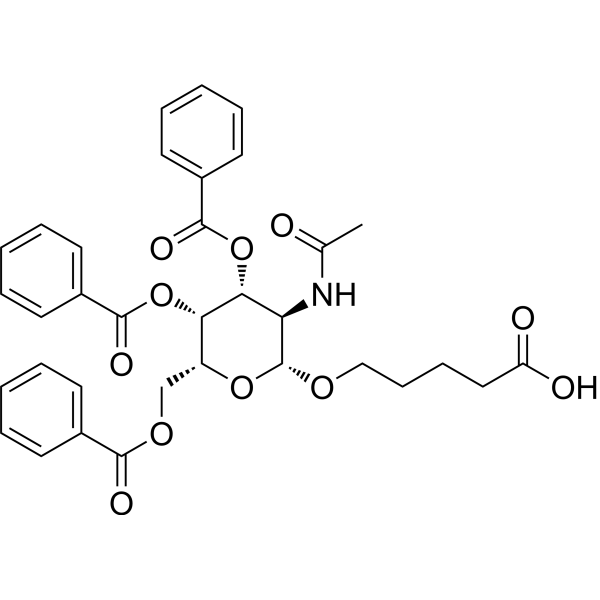
TriGalNAc CBz is a GalNAc derivative and tri-GalNAc is an asialoglycoprotein receptor (ASGPR) ligand. TriGalNAc CBz can be used for mRNA drug delivery as well as lysosomal targeted chimerism (LYTAC) studies .
loading...
    loading...
Cat. No.: HY-145368B
Purity:  ≥95.0%
Target:  

LYTACs

Research Areas:  

Metabolic Disease

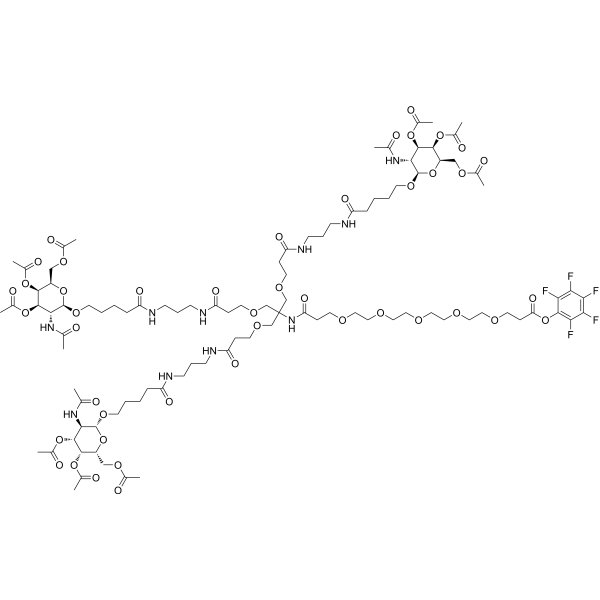
Tri-GalNAc(OAc)3-Perfluorophenyl is a pentafluorophenyl modified Tri-GalNAc(OAc)3 (HY-148118), a tri-GalNAc ligand that can be used for the synthesis of GalNAc-LYTAC. GalNAc-LYTAC engages the asialoglycoprotein receptor for targeted protein degradation.Tri-GalNAc(OAc)3-Perfluorophenyl can be used for the study of liver metabolism .
loading...
    loading...
Cat. No.: HY-147102
CAS No.: 3062597-46-7
Purity:  99.40%
Target:  

LYTACs

Research Areas:  

Metabolic Disease

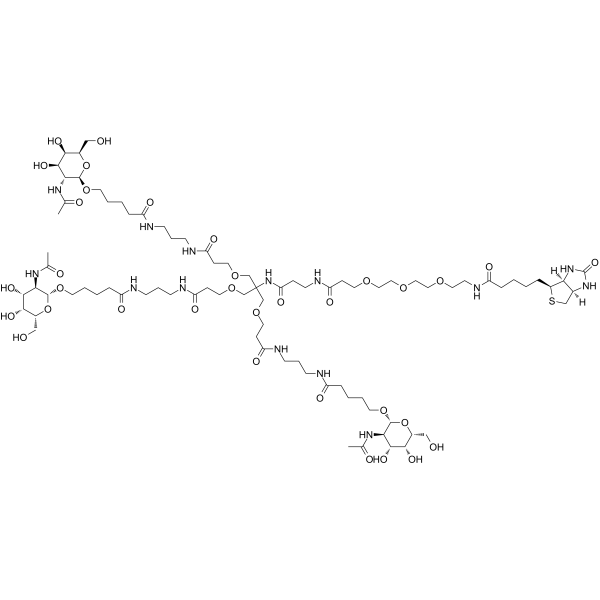
tri-GalNAc biotin is a biotinylated ASGPR (Asialoglycoprotein receptor) ligand. tri-GalNAc biotin promotes cellular uptake of neutravidin (NA) via ASGPR. tri-GalNAc biotin delivers neutravidin to lysosomes for degradation. tri-GalNAc biotin can be used for research of LYsosome TArgeting Chimera (LYTAC) .
loading...
    loading...
Cat. No.: HY-150151A
Target:  

LYTACs

Research Areas:  

Cardiovascular Disease

GalNac-siRNA negative control (21nt) is the negative control form of GalNac-siRNA. GalNac-siRNA is an Asialoglycoprotein receptor (ASGPR)-targeted inhibitor conjugate. GalNac-siRNA is promising for research of hereditary transthyretin amyloidosis, acute hepatic porphyria, hemophilia and hypercholesterolemia .
loading...
    loading...
Cat. No.: HY-171910
CAS No.: 3099288-71-5
Research Areas:  

Others

tri(GalNAc-PEG2)-PEG4-cyclo(Ac-DCAW-{Arg(3F-Ph)-PEG2}-LGELVWCT) (Cys2-Cys12) is an asialoglycoprotein receptor (ASGPR) ligand that can be used for LYsosome TArgeting Chimera (LYTAC) research .
loading...
    loading...
Cat. No.: HY-153880
CAS No.: 2795275-59-9
Target:  

LYTACs Ras

Research Areas:  

Cancer

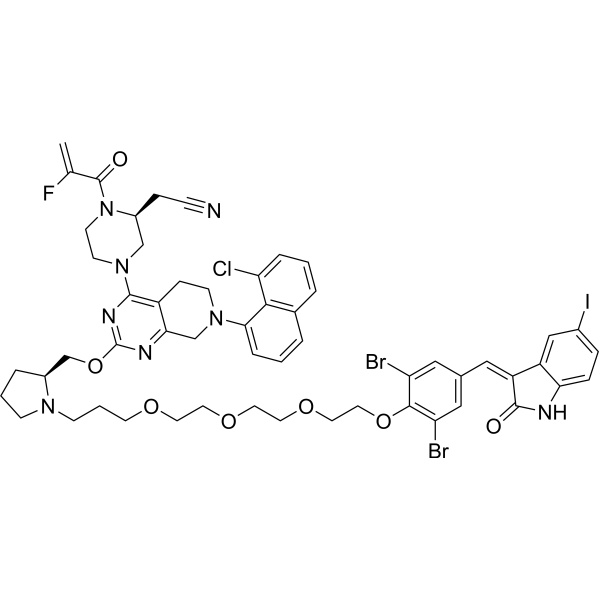
KRAS degrader-1 is a potent KRAS degrader. KRAS degrader-1 targets specific proteins for degradation via the autophagy-lysosomal degradation pathway. KRAS degrader-1 is suitable for use in cancer research. (Blue: KRAS G12C-IN-72 (HY-128414); Black: Linker (HY-175587); Pink: 5-Iodoindolin-2-one (HY-76986); Blue + Black: KRAS ligand-Linker Conjugate 7 (HY-175586)) .
loading...
    loading...
Cat. No.: HY-179737
CAS No.: 3062599-51-0
Target:  

LYTACs

Research Areas:  

Metabolic Disease

ASGPR ligand-2 (Compound 366) is an asialoglycoprotein receptor (ASGPR) binder. ASGPR ligand-2 can be coupled with recognition elements of target proteins (such as antibodies or antigen-binding fragments), and through the endocytosis mediated by ASGPR, the target protein is delivered to the lysosomes of liver cells, promoting the degradation of the target protein. ASGPR ligand-2 can be used for the research of metabolic disease .
loading...
    loading...
Cat. No.: HY-145013
CAS No.: 3008204-26-7
Target:  

LYTACs

Research Areas:  

Others

tri-GalNAc-COOH acetylation is the acetylated and modified form of tri-GalNAc-COOH. tri-GalNAc-COOH acetylation can be used for the synthesis of LYTAC.
loading...
    loading...
Cat. No.: HY-174476
CAS No.: 1472616-48-0
Target:  

HSP Drug Intermediate

Research Areas:  

Cancer

HSP90i is a HSP90 inhibitor. HSP90i can be used as a drug intermediate to synthesize LYTACs, such as dPDL1-4 (HY-174468) .
loading...
    loading...
Cat. No.: HY-174468
Target:  

LYTACs PD-1/PD-L1 HSP

Research Areas:  

Cancer

dPDL1-4 is a potent and selective eHSPTAC eHSP90 PD-L1 degrader with DC50s of 7.77 μM and 6.52 μM in HeLa and B16F10 cells. dPDL1-4 bridges eHSP90 with the target protein, inducing lysosomal degradation. dPDL1-4 can degrade PD-L1 significantly and inhibits tumor growth. dPDL1-4 can be used for the study of cervical cancer and melanoma. ((Pink: eHSP90 ligand (HY-174476); Blue: PD-L1 ligand (HY-116274); Black: Linker (HY-W021787); HSP ligand + linker: HY-174799)) .
loading...
    loading...
Cat. No.: HY-142881
CAS No.: 2378837-67-1
Target:  

LYTACs

Research Areas:  

Others

D-MoDE-A (1) is a bifunctional small molecule that mediates the degradation of extracellular proteins through the asialoglycoprotein receptor (ASGPR).
loading...
    loading...
Cat. No.: HY-153527
CAS No.: 1159408-72-6
Target:  

LYTACs

Research Areas:  

Metabolic Disease

GalNAc-L96 analog is an intermediate in the synthesis of the asialoglycoprotein receptor (ASGPR) ligand GalNAc-L96 (HY-147012).
loading...
    loading...
Cat. No.: HY-174799
Target:  

HSP

Research Areas:  

Cancer

HSP90i-COCH2CH2-PEG4-NHBoc is a conjugate of the HSP90 Ligand (HY-174476) and the linker (HY-W021787). HSP90i-COCH2CH2-PEG4-NHBoc can be used for synthesis of LYTACs, such as dPDL1-4 (HY-174468) .
loading...
    loading...
Cat. No.: HY-168554
STING Degrader-3 is a PROTAC-like STING degrader with a DC50 of 2.58 μM in THP-1 cells. STING Degrader-3 degrades STING protein via the lysosomal pathway. STING Degrader-3 functions as a non-degradative inhibitor in macrophages. STING Degrader-3 reduces the phosphorylation levels of TBK1 and IRF3, and downregulates the expression of IFN-β, CXCL10, IL-6, TNFα, IL-1β, ISG15 and ISG56. STING Degrader-3 exhibits renoprotective properties in a cisplatin-induced acute kidney injury model. STING Degrader-3 can be used in studies related to acute kidney injury. ((Pink: STING ligand (HY-168676); Blue: CRBN ligand (HY-126457); Black: linker (HY-W123015); CRBN ligand + linker: (HY-168677)) .
loading...
    loading...
Cat. No.: HY-142885
CAS No.: 2378837-56-8
Target:  

LYTACs

Research Areas:  

Others

M-MoDE-A (2) is a bifunctional small molecule that mediates the degradation of extracellular proteins through the asialoglycoprotein receptor (ASGPR).
loading...
    loading...
Cat. No.: HY-164396
CAS No.: 3030990-46-3
Target:  

Drug Derivative LYTACs

Research Areas:  

Cancer

Allyl-mannose-6-phosphonate is a stable analog of mannose-6-phosphate (M6P). Allyl-mannose-6-phosphonate can be used to synthesize M6Pn-polypeptide conjugates and construct lysosome-targeting chimeras (LYTAC). Allyl-mannose-6-phosphonate is applicable for tumor research .
loading...
    loading...

