15 Results for "

MC38 mice

" in MedChemExpress (MCE) Product Catalog:
Products (15)

15 Results for "MC38 mice" in MCE Product Catalog:

1
1 Cited Publications
Cat. No.: HY-149208
CAS No.: 2921948-27-6
Target:  

HDAC Apoptosis

Research Areas:  

Cancer

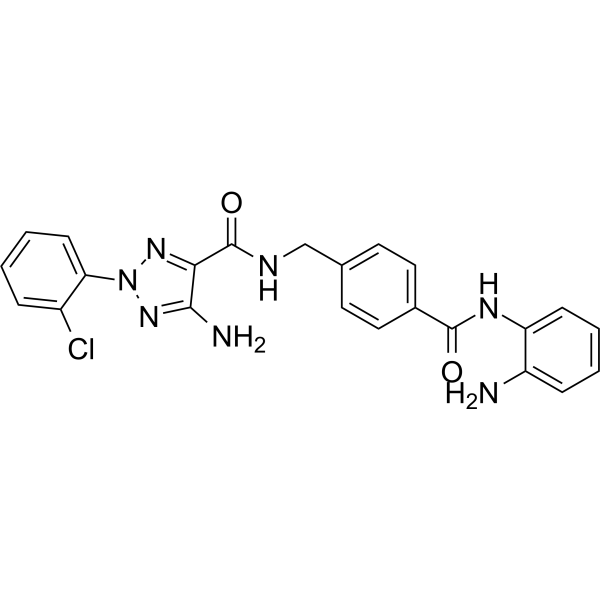
HDAC-IN-53 is an orally active, and selective HDAC1-3 inhibitor with IC50 values of 47 nM, 125 nM, and 450 nM, respectively. HDAC-IN-53 does not inhibit class II HDACs (HDAC4, 5, 6, 7, 9; IC50>10 μM). HDAC-IN-53 induces caspase-dependent apoptosis. HDAC-IN-53 significantly inhibits the growth of human tumor xenografts in nude mice and murine tumor growth in immune-competent mice bearing MC38 colon cancer .
loading...
    loading...
Cat. No.: HY-P990117
Target:  

Integrin

Research Areas:  

Cardiovascular Disease Cancer

Anti-Mouse/Rat/Human Osteopontin/SPP1 Antibody (MPIIIB10) is a mouse-derived Osteopontin/SPP1 IgG1 κ type antibody inhibitor. Anti-Mouse/Rat/Human Osteopontin/SPP1 Antibody (MPIIIB10) blocks Angiotensin II (HY-13948)-induced DNA synthesis and collagen gel contraction in cardiac fibroblasts. Anti-Mouse/Rat/Human Osteopontin/SPP1 Antibody (MPIIIB10) significantly inhibits tumor growth in CT26 or MC38 tumors mice models .
loading...
    loading...
Cat. No.: HY-160421
CAS No.: 2000236-36-0
Target:  

Apoptosis

Research Areas:  

Inflammation/Immunology Cancer

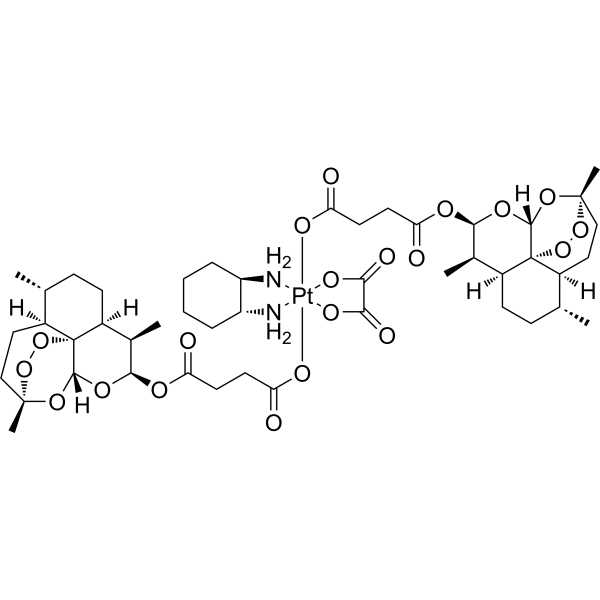
TREM2-IN-1 (OPA) is a TREM2 inhibitor derived from oxaliplatin and artesunate. TREM2-IN-1 can relieves immunosuppressive tumor microenvironment and enhancing chemical anticancer efficiency. TREM2-IN-1 deters the tumor growth in mice models bearing MC38 colorectal tumor by reducing the number of CD206 + and CX3CR1 + immunosuppressive macrophages. TREM2-IN-1 also promotes the expansion and infiltration of immunostimulatory dendritic, cytotoxic T and natural killer cells .
loading...
    loading...
Cat. No.: HY-153358
CAS No.: 2935964-98-8
Purity:  99.91%
Target:  

HDAC

Research Areas:  

Cancer

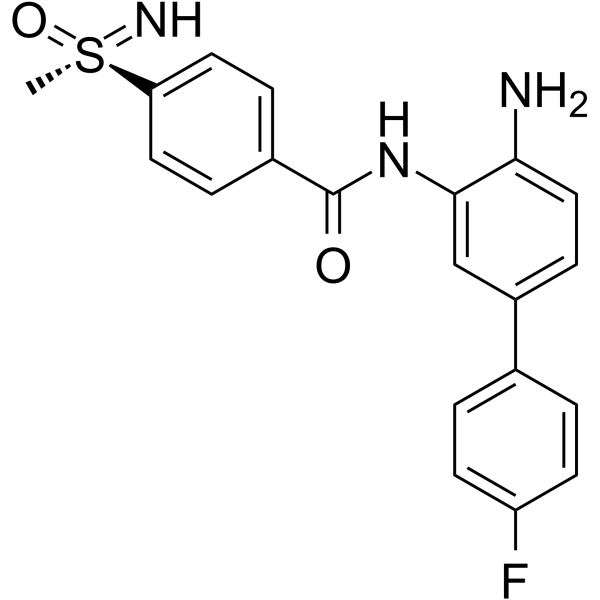
TNG260 is a selective, orally effective inhibitor of HDAC1 and CoREST complex, with a 10-fold selectivity for HDAC1 over HDAC3 and a 500-fold selectivity for CoREST complex over NuRD and Sin3 complex. TNG260 reshapes the tumor immune microenvironment, reduces immunosuppressive neutrophil infiltration, promotes effector T cell recruitment, and reverses anti-PD-1 resistance caused by STK11 deficiency by inhibiting the activity of the CoREST-HDAC1 complex. TNG260 induces durable tumor regression in combination with α-PD1 in MC38 tumor-bearing mice with STK11 mutations, and has lower toxicity to bone marrow cells than non-selective HDAC inhibitors .
loading...
    loading...
Cat. No.: HY-P11060
Synonyms: Adpgk peptide
Target:  

MHC

Research Areas:  

Cancer

MC38 SLP Adpgk (Adpgk peptide) is an H-2 K b-restricted colorectal cancer neoantigen peptide. MC38 SLP Adpgk is formulated into PCNP nanocomplexes together with CpG ODN. PCNP vaccines significantly enhance the co-delivery efficiency of neoantigens and adjuvants to lymphoid organs, and activate cytotoxic T cells. PCNP vaccines not only protect mice from MC-38 colorectal tumor invasion, but also exhibit anti-tumor efficacy in established colorectal tumor models and significantly prolong the survival of tumor-bearing mice .
loading...
    loading...
Cat. No.: HY-172930
CAS No.: 2991021-08-8
PVTX-405 is a selective and oral active IKZF2 molecular glue degrader with a DC50  of  0.7 nM and a Dmax of 91%. PVTX-405 enhances degradation efficiency, significantly reduces off-target degradation, and alleviates hERG inhibition with IC50 of 48 µM. PVTX-405 significantly inhibits the growth of MC38 tumors, with greater synergistic anti-cancer efficacy in combination with immune checkpoint therapies (ICTs) (anti-PD1 or anti-LAG3) in the MC38 mouse tumor xenograft model using Crbn 391V C57BL/6 mice .
loading...
    loading...
Cat. No.: HY-171572
Atezolizumab-MMAE is an anti-PD-L1 antibody-drug conjugate (ADC) with an EC50 of 1.1 nM. Atezolizumab-MMAE is composed of a humanized anti-PD-L1 antibody (Atezolizumab) (HY-P9904), a lysosomally cleavable dipeptide linker (valine-citrulline), a tubulin inhibitor (MMAE) (HY-15162), and the drug-linker conjugate for ADC is VcMMAE (HY-15575). Atezolizumab-MMAE has a potent cytotoxicity (EC50: 9.75-11.94 nM) and immune activation effect. Atezolizumab-MMAE has a significantly anti-tumor activity in MC38 xenograft PD-1-humanized immune system mice model .
loading...
    loading...
Cat. No.: HY-162645
CAS No.: 3029897-97-7
Target:  

TAM Receptor

Research Areas:  

Inflammation/Immunology Cancer

BPR5K230 is a dual inhibitor for the receptor tyrosine kinase MER and AXL, with IC50 of 4.1 nM and 9.2 nM. BPR5K230 inhibits the proliferation of Ba/F3-MER with IC50 of 5 nM. BPR5K230 exhibits good pharmacokinetic characteristics in mice, exhibits anti-inflammatory and antitumor against 4T1, MDA-MB-231, MC38 and Hepa1?6 in mouse models .
loading...
    loading...
Cat. No.: HY-174308
Target:  

STING

Research Areas:  

Inflammation/Immunology Cancer

ZSA-215 is a potent and orally active STING agonist with an EC50 of 3.3 μM. ZSA-215 enhances STING signaling through promoting the phosphorylation of STING and interferon regulatory factor 3 (IRF3) and secretion of IFN-β. ZSA-215 inhibits tumor regression and long-term survival of mice in MC38 colon cancer model. ZSA-215 can be used to the study of colon cancerr .
loading...
    loading...
Cat. No.: HY-P991566
CAS No.: 2983061-18-1

Target:  

CTLA-4

Research Areas:  

Cancer

KD6001 is a humanized IgG1κ monoclonal antibody, targeting CTLA4. KD6001 significantly disrupts CTLA-4 interactions with CD80 (IC50: 16 ng/mL) and CD86. KD6001 enhances IL-2 and IFNγ expression in PHA-activated human lymphocytes and exhibits potent antitumor effects. KD6001 effectively inhibits tumor growth in MC38, B16, and Hepa1-6 tumor mice model. KD6001 can be used for cancers research, such as advanced melanoma, hepatocellular carcinoma and liver cancer .
loading...
    loading...
Cat. No.: HY-175361
Target:  

ROR

Research Areas:  

Cancer

RORγ agonist 2 (Compound 34) is a selective RORγ agonist with an EC50 of 0.03  μM for hRORγ. RORγ agonist 2 significantly inhibits tumors growth in syngeneic MC38 tumor mice model .
loading...
    loading...
Cat. No.: HY-P991961

Target:  

CTLA-4

Research Areas:  

Cancer

REGN4659 is a fully human anti-CTLA-4 monoclonal antibody and IgG1 antibody. REGN4659 binds to the extracellular domain of human and monkey CTLA-4 with high affinity and specificity. REGN4659 blocks CTLA-4 interaction with CD80 and CD86 ligands. REGN4659 significantly suppresses MC38.Ova tumor growth in CTLA-4 knock-in mice .
loading...
    loading...
Cat. No.: HY-P991528

Target:  

NF-κB

Research Areas:  

Inflammation/Immunology Cancer

PE0116 is a fully human CD137 agonistic monoclonal antibody generated from immunized harbor H2L2 human transgenic mice. PE0116 is a ligand block. PE0116 activates NF-κB signaling which significantly promotes T-cell proliferation and increases cytokine secretion in vitro. PE0116 exhibits robust antitumor activity in MC38 tumor model .
loading...
    loading...
Cat. No.: HY-184931
Research Areas:  

Cancer

PTPN22-IN-3 is a potent, selective, and orally active inhibitor of PTPN22 with an IC50 of 0.49 μM and a Ki of 0.28 μM. PTPN22-IN-3 exhibits over 14-fold selectivity against a broad panel of PTPs and shows no significant inhibition against SRC/CSK kinases or IDO1/Arginase metalloenzymes. PTPN22-IN-3 enhances TCR signaling, increases IL-2 expression and secretion, and promotes mouse splenic T cell proliferation. In immune-competent C57BL/6J mice, PTPN22-IN-3 suppresses MC38 syngeneic tumor growth and synergizes with Pembrolizumab (anti-PD-1) (HY-P9902A) therapy. PTPN22-IN-3 can be used for the study of colorectal cancer and other solid tumors responsive to T cell-mediated anti-tumor immunity .
loading...
    loading...
Cat. No.: HY-169478
CAS No.: 2924606-55-1
Target:  

Liposome

Research Areas:  

Cancer

Lipid N2-3L is an ionizable cationic lipid (pKa = 8.99) that can be used to generate supramolecular lipid nanoparticles (SMLNPs) for mRNA delivery. Lipid nanoparticles formed by encapsulating a luciferase reporter gene with Lipid N2-3L were detected to accumulate in the lymph nodes of mice, indicating that they can effectively enter the mouse immune system. Lipid nanoparticles formed by encapsulating ovalbumin mRNA and the TLR7/8 agonist Resiquimod (HY-13740) with Lipid N2-3L were able to reduce tumor volume and increase survival in the MC-38-OVA mouse colon cancer model. Lipid N2-3L can be used in the research of drug delivery for cancer-related therapies .
loading...
    loading...
  • 1

