
26 Results for "

Mus musculus

" in MedChemExpress (MCE) Product Catalog:
Products (26)

26 Results for "Mus musculus" in MCE Product Catalog:

Cat. No.: HY-P9991
CAS No.: 2460539-61-9
Synonyms: TST001

Target:  

Gap Junction Protein

Research Areas:  

Cancer

Osemitamab is an IgG1 antibody targeting to human claudin-18.2. Osemitamab consists of human-Mus musculus monoclonal TST001 γ1-chain, disulfide with human-Mus musculus monoclonal TST001 κ-chain, dimer (ACI). Osemitamab in combination with Capecitabine (HY-B0016) and Oxaliplatin (HY-17371), can be used for G/GEJ cancer study .
loading...
    loading...
Cat. No.: HY-W341625
CAS No.: 474943-80-1
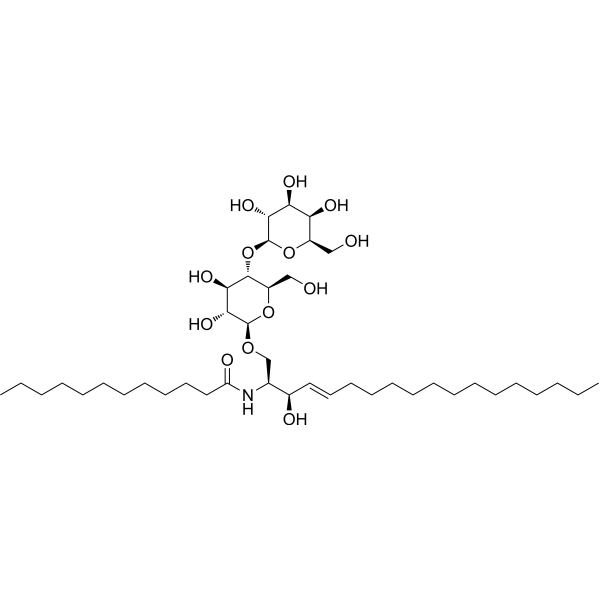
Trihexosylceramide (d18:1/12:0) is a glycosphingolipid and mood-related compound. Trihexosylceramide (d18:1/12:0) is characterized by elevated serum levels in Mus musculus fed a high-fat diet, and its levels are positively correlated with mood Z-scores. Accumulation of Trihexosylceramide (d18:1/12:0) in tissues is considered the etiology of angiokeratoma corporis diffusum. Trihexosylceramide (d18:1/12:0) can be used in studies related to high-fat diet-induced mood disorders .\n


loading...
    loading...
Cat. No.: HY-111178
CAS No.: 90280-13-0
Purity:  99.18%
Synonyms: BisfluoroModafinil; CRL-40940; NLS-4
Target:  

Dopamine Transporter

Research Areas:  

Neurological Disease

Lauflumide (BisfluoroModafinil) is a selective dopamine reuptake inhibitor and wake-promoting agent. Lauflumide inhibits the dopamine transporter (DAT). Lauflumide induces sustained wakefulness without eliciting hyperlocomotion, stereotypy or abnormal behaviors in Mus musculus (house mice). Lauflumide reduces non-rapid eye movement (NREM) sleep rebound in rats, modulates electroencephalogram (EEG) spectral composition, and produces anti-aggressive effects. Lauflumide alleviates circadian rhythm disturbances in rats, increases spontaneous activity in fatigued rats, and facilitates their recovery from severe fatigue. Lauflumide can be used in research related to excessive daytime sleepiness as well as chronic severe fatigue/chronic fatigue syndrome (CFS) .
loading...
    loading...
Cat. No.: HY-P5081
CAS No.: 1678414-54-4
Research Areas:  

Inflammation/Immunology

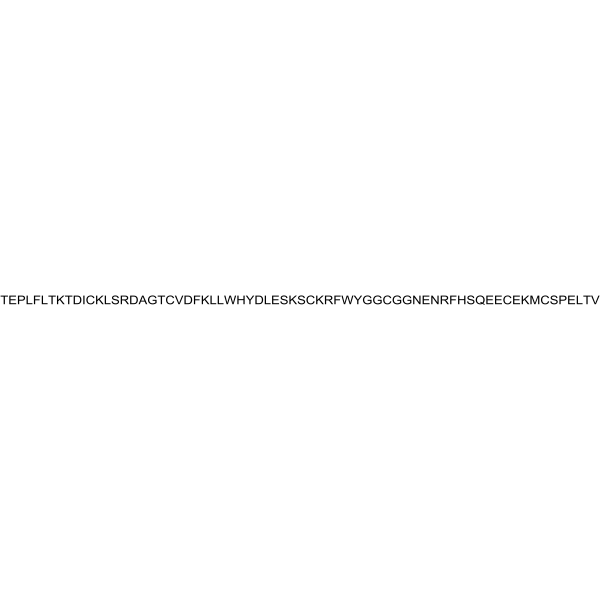
Endotrophin (Mus musculus) is an adipokine, a cleavage fragment derived from Collagen VI, whose levels are elevated in adipose tissue and breast tumors of obese mice. Endotrophin (Mus musculus) activates the TGF-β signaling pathway and reduces the expression of hormone-sensitive lipase. Endotrophin (Mus musculus) induces adipogenesis, lipid accumulation, fibrosis, inflammation, angiogenesis, adipose tissue expansion, epithelial-mesenchymal transition, and insulin resistance; it also induces Cisplatin (HY-17394) resistance in cancer cells. Endotrophin (Mus musculus) can be used in research related to metabolic diseases such as obesity and type 2 diabetes, as well as cancers such as breast cancer .
loading...
    loading...
Cat. No.: HY-158315
Purity:  99.43%
Target:  

Dipeptidyl Peptidase

Research Areas:  

Inflammation/Immunology

NZ-97 is a locally deliverable, lung-retaining dipeptidyl peptidase 4 (DPP4) inhibitor with an IC50 of 18 nM. It exhibits selectivity for DPP8 and DPP9 (with IC50 values of 1.3 μM and 0.6 μM, respectively). NZ-97 inhibits the DPP4 pool in lung-resident cells and epithelial lining fluid, elevates IL-6 and IGF-1 levels, and induces the expansion of type 2 alveolar epithelial cells (AEC2). NZ-97 reduces protein content in bronchoalveolar lavage fluid (BALF), ameliorates lung injury and alleviates pulmonary fibrosis. NZ-97 shows tolerability in untreated Mus musculus mice after intratracheal administration, and does not alter the proliferation or differentiation of lung fibroblasts. NZ-97 can be used in studies related to idiopathic pulmonary fibrosis, acute lung injury and emphysema .
loading...
    loading...
Cat. No.: HY-145425
CAS No.: 2771006-54-1
Target:  

IRE1 Apoptosis FGFR

Research Areas:  

Inflammation/Immunology

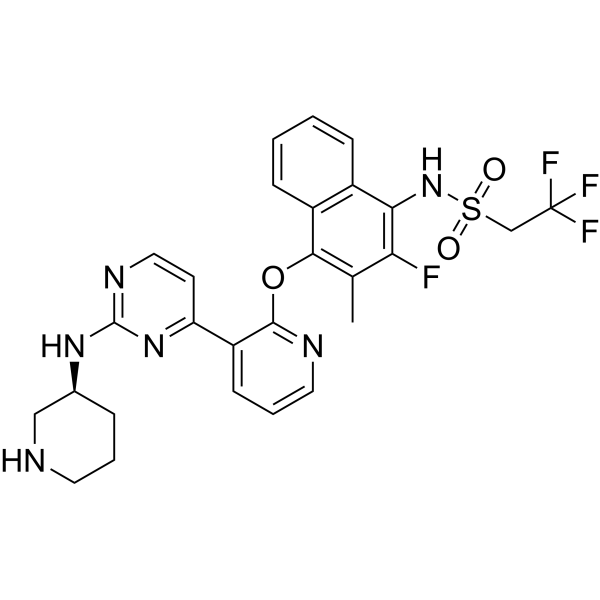
PAIR2 is a highly selective inhibitor targeting the kinase domain of human IRE1α, with a Ki value of 8.8 nM against human IRE1α. PAIR2 fully occupies the ATP-binding site of the IRE1α kinase domain, partially antagonizes the ribonuclease activity of IRE1α, specifically inhibits regulated IRE1α-dependent decay (RIDD) and its mediated substrate cleavage, while preserving the splicing function of Xbp1 mRNA. PAIR2 also promotes the differentiation of B cells into plasma cells, blocks IRE1α-induced cell apoptosis, and restores the expression of Fgfr2 mRNA in AT2 cells. PAIR2 effectively reaches a steady-state concentration in the lung tissues of Mus musculus, and serves as an important tool for investigating the function of the IRE1α signaling pathway in diseases such as pulmonary fibrosis .
loading...
    loading...
Cat. No.: HY-172910
CAS No.: 3077252-76-4
MTHFD2-IN-6 is an orally active selective inhibitor of MTHFD2, with a human IC50 of 1.46 μM. MTHFD2-IN-6 binds directly to MTHFD2, selectively inhibits cancer cell proliferation, promotes ROS accumulation in cancer cells, and induces cancer cell cycle arrest and apoptosis. MTHFD2-IN-6 inhibits tumor growth in Mus musculus xenograft models. MTHFD2-IN-6 can be used for lung cancer research .
loading...
    loading...
Cat. No.: HY-P5081A
Research Areas:  

Inflammation/Immunology

Endotrophin (Mus musculus) TFA is an adipokine, a cleavage fragment derived from Collagen VI, whose levels are elevated in adipose tissue and breast tumors of obese mice. Endotrophin (Mus musculus) TFA activates the TGF-β signaling pathway and reduces the expression of hormone-sensitive lipase. Endotrophin (Mus musculus) TFA induces adipogenesis, lipid accumulation, fibrosis, inflammation, angiogenesis, adipose tissue expansion, epithelial-mesenchymal transition, and insulin resistance; it also induces Cisplatin (HY-17394) resistance in cancer cells. Endotrophin (Mus musculus) TFA can be used in research related to metabolic diseases such as obesity and type 2 diabetes, as well as cancers such as breast cancer .
loading...
    loading...
Cat. No.: HY-162280
CAS No.: 3034024-77-3
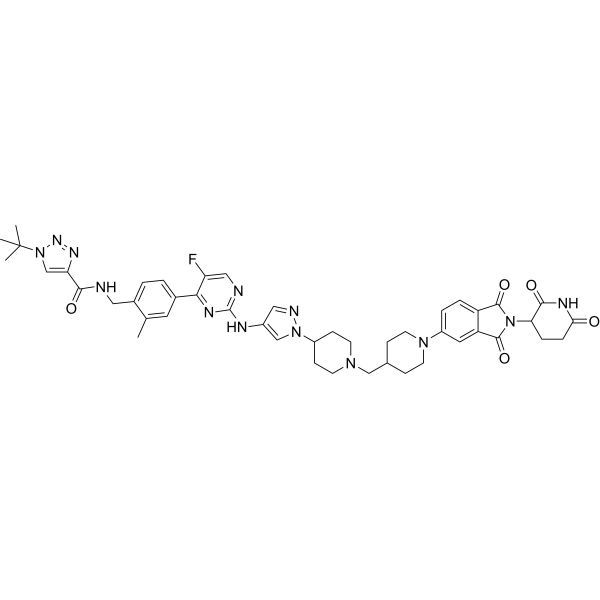
PROTAC BTK Degrader-9 is a potent BTK PROTAC degrader with a DC50 of 1.29 nM (in Mino cells at 4 h). PROTAC BTK Degrader-9 induces the formation of a stable ternary complex with BTK and the CRBN E3 ubiquitin ligase, thereby mediating proteasomal degradation of BTK in a CRBN-dependent manner. PROTAC BTK Degrader-9 downregulates the RANKL-activated BTK-PLCγ2-Ca 2+-NFATc1 signaling pathway. PROTAC BTK Degrader-9 alleviates alveolar bone resorption in periodontitis models of Mus musculus (house mouse). PROTAC BTK Degrader-9 can be used in research related to periodontitis .
loading...
    loading...
Cat. No.: HY-167244
CAS No.: 5823-25-6
Target:  

Insecticide

Research Areas:  

Others

AI 3-23445 is a compound with environmental toxicity and insecticidal activity, capable of inducing avoidance behavior in Peromyscus maniculatus and Mus musculus. AI 3-23445 can be utilized in agricultural research .
loading...
    loading...
Cat. No.: HY-162060
CAS No.: 2894823-79-9
Target:  

HDAC NO Synthase Akt PI3K

Research Areas:  

Cardiovascular Disease

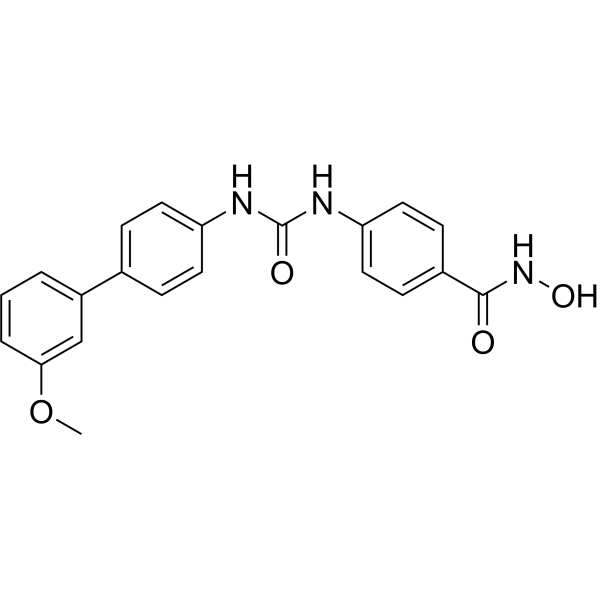
YPX-C-05 is an orally active HDAC inhibitor and vasodilator. YPX-C-05 inhibits HDAC enzymatic activity, increases histone H4 acetylation, activates the PI3K/Akt pathway, promotes Akt and eNOS phosphorylation, enhances eNOS activity, and boosts nitric oxide production. YPX-C-05 increases Tetrahydrobiopterin (HY-107383) levels, restores serum nitric oxide levels, reduces endothelin-1 levels, and improves endothelial function. YPX-C-05 reduces vascular remodeling and exerts antihypertensive effects in hypertensive Mus musculus mice. YPX-C-05 can be used for the research of hypertension .
loading...
    loading...
Cat. No.: HY-187700
Research Areas:  

Neurological Disease

BRD3290 is a GluA3-preferring AMPA receptor positive allosteric modulator with brain exposure in Mus musculus (mice) following peripheral administration. BRD3290 preferentially potentiates GluA3-containing AMPA receptors over GluA1/2-containing AMPA receptors. BRD3290 increases cerebellar cGMP levels in Mus musculus (mice). BRD3290 does not induce convulsions, alter motor function, or improve novel object recognition task performance in Mus musculus (mice) at tested doses. BRD3290 can be used for the research of schizophrenia .
loading...
    loading...
Cat. No.: HY-D3379
Neuro-DiO trifluoromethanesulfonate is a green Fluorescent carbocyanine dye and also a vascular labeling agent. Neuro-DiO trifluoromethanesulfonate can be used for confocal microscopy imaging of cerebral blood vessels in mice (Mus musculus) .
loading...
    loading...
Cat. No.: HY-N11732
CAS No.: 36375-21-0
O-Demethylrotenone is a rotenone (HY-B1756) derivative and a photodegradation product of rotenone that induces acute intraperitoneal toxicity. The acute intraperitoneal LD50 of O-Demethylrotenone in Mus musculus is 8.0 mg/kg .
loading...
    loading...
Cat. No.: HY-183924
CAS No.: 725237-11-6
Target:  

Syk Tyrosinase

Research Areas:  

Inflammation/Immunology

SYK-IN-14 is an orally active Syk and ZAP-70 inhibitor with human Syk IC50 of 0.006 μM, human ZAP-70 IC50 of 0.23 μM. SYK-IN-14 functionally inhibits Syk kinase activity in vitro. SYK-IN-14 functionally inhibits ZAP-70 kinase activity in vitro. SYK-IN-14 suppresses passive cutaneous anaphylaxis reaction in Mus musculus mice. SYK-IN-14 suppresses Concanavalin A (HY-P2149)-induced IL-2 production in Mus musculus mice. SYK-IN-14 can be used for the research of allergic disorders and autoimmune diseases .
loading...
    loading...
Cat. No.: HY-156156
CAS No.: 2248752-25-0
Synonyms: Z1480758218; ZINC000157673384
Target:  

Melatonin Receptor

Research Areas:  

Neurological Disease

UCSF3384 (Z1480758218) is a selective, blood-brain barrier-permeable MT1 inverse agonist, with an EC50 of 21 nM for hMT1. UCSF3384 selectively elevates basal cAMP levels. UCSF3384 delays circadian rhythm resetting and advances the onset of wheel-running activity rhythm in Mus musculus. UCSF3384 is applicable to research related to circadian rhythm disorders .
loading...
    loading...
Cat. No.: HY-182584
CAS No.: 153607-45-5
Target:  

5-HT Receptor

Research Areas:  

Neurological Disease

S 15931 is a 5-HT1A receptor inhibitor. S 15931 inhibits the late-phase hindpaw licking response induced by formalin and the abdominal writhing response induced by acetic acid in Mus musculus. S 15931 abolishes the spontaneous tail-flick response induced by 8-OH-DPAT in Rattus norvegicus and potentiates the analgesic effect of morphine. S 15931 is applicable for pain-related research .
loading...
    loading...
Cat. No.: HY-181740
Target:  

CD1

Research Areas:  

Cancer

GCB-27b is an immunostimulant that binds to CD1d. GCB-27b forms a stable and long-lasting complex with CD1d, which is presented to the TCR of NKT cells to drive immune responses. GCB-27b induces a Th1-skewed immune response in *Mus musculus*, resulting in high expression of IFN?γ with restricted IL-4 levels. GCB-27b is applicable to research related to lung metastasis of melanoma .
loading...
    loading...
Cat. No.: HY-189008
Target:  

Others

17β-HSD13-IN-1 is a selective 17β-HSD13 inhibitor with a human IC50 of 9 nM, high selectivity over 17β-HSD1, nanomolar cellular activity, broad pH solubility, extended rodent plasma mean residence times, and high oral bioavailability in Mus musculus. 17β-HSD13-IN-1 engages in hydrophobic interactions with specific active-site amino acids of its target enzyme. 17β-HSD13-IN-1 can be used for the research of metabolic dysfunction-associated steatohepatitis (mash) .
loading...
    loading...
Cat. No.: HY-P71376
Purity:  ≥ 95%, as determined by reducing SDS-PAGE.
Synonyms: TPK1; Thiamine Kinase; Thiamin Pyrophosphokinase 1; CDNA FLJ46821 Fis, Clone TSTOM2002611, Moderately Similar To Mus Musculus Thiamin Pyrophosphokinase (Tpk1); HTPK1; Uncharacterized Protein TPK1; PP20; Thiamine Pyrophosphokinase; Thiamine Pyrophosphokina
Species:  
Human
Source:  
HEK293
loading...
    loading...

