

68 Results for "

N-terminus

" in MedChemExpress (MCE) Product Catalog:
Products (68)

68 Results for "N-terminus" in MCE Product Catalog:

5
5 Cited Publications
Cat. No.: HY-150279
CAS No.: 2565638-16-4
Purity:  99.65%
Target:  

DNA/RNA Synthesis

Research Areas:  

Others

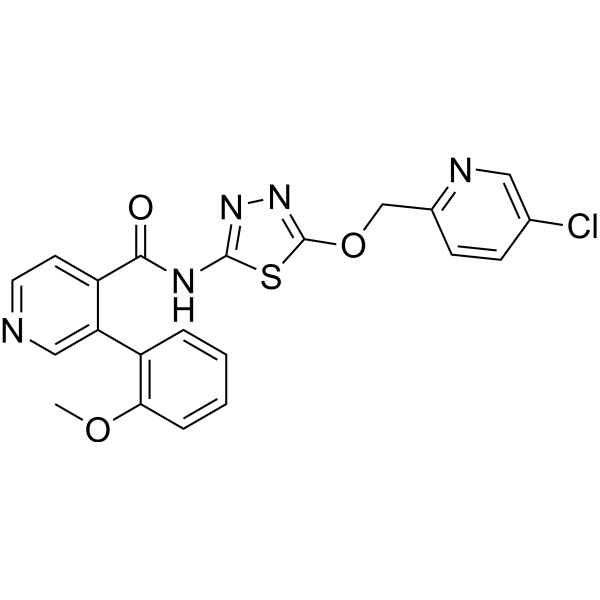
PolQi2 is a PolΘ inhibitor that targets and inhibits alt-EJ (alternative end-joining) repair by inhibiting the helicase domain at the N-terminus of PolΘ. PolQi2 enhances the precision and integration efficiency of gene editing at different loci and in various cell lines. Furthermore, the combined use of PolQi2 with DNA-PK inhibitors reduces the off-target effects of Cas9. PolQi2 can be used in gene editing research .
loading...
    loading...
3
3 Cited Publications
Cat. No.: HY-17573
CAS No.: 37025-55-1
Target:  

Oxytocin Receptor

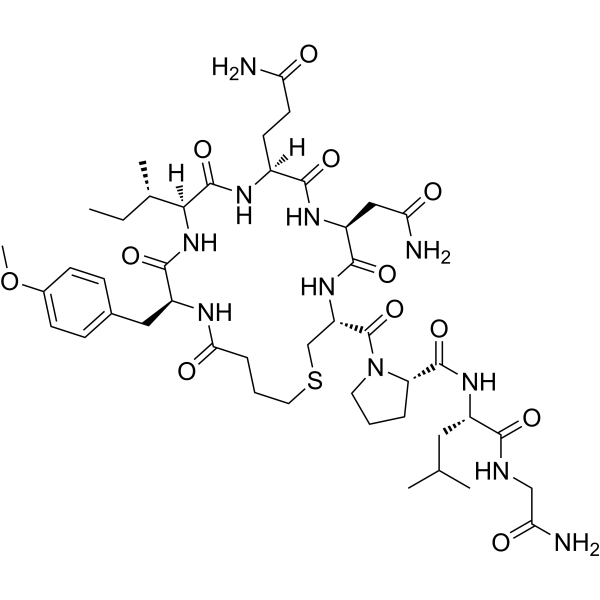
Carbetocin, an oxytocin (OT) analogue, is an oxytocin receptor agonist with a Ki of 7.1 nM. Carbetocin has high affinity to chimeric N-terminus (E1) of the oxytocin receptor (Ki=1.17 μM). Carbetocin has the potential for postpartum hemorrhage research. Carbetocin can crosse the blood-brain barrier and produces antidepressant-like activity via activation of oxytocin receptors in the CNS .
loading...
    loading...
3
3 Cited Publications
Cat. No.: HY-17573A
CAS No.: 1631754-28-3
Target:  

Oxytocin Receptor

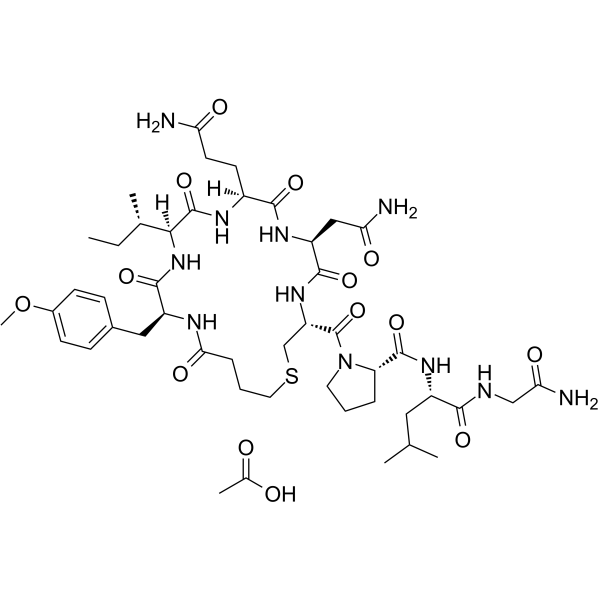
Carbetocin acetate, an oxytocin (OT) analogue, is an oxytocin receptor agonist with a Ki of 7.1 nM. Carbetocin acetate has high affinity to chimeric N-terminus (E1) of the oxytocin receptor (Ki=1.17 μM). Carbetocin acetate has the potential for postpartum hemorrhage research. Carbetocin acetate can crosse the blood-brain barrier and produces antidepressant-like activity via activation of oxytocin receptors in the CNS .
loading...
    loading...
2
2 Cited Publications
Cat. No.: HY-16757
CAS No.: 853400-76-7
Synonyms: NNZ-2566
Target:  

iGluR

Research Areas:  

Neurological Disease

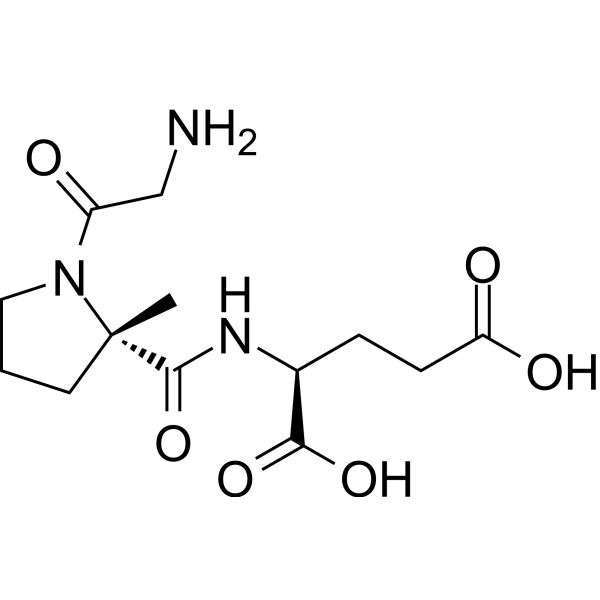
Trofinetide (NNZ-2566), a synthetic analogue of the endogenous N-terminus tripeptide, Glycine-Proline-Glutamate (GPE), has been shown to be neuroprotective in animal models of brain injury.
loading...
    loading...
1
1 Cited Publications
Cat. No.: HY-W591424
CAS No.: 92451-01-9
Synonyms: mPEG2000-SC; mPEG2000-Succinimidyl ester
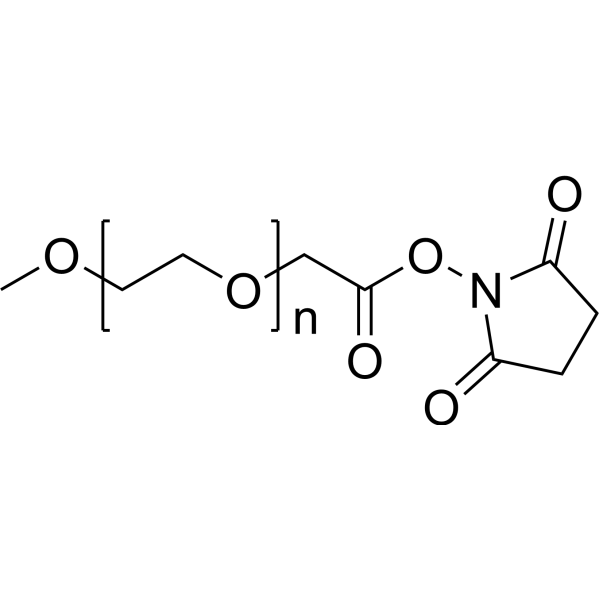
m-PEG2000-NHS ester (mPEG2000-SC) is a reagent with both cell adhesion inhibition and peptide conjugation functions. The NHS ester group of m-PEG2000-NHS ester forms stable amide bonds with primary amine-containing molecules (e.g., the N-terminus of MMP-2-cleavable octapeptide) to generate mPEG-peptide intermediates for liposome surface modification. When m-PEG2000-NHS ester is immobilized on a cystamine-modified gold surface, it can construct an in vitro model for cell adhesion kinetic studies, and higher PEG density and thicker layers correlate with lower cell adhesion rates. m-PEG2000-NHS ester can synthesize MMP-2-responsive PEGylated lipid conjugates to achieve MMP-triggered dePEGylation in the tumor microenvironment. m-PEG2000-NHS ester can be used in studies related to colon cancer and other conditions .
loading...
    loading...
1
1 Cited Publications
Cat. No.: HY-P0327
CAS No.: 245445-88-9
Target:  

Inhibitory Antibodies

Research Areas:  

Others

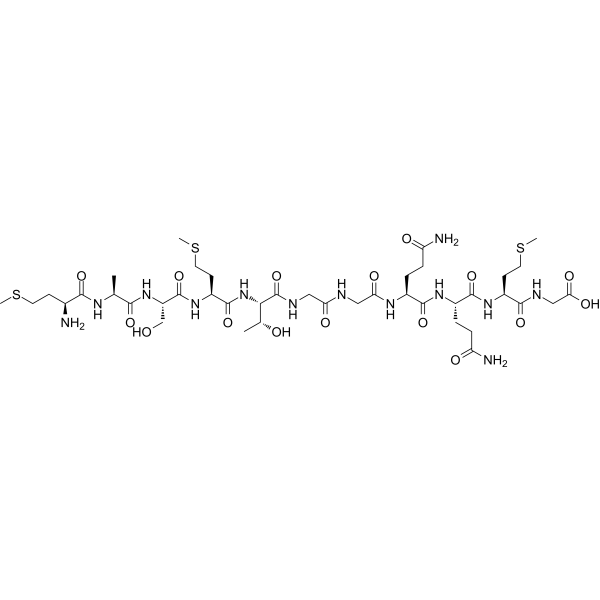
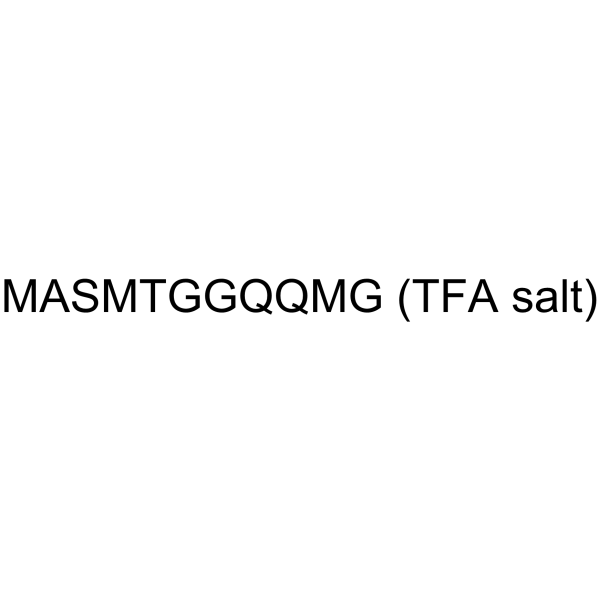
T7 Tag Peptide is a protein tag peptide composed of 11 residues from the N-terminus of gp10, the capsid protein of T7 bacteriophage. T7 Tag Peptide can be fused to the N-terminus or C-terminus of proteins such as enhanced green fluorescent protein (EGFP). T7 Tag Peptide is applicable for various immunoassays and affinity purification .
loading...
    loading...
1
1 Cited Publications
Cat. No.: HY-P99177
CAS No.: 2305638-98-4

Target:  

Inhibitory Antibodies

Research Areas:  

Cardiovascular Disease Infection

Enibarcimab is a humanized, non-neutralizing monoclonal antibody targeting adrenomedullin (ADM). Enibarcimab binds to the N-terminus of ADM, retains ADM in the circulation, and mobilizes interstitial ADM to increase the level of active bio-ADM, ultimately stabilizing blood vessels. Enibarcimab can be used in research related to septic shock and acute heart failure .
loading...
    loading...
1
1 Cited Publications
Cat. No.: HY-P2543
CAS No.: 150138-78-6
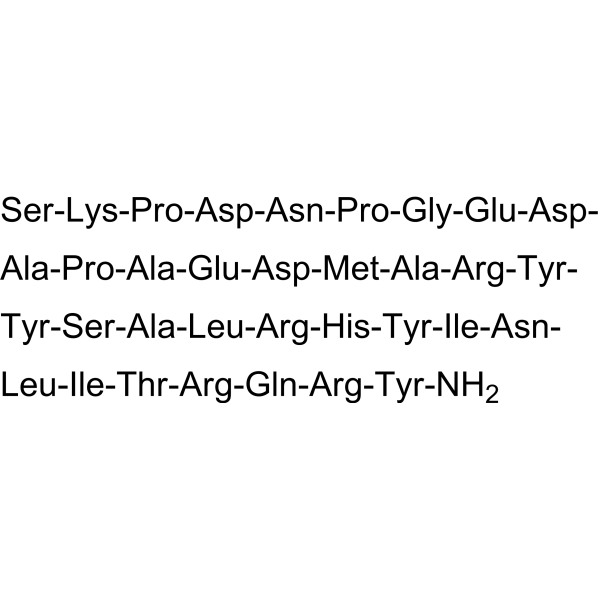
Neuropeptide Y (3-36) (human, rat) is a neuropeptide Y fragment derived from humans or rats. Neuropeptide Y is an extremely abundant neurotransmitter in central and peripheral neurons, and it participates in the regulation of psychomotor activity, circadian rhythm, feeding behavior and cardiovascular function. Neuropeptide Y (3-36) (human, rat) can serve as a substrate to be sequentially degraded from its N-terminus by AfuS28, and it requires binding to AfuS28 and SedB to be decomposed into amino acids, dipeptides and tripeptides [1] [2].
loading...
    loading...
1
1 Cited Publications
Cat. No.: HY-P10495A
Target:  

Inhibitory Antibodies

Research Areas:  

Cancer

GPR110 peptide agonist P12 acetate is the acetate salt form of GPR110 peptide agonist P12 (HY-P10495). GPR110 peptide agonist P12 acetateis a peptide that acts as a GPR110 agonist. GPR110 peptide agonist P12 acetate can significantly enhance the initial rate of GPR110 stimulated G protein GTPγS binding. GPR110 peptide agonist P12 acetate mimics the action of natural ligands, causing the extracellular domain (ECD) of the GPR110 to dissociate from the seven transmembrane domains (7TM), exposing the β-strand-13/stalk region at the N-terminus of the 7TM domain, which acts as an agonist to activate G protein signaling. GPR110 peptide agonist P12 acetate can be used in the study of developmental disorders and cancers related to GPR110 .
loading...
    loading...
1
1 Cited Publications
Cat. No.: HY-P0327A
Target:  

Inhibitory Antibodies

Research Areas:  

Others

T7 Tag Peptide TFA is a protein tag consisting of 11 residues from the N-terminus of the T7 bacteriophage capsid protein gp10. T7 Tag Peptide TFA can be fused to the N-terminus or C-terminus of proteins such as enhanced green fluorescent protein (EGFP). T7 Tag Peptide TFA can be used in various immunoassays and affinity purification .
loading...
    loading...
Cat. No.: HY-E70076
CAS No.: 9014-01-1
Synonyms: Bacillopeptidaseb
Target:  

Ser/Thr Protease

Research Areas:  

Metabolic Disease

Subtilisin, bacillus licheniformis (Bacillopeptidaseb) is a serine endopeptidase that cleaves peptide bonds with broad substrate specificity. Subtilisin, bacillus licheniformis exhibits P1 site preference (the first residue at the N-terminus of the cleavage site). Subtilisin, bacillus licheniformis can be used in protein hydrolysis, detergents, proteomics, and other fields .
loading...
    loading...
Cat. No.: HY-133513
CAS No.: 1919794-40-3
Purity:  98.15%
Synonyms: (±)-H3L28
Target:  

Drug Derivative

Research Areas:  

Cancer

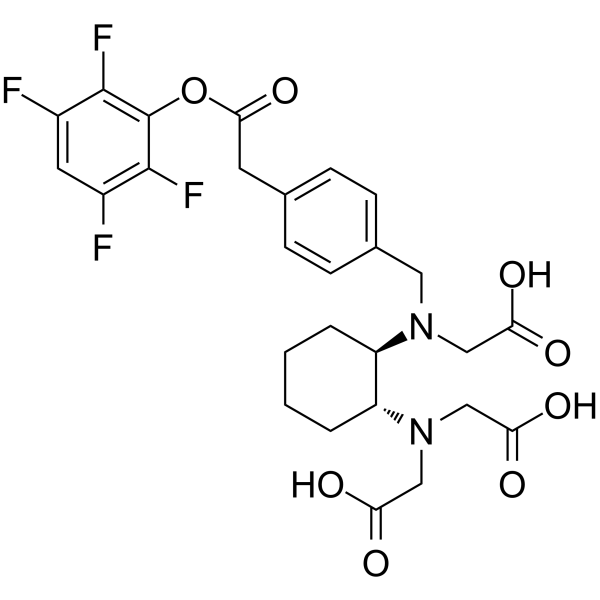
(±)-H3RESCA-TFP ((±)-H3L28) is a tetrafluorophenyl ester derivative of restrained complexing agent (RESCA). (±)-H3RESCA-TFP can be used to conjugate the chelator with a biomolecule via amine coupling (e.g., N terminus and/or the ε-amino groups of lysine) .
loading...
    loading...
Cat. No.: HY-P10069
CAS No.: 2313534-24-4
Research Areas:  

Others

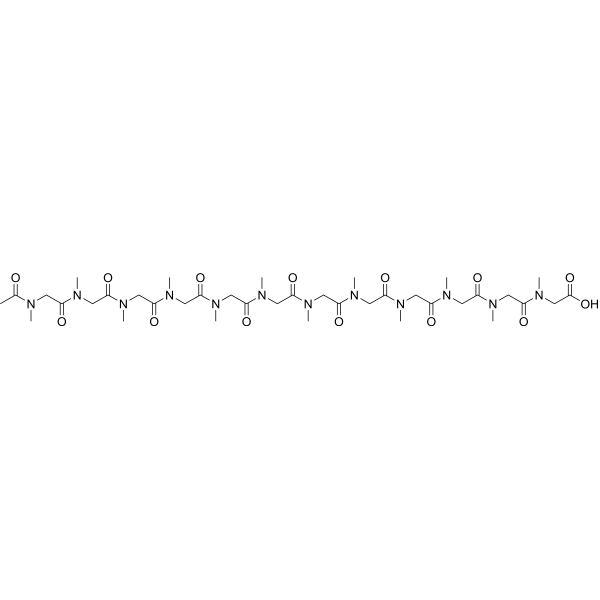
Ac-pSar12-OH is a water-soluble polymer of the polysarcosine class and can be used as a linker. Ac-pSar12-OH is a linear polypeptide derivative composed of 12 arginine units. Ac-pSar12-OH N-terminus is modified with an acetyl group, while the C-terminus retains a free hydroxyl group, which can help enhance the stability of the polypeptide .
loading...
    loading...
Cat. No.: HY-P11308
CAS No.: 1421680-54-7
Target:  

EGFR

Research Areas:  

Cancer

Cys-GE11 is an N-terminal modified GE11 (HY-P10128) with cysteine ​​(Cys) added. Cys-GE11 can be coupled through the thiol group of Cys. Cys-GE11 can be linked to PEG-P (TMC-DTC) through the N-terminus of cysteine to form a targeted polymer. Cys-GE11 can target cells with high EGFR expression (such as SMMC-7721 cells). Cys-GE11 can significantly enhance drug enrichment at the tumor site and exhibit low toxicity .
loading...
    loading...
Cat. No.: HY-164166
CAS No.: 2749824-37-9
Research Areas:  

Others

Fmoc-Sar-Sar-Sar-OH is a small molecule polypeptide composed of sarcosine residues, in which the N-terminus of the peptide chain is protected by Fmoc. Fmoc-Sar-Sar-Sar-OH can be used for peptide synthesis or synthesis of agent-peptide ligand conjugates .
loading...
    loading...
Cat. No.: HY-P99163
CAS No.: 2096513-89-0
Synonyms: ABBV-8E12; C2N-8E12

Target:  

Tau Protein

Research Areas:  

Neurological Disease

Tilavonemab (ABBV-8E12) is a humanized anti-tau monoclonal antibody that binds to amino acids 25-30 near the N-terminus of the tau protein. Tilavonemab can block the ability of human and mouse neurons to uptake tau aggregates. Tilavonemab can be used for research on Alzheimer’s disease and other tauopathies .
loading...
    loading...
Cat. No.: HY-19738
CAS No.: 185351-19-3
Target:  

Tau Protein

Research Areas:  

Neurological Disease

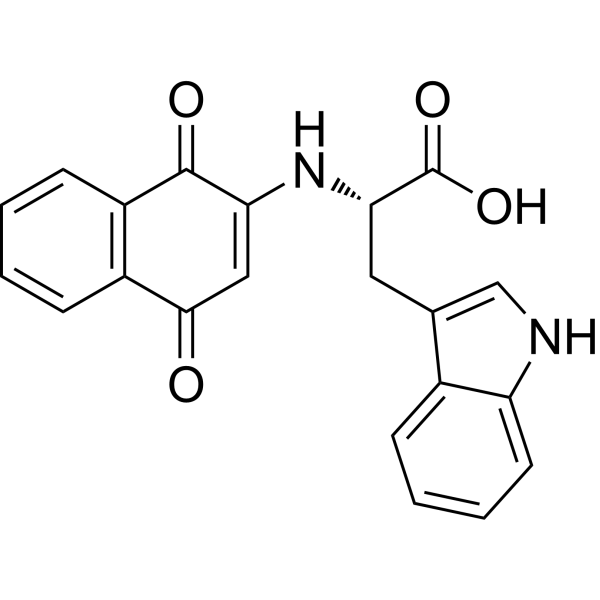
NQTrp, an aromatic naphthoquinone-tryptophan hybrid molecule, an inhibitor of the aggregation of the tau protein with generic anti-amyloidogenic effects. NQTrp inhibits the in vitro aggregation of hexapeptide ( 41GCWMLY 46 within the N-terminus of γD-crystallin) as well as full-length γD-crystallin .
loading...
    loading...
Cat. No.: HY-125372
CAS No.: 16348-49-5
Purity:  99.85%
Synonyms: ABAO
Research Areas:  

Others

2-Amino benzamidoxime (ABAO) acts as a bioconjugation reagent precursor and a fluorescent probe precursor. 2-Amino benzamidoxime contains an aniline group for imine activation of aldehydes, as well as a nucleophilic group (Nu:) located at the ortho position of the amine, which is responsible for intramolecular cyclization. 2-Amino benzamidoxime reacts with glyoxal at the N-terminus of phage-displayed peptide libraries. Derivatives of 2-Amino benzamidoxime can be used for protein bioconjugation. Derivatives of 2-Amino benzamidoxime serve as fluorescent probes .\n


loading...
    loading...
Cat. No.: HY-W717743
CAS No.: 913528-04-8
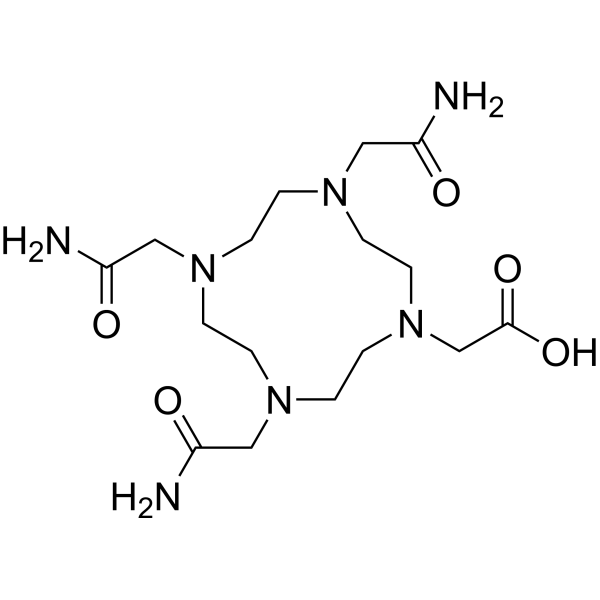
DOTAM-mono-acid is a chelator with DOTAM as its core. DOTAM-mono-acid contains a carboxylic acid group that can be activated to form an amide bond with the N-terminus of a peptide. DOTAM-mono-acid can form peptide conjugates for radiometal labeling .
loading...
    loading...
Cat. No.: HY-P5299
CAS No.: 114726-49-7
Research Areas:  

Others

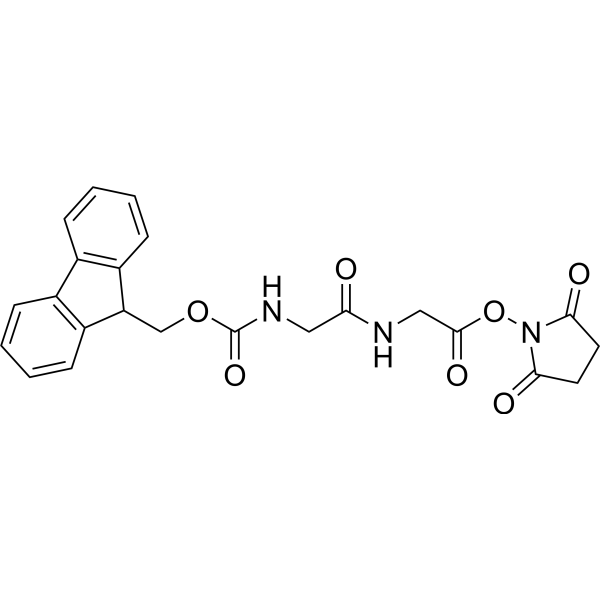
Fmoc-Gly-Gly-OSu is a dipeptide linker intermediate composed of glycine residues, with its N-terminus protected by Fmoc and C-terminus activated by N-hydroxysuccinimide (OSu). Fmoc-Gly-Gly-OSu can be used for the synthesis of ADC linker .
loading...
    loading...

