54 Results for "

PET ligands

" in MedChemExpress (MCE) Product Catalog:
Products (54)

54 Results for "PET ligands" in MCE Product Catalog:

2
2 Cited Publications
Cat. No.: HY-153549
CAS No.: 1341207-62-2
Purity:  99.03%
Research Areas:  

Cancer

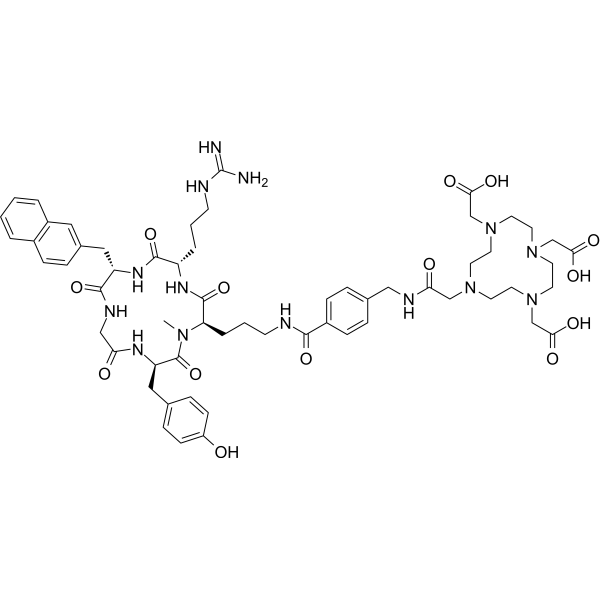
Pentixafor is a cyclic pentapeptide ligand that targets CXCR4. Pentixafor is composed of the cyclic pentapeptide Pentixafor peptide cyclo(dTyr-dOrn(NMe)-R-Nal-G) (HY-P11451), a linker, and a DOTA chelator. Pentixafor is capable of being labelled with 68Gallium ( 68Ga) for positron emission tomography (PET) imaging . Pentixafor can be used for the synthesis/research of Radionuclide-Drug Conjugates (RDCs).
loading...
    loading...
1
1 Cited Publications
Cat. No.: HY-125399
CAS No.: 1366302-52-4
Purity:  99.74%
Synonyms: HBED-CC-PSMA
Research Areas:  

Cancer

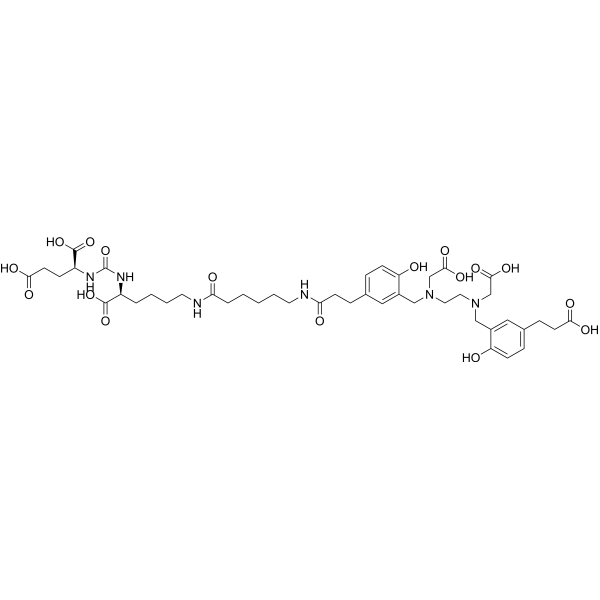
PSMA-11 is a small molecule ligand that targets prostate-specific membrane antigen (PSMA) and has the ability to inhibit PSMA activity. PSMA-11 can be used to synthesize 68Ga-PSMA-11, a positron emission tomography (PET) tracer that can be used to image advanced prostate cancer .
loading...
    loading...
1
1 Cited Publications
Cat. No.: HY-163574
CAS No.: 3033951-71-9
Target:  

hnRNP

Research Areas:  

Neurological Disease

TDP-43 ligand-1 is a specific ligand for TDP43, and its Ki value for binding to TDP-43 protein aggregates is 78 nM. TDP-43 ligand-1 can be used in the research of PET imaging probes for TDP-43 proteinopathies.
loading...
    loading...
Cat. No.: HY-175748
CAS No.: 3056154-69-6
MK-7337 is an α-synuclein ligand with an affinity of < 1 nM. MK-7337 labeled with 11C can be used as a PET tracer for neurodegenerative disorders like Parkinson’s disease imagination .
loading...
    loading...
Cat. No.: HY-137002
CAS No.: 913733-27-4
Research Areas:  

Others

Fmoc-N-Me-Arg(Pbf)-OH is an amino acid derivative containing a guanidinium protecting group on the arginine side chain. Fmoc-N-Me-Arg(Pbf)-OH is used in the synthesis of neurotensin-derived NTS1 ligands for PET imaging .
loading...
    loading...
Cat. No.: HY-101185
CAS No.: 1320211-61-7
Target:  

Tau Protein

Research Areas:  

Neurological Disease

T808 is a selective tau protein-targeting ligand. T808 can be used to synthesize [ 18F]-T808, a highly selective tau protein positron emission tomography (PET) tracer. T808 can also be used to synthesize [ 3H]-T808, a marker for in vitro experiments. T808 can be used for the research of alzheimer’s disease .
loading...
    loading...
Cat. No.: HY-152148
CAS No.: 1672691-50-7
Purity:  99.26%
Target:  

MAGL

Research Areas:  

Neurological Disease

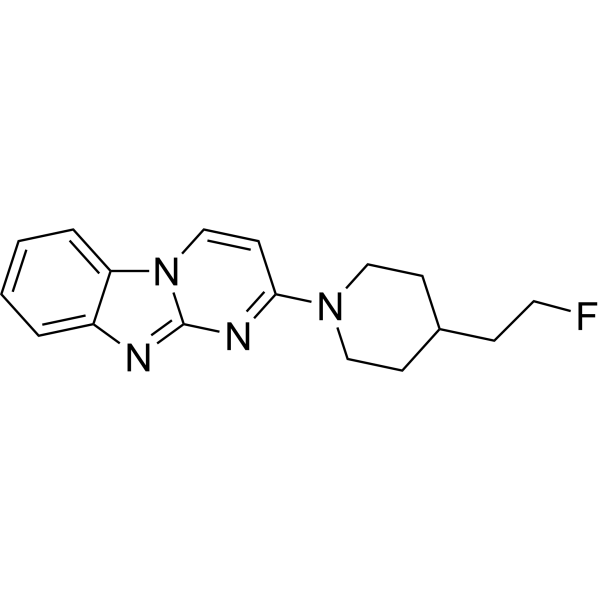
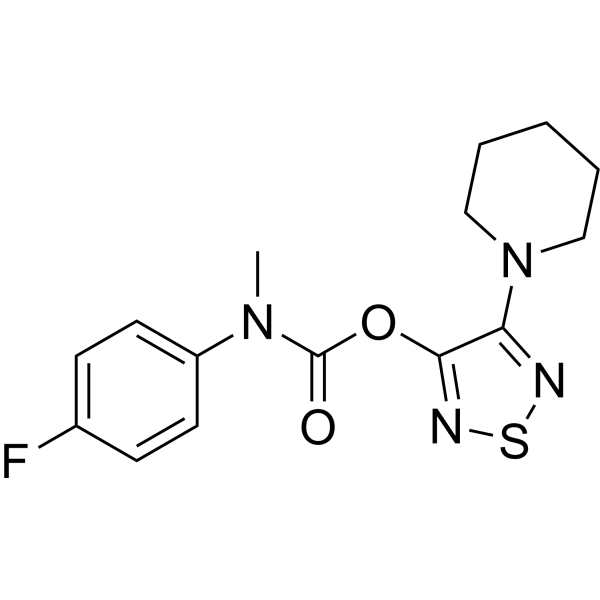
JZP-MA-11 is a brain-penetrant positron emission tomography (PET) ligand targeting the brain endocannabinoid α/β-hydrolase domain 6 (ABHD6) enzyme. JZP-MA-11 selectively inhibits ABHD6 with an IC50 value of 126 nM. [18F]JZP-MA-11 has the potential for preclinical evaluation targeting the brain ABHD6 in mice and nonhuman primate (NHP) .
loading...
    loading...
Cat. No.: HY-P5362
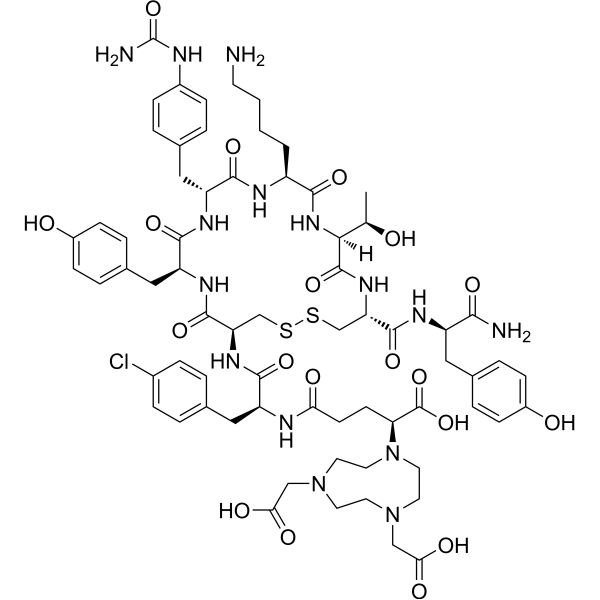
NODAGA-LM3 is a ligand that can cross the blood-brain barrier and targets somatostatin receptor SSTR2 with high affinity (IC50 = 1.3 nM). NODAGA-LM3 does not trigger the internalization of SSTR2 and can inhibit agonist-induced internalization processes. NODAGA-LM3 shows low uptake in normal tissues such as the liver and spleen, but high uptake in the lungs and blood pool. 68Ga-labeled NODAGA-LM3 can serve as a PET imaging agent for well-differentiated neuroendocrine tumors, and is applied in studies related to small cell lung cancer and well-differentiated neuroendocrine tumors .
loading...
    loading...
Cat. No.: HY-P5018
CAS No.: 1820563-84-5
Research Areas:  

Neurological Disease Cancer

NOTA-AE105 is a uPAR-targeting PET imaging ligand. NOTA-AE105 can be radiolabeled with 64Cu and 68Ga. NOTA-AE105 binds to the urokinase-type plasminogen activator receptor, thereby enabling PET imaging of uPAR expression in tumor tissues. NOTA-AE105 can be used for research on head and neck squamous cell carcinoma, breast cancer, prostate cancer, bladder cancer, and glioblastoma .
loading...
    loading...
Cat. No.: HY-137557
CAS No.: 1565797-16-1
Synonyms: APN1607; PM-PBB3
Target:  

Tau Protein

Research Areas:  

Neurological Disease

Florzolotau (APN1607) is a positron emission tomography (PET) ligand that can be used for the detection of Alzheimer's disease (AD) and other tau proteinopathies. Its binding sites are located in the β-sheet of paired helical filaments (PHFs) and straight filaments (SFs) of tau protein, as well as in the C-shaped cavity of SFs. In addition, APN-1607 binds to intraneuronal inclusions in Alzheimer's disease (AD), primary age-related tauopathy (PART) and posterior cortical atrophy (PCA). Florzolotau shows promise for PET imaging studies of neurological disorders, particularly tau proteinopathies .
loading...
    loading...
Cat. No.: HY-100275
CAS No.: 1201323-97-8
Purity:  99.70%
Target:  

Amyloid-β

Research Areas:  

Neurological Disease

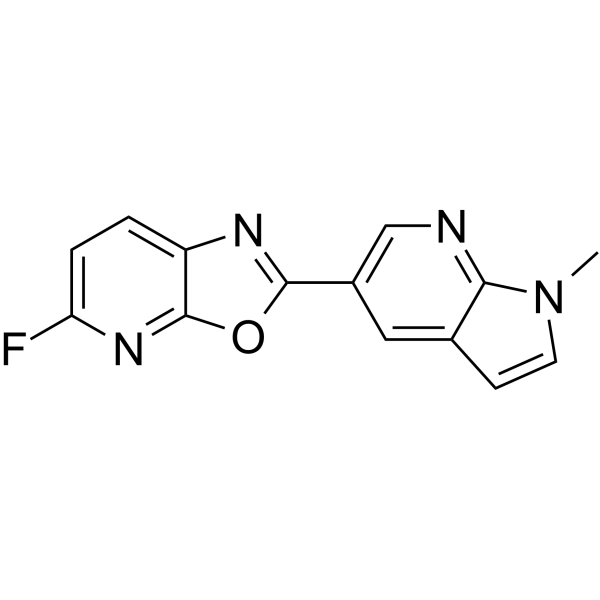
MK-3328 is a β-Amyloid ligand, which exhibits high binding potency with an IC50 of 10.5 nM. MK-3328 is capable of being labelled with 18F for positron emission tomography (PET) imaging .
loading...
    loading...
Cat. No.: HY-400882
CAS No.: 958233-17-5
Tosylate-DPA-714 is a GMP-grade precursor for the radiosynthesis of DPA-714 (HY-122607). It crosses the blood-brain barrier and exhibits steroidogenic activity. DPA-714 is a specific ligand for the 18 kDa translocator protein (TSPO) with a Ki of 7.0 nM. Tosylate-DPA-714 is safe and does not bind to central benzodiazepine receptors (benzodiazepine receptor). As a radiolabeling precursor, Tosylate-DPA-714 reacts with 18F via nucleophilic aliphatic substitution to form 18F-DPA-714, enabling specific targeted binding to TSPO. 18F-DPA-714 accurately reflects the level of neuroinflammation mediated by microglial activation, and is used for PET molecular imaging of neurological diseases such as Alzheimer's disease and multiple sclerosis .
loading...
    loading...
Cat. No.: HY-175613
Target:  

FAP

Research Areas:  

Cancer

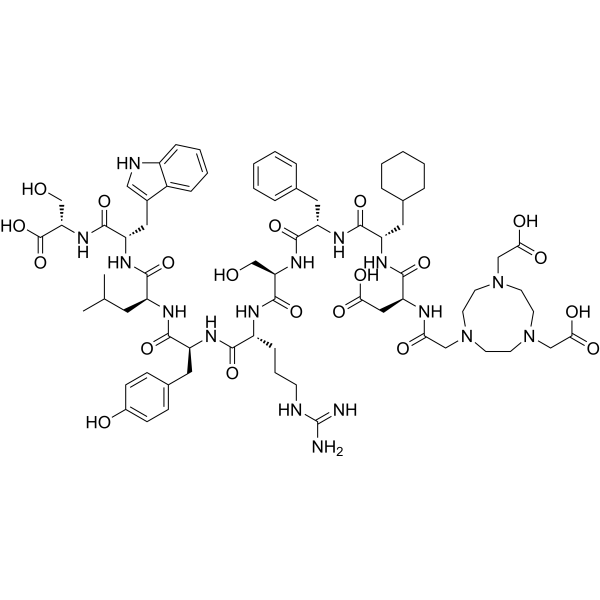
DOTA-ALB-02 is an albumin-bound FAP inhibitor (FAPI) ligand. DOTA-ALB-02 labeled with 177Lu has a high FAP-binding affinity and enhanced tumor uptake and retention with a significant tumor/nontarget ratio. DOTA-ALB-02 can be used for PET/CT and SPECT/CT imaging of cancers, especially late-stage cancers .
loading...
    loading...
Cat. No.: HY-173291
CAS No.: 3063166-64-0
Target:  

Tau Protein

Research Areas:  

Neurological Disease

Tau ligand-1 (Compound 75) is a ligand for aggregated tau protein that can penetrate the blood-brain barrier . In tissues from patients with Alzheimer's disease, progressive supranuclear palsy, corticobasal degeneration, and Pick's disease, Tau ligand-1 exhibits high affinity for aggregated tau protein, with equilibrium dissociation constant (KD) values ranging from 1 to 3.8 nM . Tau ligand-1 can serve as a potential positron emission tomography (PET) tracer and holds promise for application in positron emission tomography imaging studies of tau-related diseases in the central nervous system .
loading...
    loading...
Cat. No.: HY-P5292A
CAS No.: 2375849-11-7
Research Areas:  

Cancer

HYNIC-iPSMA TFA is a PSMA-targeted ligand for tumor molecular imaging, with a Ki value of 3.11 nM. HYNIC-iPSMA TFA consists of two components: HYNIC (6-hydrazinonicotinamide) and iPSMA (Inhibitor of Prostate-Specific Membrane Antigen). HYNIC serves as a chelating moiety to link radionuclides to the targeting molecule; iPSMA is a specific inhibitor that targets Prostate-Specific Membrane Antigen (PSMA). 68Ga-labeled iPSMA is used for prostate cancer detection via PET imaging, while the further developed 99mTc-EDDA/HYNIC-iPSMA TFA exhibits excellent specificity and sensitivity. HYNIC-iPSMA TFA can be used for the synthesis and research of radionuclide-conjugated drugs (RDC) .
loading...
    loading...
Cat. No.: HY-175229
CAS No.: 3066073-36-4
Target:  

PSMA

Research Areas:  

Cancer

PSMA ligand 1 (Compound 1c) is a PSMA ligand with an IC50 of 26.74 nM. The [ 18F]-labeled PSMA ligand 1 can serve as a PSMA PET tracer and is used in research on the diagnosis of prostate cancer .
loading...
    loading...
Cat. No.: HY-175730
CAS No.: 2816933-22-7
CB2R ligand-1 (Compound L14) is a selective Cannabinoid type 2 receptor (CB2R) ligand with a with Ki of 0.16  nM for CB2R over CB1R. CB2R ligand-1 as be used as a tracer for positron emission tomography (PET) imaging of neurodegenerative diseases, inflammation and cancer .
loading...
    loading...
Cat. No.: HY-128642
CAS No.: 2370952-98-8
Purity:  98.94%
Target:  

FAP

Research Areas:  

Cancer

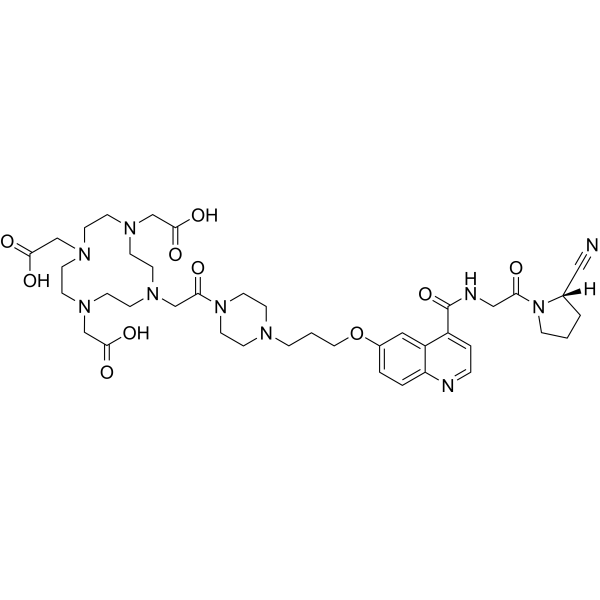
FAPI-2 is a quinoline-based fibroblast activation protein (FAP)-targeting ligand that can be labeled as 68Ga-FAPI-2 and used as a PET tracer for cancer diagnosis. FAPI-2 has advantages such as fast tracer kinetics, no need for fasting preparation, and being unaffected by blood glucose .
loading...
    loading...
Cat. No.: HY-175612
Target:  

FAP

Research Areas:  

Cancer

DOTA-ALB-01 is an albumin-bound FAP inhibitor (FAPI) ligand. DOTA-ALB-01 labeled with 68Ga or 177Lu has a high FAP-binding affinity and enhanced tumor uptake and retention. DOTA-ALB-01 can be used for PET/CT and SPECT/CT imaging of cancers, especially late-stage cancers .
loading...
    loading...
Cat. No.: HY-P5292
CAS No.: 2192215-74-8
Research Areas:  

Cancer

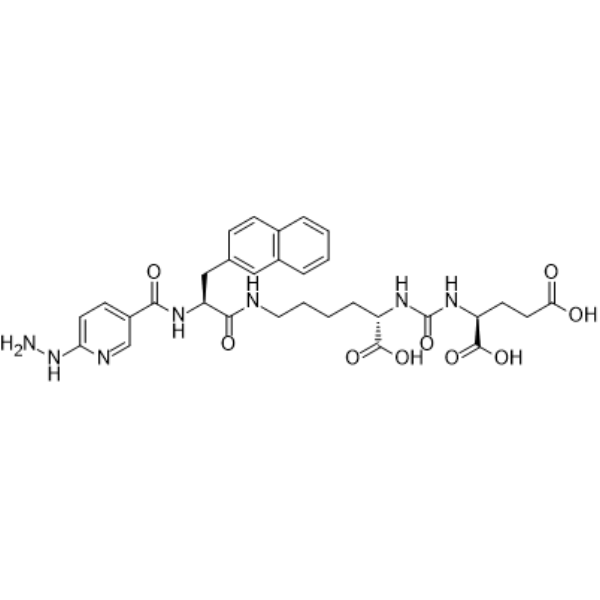
HYNIC-iPSMA is a PSMA-targeted ligand for tumor molecular imaging, with a Ki value of 3.11 nM. HYNIC-iPSMA consists of two components: HYNIC (6-hydrazinonicotinamide) and iPSMA (Inhibitor of Prostate-Specific Membrane Antigen). HYNIC acts as a chelating moiety to link radionuclides to the targeting molecule; iPSMA is a specific inhibitor that targets Prostate-Specific Membrane Antigen (PSMA). 68Ga-labeled iPSMA is used for prostate cancer detection via PET imaging, while the further developed 99mTc-EDDA/HYNIC-iPSMA TFA exhibits excellent specificity and sensitivity. HYNIC-iPSMA can be used for the synthesis and research of radionuclide-conjugated drugs (RDC) .
loading...
    loading...

