
105 Results for "

SMA

" in MedChemExpress (MCE) Product Catalog:
Products (105)

105 Results for "SMA" in MCE Product Catalog:

154
154 Publications Verification
Cat. No.: HY-50896
CAS No.: 183321-74-6
Synonyms: CP-358774; NSC 718781; OSI-774
Target:  

EGFR OAT ERK GSK-3 β-catenin

Research Areas:  

Endocrinology Cancer

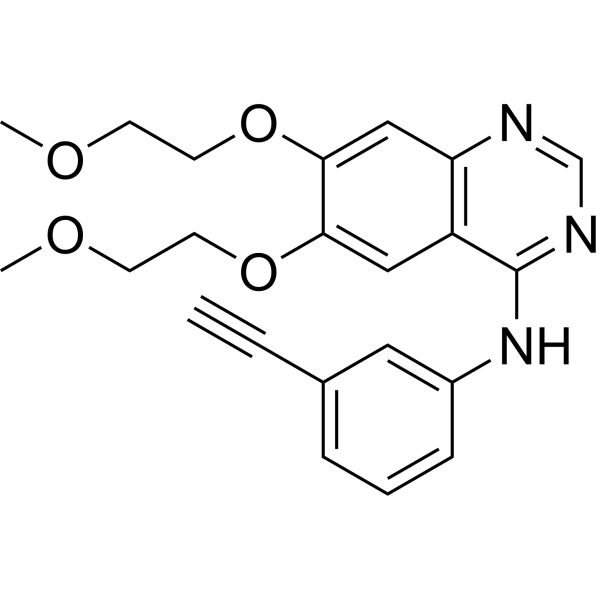
Erlotinib (CP-358774) is a selective, orally active EGFR tyrosine kinase inhibitor. Erlotinib also acts as a substrate and inhibitor of OATP2B1, with an IC50 of approximately 0.079 μM for inhibiting OATP2B1-mediated uptake of estrone 3-sulfate. Erlotinib blocks EGFR phosphorylation, downstream signal transduction, as well as the growth and proliferation of cancer cells. Erlotinib inhibits MMP-10-mediated renal injury, fibrotic lesions, the ERK1/2, GSK-3β and β-catenin signaling pathways, fibronectin, α-SMA, collagen deposition, and renal injury markers. Erlotinib is metabolized via CYP3A to produce the active metabolite OSI-420. Erlotinib can be used in research related to non-small cell lung cancer, gastric cancer, papillary renal cell carcinoma, pancreatic cancer, renal fibrosis, and other conditions .
loading...
    loading...
154
154 Publications Verification
Cat. No.: HY-12008
CAS No.: 183319-69-9
Purity:  99.94%
Synonyms: CP-358774 hydrochloride; NSC 718781 hydrochloride; OSI-774 hydrochloride
Target:  

EGFR OAT ERK GSK-3 β-catenin

Research Areas:  

Endocrinology Cancer

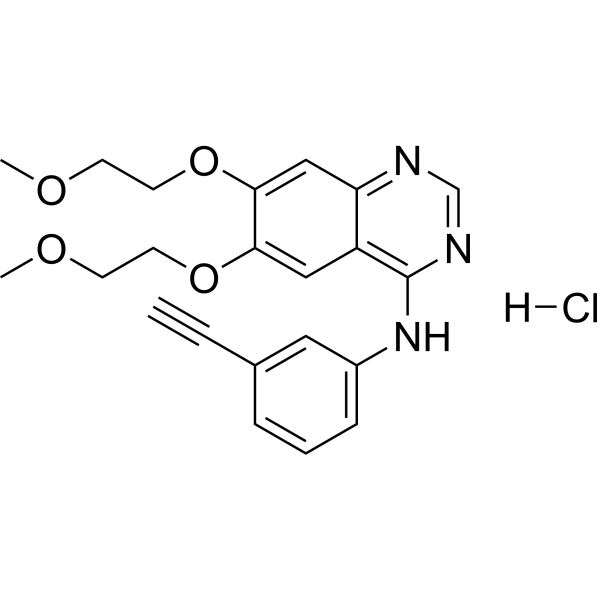
Erlotinib (CP-358774) Hydrochloride is a selective, orally active EGFR tyrosine kinase inhibitor. Erlotinib Hydrochloride also acts as a substrate and inhibitor of OATP2B1, with an IC50 of approximately 0.079 μM for inhibiting OATP2B1-mediated uptake of estrone 3-sulfate. Erlotinib Hydrochloride blocks EGFR phosphorylation, downstream signal transduction, as well as the growth and proliferation of cancer cells. Erlotinib Hydrochloride inhibits MMP-10-mediated renal injury, fibrotic lesions, the ERK1/2, GSK-3β and β-catenin signaling pathways, as well as the deposition of fibronectin, α-SMA, collagen and renal injury markers. Erlotinib Hydrochloride is metabolized via CYP3A to produce the active metabolite OSI-420. Erlotinib Hydrochloride can be used in research related to non-small cell lung cancer, gastric cancer, papillary renal cell carcinoma, EGFR inhibitor resistance and renal fibrosis .
loading...
    loading...
18
18 Cited Publications
Cat. No.: HY-19620
CAS No.: 1562338-42-4
Synonyms: LMI070; NVS-SM1
Research Areas:  

Cancer

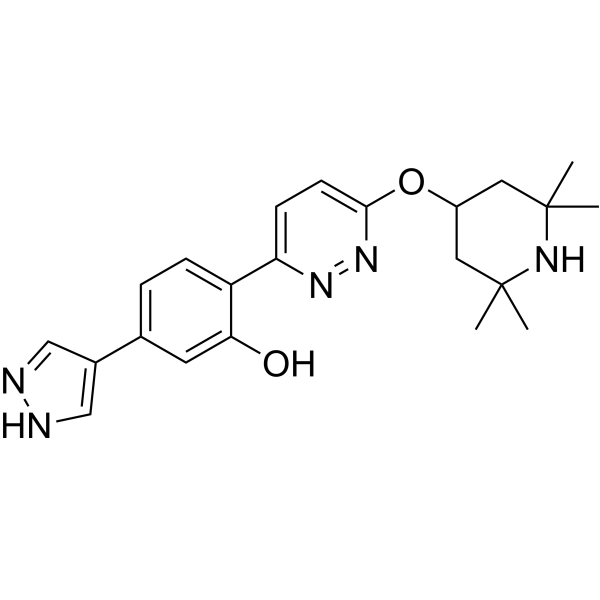
Branaplam (LMI070; NVS-SM1) is a highly potent, selective and orally active survival motor neuron-2 (SMN2) splicing modulator with an EC50 of 20 nM for SMN. Branaplam inhibits human-ether-a-go-go-related gene (hERG) with an IC50 of 6.3 μM. Branaplam elevates full-length SMN protein and extends survival in a severe spinal muscular atrophy (SMA) mouse model .
loading...
    loading...
18
18 Cited Publications
Cat. No.: HY-19620A
CAS No.: 1562338-39-9
Synonyms: LMI070 hydrochloride; NVS-SM1 hydrochloride
Research Areas:  

Cancer

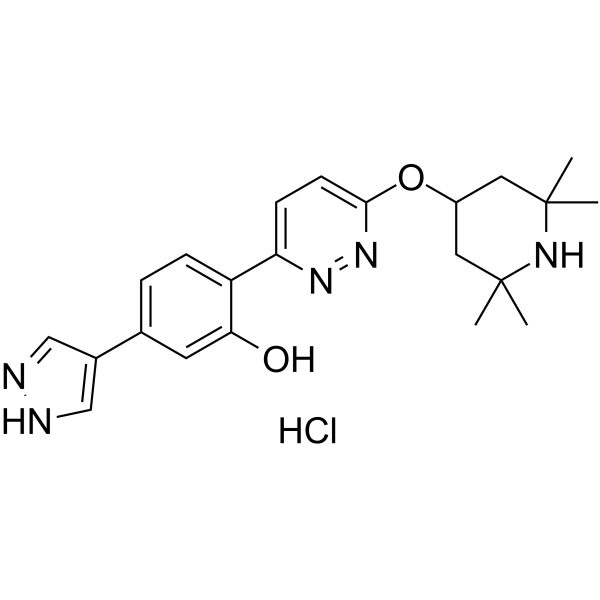
Branaplam (LMI070; NVS-SM1) hydrochloride is a highly potent, selective and orally active survival motor neuron-2 (SMN2) splicing modulator with an EC50 of 20 nM for SMN. Branaplam hydrochloride inhibits human-ether-a-go-go-related gene (hERG) with an IC50 of 6.3 μM. Branaplam hydrochloride elevates full-length SMN protein and extends survival in a severe spinal muscular atrophy (SMA) mouse model .
loading...
    loading...
7
7 Cited Publications
Cat. No.: HY-P80484
Synonyms: alpha sarcomeric Actin; alpha smooth muscle Actin; Actin alpha; ASMA; ASM-A; alpha-SMA; alpha SMA; AAT6; ACTA2; Actin alpha 2 smooth muscle aorta; Actin aortic smooth muscle; ACTSA; ACTVS; Alpha 2 actin; Alpha-actin 2; Cell growth inhibiting gene 46 protein; Growth inhibiting gene 46; ACTA_HUMAN; Actin alpha 2 smooth muscle aorta; Actin aortic smooth muscle; Actin, aortic smooth muscle; Alpha 2 actin; Alpha actin 2; Alpha cardiac actin; Alpha-actin 2; Alpha-actin-2; Cell growth inhibiting gene 46 protein; Cell growth-inhibiting gene 46 protein; Growth inhibiting gene 46; MYMY5 α-Smooth Muscle Actin; α Smooth Muscle Actin;

Host:  

Rabbit

Application:  

WB, IHC-P, FC, IP

Reactivity:  

Human, Mouse

loading...
    loading...
5
5 Cited Publications
Cat. No.: HY-151427
CAS No.: 2348795-14-0
Purity:  99.47%
Target:  

TGF-β Receptor

Research Areas:  

Inflammation/Immunology

TGFβ1-IN-1 (compound 42) is a potent, orally active TGF-β1 inhibitor. TGFβ1-IN-1 inhibits the upregulation of TGF-β1-induced fibrosis markers (α-SMA and fibronectin) and can be used in liver fibrosis disease studies .
loading...
    loading...
5
5 Cited Publications
Cat. No.: HY-P71323
Purity:  ≥85%, as determined by reducing SDS-PAGE.
Synonyms: SMAD3; MAD, Mothers Against Decapentaplegic Homolog 3; Prev. MADH3; SMAD, Mothers Against DPP Homolog 3; JV15-2; SMA- And MAD-Related Protein 3; HsT17436; Mothers Against DPP Homolog; Mothers Against Decapentaplegic Homolog 3; Mad Protein Homolog; Mothers Against DPP Homolog 3; Mad Homolog JV15-2; MAD Homolog 3; SMAD Family Member; HMAD-3; MAD Homolog; HSMAD3; HSPC193; Mad3; SMAD 3; MAD, Mothers Against Decapentaplegic Homolog 3 (Drosophila); LDS1C; SMAD, Mothers Against DPP Homolog 3 (Drosophila); LDS3; SMAD Family Member 3; Mothers Against Decapentaplegic Homolog
Species:  
Human
Source:  
E. coli
loading...
    loading...
2
2 Cited Publications
Cat. No.: HY-B0279
CAS No.: 87333-19-5
Synonyms: HOE-498
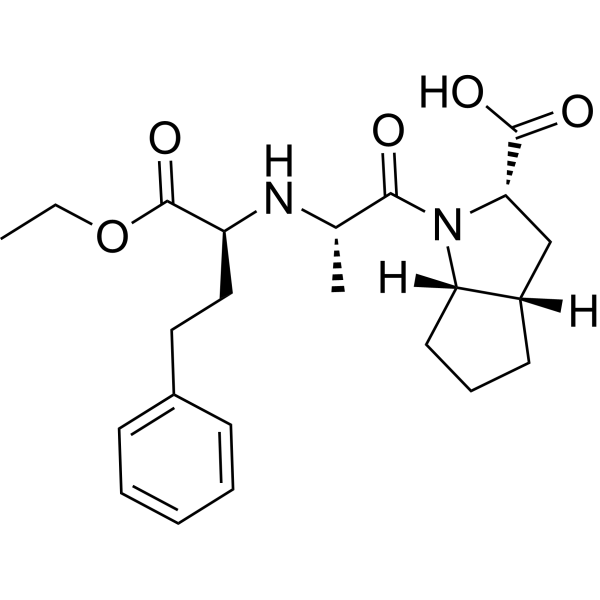
Ramipril (HOE-498) is an orally active angiotensin-converting enzyme (ACE) inhibitor with blood-brain barrier permeability, and it is metabolized in vivo to the active metabolite Ramiprilat (HY-A0115). Ramipril has antioxidant, vasoprotective, and anti-atherosclerotic effects. Ramipril reduces the degradation of angiotensin II and bradykinin, downregulates TGF-beta/CTGF/fibronectin/α-SMA, and inhibits pancreatic/cardiac fibrosis. Ramipril improves glucose tolerance and insulin secretion, and reduces weight gain/appetite. Ramipril sensitizes mast cells, enhances FcεRI histamine release/degranulation, aggravates IgE allergic reactions, and downregulates the bradykinin receptor. Ramipril improves vascular endothelial relaxation function in spontaneously hypertensive rats. Ramipril alleviates Oxaliplatin (HY-17371)-induced acute hyperalgesia in mice. Ramipril can be used in research related to diseases such as type 2 diabetes, rheumatoid arthritis, allergy, and hypertension .
loading...
    loading...
2
2 Cited Publications
Cat. No.: HY-137458
CAS No.: 1416775-46-6
Purity:  98.03%
Synonyms: ARQ 751
Target:  

Akt CDK TGF-beta/Smad

Research Areas:  

Cancer

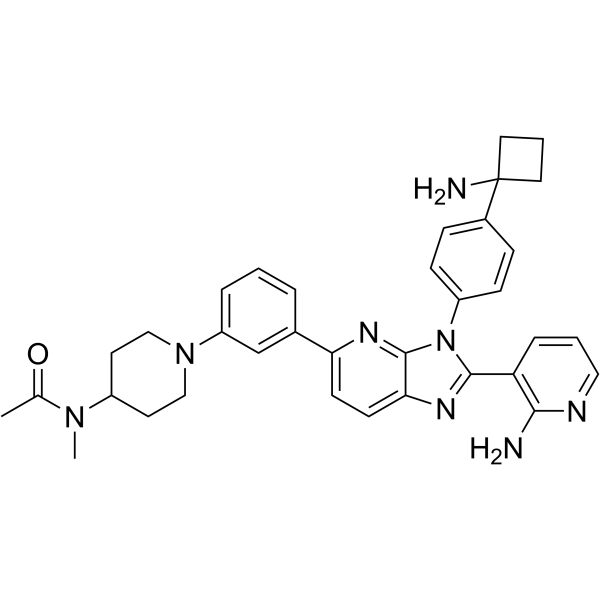
Vevorisertib (ARQ 751) is an orally active allosteric AKT inhibitor that blocks AKT phosphorylation. Vevorisertib inhibits tumor cell proliferation through Cyclin D1 and Ki67. Vevorisertib inhibits liver fibrosis through collagen accumulation, alpha-SMA, COL1, and TGF-beta. Vevorisertib reduces total bilirubin. Vevorisertib significantly reduces tumor size in a cirrhotic rat HCC model. Vevorisertib can be used for research on hepatocellular carcinoma .
loading...
    loading...
2
2 Cited Publications
Cat. No.: HY-137458A
CAS No.: 1416775-08-0
Purity:  99.13%
Synonyms: ARQ 751 trihydrochloride
Target:  

Akt CDK TGF-beta/Smad

Research Areas:  

Cancer

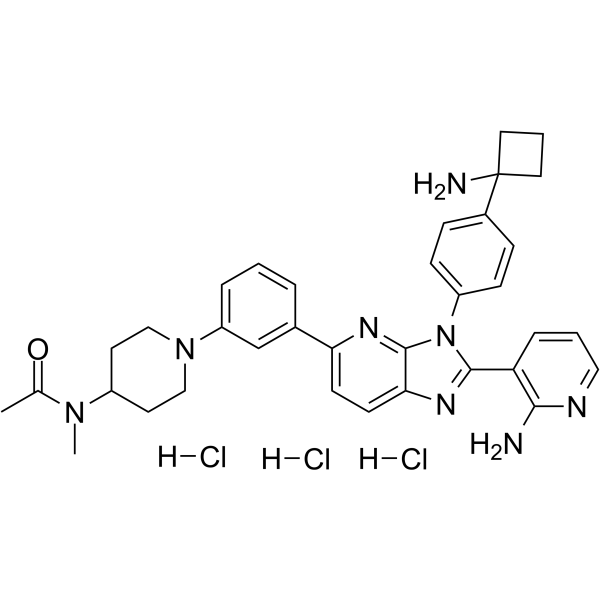
Vevorisertib trihydrochloride (ARQ 751 trihydrochloride) is an orally active allosteric AKT inhibitor that blocks AKT phosphorylation. Vevorisertib trihydrochloride inhibits tumor cell proliferation through Cyclin D1 and Ki67. Vevorisertib trihydrochloride inhibits liver fibrosis through collagen accumulation, alpha-SMA, COL1, and TGF-beta. Vevorisertib trihydrochloride reduces total bilirubin. Vevorisertib trihydrochloride significantly reduces tumor size in a cirrhotic rat HCC model. Vevorisertib trihydrochloride can be used for research on hepatocellular carcinoma .
loading...
    loading...
2
2 Cited Publications
Cat. No.: HY-137458B
Synonyms: ARQ 751 tetrahydrochloride
Target:  

Akt CDK TGF-beta/Smad

Research Areas:  

Cancer

Vevorisertib tetrahydrochloride (ARQ 751 tetrahydrochloride) is an orally active allosteric AKT inhibitor that blocks AKT phosphorylation. Vevorisertib tetrahydrochloride inhibits tumor cell proliferation through Cyclin D1 and Ki67. Vevorisertib tetrahydrochloride inhibits liver fibrosis through collagen accumulation, alpha-SMA, COL1, and TGF-beta. Vevorisertib tetrahydrochloride reduces total bilirubin. Vevorisertib tetrahydrochloride significantly reduces tumor size in a cirrhotic rat HCC model. Vevorisertib tetrahydrochloride can be used for research on hepatocellular carcinoma .
loading...
    loading...
1
1 Cited Publications
Cat. No.: HY-133897
CAS No.: 26988-72-7
Purity:  99.18%
Synonyms: 1-Methyl-DL-tryptophan; (Rac)-NLG-8189
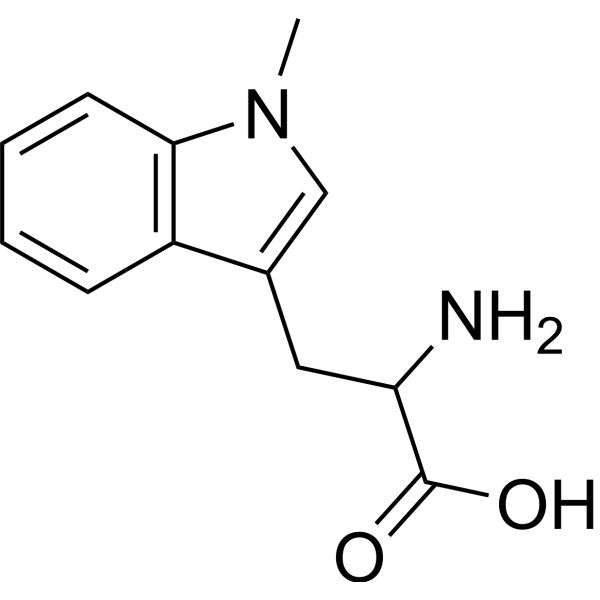
(Rac)-Indoximod (1-Methyl-DL-tryptophan) is an indoleamine 2,3-dioxygenase (IDO) inhibitor. Co-treatment with IFN-γ and (Rac)-Indoximod markedly reduces the activity of human cardiac myofibroblasts (hCMs) expressing α-SMA and induces apoptosis through up-regulating the IRF-1, Fas, and FasL genes .
loading...
    loading...
1
1 Cited Publications
Cat. No.: HY-151932
CAS No.: 3037847-72-3
Purity:  95.94%
Target:  

FXR

Research Areas:  

Inflammation/Immunology

FXR agonist 3 is an anti-NASH agent, acting by activating FXR. FXR agonist 3 inhibits COL1A1, TGF-β1, α-SMA and TIMP1 expression with anti-fibrogenic activity. FXR agonist 3 significantly reduces liver steatosis and inflammation, improves liver fibrosis level .
loading...
    loading...
1
1 Cited Publications
Cat. No.: HY-N2441
CAS No.: 74805-90-6
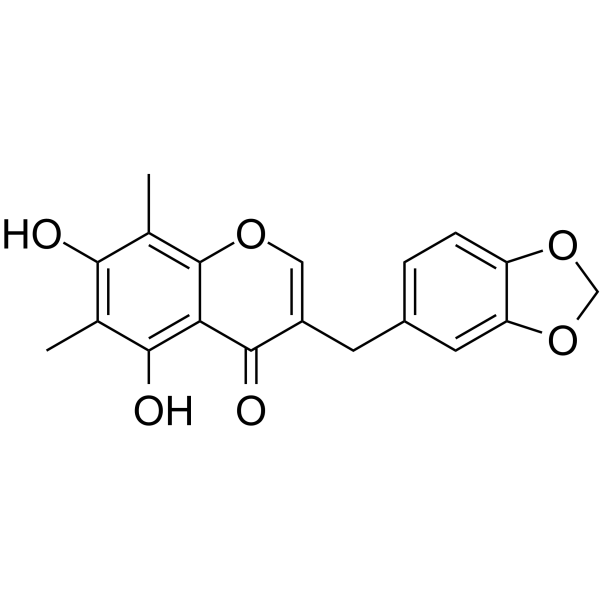
Methylophiopogonone A is a homoisoflavonoid compound found in the tuberous roots of Ophiopogon japonicus. Methylophiopogonone A inhibits lipopolysaccharide-induced NO production in mouse microglia with an IC50 of 19.2 μM. Methylophiopogonone A blocks the proliferation of LX-2 hepatic stellate cells and downregulates TGF-β1-induced expressions of type I collagen and α-SMA. Methylophiopogonone A blocks RELA/EGFR-mediated hepatic stellate cell activation, inhibits the MAPK12 pathway to reduce extracellular matrix accumulation, and simultaneously suppresses inflammatory signal transduction. Methylophiopogonone A can be used in studies related to chronic hepatitis B-associated hepatic fibrosis and neuroinflammation .
loading...
    loading...
1
1 Cited Publications
Cat. No.: HY-146434
CAS No.: 2387678-02-4
Purity:  99.37%
Target:  

TGF-beta/Smad

Research Areas:  

Inflammation/Immunology

TGFβ-IN-2 is an orally active TGF-β inhibitor. TGFβ-IN-2 suppresses the TGF-β-induced protein expression of COL1A1, α-SMA, and p-Smad3 in vitro. TGFβ-IN-2 demonstrates excellent anti-fibrotic efficacy in Bleomycin (HY-108345)-induced pulmonary fibrosis model. TGFβ-IN-2 can be used for the study of pulmonary fibrosis .
loading...
    loading...
Cat. No.: HY-175603
CAS No.: 3091000-99-3
Research Areas:  

Cancer

NCGC00685960 is a Nicotinamide N-methyltransferase (NNMT) inhibitor with an IC50 <10  nM. NCGC00685960 has potent antitumor activity. NCGC00685960 increases H3K27 trimethylation levels in ovarian cancer cells and inhibits α-SMA expression in NNMT-expressing ovarian fibroblasts. NCGC00685960 reduces 1-MNA levels, reverses SAM and H3K27 hypomethylation and significantly impairs collagen contractility in cancer-associated fibroblasts (CAFs). NCGC00685960 can be used for cancers research, such as ovarian cancer, breast cancer, colon cancer .
loading...
    loading...
Cat. No.: HY-P99518
CAS No.: 1580555-26-5
Synonyms: BMS-986089; RG 6206; RO 7239361; BHV2000
Target:  

TGF-beta/Smad

Research Areas:  

Others

Taldefgrobep alfa (BMS 986089; RG 6206; RO 7239361) is a protein that blocks myostatin. Taldefgrobep alfa is a fusion protein composed of a human IgG1-Fc domain and Adnectin domain. Taldefgrobep alfa can be used for spinal muscular atrophy (SMA) research .
loading...
    loading...
Cat. No.: HY-176803
CAS No.: 2673403-86-4
Target:  

15-PGDH

Research Areas:  

Neurological Disease

MF-DH-300 is a 15-PGDH inhibitor that can be applicable to the research of muscle disorders such as spinal muscular atrophy (SMA).
loading...
    loading...
Cat. No.: HY-107830
CAS No.: 1448-36-8
Purity:  99.81%
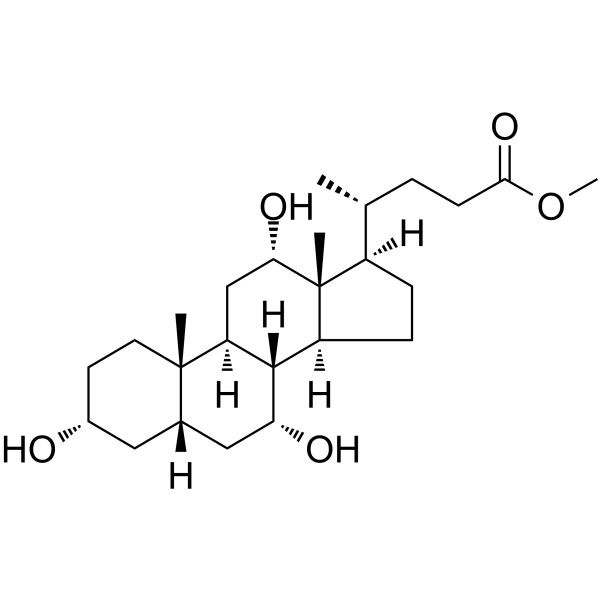
Methyl cholate is a bile acid analog and a specific inhibitor of TcdB toxin from Clostridioides difficile. Methyl cholate exerts a stronger selective inhibitory effect on TcdB than on TcdA. Methyl cholate induces conformational stabilization by binding to a unique site of TcdB, thereby blocking the binding of the toxin to host receptors and its self-processing process. Methyl cholate effectively protects human fibroblasts from TcdB-induced cytopathic effects. Methyl cholate exhibits dose-dependent anti-hepatic fibrosis activity in both cellular and zebrafish models, and significantly reduces the expression levels of α-SMA and COL-I. Methyl cholate is suitable for in-depth research in the fields of Clostridioides difficile infection and hepatic fibrosis .
loading...
    loading...
Cat. No.: HY-50896R
CAS No.: 183321-74-6
Synonyms: CP-358774 (Standard); NSC 718781 (Standard); OSI-774 (Standard)
Erlotinib Standard (CP-358774 Standard) is the analytical standard of Erlotinib (HY-50896). This product is intended for research and analytical applications. Erlotinib (CP-358774) is a selective, orally active EGFR tyrosine kinase inhibitor. Erlotinib also acts as a substrate and inhibitor of OATP2B1, with an IC50 of approximately 0.079 μM for inhibiting OATP2B1-mediated uptake of estrone 3-sulfate. Erlotinib blocks EGFR phosphorylation, downstream signal transduction, as well as the growth and proliferation of cancer cells. Erlotinib inhibits MMP-10-mediated renal injury, fibrotic lesions, the ERK1/2, GSK-3β and β-catenin signaling pathways, as well as the deposition of fibronectin, α-SMA, collagen and renal injury markers. Erlotinib is metabolized via CYP3A to produce the active metabolite OSI-420. Erlotinib can be used in research related to non-small cell lung cancer, gastric cancer, papillary renal cell carcinoma, EGFR inhibitor resistance and renal fibrosis .
loading...
    loading...

