
452 Results for "

Stille coupling

" in MedChemExpress (MCE) Product Catalog:
Products (452)

452 Results for "Stille coupling" in MCE Product Catalog:

54
54 Publications Verification
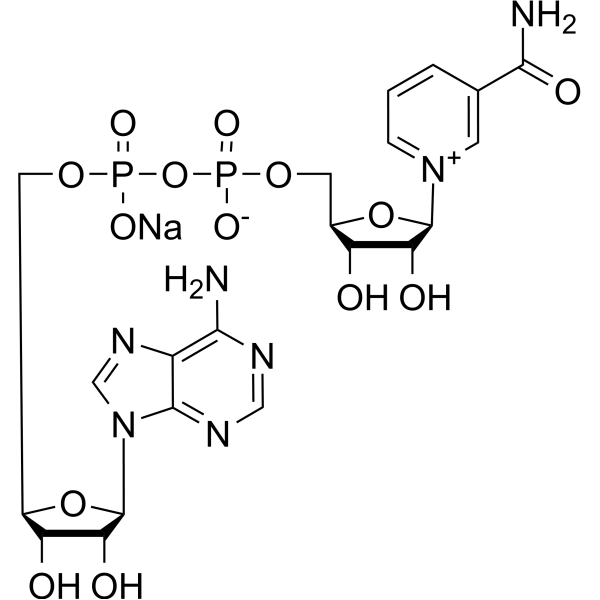
Cat. No.: HY-B0445A
CAS No.: 20111-18-6
Synonyms: β-DPN sodium; β-NAD sodium; β-Nicotinamide Adenine Dinucleotide sodium
NAD sodium is an orally effective cofactor and homeostatic regulator. NAD sodium can be reduced to β-nicotinamide adenine dinucleotide (NADH) during coupling with reactions that oxidize organic substrates. NAD sodium can be converted to β-nicotinamide adenine dinucleotide (NADH) and passes to the inside of mitochondria, which indirectly generates ATP. NAD sodium can be used for the research of non-alcoholic fatty liver disease, obesity, and glucose intolerance .
loading...
    loading...
8
8 Cited Publications
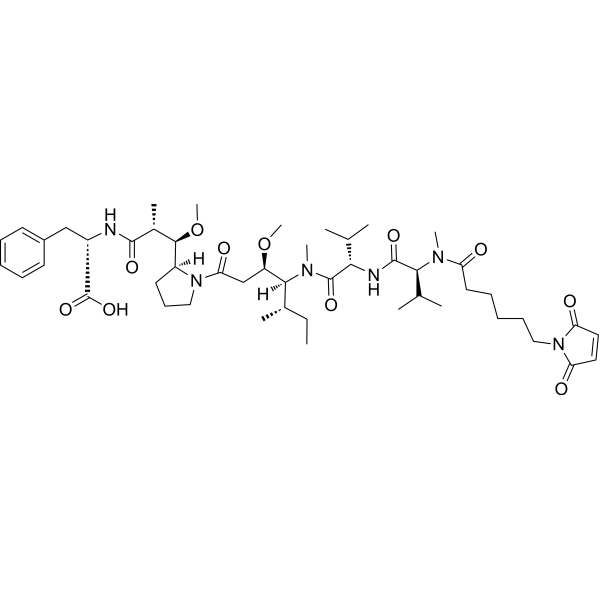
Cat. No.: HY-15578
CAS No.: 863971-19-1
Purity:  99.96%
Synonyms: Maleimidocaproyl monomethylauristatin F
McMMAF (Maleimidocaproyl monomethylauristatin F) is a drug-linker conjugate for ADCs, formed by coupling the potent microtubule inhibitor Monomethyl auristatin F (MMAF) (HY-15579) with a maleimidocaproyl (mc) linker. McMMAF can be conjugated with anti-BCMA antibodies to form J6M0-mcMMAF, promoting apoptosis and inhibiting tumor growth .
loading...
    loading...
8
8 Cited Publications
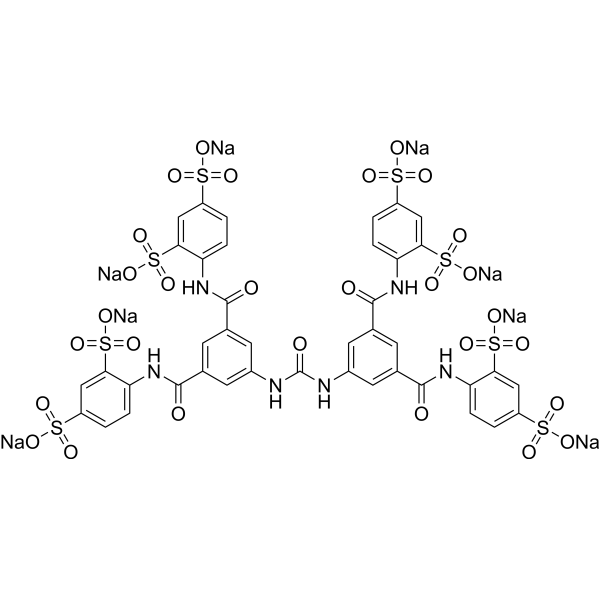
Cat. No.: HY-112461A
CAS No.: 627034-85-9
Purity:  97.39%
Target:  

P2X Receptor

Research Areas:  

Cardiovascular Disease

NF449 octasodium is a highly potent P2X1 receptor antagonist, with IC50s of 0.28, 0.69, and 120 nM for rP2X1, rP2X1+5, P2X2+3, respectively. NF449 octasodium is a Gsα-selective G Protein antagonist. NF449 octasodium suppresses the rate of GTP[γS] binding to Gsα-s, inhibits the stimulation of adenylyl cyclase activity, and blocks the coupling of β-adrenergic receptors to Gs .
loading...
    loading...
7
7 Cited Publications
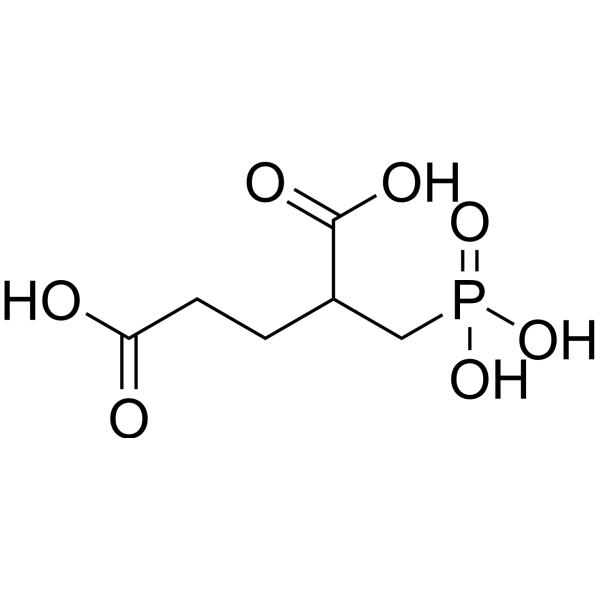
Cat. No.: HY-100788
CAS No.: 173039-10-6
Purity:  ≥98.0%
Synonyms: 2-(Phosphonomethyl)pentanedioic acid
Target:  

Carboxypeptidase

Research Areas:  

Neurological Disease

2-PMPA (2-(Phosphonomethyl)pentanedioic acid) is a glutamate carboxypeptidase II (GCPII) inhibitor with an IC50 of 0.0003 μM. 2-PMPA shows low blood-brain barrier penetration. 2-PMPA sodium blocks the hydrolysis of NAAG, regulates glutamate levels in the brain and neurovascular coupling. 2-PMPA is applicable to the research of neurological diseases .
loading...
    loading...
7
7 Cited Publications
Cat. No.: HY-100788C
CAS No.: 373645-42-2
Synonyms: 2-(Phosphonomethyl)pentanedioic acid sodium
Target:  

Carboxypeptidase

Research Areas:  

Neurological Disease

2-PMPA (2-(Phosphonomethyl)pentanedioic acid) sodium is a glutamate carboxypeptidase II (GCPII) inhibitor with an IC50 of 0.0003 μM. 2-PMPA sodium shows low blood-brain barrier penetration. 2-PMPA sodium blocks the hydrolysis of NAAG, regulates glutamate levels in the brain and neurovascular coupling. 2-PMPA sodium is applicable to the research of neurological diseases .
loading...
    loading...
3
3 Cited Publications
Cat. No.: HY-P2141
CAS No.: 1234510-46-3
Synonyms: TRV027
Research Areas:  

Cardiovascular Disease

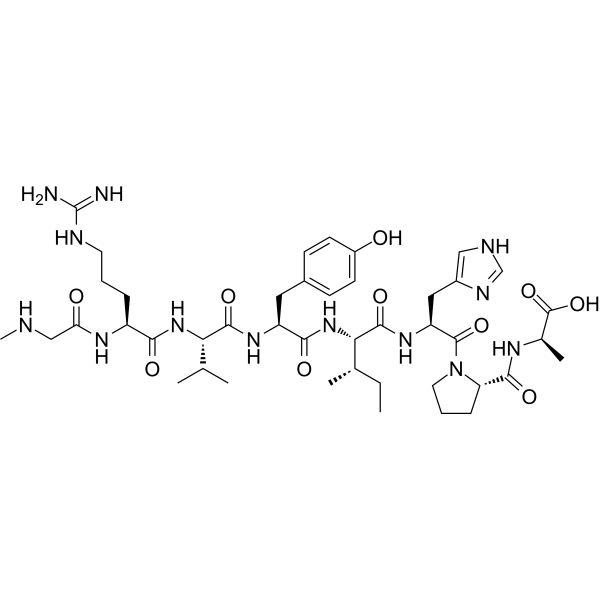
TRV120027, a β-arrestin-1-biased agonist of the angiotensin II receptor type 1 (AT1R), engages β-arrestins while blocking G-protein signaling . TRV120027 induces acute catecholamine secretion through cation channel subfamily C3 (TRPC3) coupling, promotes the formation of a macromolecular complex composed of AT1R-β-arrestin-1-TRPC3-PLCγ at the plasma membrane. TRV120027 inhibits angiotensin II-mediated vasoconstriction and increases cardiomyocyte contractility. TRV120027 has the potential for the acute decompensated heart failure (ADHF) treatment .
loading...
    loading...
3
3 Cited Publications
Cat. No.: HY-P2141A
Research Areas:  

Cardiovascular Disease

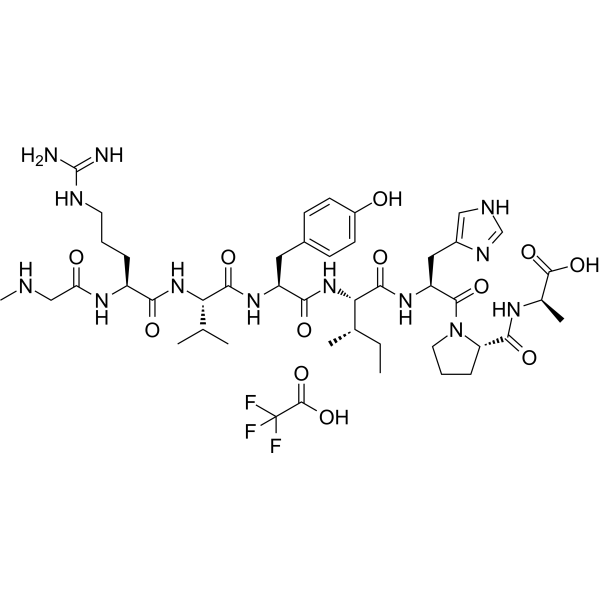
TRV120027 TFA, a β-arrestin-1-biased agonist of the angiotensin II receptor type 1 (AT1R), engages ?-arrestins while blocking G-protein signaling . TRV120027?TFA induces?acute?catecholamine?secretion?through cation channel subfamily C3 (TRPC3) coupling, promotes the formation of a macromolecular complex composed of AT1R–β-arrestin-1–TRPC3–PLCγ at the plasma membrane. TRV120027 TFA inhibits angiotensin II–mediated vasoconstriction and increases cardiomyocyte contractility. TRV120027 TFA has the potential for the?acute decompensated heart failure (ADHF) treatment .
loading...
    loading...
2
2 Cited Publications
Cat. No.: HY-P2910
CAS No.: 9028-79-9
Synonyms: GOase
Target:  

Endogenous Metabolite

Research Areas:  

Others

Galactose Oxidase, Dactylium dendroides (GOase) from fungus is often used in biochemical studies. Galactose oxidase is a type II copper metalloenzyme, and it containing a single polypeptide. Galactose oxidase catalyzes two-electron oxidation of primary alcohols to their corresponding aldehydes, coupling with the reduction of dioxygen to hydrogen peroxide .
loading...
    loading...
2
2 Cited Publications
Cat. No.: HY-B0558
CAS No.: 22232-54-8
Target:  

p38 MAPK

Research Areas:  

Neurological Disease Endocrinology

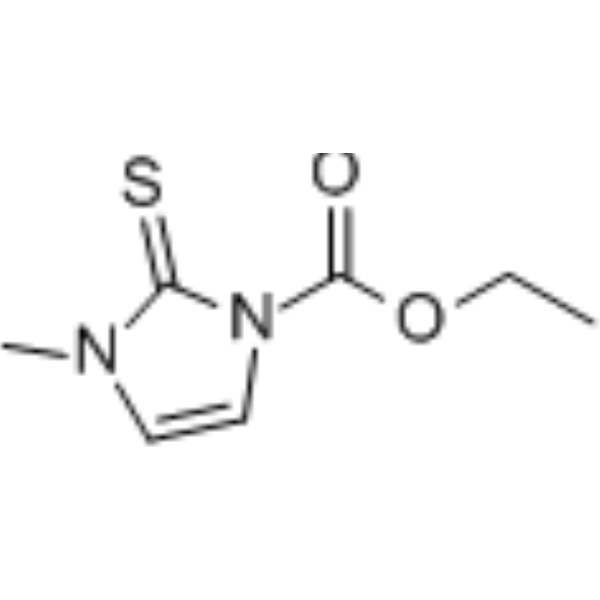
Carbimazole is an orally active antithyroid agent which rapidly converts to Methimazole after absorption and prevents thyroid peroxidase enzyme from iodinating and coupling the tyrosine residues on thyroglobulin, hence reducing the production of thyroxine. Carbimazole also displays anti-inflammatory and neuronal-protective activities, suggesting its application for hyperthyroidism and neurological research .
loading...
    loading...
2
2 Cited Publications
Cat. No.: HY-Y1168
CAS No.: 3945-69-5
Synonyms: 4-(4,6-Dimethoxy-1,3,5-triazin-2-yl)-4-methylmorpholinium chloride
DMTMM (4-(4,6-dimethoxy-1,3,5-triazine-2-yl)-4-methylmorpholinium chloride) is a coupling agent. DMTMM can activate carboxyl groups and promote the formation of amide bonds. DMTMM plays an important role in promoting the chemical modification of biomacromolecules such as polysaccharides and proteins. DMTMM can be used for research of tissue engineering, breast cancer, corneal regeneration, and biomaterials .
loading...
    loading...
1
1 Cited Publications
Cat. No.: HY-D2171A
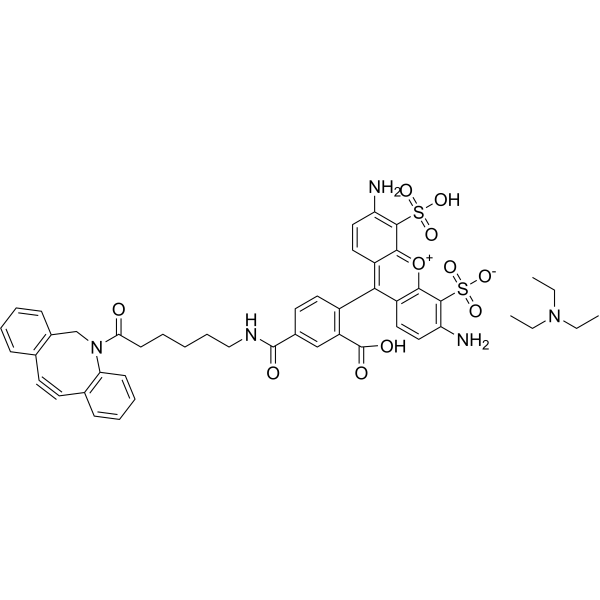
AF488 DBCO ditriethylamineis a fluorescent dye and also a click chemistry reagent that can label azide-containing biomolecules. AF488 DBCO ditriethylaminemediates the coupling reaction with azide-modified 2'-OMe RNA oligonucleotides. DBCO is a bioorthogonal partner of azides and enables covalent coupling without copper (Ex/Em = 470/520 nm) .
loading...
    loading...
1
1 Cited Publications
Cat. No.: HY-15933
CAS No.: 40567-80-4
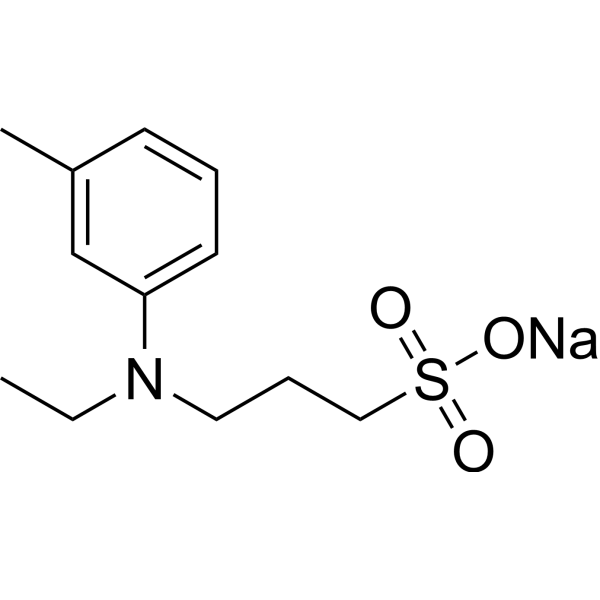
TOPS is a chromogenic substrate. TOPS undergoes an oxidative coupling reaction with 4-aminoantipyrine in the presence of H2O2 and nanocrystalline cobalt selenide. TOPS is used in studies related to uric acid detection .
loading...
    loading...
1
1 Cited Publications
Cat. No.: HY-D2171
AF488 DBCO is a fluorescent dye and also a click chemistry reagent that can label azide-containing biomolecules. AF488 DBCO mediates the coupling reaction with azide-modified 2'-OMe RNA oligonucleotides. DBCO is a bioorthogonal partner of azides and enables covalent coupling without copper (Ex/Em = 470/520 nm) .
loading...
    loading...
1
1 Cited Publications
Cat. No.: HY-161541
Estradiol/BSA is the antigen-adjuvant conjugate formed by the coupling of Estradiol (HY-B0141) with Bovine Serum Albumin (BSA). By coupling the antigen with a protein adjuvant, the production of antigen-specific antibodies in vaccine models can be enhanced. The conjugate does not affect protein folding or disrupt major epitopes, and it can enhance cross-presentation and the generation of antigen-specific T cells.
loading...
    loading...
1
1 Cited Publications
Cat. No.: HY-30014
CAS No.: 348640-06-2
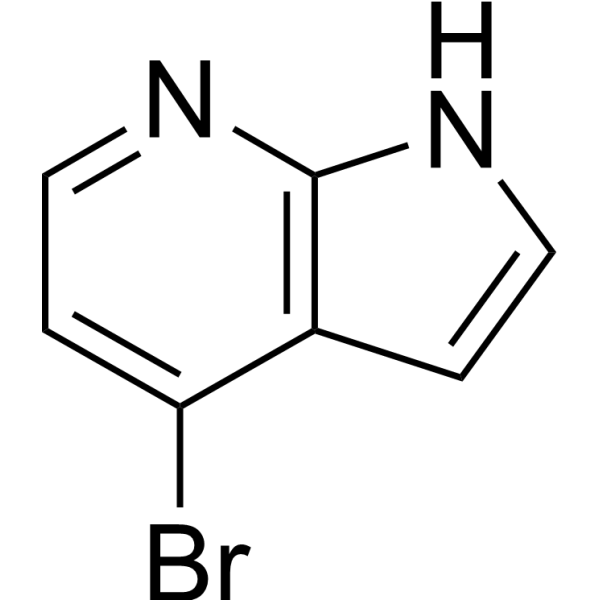
4-Bromo-7-azaindole is a brominated derivative of 7-azaindole. 4-Bromo-7-azaindole serves as a substrate for palladium-catalyzed C-N and C-O cross-coupling reactions, reacting with amides, amines, amino acid esters and phenols .
loading...
    loading...
1
1 Cited Publications
Cat. No.: HY-P99205
CAS No.: 1020264-78-1

Target:  

ADC Antibodies

Research Areas:  

Cancer

Glembatumumab is a fully human IgG2 monoclonal antibody directed against the extracellular structural domain of GPNMB expressed in human breast cancer and melanoma. Glembatumumab can be coupled to the microtubule inhibitor monomethyl auristatin E to form glembatumumab vedotin. Glembatumumab vedotin is an antibody-agent coupling (ADC) with antitumor activity .
loading...
    loading...
1
1 Cited Publications
Cat. No.: HY-43869
CAS No.: 1703768-74-4
Synonyms: PSMA-617 Ligand-Linker Conjugate
Target:  

ADC Linkers

Research Areas:  

Cancer

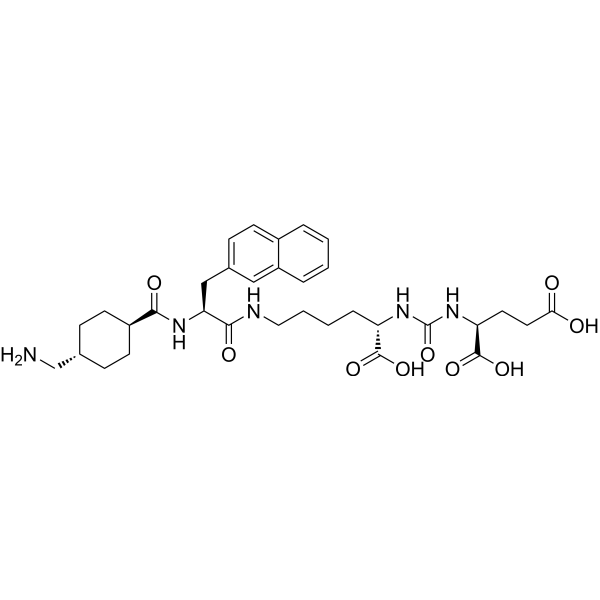
Vipivotide tetraxetan Ligand-Linker Conjugate (PSMA-617 Ligand-Linker Conjugate) is a complex composed of pharmacophore group Glutamate-urea-Lysine peptide coupling linker, which can be used to synthesize Vipivotide tetraxetan (PSMA-617). Glutamate-urea-Lysine selectively binds to prostate-specific membrane antigen (PSMA) .
loading...
    loading...
1
1 Cited Publications
Cat. No.: HY-W013151
CAS No.: 114932-60-4
Research Areas:  

Others

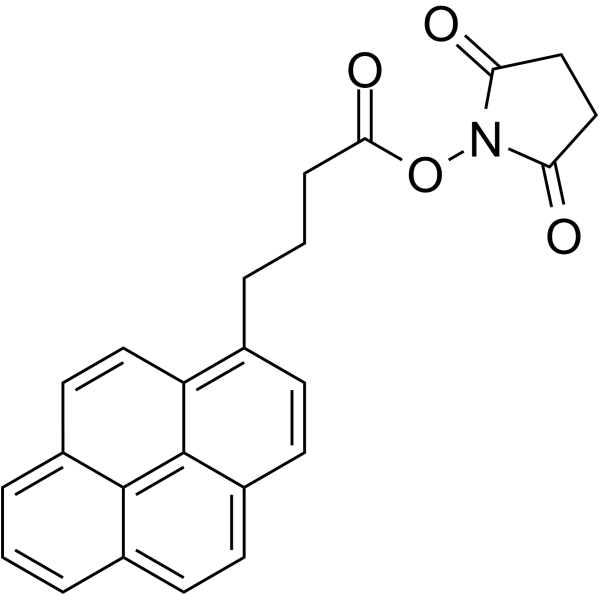
1-Pyrenebutyric acid N-hydroxysuccinimide ester (PANHS) is a linker and interface coupling agent that can be used to prepare electrochemical biosensors. 1-Pyrenebutyric acid N-hydroxysuccinimide ester immobilizes SARS-CoV-2 spike antibodies on graphene sheets. 1-Pyrenebutyric acid N-hydroxysuccinimide ester is often used as an activation reagent for carboxylic acids in organic chemistry or biochemistry .
loading...
    loading...
1
1 Cited Publications
Cat. No.: HY-178234
CAS No.: 1892576-07-6
Target:  

GPR84

Research Areas:  

Inflammation/Immunology

LY237 is a potent GPR84 full agonist, with EC50 values of 0.189 nM and 0.07 nM in cAMP inhibition assay and calcium flux assay, respectively. LY237 binds to the amphipathic orthosteric pocket of GPR84, stabilizes the active conformation of the receptor, and promotes its coupling with Gαi protein. LY237 can be used in research related to ulcerative colitis, fibrotic diseases, non-alcoholic steatohepatitis, and acute respiratory distress syndrome .
loading...
    loading...
1
1 Cited Publications
Cat. No.: HY-W036410
CAS No.: 13822-56-5
Synonyms: 3-Aminopropyltrimethoxysilane; APTMS
Research Areas:  

Others

Aminopropyltrimethoxysilane (3-Aminopropyltrimethoxysilane; APTMS) is an aminosilane coupling agent and self-assembled molecule that can form self-assembled monolayers or multilayers on the surfaces of silicon-based materials, platinum, pullulan (Viscosity (10%): 15-180 mPa.s) (HY-W145522), and magnesium alloys through silanization or amine-mediated adsorption, serving for surface functionalization and performance regulation. Aminopropyltrimethoxysilane is applicable in research related to biomedical materials, antibacterial materials, and corrosion protection .
loading...
    loading...

