7 Results for "

abnormal division

" in MedChemExpress (MCE) Product Catalog:
Products (7)

7 Results for "abnormal division" in MCE Product Catalog:

Cat. No.: HY-122594
CAS No.: 1151668-24-4
Purity:  99%
Target:  

Topoisomerase

Research Areas:  

Cancer

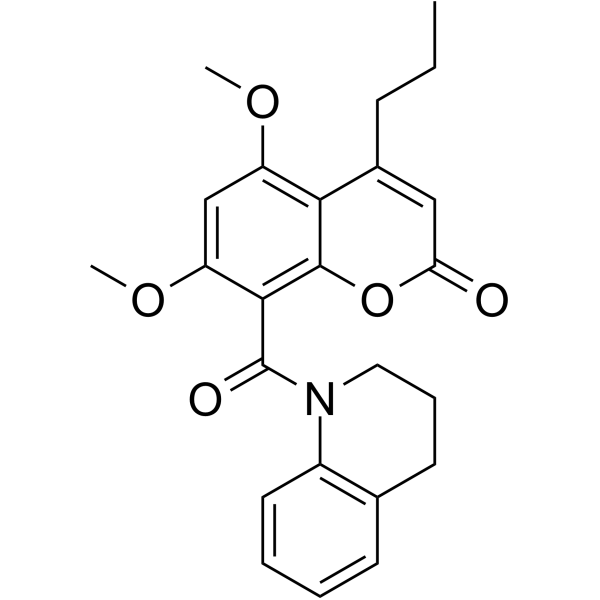
BNS-22 is a DNA topoisomerase II (TOP2) catalytic inhibitor with the IC50 values of 2.8 μM and 0.42 μM for human TOP2α and TOP2β, respectively. BNS-22 induces abnormal division and has anti-proliferative activity .
loading...
    loading...
Cat. No.: HY-N11071
CAS No.: 3627-51-8
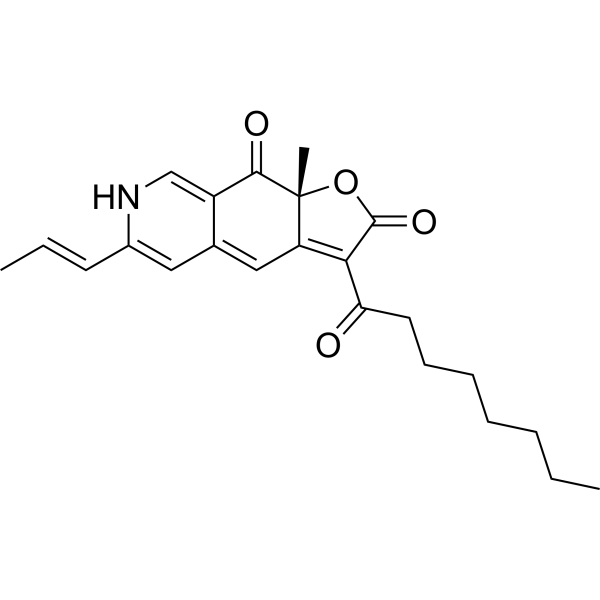
Monascorubramine is a metabolite derived from Monascus with antibacterial, cytotoxic and antimitotic activities. Monascorubramine interferes with mitotic spindle tubulin, triggers metaphase mitotic arrest, induces abnormal c‑mitosis division, and exerts antimitotic effects. Monascorubramine exhibits antibacterial activity and inhibits both Gram-positive and Gram-negative bacteria. Monascorubramine can be used in studies related to bacterial infections .
loading...
    loading...
Cat. No.: HY-178912
Anti-MRSA agent 39 is an orally active ClpX modulator that binds Staphylococcus aureus caseinolytic protease X (SaClpX) with high affinity (Kd = 3.6 μM). Anti-MRSA agent 39 exerts antibacterial effects through temperature-dependent inhibition of cell division. Anti-MRSA agent 39 elicits profound metabolic dysregulation in methicillin-resistant Staphylococcus aureus (MRSA), manifesting as significantly reduced ATP levels, elevated reactive oxygen species (ROS), and decreased NAD+/NADH ratio, and accelerates bacterial lysis rates in MRSA ATCC 33591. Anti-MRSA agent 39 significantly increases the proportion of MRSA cells in the mitotic phase, and the cells exhibit obvious morphological abnormalities. Anti-MRSA agent 39 can be used for the study of invasive MRSA infections .
loading...
    loading...
Cat. No.: HY-187916
CAS No.: 55975-92-3
Target:  

Antibiotic Bacterial

Research Areas:  

Infection

Pirbenicillin is a semisynthetic broad-spectrum penicillin antibacterial agent with bacteriostatic and bactericidal activities. The antibacterial action of Pirbenicillin manifests as inhibition of bacterial division and induction of abnormal morphological changes. Pirbenicillin can be used in research related to bacterial infections .
loading...
    loading...
Cat. No.: HY-W714183
CAS No.: 29091-05-2
Dinitramine is a herbicide. Dinitramine activates the Erk/P38/JNK/MAPK pathway and inactivates the PI3k/Akt pathway in testicular cells. Dinitramine induces endoplasmic reticulum stress, dysregulation of calcium homeostasis in the cytoplasm and mitochondria, apoptosis, and downregulated expression of cell cycle genes in testicular cells. Dinitramine reduces the viability and proliferation capacity of testicular cells, and inhibits cell division by suppressing the synthesis of tubulin. Dinitramine induces abnormal heart development, inhibited angiogenesis, inflammatory responses, apoptosis, and impaired embryonic growth in zebrafish embryos .
loading...
    loading...
Cat. No.: HY-187202
Research Areas:  

Infection

Antimicrobial agent-55 is a ciprofloxacin-derived multi-target antibacterial agent (Antibacterial) that inhibits E. coli DNA gyrase, S. aureus topoisomerase IV and LpxC with IC50 values of 0.315, 1.553 and 0.108 μM, respectively. The MIC of Antimicrobial agent-55 against E. coli ATCC 8739 is 0.27 μM. Antimicrobial agent-55 induces bacterial DNA damage and abnormal cell division. Antimicrobial agent-55 is applicable to studies on multi-target antibacterial mechanisms, infections caused by Gram-positive and Gram-negative bacteria, and bacterial drug resistance .
loading...
    loading...
Cat. No.: HY-L196
4,637 compounds

Protein Kinases (PTKs) are a class of phosphotransferases that phosphorylate proteins. Protein kinases participate in many signal transduction pathways including those involved with growth, differentiation, and cell division. Protein kinase not only plays an important role in the process of cell activation, but also its abnormal expression is closely related to the pathogenesis of many diseases. So far, the protein kinase family has become one of the most important drug targets. The most common drug targets include ALK, B-Raf, BCR-Abl, EGFR, and VEGFR.

MCE designs a unique collection of 4,637 bioactive compounds targeting protein kinases, which is an important tool for the development of drug targeting protein kinases.

