10 Results for "

autophagy induction

" in MedChemExpress (MCE) Product Catalog:
Products (10)

10 Results for "autophagy induction" in MCE Product Catalog:

161
161 Cited Publications
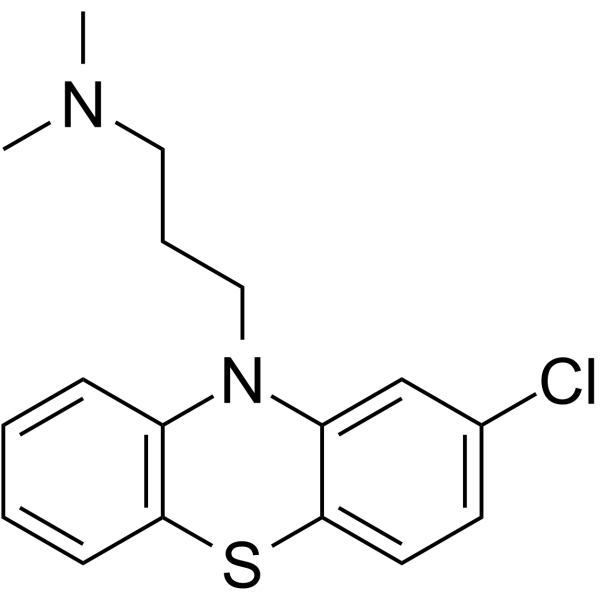
Cat. No.: HY-12708
CAS No.: 50-53-3
Purity:  99.75%
Chlorpromazine is an orally active, blood-brain barrier-transparent antipsychotic agent that effectively antagonises D2 dopamine receptors and 5-HT2A, which is widely used in schizophrenia and other psychiatric disorders. Chlorpromazine exerts anti-cancer activity through a variety of pathways, including anti-proliferation, induction of autophagy and cycle arrest (G2-M phase), inhibition of cytochrome c oxidase (CcO), inhibition of tumour growth and metastasis, and inhibition of tumour immune escape. Chlorpromazine also blocks hNav1.7 channels (IC50=25.9 μM; concentration-dependent) and HERG potassium channels (IC50=21.6 μM), which has potential for analgesic and cardiac arrhythmic studies. Chlorpromazine also can inhibit clathrin-mediated endocytosis .
loading...
    loading...
161
161 Cited Publications
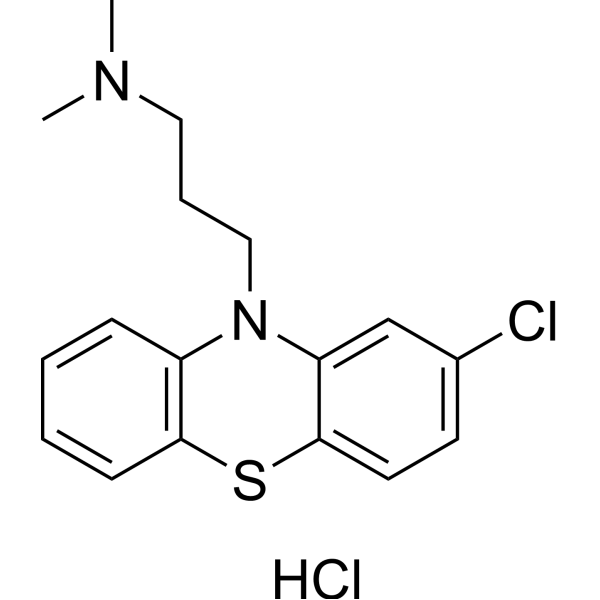
Cat. No.: HY-B0407A
CAS No.: 69-09-0
Chlorpromazine hydrochloride is an orally active, blood-brain barrier-transparent antipsychotic agent that effectively antagonises D2 dopamine receptors and 5-HT2A, which is widely used in schizophrenia and other psychiatric disorders. Chlorpromazine hydrochloride exerts anti-cancer activity through a variety of pathways, including anti-proliferation, induction of autophagy and cycle arrest (G2-M phase), inhibition of cytochrome c oxidase (CcO), inhibition of tumour growth and metastasis, and inhibition of tumour immune escape. Chlorpromazine hydrochloride also blocks hNav1.7 channels (IC50=25.9 μM; concentration-dependent) and HERG potassium channels (IC50=21.6 μM), which has potential for analgesic and cardiac arrhythmic studies. Chlorpromazine hydrochloride also can inhibit clathrin-mediated endocytosis .
loading...
    loading...
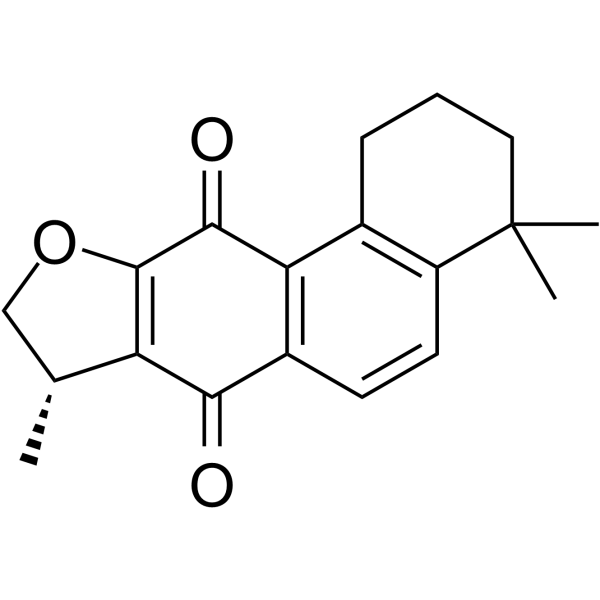
Cat. No.: HY-N6651
CAS No.: 22550-15-8
Isocryptotanshinone is a dual STAT3 and PTP1B (IC50 = 56.1 μM) inhibitor. Isocryptotanshinone inhibits STAT3 by binding to the STAT3 SH2 domain to block phosphorylation and nuclear translocation [1][2]. Isocryptotanshinone exerts its anti-proliferative effect via the induction of cell cycle arrest, apoptosis, and pro-death autophagy, through the regulation of STAT3, AKT/mTOR and MAPK signaling pathways. Isocryptotanshinone suppresses the xenograft gastric cancer (GC) tumor growth in BALB/c nude mice. Isocryptotanshinone can be used for cancer research, such as lung cancer, breast cancer and GC .
loading...
    loading...
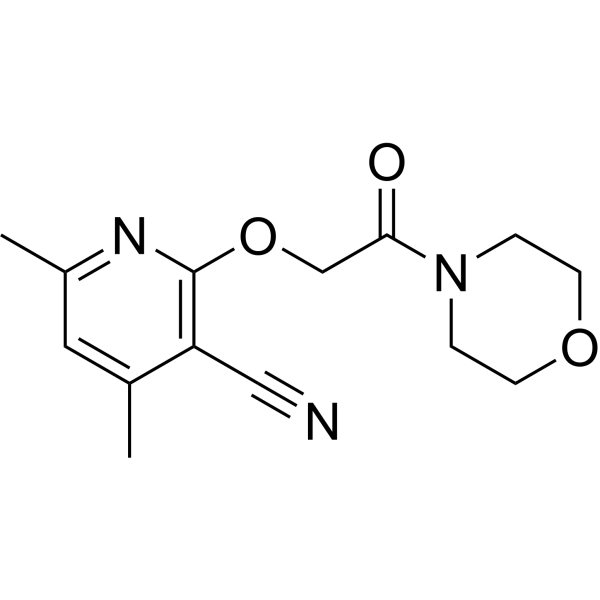
Cat. No.: HY-162006
CAS No.: 916038-47-6
Pim-1 kinase inhibitor 8 is a potent PIM-1 inhibitor with an IC50 value of 14.3 nM. Pim-1 kinase inhibitor 8 impedes cell proliferation and migration through PIM-1 inhibition and the induction of both apoptosis and autophagy. Pim-1 kinase inhibitor 8 inhibits solid tumor growth in Solid Ehrlich Carcinoma (SEC)-bearing mice. Pim-1 kinase inhibitor 8 can be used for breast and liver cancer research .
loading...
    loading...
Cat. No.: HY-158985A
Target:  

Autophagy AUTACs

Research Areas:  

Cancer

Amino-PEG3-2G degrader-1 hydrochloride is the hydrochloride salt form of Amino-PEG3-2G degrader-1 (HY-158985). Amino-PEG3-2G degrader-1 hydrochloride is a conjugate of a PEG Linker and a pyrazole-linked FBnG tag for ubiquitin-proteasome system (UPS) induction. Amino-PEG3-2G degrader-1 hydrochloride can be used to synthesize autophagy-targeting chimeras (AUTACs) .
loading...
    loading...
Cat. No.: HY-158985
CAS No.: 2267315-06-8
Target:  

AUTACs Autophagy

Research Areas:  

Cancer

Amino-PEG3-2G degrader-1 (compound ) is a conjugate of a PEG Linker and a pyrazole-linked FBnG tag for ubiquitin-proteasome system (UPS) induction. Amino-PEG3-2G degrader-1 can be used to synthesize autophagy-targeting chimeras (AUTACs) .
loading...
    loading...
Cat. No.: HY-B0407AR
CAS No.: 69-09-0
Chlorpromazine (hydrochloride) (Standard) is the analytical standard of Chlorpromazine (hydrochloride). This product is intended for research and analytical applications. Chlorpromazine hydrochloride is an orally active, blood-brain barrier-transparent antipsychotic agent that effectively antagonises D2 dopamine receptors and 5-HT2A, which is widely used in schizophrenia and other psychiatric disorders. Chlorpromazine hydrochloride exerts anti-cancer activity through a variety of pathways, including anti-proliferation, induction of autophagy and cycle arrest (G2-M phase), inhibition of cytochrome c oxidase (CcO), inhibition of tumour growth and metastasis, and inhibition of tumour immune escape. Chlorpromazine hydrochloride also blocks hNav1.7 channels (IC50=25.9 μM; concentration-dependent) and HERG potassium channels (IC50=21.6 μM), which has potential for analgesic and cardiac arrhythmic studies. Chlorpromazine hydrochloride also can inhibit clathrin-mediated endocytosis .
loading...
    loading...
Cat. No.: HY-149717
CAS No.: 2378641-43-9
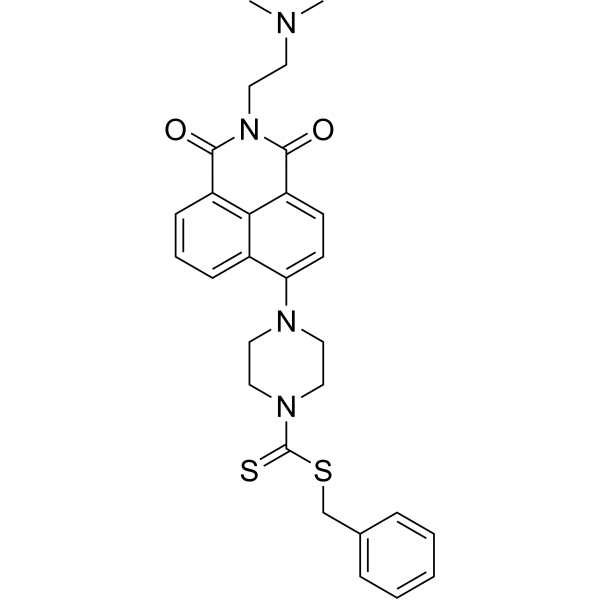
Antitumor agent-122 is a potent multi-target antitumor agent that exerts its effects through the induction of ferroptosis, autophagy, apoptosis, and cell cycle arrest. In the ferroptosis pathway, Antitumor agent-122 inhibits GPX4 expression and upregulates FACL4 expression, increasing intracellular lipid peroxidation and ferrous ion levels. In the autophagy pathway, Antitumor agent-122 induces autophagy by inhibiting the AKT/mTOR signaling pathway. In the apoptosis and cell cycle pathways, Antitumor agent-122 arrests cells at the G1/S phase and subsequently promots mitochondrial pathway-mediated apoptosis. Antitumor agent-122 can be used in the research of solid tumors including gastric, liver, ovarian, and bladder cancers .
loading...
    loading...
Cat. No.: HY-12708R
CAS No.: 50-53-3
Chlorpromazine (Standard) is the analytical standard of Chlorpromazine (HY-12708). This product is intended for research and analytical applications. Chlorpromazine is an orally active, blood-brain barrier-transparent antipsychotic agent that effectively antagonises D2 dopamine receptors and 5-HT2A, which is widely used in schizophrenia and other psychiatric disorders. Chlorpromazine exerts anti-cancer activity through a variety of pathways, including anti-proliferation, induction of autophagy and cycle arrest (G2-M phase), inhibition of cytochrome c oxidase (CcO), inhibition of tumour growth and metastasis, and inhibition of tumour immune escape. Chlorpromazine also blocks hNav1.7 channels (IC50=25.9 μM; concentration-dependent) and HERG potassium channels (IC50=21.6 μM), which has potential for analgesic and cardiac arrhythmic studies. Chlorpromazine also can inhibit clathrin-mediated endocytosis .
loading...
    loading...
Cat. No.: HY-123996
CAS No.: 20041-64-9
3-Ethoxy-5,6-dibromosalicylaldehyde is an IRE1/ERN1 inhibitor, with an IC50 of 0.12 μM, a Ki of 71-88 nM, and a Kd of 100 nM against the ribonuclease activity of hIRE1α, as well as an IC50 of 4.8 μM against yeast Ire1. It shows selectivity toward IRE1 ribonuclease. 3-Ethoxy-5,6-dibromosalicylaldehyde blocks the IRE1/ERN1-mediated unfolded protein response (UPR) signaling pathway, including XBP-1 mRNA splicing, induction of XBP1 target genes, and activation of MAPK8/9/10, but does not alter the phosphorylation level of IRE1α or the PERK/ATF6 pathway. 3-Ethoxy-5,6-dibromosalicylaldehyde inhibits chikungunya virus replication, induces growth arrest, apoptosis and clonogenic inhibition in pancreatic cancer cells, reduces FB1 (Fumonisin B1) (HY-N6719)-induced autophagy and cell death, regulates PGG-induced senescence and apoptosis, and alleviates Sorafenib (HY-10201)-induced vacuolization and damage in hepatic stellate cells. 3-Ethoxy-5,6-dibromosalicylaldehyde can be used in research related to chikungunya virus infection, pancreatic cancer, FB1-induced nephrotoxicity, liver cancer, breast cancer, lung cancer and liver fibrosis .
loading...
    loading...

