20 Results for "

background fluorescence

" in MedChemExpress (MCE) Product Catalog:
Products (20)

20 Results for "background fluorescence" in MCE Product Catalog:

21
21 Publications Verification
Cat. No.: HY-110251
CAS No.: 1539318-36-9
Purity:  98.11%
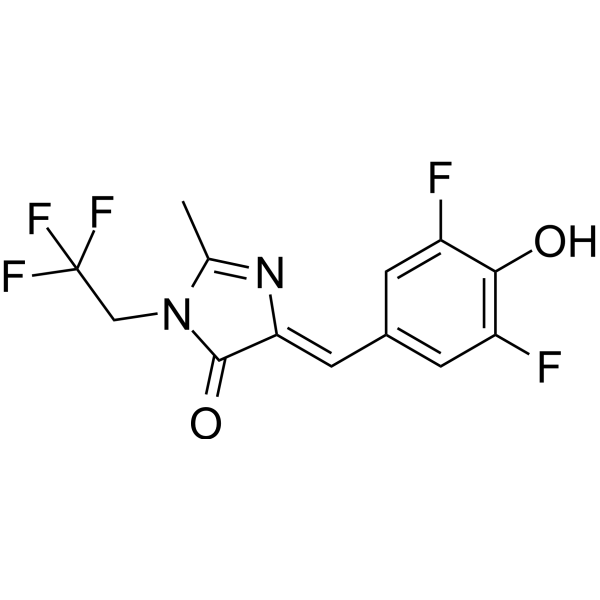
DFHBI-1T is a membrane-permeable RNA aptamers-activated fluorescence probe (ex/em=472 nm/507 nm). DFHBI-1T binds to RNA aptamers (Spinach, Spinach2, iSpinach, and Broccoli) and causes specific fluorescence and lower background fluorescence. DFHBI-1T is used to image RNA in live cells .
loading...
    loading...
4
4 Cited Publications
Cat. No.: HY-D1373
CAS No.: 156840-13-0
Synonyms: HBC 530
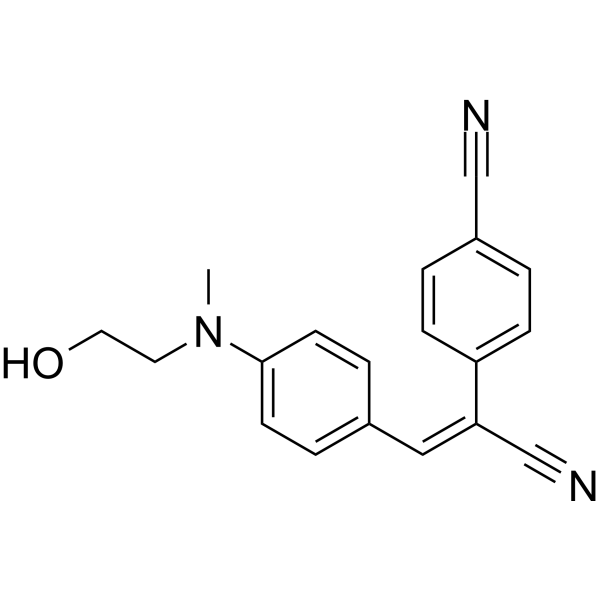
HBC (HBC 530) is a GFP fluorophore-like synthetic dye, with a structurally rigid electron acceptor and a strong electron donor. HBC has a low fluorescence background, and when combined with Pepper (RNA aptamer), HBC forms a tight complex and activates and emits bright fluorescence (Kd of ~3.5 nM). HBC emission peaks vary in different complexes and covers the spectrum from cyan to red. HBC can be used in the live cell imaging of RNA (Em/Ex = 530/485 nm) .
loading...
    loading...
1
1 Cited Publications
Cat. No.: HY-D1540
CAS No.: 2097714-45-7
Synonyms: Cy 5.5 amine; Lumiprobe Cy 5.5 amine
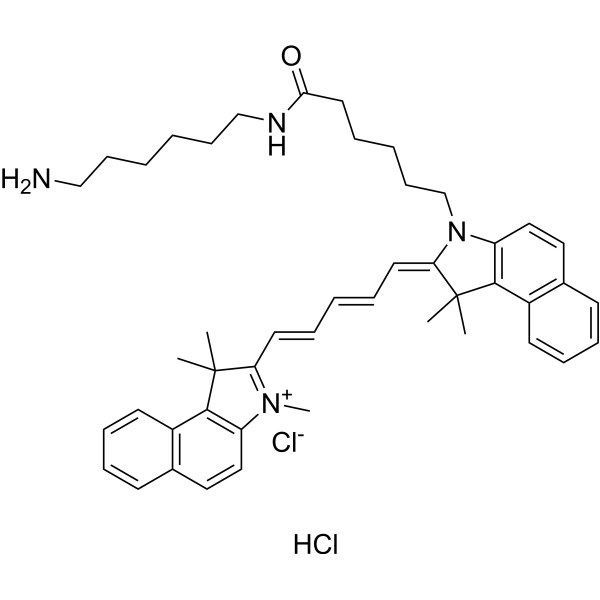
Cyanine5.5 amine (Cy 5.5 amine), a Cy5.5 Analogue, is a near-infrared (NIR) fluorescent dye (Ex=648 nm, Em=710 nm). Cyanine5.5 amine can be used in the preparation of Cy5.5-labeled nanoparticles, which can be tracked and imaged with low fluorescence background using confocal microscopy .
loading...
    loading...
Cat. No.: HY-D0102
CAS No.: 91366-65-3
Synonyms: ABD-F
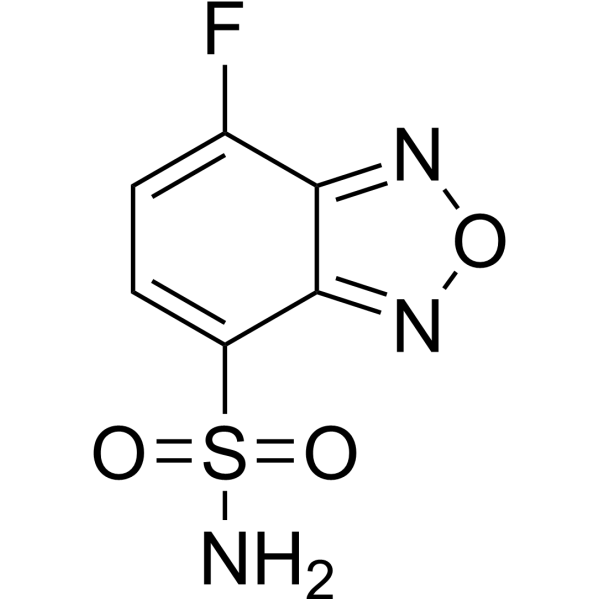
4-(Aminosulfonyl)-7-fluoro-2,1,3-benzoxadiazole (ABD-F) is a fluorescent reagent for the sensitive and specific detection of thiols (Ex/Em: 380/510 nm). 4-(Aminosulfonyl)-7-fluoro-2,1,3-benzoxadiazole has low fluorescence background, and good stability of fluorophor .
loading...
    loading...
Cat. No.: HY-DY1047
CAS No.: 1539318-36-9
DFHBI-1T (solution) is a membrane-permeable RNA aptamers-activated fluorescence probe (ex/em=472 nm/507 nm). DFHBI-1T binds to RNA aptamers (Spinach, Spinach2, iSpinach, and Broccoli) and causes specific fluorescence and lower background fluorescence. DFHBI-1T is used to image RNA in live cells .
Solvent and concentration: DMSO: 20 mM
loading...
    loading...
Cat. No.: HY-D1346
CAS No.: 1877282-17-1
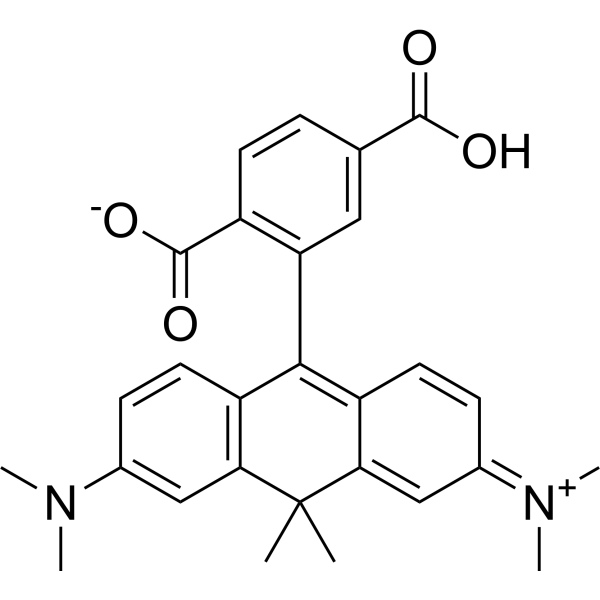
610CP is a new type of actin labeling dye. It dissolves in organic solvents. In DMSO the 610CP excitation/emission wavelength is between 609 and 634 nm. 610CP is a fluorescent dye that penetrates living cells. Upon cell entry, 610CP binds to Bromo-des-methyl-Jasplakinolide Therefore, 610CP dye can be used to stain actin fluorescence images with low background and high resolution.
loading...
    loading...
Cat. No.: HY-143285
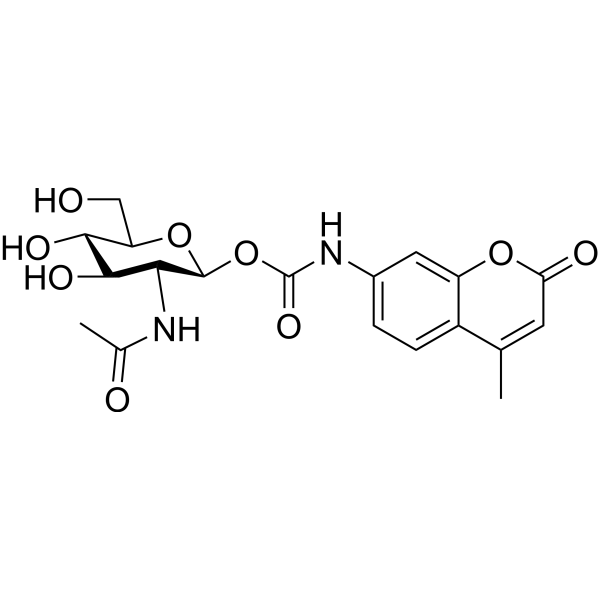
AMC-GlcNAc (compound 1) is a potent fluorogenic probe for detection and characterization of β-hexosaminidase enzyme activity. AMC-GlcNAc enables continuous monitoring by turn-on fluorescence and fluorescence signal is constant over a wide pH range (Ex=325 nm, Em=390 nm). AMC-GlcNAc enables ratiometric fluorescence detection with high sensitivity and low background, which can be used to screen for recombinant dispersin B activity in E. coli cell lysate .
loading...
    loading...
Cat. No.: HY-164867
CAS No.: 3023933-33-4
Research Areas:  

Others

Fmoc-L-Dap(NBSD)-OH is a benzodiazole amino acid that can be used as a building block for constructing background-free peptide probes for fluorescence imaging .
loading...
    loading...
Cat. No.: HY-D1426
CAS No.: 217176-86-8
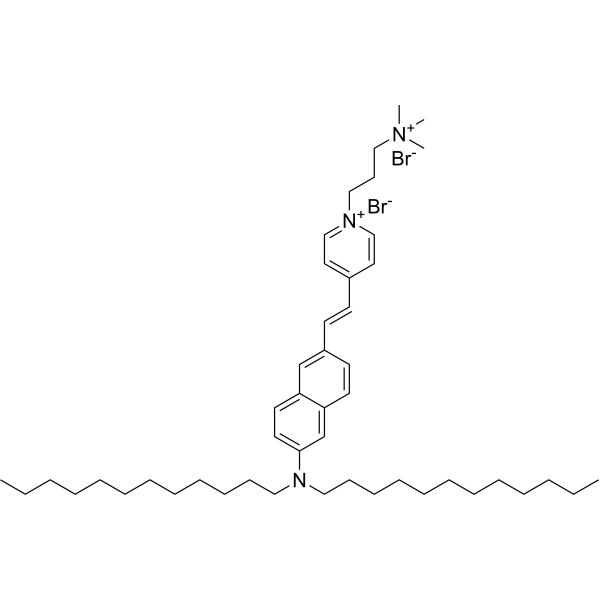
Di-12-ANEPPQ is a fast-responding membrane potential dye. Di-12-ANEPPQ, the lipophilic dye, shows cell-specific loading and Golgi-like staining patterns with minimal background fluorescence in the slices of neocortex and hippocampus .
loading...
    loading...
Cat. No.: HY-D3206
CAS No.: 1860808-05-4
CuFS is a reaction-based fluorescent sensor for detecting Cu 2+ with zero background fluorescence. CuFS acts as a fluorescence quencher in the absence of Cu 2+ and as a fluorescence enhancer in the presence of Cu 2+. CuFS can be fabricated into test strips and applied to the detection of Cu 2+ in human cancer cells .
loading...
    loading...
Cat. No.: HY-D2924
CBG-549-QSY7 is a Dylight 549-labeled SNAP tag fluorescent probe (Ex/Em: 546 nm/580 nm), specially designed for non-washable fluorescence imaging applications. CBG-549-QSY7 employs an intramolecular FRET quenching mechanism: intramolecular fluorescence quenching occurs before binding to the SNAP tag, and upon binding, the quenching group is cleaved, releasing fluorescence. The background fluorescence of CBG-549-QSY7 is extremely low, and clear cell membrane images can be obtained after 5 minutes of incubation .
loading...
    loading...
Cat. No.: HY-110251R
CAS No.: 1539318-36-9
Research Areas:  

Others

DFHBI-1T (Standard) is the analytical standard of DFHBI-1T (HY-110251). This product is intended for research and analytical applications. DFHBI-1T is a membrane-permeable RNA aptamers-activated fluorescence probe (ex/em=472 nm/507 nm). DFHBI-1T binds to RNA aptamers (Spinach, Spinach2, iSpinach, and Broccoli) and causes specific fluorescence and lower background fluorescence. DFHBI-1T is used to image RNA in live cells .
loading...
    loading...
Cat. No.: HY-D3603
CAS No.: 928817-42-9
Research Areas:  

Others

Benzylguanine-CY5 is a quenched fluorescent dye conjugate based on benzylguanine (BG). Benzylguanine-CY5 possesses the activity of specifically covalently labeling SNAP-tag fusion proteins. Benzylguanine-CY5 exhibits intramolecular fluorescence quenching in the unbound state; upon binding to SNAP-tag, the quenching guanine moiety is cleaved, and its fluorescence intensity increases. Benzylguanine-CY5 can be used for background-free specific fluorescent labeling and imaging studies of SNAP-tag fusion proteins in living cells .
loading...
    loading...
Cat. No.: HY-D3361
Target:  

Fluorescent Dye

Research Areas:  

Others

JF639-HTL is a deep-red fluorescent dye belonging to the Janelia Fluor series and also a HaloTag ligand. JF639-HTL contains a methoxy group as the R substituent, which forms a specific covalent bond with HaloTag fusion proteins. JF639-HTL is fluorogenic, exhibiting low background fluorescence in solution and a significant fluorescence enhancement upon binding to proteins. It also possesses cell permeability and excellent photostability. JF639-HTL can be used in studies related to fluorescent labeling, localization tracking, and pulse-chase imaging of proteins in living cells .
loading...
    loading...
Cat. No.: HY-D1346A
Target:  

Fluorescent Dye

Research Areas:  

Others

610CP TFA is a new type of actin labeling dye. It dissolves in organic solvents. In DMSO the 610CP TFA excitation/emission wavelength is between 609 and 634 nm. 610CP TFA is a fluorescent dye that penetrates living cells. Upon cell entry, 610CP TFA binds to Bromo-des-methyl-Jasplakinolide Therefore, 610CP TFA dye can be used to stain actin fluorescence images with low background and high resolution.
loading...
    loading...
Cat. No.: HY-D3174
CAS No.: 2688758-23-6
PiF is a fluorescent probe with high specificity for pancreatic β-cells (Ex/Em = 535 nm/565 nm), and its fluorescence signal increases significantly with elevated insulin concentrations in in vitro experiments. PiF enables visualization of rat and human islets transplanted via the portal vein in mouse livers with low liver background signals. The fluorine atom of PiF can be replaced by radioactive 18F to prepare a PET tracer. PiF can be used for research on type 1 diabetes .
loading...
    loading...
Cat. No.: HY-D3007
LD-CK is a fluorescent probe based on a coumarin-chromone structure, specifically designed to visualize lipid droplet polarity changes and endowed with multimodal imaging capability. LD-CK contains a high-performance lipophilic coumarin moiety, which enables it to specifically target lipid droplets upon cellular entry while minimizing background fluorescence to the greatest extent. LD-CK has an excitation wavelength (Ex) of 488 nm and an emission wavelength (Em) of 540 nm (in low-polarity environments such as toluene) or 640 nm (in high-polarity environments such as glycerol), with its emission peak undergoing a redshift as solvent polarity increases .
loading...
    loading...
Cat. No.: HY-D3391
RMR-Tre is a fluorescent probe targeting the mycobacterial acyltransferase Ag85. Under the catalysis of Ag85, RMR-Tre undergoes 6-position mycoloylation and anchors to the mycobacterial membrane, while achieving fluorescence activation by inhibiting the intramolecular twisted charge transfer state transition. RMR-Tre can distinguish live mycobacteria from dead ones through metabolism-driven labeling, enabling rapid, wash-free, low-background detection of viable bacteria. RMR-Tre reports the drug resistance of Mycobacterium tuberculosis via the trehalose catalytic shift activity readout associated with TreS. In addition, RMR-Tre can be combined with flow cytometry or high-content imaging techniques to visualize and quantitatively analyze the metabolic heterogeneity of Mycobacterium tuberculosis related to persistence and drug resistance. RMR-Tre is widely used in tuberculosis-related research .
loading...
    loading...
Cat. No.: HY-DY2041
Target:  

Fluorescent Dye

Research Areas:  

Infection

Callose Staining Solution (Aniline Blue, Bright-Field Method) is a fluorescent dye used for detecting callose in plant tissues, green algal cell walls, plant cells, and protoplasts. Callose Staining Solution (Aniline Blue, Bright-Field Method) specifically binds to callose, a β-(1,3)-D-glucan polymer, and exhibits blue-green fluorescence under alkaline conditions with reduced background staining and non-toxicity to living cells. Callose Staining Solution (Aniline Blue, Bright-Field Method) is suitable for observation under UV or epifluorescence microscopy (Ex/Em = 365-370/397-509 nm). Callose Staining Solution (Aniline Blue, Bright-Field Method) can be used in studies related to the visualization of callose deposition in plants .
loading...
    loading...
Cat. No.: HY-D3525
Target:  

Fluorescent Dye

Research Areas:  

Others

BDL-E5 is a fluorescent probe for detecting live induced pluripotent stem cells at the early reprogramming stage. Its detection mechanism involves specific binding to authentic reprogramming cells, which exhibit increased expression of pluripotency and epithelial genes and decreased expression of mesenchymal genes compared to non-reprogramming cells; it appears to co-localize more significantly with the Golgi complex than other organelle markers in reprogramming cells, and it does not require washing after staining to reduce background signals; fluorescence is generated upon binding to these early reprogramming cells, with positive cells appearing 7 days before iPS colonies are visible and stain positive for the conventional pluripotent marker TRA-1-60, and sorting BDL-E5-positive cells enriches populations that generate higher numbers and quality of iPS colonies. Its detection wavelength is Ex/Em = 578/599 nm .
loading...
    loading...
  • 1

