
40 Results for "

bacterial outer membrane

" in MedChemExpress (MCE) Product Catalog:
Products (40)

40 Results for "bacterial outer membrane" in MCE Product Catalog:

1
1 Cited Publications
Cat. No.: HY-128780B
CAS No.: 2408422-41-1
Purity:  99.74%
Target:  

Bacterial Antibiotic

Research Areas:  

Infection

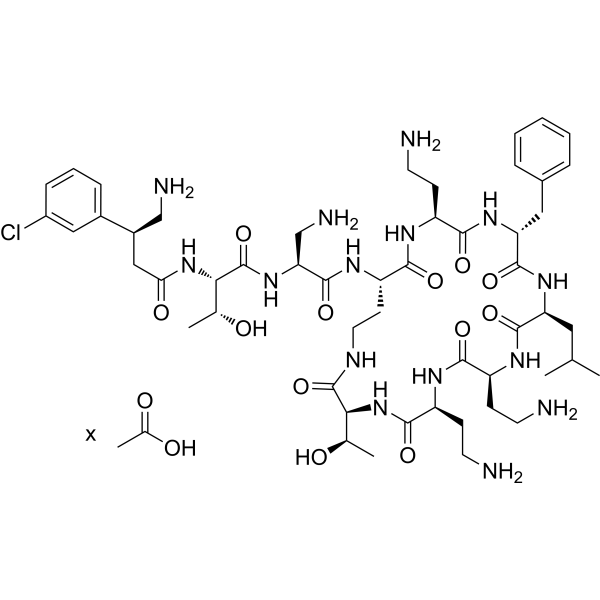
SPR206 acetate is a polymyxin analog with antibiotic activity against Gram-negative pathogens, including multidrug-resistant (MDR) variants. SPR206 acetate has an anti-bacterial infection effect by interacting with the bacterium’s outer membrane. The MIC values of SPR206 acetate against Pseudomonas aeruginosa Pa14 and Acinetobacter baumannii NCTC13301 are both 0.125 mg/L .
loading...
    loading...
Cat. No.: HY-147429
CAS No.: 2379336-76-0
Purity:  99.09%
Synonyms: Abx MCP; RG6006
Target:  

Bacterial Liposome

Research Areas:  

Infection

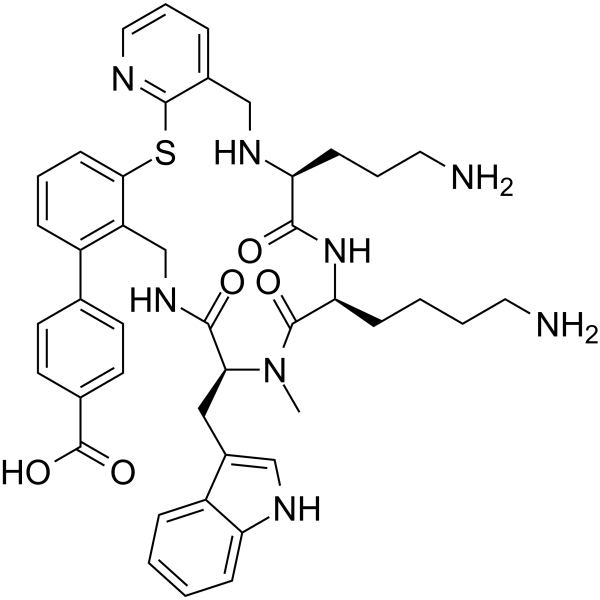
Zosurabalpin (Abx MCP; RG6006) is a lipopolysaccharide (LPS) transport inhibitor that targets the LptB2FGC complex. Zosurabalpin blocks the transport of LPS from the inner membrane to the outer membrane, leading to intracellular toxic accumulation of LPS and bacterial death. Zosurabalpin exhibits potent antibacterial activity against carbapenem-resistant Acinetobacter baumannii (CRAB) and shows in vivo efficacy in mouse infection models. Zosurabalpin can be used for research on CRAB infections, including pneumonia and sepsis .
loading...
    loading...
Cat. No.: HY-164036
CAS No.: 2930690-12-1
Target:  

Antibiotic Bacterial

Research Areas:  

Infection

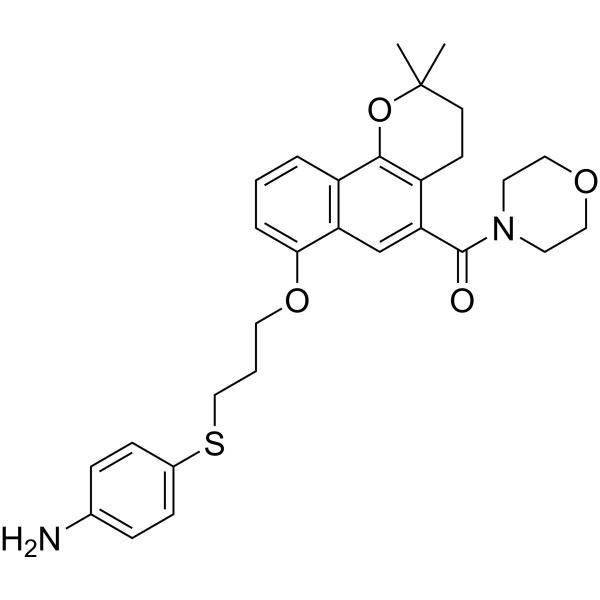
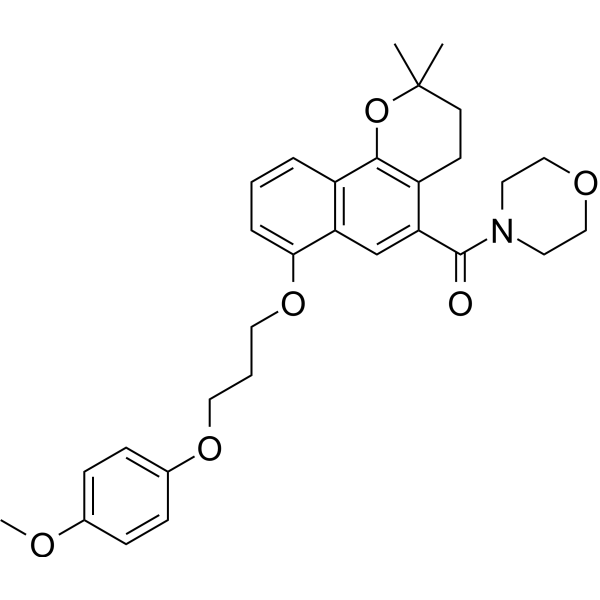
Lolamicin is an orally effective inhibitor that specifically targets the Gram-negative bacteria lipoprotein transport system LolCDE complex. It selectively inhibits the transmembrane transport of outer membrane lipoproteins by competitively binding to lipoprotein binding sites. Lolamicin destroys the integrity of the bacterial outer membrane, leading to cell death, and has both bactericidal and antibacterial activity. It has significant effects on multidrug-resistant Enterobacteriaceae pathogens (such as Escherichia coli and Klebsiella pneumoniae). Lolamicin can be used to inhibit the study of acute pneumonia, sepsis and other infections caused by Gram-negative bacteria .
loading...
    loading...
Cat. No.: HY-W012669
CAS No.: 643-79-8
Synonyms: Phthaldialdehyde
Phthalaldehyde (Phthaldialdehyde) reacts with proteins containing primary amines and blocked amino-terminal peptides of amino acids. Phthalaldehyde stabilizes bacterial outer membranes and cell walls, increases the optical density of bacterial cell suspensions, and inhibits bacterial lysis induced by ethylenediaminetetraacetic acid and sodium dodecyl sulfate. Phthalaldehyde exhibits bactericidal activity against Gram-negative vegetative bacteria .
loading...
    loading...
Cat. No.: HY-P0311
CAS No.: 184776-51-0
Target:  

Bacterial

Research Areas:  

Infection

LAH4, an alpha-helix of the designed amphipathic peptide antibiotic, exhibits potent antimicrobial, nucleic acid transfection and cell penetration activities. LAH4 possesses high plasmid DNA delivery capacities. LAH4 has a strong affinity for anionic lipids found in the outer membrane of bacterial membranes .
loading...
    loading...
Cat. No.: HY-W009123
CAS No.: 112-84-5
Synonyms: cis-13-Docosenamide
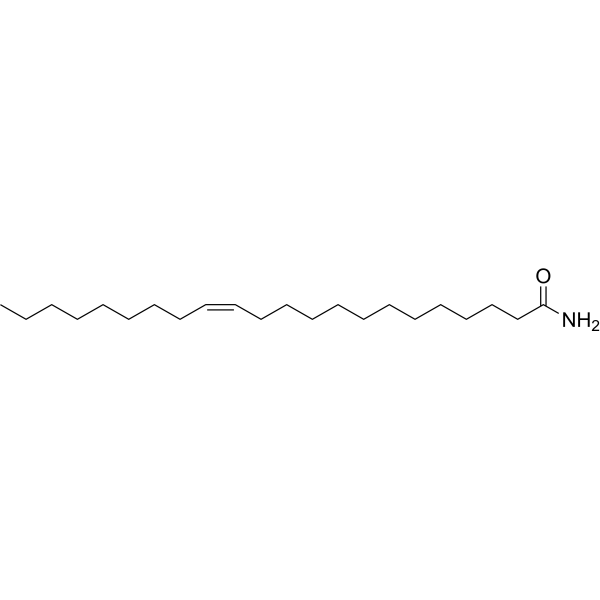
Erucamide is an orally active, blood-brain barrier-permeable TMEM19 ligand and T3SS inhibitor. Erucamide exerts retinal neuroprotective effects in mouse models of retinal degeneration. Erucamide attenuates depression- and anxiety-like behaviors in mice.\n\nErucamide binds to the conserved hydrophobic pocket in HrcC, disrupts its outer membrane localization, and blocks T3SS-mediated effector protein secretion in Gram-negative pathogenic bacteria. Erucamide enhances the antimicrobial immunity of plants against pathogenic bacteria. Erucamide can be used in research related to retinitis pigmentosa, anxiety and depression, bacterial wilt, and bacterial blight .
loading...
    loading...
Cat. No.: HY-P5601
CAS No.: 214542-43-5
Target:  

Bacterial Fungal

Research Areas:  

Infection

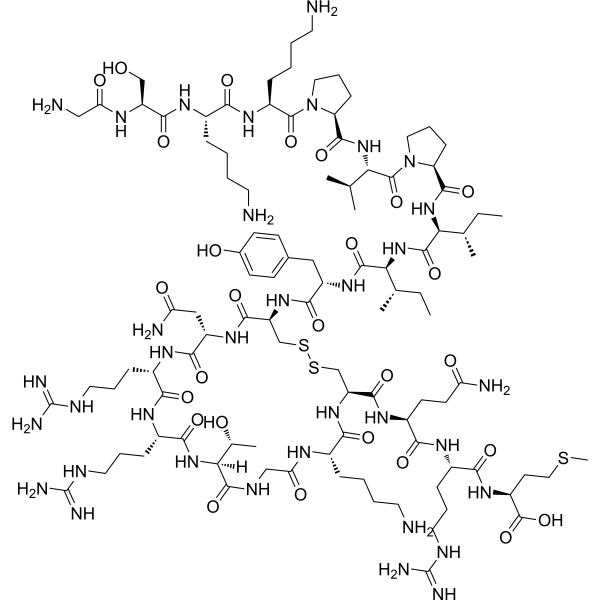
Thanatin is an inducible cationic antimicrobial peptide. Thanatin is a pathogen-inducible single-disulfide-bond-containing β-hairpin AMP. Thanatin displays broad-spectrum activity against both Gram-negative and Gram-positive bacteria as well as against various species of fungi with MICs of 0.3-40 µM, 0.6-40 µM and 0.6-20 µM, respectively. Thanatin has the property of competitive replacement of divalent cations from bacterial outer membrane (OM), leading to OM disruption .
loading...
    loading...
Cat. No.: HY-P5601A
Target:  

Bacterial Fungal

Research Areas:  

Infection

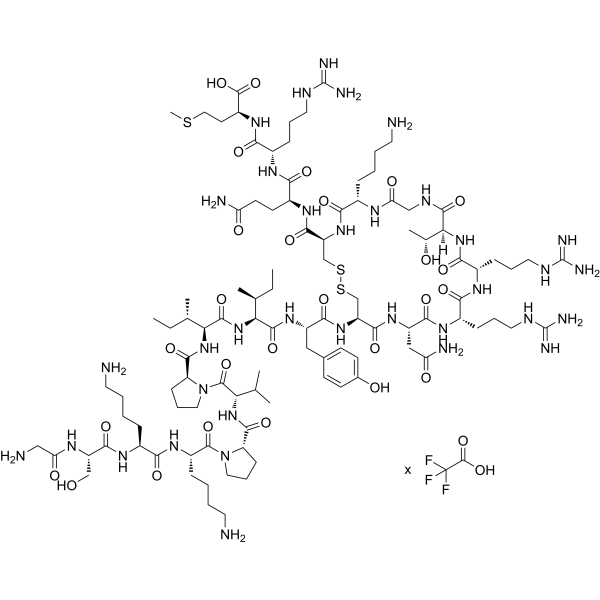
Thanatin TFA is an inducible cationic antimicrobial peptide. Thanatin TFA s a pathogen-inducible single-disulfide-bond-containing β-hairpin AMP. Thanatin TFA displays broad-spectrum activity against both Gram-negative and Gram-positive bacteria as well as against various species of fungi with MICs of 0.3-40 µM, 0.6-40 µM and 0.6-20 µM, respectively. Thanatin TFA has the property of competitive replacement of divalent cations from bacterial outer membrane (OM), leading to OM disruption .
loading...
    loading...
Cat. No.: HY-P4809
CAS No.: 872043-01-1
Target:  

Bacterial Fungal

Research Areas:  

Infection Cancer

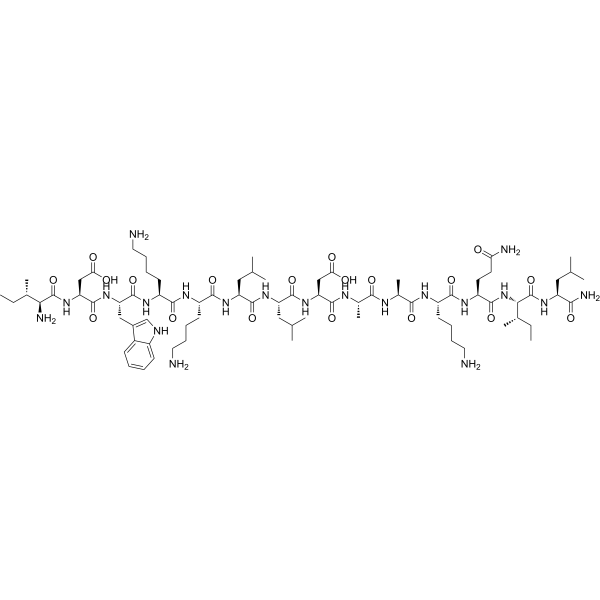
Polybia-MP1 is an antimicrobial peptide with antibacterial, antifungal and anticancer activities. Polybia-MP1 selectively targets cancer cells by interacting with PS and PE in the outer leaflet of cell membranes, and induces necrosis via pore formation. Polybia-MP1 exhibits antibacterial activity against Pseudomonas aeruginosa. Polybia-MP1 can be used in research related to bacterial infections, fungal infections and cancers .
loading...
    loading...
Cat. No.: HY-P0311A
Target:  

Bacterial

Research Areas:  

Infection

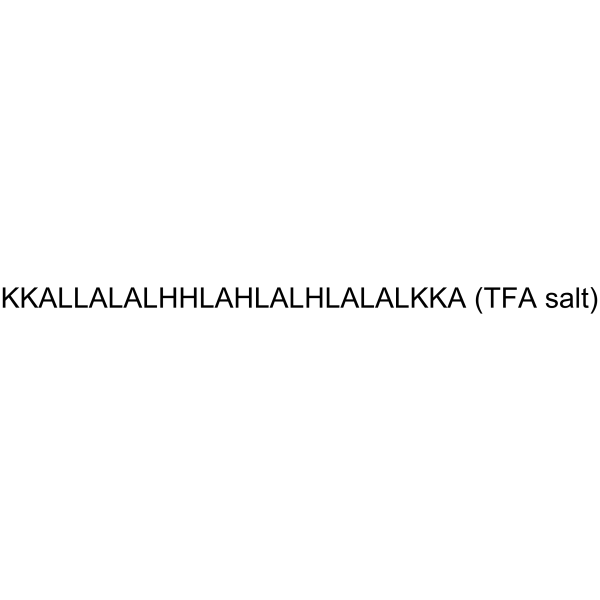
LAH4 TFA, an alpha-helix of the designed amphipathic peptide antibiotic, exhibits potent antimicrobial, nucleic acid transfection and cell penetration activities. LAH4 TFA possesses high plasmid DNA delivery capacities. LAH4 TFA has a strong affinity for anionic lipids found in the outer membrane of bacterial membranes .
loading...
    loading...
Cat. No.: HY-P5694
Research Areas:  

Infection

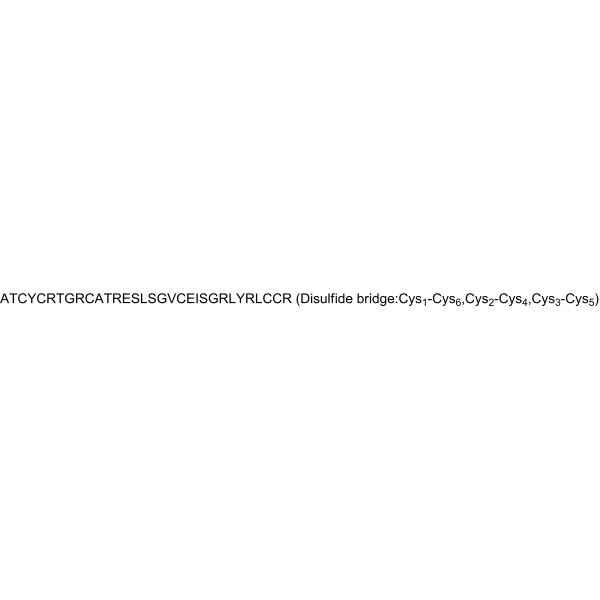
Human α-defensin 5 is an orally active antimicrobial peptide with diverse biological activities including antibacterial, antiviral, and antiparasitic effects. Human α-defensin 5 kills UPEC, inhibits bacterial biofilm formation, and disrupts bacterial outer membrane integrity. Human α-defensin 5 is hijacked by Shigella flexneri, enhancing Shigella adhesion, aggregation, and invasion of host epithelial cells, and aggravating histopathological damage in corneal and colonic tissues as well as fever. Human α-defensin 5 inhibits LPS-induced pro-inflammatory cytokine production and NF-κB signaling pathway activation, upregulates the tight junction proteins ZO-1 and occludin, and maintains intestinal epithelial barrier integrity. Human α-defensin 5 inhibits various non-enveloped viruses and exhibits killing activity against Toxoplasma gondii tachyzoites. Human α-defensin 5 reduces UPEC bacterial load in the bladder and urine and alleviates inflammatory damage in a rat catheter-associated urinary tract infection model. Human α-defensin 5 can be used in research related to bacterial infections, viral infections, parasitic infections, and inflammatory bowel disease .
loading...
    loading...
Cat. No.: HY-P10519
CAS No.: 2676889-05-5
Research Areas:  

Infection

Brevicidine is an antimicrobial peptide with selective bactericidal activity against Gram-negative pathogens. Brevicidine disrupts bacterial morphology by binding to lipopolysaccharide (LPS) on the bacterial cell membrane to form pores. Brevicidine causes dissipation of intracellular proton motive force, outer membrane damage, inhibition of ATP biosynthesis and reactive oxygen species accumulation in bacterial cells. As a sensitizer, Brevicidine exerts synergistic activity when combined with a variety of conventional antibiotics .
loading...
    loading...
Cat. No.: HY-179396
CAS No.: 1884551-35-2
Target:  

Bacterial

Research Areas:  

Infection

T-1228 is a highly selective LpxC inhibitor. T-1228 can effectively block the synthesis of LPS (HY-D1056), causing defects in the bacterial outer membrane structure, increasing membrane permeability, and ultimately leading to bacterial cell death. T-1228 can be used for the study of Gram-negative bacterial infections .
loading...
    loading...
Cat. No.: HY-P11442
Synonyms: Lycotoxin-Pa2a; TBIU041425
Lytx-Pa2a (Lycotoxin-Pa2a) is a peptide inhibitor against bacterial membranes and TLR4 receptor. Lytx-Pa2a exerts antimicrobial effects via non-competitive disruption of outer/cytoplasmic membranes and suppression of LPS-induced TLR4/NF-κB signaling. Lytx-Pa2a is promising for research of bacterial infection and inflammation-related disease (e.g., sepsis) .
loading...
    loading...
Cat. No.: HY-149812
CAS No.: 2890177-95-2
Target:  

Bacterial Parasite

Research Areas:  

Infection

Efflux pump-IN-4 is an AcrB efflux pump inhibitor, with ability to potentiate the effect of antibiotics. Efflux pump-IN-4 inhibits Nile Red (a known substrate of AcrB) efflux. Efflux pump-IN-4 does not disrupts the bacterial outer membrane nor display toxicity in a nematode model .
loading...
    loading...
Cat. No.: HY-147429A
Synonyms: Abx MCP TFA; RG6006 TFA
Target:  

Bacterial Liposome

Research Areas:  

Infection

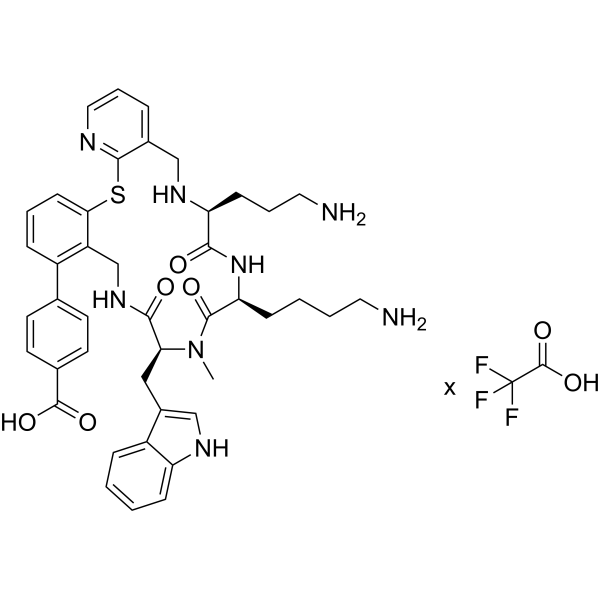
Zosurabalpin (Abx MCP; RG6006) TFA is a lipopolysaccharide (LPS) transport inhibitor that targets the LptB2FGC complex. Zosurabalpin TFA blocks the transport of LPS from the inner membrane to the outer membrane, leading to intracellular toxic accumulation of LPS and bacterial death. Zosurabalpin TFA exhibits potent antibacterial activity against carbapenem-resistant Acinetobacter baumannii (CRAB) and shows in vivo efficacy in mouse infection models. Zosurabalpin TFA can be used for research on CRAB infections, including pneumonia and sepsis .
loading...
    loading...
Cat. No.: HY-120805
CAS No.: 13191-64-5
Aurofusarin is a secondary metabolite . Aurofusarin catalytically inhibits topoisomerase II alpha, induces CYP1A1, p53, oxidative stress, DNA damage, and glutathione redox shift, intercalates into DNA, and causes S phase reduction accompanied by cytoskeletal/nuclear condensation. Aurofusarin disrupts intestinal epithelial barrier integrity, acts additively with deoxynivalenol, reduces mitochondrial activity, is cytotoxic to colon cells, and inhibits probiotic Gram-positive bacteria through outer membrane penetration without affecting Gram-negative bacteria. Aurofusarin can be used in research on colon cancer and bacterial infections .
loading...
    loading...
Cat. No.: HY-162672
Target:  

Bacterial

Research Areas:  

Infection

Antibacterial agent 231 (derivative 8) is an antimicrobial agent against multidrug-resistant Helicobacter pylori (H. pylori) with a minimum inhibitory concentration of 0.25–0.5 μg/mL. Antibacterial agent 231 directly targets the protein transposase subunit SecA and the outer membrane protein assembly factor BamD to inhibit the trafficking and assembly of bacterial outer membrane proteins (OMPs). Antibacterial agent 231 can be used to study the effects of antibiotic treatment on intestinal microbial balance .
loading...
    loading...
Cat. No.: HY-149810
CAS No.: 2890177-90-7
Target:  

Bacterial Parasite

Research Areas:  

Infection

AcrB-IN-2 is an AcrB efflux pump inhibitor, with ability to potentiate the effect of antibiotics. AcrB-IN-22 inhibits Nile Red (a known substrate of AcrB) efflux.AcrB-IN-2 does not disrupts the bacterial outer membrane nor display toxicity in a nematode model .
loading...
    loading...
Cat. No.: HY-144255
Research Areas:  

Infection

Antibacterial agent 70 is an antibacterial agent that interacts with DNA, with a MIC value of 0.5 μg/mL against K. pneumonia and A. baumanii. Antibacterial agent 70 exhibits rapid bactericidal activity, low cytotoxicity to mammalian cells, and low tendency to induce drug resistance. Antibacterial agent 70 intercalates into DNA, disrupts bacterial membrane integrity, increases intracellular ROS production, reduces GSH activity, regulates membrane depolarization, enhances outer membrane permeability, and induces inner membrane damage. Antibacterial agent 70 can be used in studies related to multidrug-resistant bacterial infections and infections caused by drug-resistant Gram-negative pathogens .
loading...
    loading...

