60 Results for "

catalytically active site

" in MedChemExpress (MCE) Product Catalog:
Products (60)

60 Results for "catalytically active site" in MCE Product Catalog:

  • Categories Recommended:
    More
17
17 Cited Publications
Cat. No.: HY-11107
CAS No.: 477575-56-7
Purity:  99.86%
Research Areas:  

Cancer

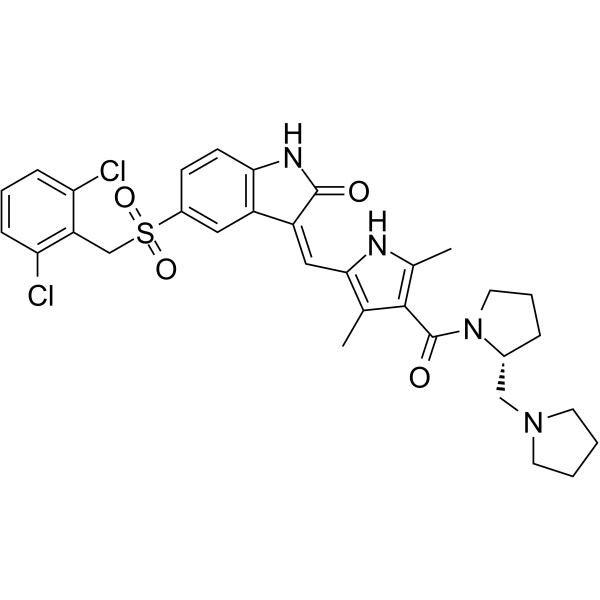
PHA-665752 is a selective, ATP-competitive, and active-site inhibitor of the catalytic activity of c-Met kinase (Ki=4 nM; IC50=9 nM). PHA-665752 exhibits >50-fold selectivity for c-Met compared with a panel of diverse tyrosine and serine-threonine kinases. PHA-665752 induces apoptosis and cell cycle arrest, and exhibits cytoreductive antitumor activity .
loading...
    loading...
Cat. No.: HY-157521
CAS No.: 3055162-52-9
Target:  

Acyltransferase

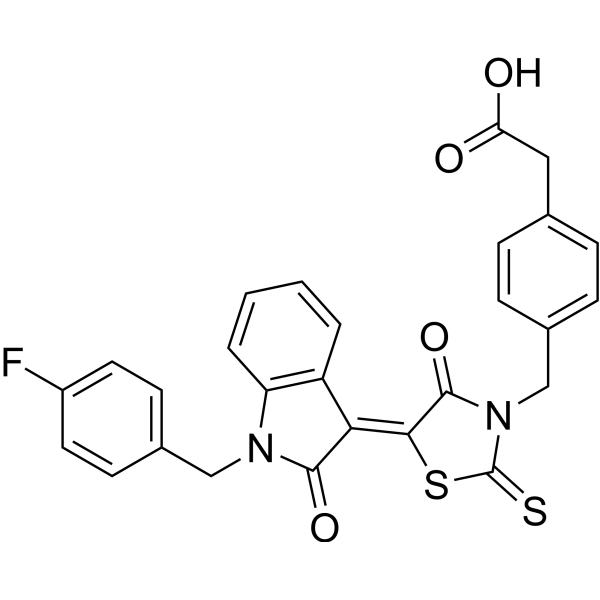
AANAT-IN-1 is an arylalkylamine N-acetyltransferase (AANAT) inhibitor with a sheep AANAT IC50 of 9.9 μM. AANAT-IN-1 binds to the active site of sheep AANAT, interacting with amino acid residues via hydrogen bonds, hydrophobic interactions, ionic interactions, and water bridges, inhibiting the enzyme's catalytic activity. AANAT-IN-1 can be used for the researches of circadian rhythm-associated neuropsychiatric conditions, seasonal affective disorder, and other diseases associated with abnormally elevated melatonin levels .
loading...
    loading...
Cat. No.: HY-149922
CAS No.: 1101130-96-4
Purity:  98.12%
Target:  

LOX-1

Research Areas:  

Cardiovascular Disease Others

DKI5 is a LOX-1 inhibitor with a soybean IC50 of 22.5 μM. DKI5 binds to the active site and affects the catalytic iron center. DKI5 inhibits lipid peroxidation .
loading...
    loading...
Cat. No.: HY-171036
CAS No.: 252212-58-1
Research Areas:  

Metabolic Disease

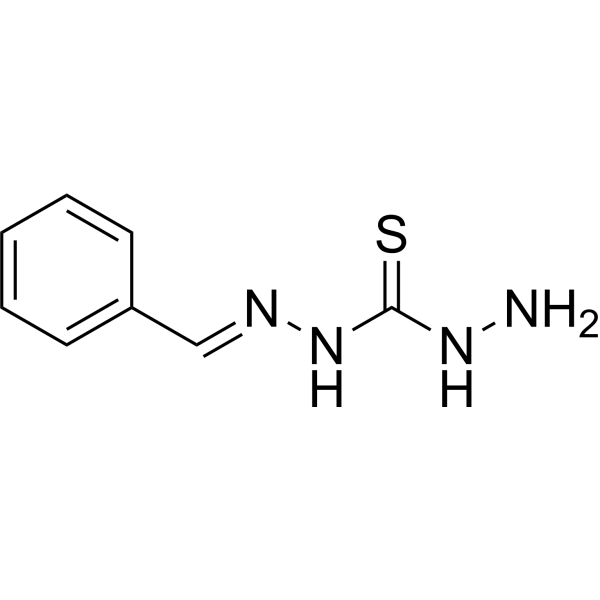
GAPDH-IN-1 (Compound F8) is a GAPDH inhibitor (IC50 of 39.31 μM for GAPDH enzymatic activity). GAPDH-IN-1 forms a covalent adduct with an aspartic acid in the active site to displace NAD +, a cofactor of the enzyme, with concomitant enhancement of the cysteine-reactive probe reaction with the catalytic cysteine .
loading...
    loading...
Cat. No.: HY-P10422A
Synonyms: ML-peptide, Multi-Leucine (ML)-peptide triacetate
Target:  

Autophagy

Research Areas:  

Cancer

Multi-Leu peptide (ML-peptide) triacetate is a potent inhibitor of PACE4 (Ki=22 nM). Multi-Leu peptide triacetate can competitively bind to the active site of PACE4 by simulating the substrate sequence of PACE4, thereby inhibiting its catalytic activity. Multi-Leu peptide triacetate can be used to study the specific mechanism of PACE4 in the development of prostate cancer .
loading...
    loading...
Cat. No.: HY-N10686
CAS No.: 61077-78-9
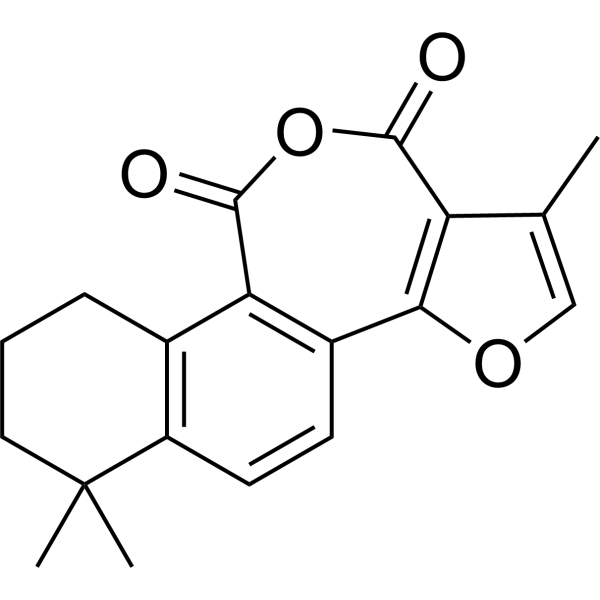
Tanshinone IIA anhydride, present in root extracts of Salvia miltiorrhiza, acts as an inhibitor of human carboxylesterase (CE). Tanshinone IIA anhydride has a Ki value of 1.9 nM against hCE1 and a Ki value of 1.4 nM against hiCE. Tanshinone IIA anhydride forms a stable covalent complex with serine Ser221 at the active site of hCE1, blocking the catalytic cycle of carboxylesterase, and the activity of the inactivated enzyme cannot recover spontaneously. Tanshinone IIA anhydride is applicable in metabolism-related studies .
loading...
    loading...
Cat. No.: HY-P2765
CAS No.: 9075-65-4
Synonyms: GPDH, rabbit muscle; α-Glycerophosphate dehydrogenase, rabbit muscle; Glycerol phosphate dehydrogenase, rabbit muscle
Research Areas:  

Metabolic Disease

Glycerol‑3‑phosphate dehydrogenase, rabbit muscle (GPDH; α-Glycerophosphate dehydrogenase; Glycerol phosphate dehydrogenase) is an NADH-dependent oxidoreductase derived from rabbit muscle that participates in glycolysis, gluconeogenesis, and the glycerol‑3‑phosphate shuttle metabolic pathway. Glycerol‑3‑phosphate dehydrogenase, rabbit muscle uses NADH as a reducing equivalent donor, and its substrate binding relies on the phosphate-binding site in the active center; it catalyzes the reversible reduction of dihydroxyacetone phosphate to L‑α‑glycerol‑3‑phosphate. The catalytic activity of the enzymatic reaction of Glycerol‑3‑phosphate dehydrogenase, rabbit muscle is regulated by pH and divalent metal ions. Glycerol‑3‑phosphate dehydrogenase, rabbit muscle can be used in metabolism-related studies .
loading...
    loading...
Cat. No.: HY-W016480
CAS No.: 943-80-6
Synonyms: H-Phe(4-NH2)-OH
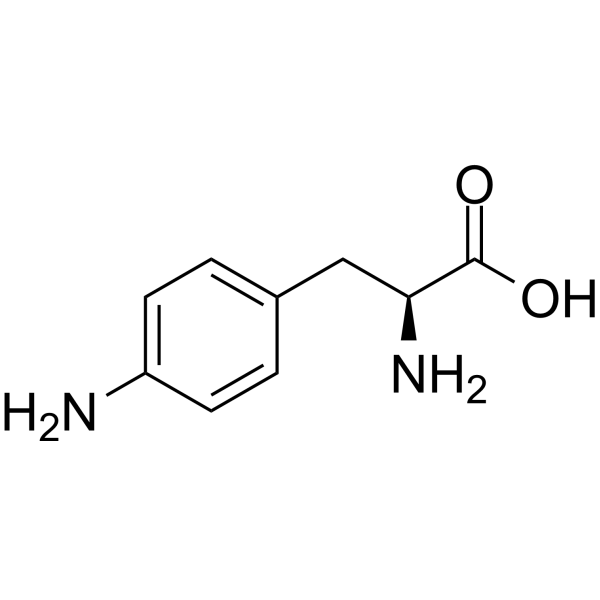
4-Amino-L-phenylalanine (H-Phe(4-NH2)-OH) is a metabolic intermediate and an α-carbonic anhydrase (TcCA) activator with a Ka value of 0.75 μM. 4-Amino-L-phenylalanine acts through active site cavity entrance binding and a proton shuttle mechanism to enhance the catalytic rate of CO2 hydration. 4-Amino-L-phenylalanine serves as a diamine monomer for bio-based polymer synthesis and is produced in Escherichia coli via the shikimate pathway. 4-Amino-L-phenylalanine constitutes a structural component of haptens used in immunoassay development. 4-Amino-L-phenylalanine is used for the production of Chloramphenicol (HY-B0239) and Pristinamycin I in Streptomyces venezuelae and S. pristinaespiralis, respectively. 4-Amino-L-phenylalanine is used in research related to Trypanosoma cruzi infection .
loading...
    loading...
Cat. No.: HY-W028350
CAS No.: 40106-12-5
Research Areas:  

Infection

NSC727447 is a vinyl urea-based allosteric inhibitor of HIV reverse transcriptase-associated RNase H with IC50 values of 2.0 μM and 2.5 μM against HIV-1 and HIV-2 RNase H, respectively, and IC50 values of 100 μM and 10.6 μM against Escherichia coli and human RNase H, respectively. NSC727447 exerts allosteric inhibitory effects mainly by interacting with the region adjacent to α-helix I in the thumb subdomain of the p51 subunit of HIV-1 reverse transcriptase. Cys280, Lys281 and the RNase H primer grip region are involved in its action, and it may inhibit the catalytic activity of RNase H by altering the positioning of nucleic acid substrates or the geometry of the RNase H active site. NSC727447 can be used in studies related to HIV infection, the function of HIV reverse transcriptase RNase H, and allosteric inhibition mechanisms .
loading...
    loading...
Cat. No.: HY-122142A
CAS No.: 127428-47-1
Synonyms: S-2366 (hydrochloride)
Research Areas:  

Others

Pyr-​Pro-​Arg-​pNA (S-2366) hydrochloride is a chromogenic peptidyl substrate, and a noncompetitive inhibitor that occupies the active sites of FXIa and FXIa-LC to block factor IX activation. Pyr-​Pro-​Arg-​pNA hydrochloride functions as a hydrolyzable substrate for FXIa’s catalytic domain, human APC, murine APC, and purified plasma kallikrein .
loading...
    loading...
Cat. No.: HY-110147B
Purity:  ≥99.0%
Target:  

Furin

Research Areas:  

Infection

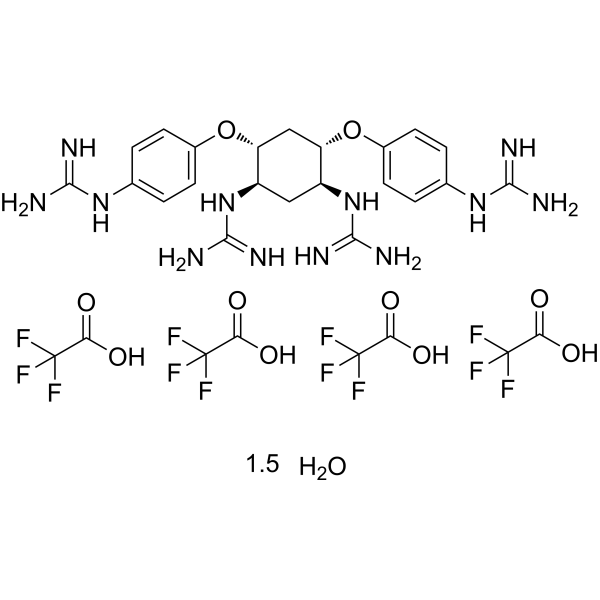
SSM-3 tetraTFA hydrate is a potent furin inhibitor with an EC50 of 54 nM. SSM-3 tetraTFA hydrate uses its positively charged guanidyl group to form strong electrostatic interactions with the negatively charged residues in the catalytic center of furin, thereby competitively occupying and blocking the active site. SSM-3 tetraTFA hydrate can be used in the research of anthrax and avian influenza .
loading...
    loading...
Cat. No.: HY-167920
CAS No.: 1637-70-3
Synonyms: S-Sulfoglutathione
Target:  

Endogenous Metabolite

Research Areas:  

Cancer

Glutathione sulfonate (S-Sulfoglutathione) is a multifunctional bioactive compound that inhibits angiogenesis and tumor growth. Glutathione sulfonate is a competitive inhibitor of glutathione S-transferase and is involved in the detoxification process and the binding of a variety of exogenous and endogenous compounds. Glutathione sulfonate acts in the substrate binding site of Escherichia coli glutathione S-transferase, affecting the catalytic mechanism. The structural characteristics of Glutathione sulfonate contribute to its inhibitory effect by hydrogen bonding in the active center of the enzyme .
loading...
    loading...
Cat. No.: HY-D2188
IMP-2373 is a low-toxicity activity-based probe targeting covalent pan-deubiquitinase (DUB), which modulates and monitors DUB activity via covalent binding to the catalytic cysteine and active site of DUB. IMP-2373 enables real-time tracking of dynamic intracellular DUB activity in physiologically relevant living cell systems, and quantitative analysis of activity changes induced by pharmacological inhibition or MYC dysregulation. IMP-2373 can be used for research on related diseases such as B-cell lymphoma .
loading...
    loading...
Cat. No.: HY-174423
CAS No.: 1994348-72-9
Synonyms: NC-656
Target:  

Herbicide HPPD

Research Areas:  

Others

Iptriazopyrid is a 4-hydroxyphenylpyruvate dioxygenase (HPPD) inhibitor, with a Ki value of 24.3 nM against Arabidopsis thaliana and 33.3 nM against Oryza sativa. Iptriazopyrid binds to the active pocket of HPPD, occupies the catalytic site, inhibits carotenoid biosynthesis, prevents chloroplast formation, and induces albino and chlorotic symptoms in sensitive plants. Used as a herbicide, Iptriazopyrid can control barnyardgrass when applied alone, and its efficacy does not decrease when mixed with labeled residual herbicides. When Iptriazopyrid is mixed with 2,4-D or triclopyr, its barnyardgrass control effect shows an antagonistic effect. Iptriazopyrid is a triazole carboxamide herbicide that exhibits selectivity for Oryza sativa over Echinochloa crus-galli, and has partial tank-mix compatibility with synthetic auxin herbicides registered for rice .
loading...
    loading...
Cat. No.: HY-N15159
CAS No.: 146776-30-9
Cladophorol A is a cyclic GMP-AMP synthase (cGAS) inhibitor. Cladophorol A binds to the conserved adenosine nucleobase binding site within the cGAS active site to inhibit its catalytic activity. Cladophorol A effectively inhibits the overactivation of the cGAS-STING pathway with an IC50 of 370 nM. Cladophorol A inhibits asexual blood-stage Plasmodium falciparum with an EC50 of 0.7 μg/mL. Cladophorol A can be used for the researches of inflammatory disease and malaria .
loading...
    loading...
Cat. No.: HY-170920
CAS No.: 3056059-99-2
Herbicide safener-4 is a herbicide safener targeting acetolactate synthase (ALS). Herbicide safener-4 competitively binds to the active site of ALS, blocks the binding of Mesosulfuron-methyl (HY-126987), and simultaneously allows substrates to enter for catalytic reactions. Herbicide safener-4 increases the content/activity of glutathione (GSH), glutathione S-transferase (GST), cytochrome P450 monooxygenase (CYP450) and peroxidase (POD) in plants, and decreases the activity of superoxide dismutase (SOD) .
loading...
    loading...
Cat. No.: HY-P2765A
CAS No.: 9075-65-4
Synonyms: GPDH, microorganism; α-Glycerophosphate dehydrogenase, microorganism; Glycerol phosphate dehydrogenase, microorganism
Research Areas:  

Metabolic Disease

Glycerol-3-phosphate dehydrogenase, microorganism (GPDH; α-Glycerophosphate dehydrogenase; Glycerol phosphate dehydrogenase) is an NADH-dependent oxidoreductase derived from microorganism that participates in glycolysis, gluconeogenesis, and the glycerol‑3‑phosphate shuttle metabolic pathway. Glycerol-3-phosphate dehydrogenase, microorganism uses NADH as a reducing equivalent donor, and its substrate binding relies on the phosphate-binding site in the active center; it catalyzes the reversible reduction of dihydroxyacetone phosphate to L‑α‑glycerol‑3‑phosphate. The catalytic activity of the enzymatic reaction of Glycerol-3-phosphate dehydrogenase, microorganism is regulated by pH and divalent metal ions. Glycerol-3-phosphate dehydrogenase, microorganism can be used in metabolism-related studies .
loading...
    loading...
Cat. No.: HY-10572A
CAS No.: 154801-74-8
Synonyms: (R)-DMP 266; (R)-EFV; (R)-L-743726
Target:  

Reverse Transcriptase

Research Areas:  

Infection

(R)-Efavirenz ((R)-DMP 266) is a non-nucleoside reverse transcriptase inhibitor that acts by non-competitive inhibition of the viral enzyme. (R)-Efavirenz can be metabolized by CYP2B6 to 8-hydroxyefavirenz in a highly stereoselective manner. (R)-Efavirenz is promising to be a useful probe for the CYP2B6 active site and catalytic mechanisms .
loading...
    loading...
Cat. No.: HY-122142
CAS No.: 72194-57-1
Synonyms: S-2366
Pyr-​Pro-​Arg-​pNA (S-2366) is a chromogenic peptidyl substrate, and a noncompetitive inhibitor that occupies the active sites of FXIa and FXIa-LC to block factor IX activation. Pyr-​Pro-​Arg-​pNA functions as a hydrolyzable substrate for FXIa’s catalytic domain, human APC, murine APC, and purified plasma kallikrein .
loading...
    loading...
Cat. No.: HY-P10422
CAS No.: 1413058-07-7
Synonyms: ML-peptide, Multi-Leucine (ML)-peptide
Target:  

Autophagy

Research Areas:  

Cancer

Multi-Leu peptide (ML-peptide) is a potent inhibitor of PACE4 (Ki=22 nM). Multi-Leu peptide can competitively bind to the active site of PACE4 by simulating the substrate sequence of PACE4, thereby inhibiting its catalytic activity. Multi-Leu peptide can be used to study the specific mechanism of PACE4 in the development of prostate cancer .
loading...
    loading...

