


23 Results for "

cellular internalization

" in MedChemExpress (MCE) Product Catalog:
Products (23)

23 Results for "cellular internalization" in MCE Product Catalog:

3
3 Cited Publications
Cat. No.: HY-164992
Synonyms: MRG002; Trastuzumab MMAE
Trastuzumab vedotin (MRG002; Trastuzumab MMAE) is an antibody-drug conjugate and cytotoxin targeting HER2, with a Kd of 7.50E-11 M for human HER2. After binding to HER2, Trastuzumab vedotin undergoes internalization and lysosomal trafficking, delivering a cytotoxic payload to HER2-expressing cells and inducing tumor regression in in vivo xenograft models with HER2-expressing tumors. The anti-tumor activity of Trastuzumab vedotin is enhanced when used in combination with anti-PD-1 antibodies, and it exhibits preclinical anti-tumor activity in drug-resistant breast cancer, gastric cancer, and urothelial carcinoma PDX models. Trastuzumab vedotin has low antibody-dependent cellular cytotoxicity activity and can be used in studies related to HER2-positive breast cancer, HER2-positive gastric cancer, and unresectable locally advanced or metastatic HER2-positive urothelial carcinoma .
loading...
    loading...
2
2 Cited Publications
Cat. No.: HY-131901
CAS No.: 637-03-6
Purity:  99.32%
Synonyms: Oxophenylarsine; PhAsO; Arsenosobenzene
Research Areas:  

Others

Phenylarsine oxide (PAO), an inhibitor of endocytosis, inhibits PTPε with an IC50 of 18 μM. Phenylarsine oxide (PAO) inhibits oxygen consumption and decreases cellular ATP content overlap with those used to inhibit protein internalization .
loading...
    loading...
Cat. No.: HY-P9964
CAS No.: 906805-06-9
Synonyms: 11F8; IMC-11F8; LY3012211

Target:  

EGFR

Research Areas:  

Cancer

Necitumumab (11F8; IMC-11F8; LY3012211) is a human IgG monoclonal antibody directed against EGFR. Necitumumab binds to the EGF binding site of EGFR, blocks ligand binding, neutralizes ligand-induced EGFR phosphorylation and downstream signaling, induces EGFR internalization and degradation, and mediates antibody-dependent cellular cytotoxicity (ADCC) in EGFR-expressing cells. Necitumumab enhances antitumour activity in combination with Gemcitabine (HY-17026) and Cisplatin (HY-17394) in murine non-small-cell lung cancer xenograft models. Necitumumab can be used in research on cancers such as non-small cell lung cancer and colorectal cancer .
loading...
    loading...
Cat. No.: HY-P3717
CAS No.: 3031514-44-7
Target:  

Ephrin Receptor

Research Areas:  

Cancer

Targefrin is a potent EphA2-targeting agent, acts as an antagonist. Targefrin binds EphA2-LBD with 21 nM dissociation constant and an IC50 value of 10.8 nM. Targefrin induces cellular receptor internalization and degradation in several pancreatic cancer cell lines .
loading...
    loading...
Cat. No.: HY-P990049
CAS No.: 2648260-93-7
Synonyms: JMT-101; MRG003 Antibody

Target:  

EGFR ADC Antibodies

Research Areas:  

Cancer

Becotatug (JMT-101) is a humanized IgG1 monoclonal antibody targeting epidermal growth factor receptor (EGFR), and serves as the antibody component of the antibody-drug conjugate Becotatug vedotin (HY-171265). Becotatug specifically binds to the extracellular domain of EGFR, induces receptor internalization and degradation, blocks the EGFR signaling pathway, and mediates antibody-dependent cellular cytotoxicity. When conjugated to monomethyl auristatin E (MMAE) (HY-15162) via a valine-citrulline cleavable linker, Becotatug enables targeted delivery of cytotoxic drugs to EGFR-positive tumor cells. Becotatug can be used for research related to non-small cell lung cancer, nasopharyngeal carcinoma, and head and neck squamous cell carcinoma. .
loading...
    loading...
Cat. No.: HY-P991381
Synonyms: PPMX-T003; TSP-A18
JST‑TfR09 (PPMX‑T003) is a human monoclonal antibody (mAb) targeting transferrin receptor 1 (TfR1/CD71). JST‑TfR09 blocks the binding of transferrin to TfR1, inhibits TfR1 internalization, and suppresses cellular iron uptake. JST‑TfR09 triggers ferritin degradation via activating the autolysosomal system, promotes ROS production and lipid peroxidation, and ultimately induces ferroptosis. JST‑TfR09 exhibits cytotoxicity toward human erythroblasts differentiated from hematopoietic stem cells. JST-TfR09 can be used in leukemia research. Recommended isotype control: Human IgG1 lambda, Isotype Control (HY-P99992) .
loading...
    loading...
Cat. No.: HY-P2483B
Target:  

Bacterial Proteasome

Octaarginine acetate is a cell-penetrating peptide and proteasome inhibitor. Octaarginine acetate exhibits mixed-type inhibition against 20S proteasome chymotrypsin-like, caspase-like, and trypsin-like activities, and inhibits 26S proteasome activity with decreased efficiency. Octaarginine acetate induces ubiquitin-conjugated protein accumulation, mediates HSPG-dependent cellular internalization via macropinocytosis, enhances liposomal cargo uptake and gene delivery. Octaarginine acetate can be used for the research of cervix carcinoma, collagen antibody-induced arthritis, and bacterial infections .
loading...
    loading...
Cat. No.: HY-P2483
CAS No.: 148796-86-5
Target:  

Proteasome Bacterial

Octaarginine is a cell-penetrating peptide and proteasome inhibitor. Octaarginine exhibits mixed-type inhibition against 20S proteasome chymotrypsin-like, caspase-like, and trypsin-like activities, and inhibits 26S proteasome activity with decreased efficiency. Octaarginine induces ubiquitin-conjugated protein accumulation, mediates HSPG-dependent cellular internalization via macropinocytosis, enhances liposomal cargo uptake and gene delivery. Octaarginine can be used for the research of cervix carcinoma, collagen antibody-induced arthritis, and bacterial infections .
loading...
    loading...
Cat. No.: HY-167862
CAS No.: 2411412-36-5
Target:  

Endogenous Metabolite

Research Areas:  

Neurological Disease

UCM-05194 is a selective LPA1 receptor agonist with activity to improve neuropathic pain. UCM-05194 is a LPA1 agonist that exhibits potent and selective properties in its pharmacologically similar properties. UCM-05194 triggers LPA1-mediated cellular effects and leads to internalization of the receptor, resulting in functional inactivation in primary sensory neurons. UCM-05194 effectively reduces pain perception in in vivo models. UCM-05194 can be used to conduct research on progressive systemic diseases .
loading...
    loading...
Cat. No.: HY-P10155
CAS No.: 352653-12-4
Target:  

Inhibitory Antibodies

Research Areas:  

Others

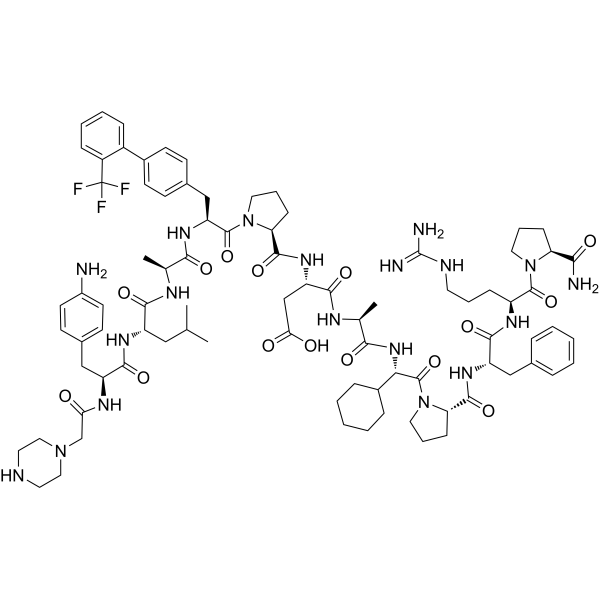
VT5 is a β-sheet amphipathic peptide consisting of 26 amino acids. VT5 has the ability to form β-sheets for cellular internalization .
loading...
    loading...
Cat. No.: HY-163079
Target:  

FAP

Research Areas:  

Cancer

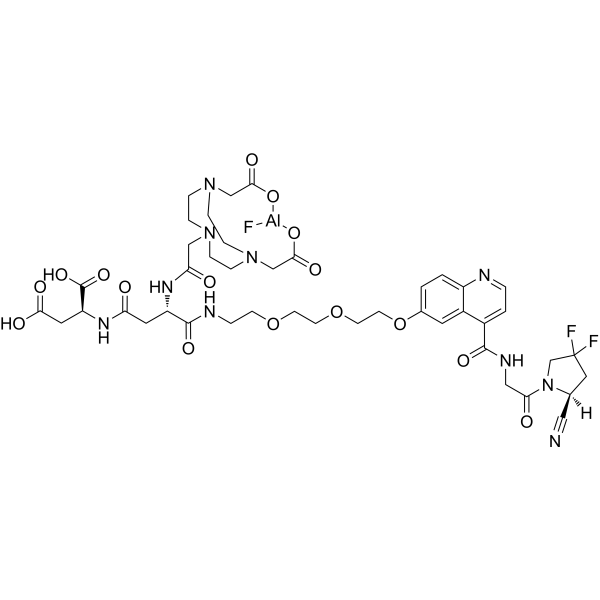
AlF-PD-FAPI has affinity for FAP , with the IC50 of 0.13 nM, and shows a specific uptake, high internalized fraction, and low cellular efflux in vitro. AlF-PD-FAPI can be used as FAP-targeting tracer .
loading...
    loading...
Cat. No.: HY-P2483A
Target:  

Proteasome Bacterial

Research Areas:  

Infection Neurological Disease Cancer

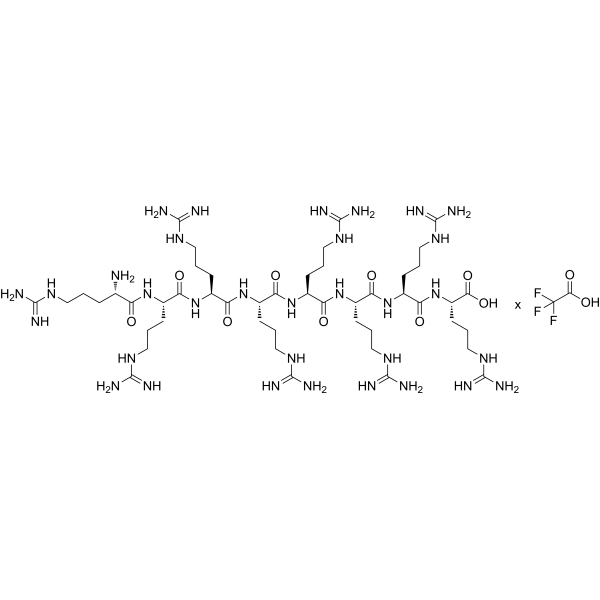
Octaarginine TFA is a cell-penetrating peptide and proteasome inhibitor. Octaarginine TFA exhibits mixed-type inhibition against 20S proteasome chymotrypsin-like, caspase-like, and trypsin-like activities, and inhibits 26S proteasome activity with decreased efficiency. Octaarginine TFA induces ubiquitin-conjugated protein accumulation, mediates HSPG-dependent cellular internalization via macropinocytosis, enhances liposomal cargo uptake and gene delivery. Octaarginine TFA can be used for the research of cervix carcinoma, collagen antibody-induced arthritis, and bacterial infections .
loading...
    loading...
Cat. No.: HY-182988
CAS No.: 2681258-65-9
Target:  

Liposome

Research Areas:  

Cancer

L-Arg-DSPE is an arginine-functionalized DSPE lipid containing free guanidine groups. L-Arg-DSPE serves as a component of NO-responsive degradable drug-loaded liposomal nanomotors (L-Arg@Lip-DOX), promoting drug deep tumor tissue penetration and cellular internalization. L-Arg-DSPE can be used for the research of drug delivery .
loading...
    loading...
Cat. No.: HY-P11647A
Target:  

Complement System

Research Areas:  

Cancer

RPARPAR acetate is a CendR tumor-penetrating peptide. RPARPAR acetate directly binds to the NRP-1 and NRP-2 receptors on the surface of tumor cells, triggering cellular internalization, vascular extravasation, and penetration into tumor tissues. RPARPAR acetate serves as an efficient ligand for targeting nanocarriers to NRP-1-positive tumors. RPARPAR acetate is applicable in research on tumor targeting and drug delivery .
loading...
    loading...
Cat. No.: HY-P11647
CAS No.: 1184942-81-1
Target:  

Complement System

Research Areas:  

Cancer

RPARPAR is a CendR tumor-penetrating peptide. RPARPAR directly binds to the NRP-1 and NRP-2 receptors on the surface of tumor cells, triggering cellular internalization, vascular extravasation, and penetration into tumor tissues. RPARPAR serves as an efficient ligand for targeting nanocarriers to NRP-1-positive tumors. RPARPAR is applicable in research on tumor targeting and drug delivery .
loading...
    loading...
Cat. No.: HY-183001
CAS No.: 1777792-44-5
Target:  

Liposome CFTR mRNA

Research Areas:  

Inflammation/Immunology

ATX-012 is an ionizable cationic lipid for the assembly of mRNA-delivering lipid nanoparticles (LNPs). ATX-012 blends with helper lipids, cholesterol and PEG-lipid conjugates to form mRNA-containing nanocarriers, which support efficient cellular internalization and the generation of functional proteins including CFTR. ATX-012 constitutes the vital building block of LNPs applied in cystic fibrosis-related biological studies .
loading...
    loading...
Cat. No.: HY-P11741
Research Areas:  

Neurological Disease

BV2 is a delivery peptide that binds to BVES, with a Ka of 2.03 μM for the BVES target. BV2 specifically binds to the extracellular domain of BVES, achieving muscle homing and cellular internalization via caveolae-mediated endocytosis. When BV2 is modified on the surface of exosomes by PMO, it enhances dystrophin restoration in the peripheral muscles and myocardium of dystrophin-deficient mice. BV2 is applicable to research related to Duchenne muscular dystrophy and muscle atrophy .
loading...
    loading...
Cat. No.: HY-P11925
CAS No.: 934965-51-2
Research Areas:  

Cancer

CPP44 is a tumor lineage-homing cell-penetrating peptide (CPP) that selectively enters myeloid leukemia cells and liver tumor cells. The cellular internalization of CPP44 is associated with M160 (CD163L1), and it mainly enters cells via an ATP- and dynein-dependent, clathrin-independent endocytic pathway. CPP44 can be used in studies related to acute myeloid leukemia, hepatocellular carcinoma, tumor-targeted delivery, and tumor imaging .
loading...
    loading...
Cat. No.: HY-P11863
Target:  

c-Met/HGFR

Research Areas:  

Infection Cancer

SMIC-1014 is a cellular mesenchymal-epithelial transition factor (c-Met) ligand. SMIC-1014 binds to the c-Met ectodomain without activating c-Met phosphorylation or inducing receptor internalization. SMIC-1014, when radiolabeled as [ 68Ga]Ga-SMIC-1014, acts as a positron emission tomography (PET) probe with defined pharmacokinetics, achieves specific tumor uptake in xenografts, and functions as a c-Met-targeted diagnostic probe. SMIC-1014 can be used for the research of colon cancer, hepatocellular carcinoma, prostate cancer .
loading...
    loading...
Cat. No.: HY-P11903
Research Areas:  

Cancer

dTBP-3 is a fully D-configured polypeptide competitive inhibitor that targets TIGIT. dTBP-3 can competitively occupy the binding interface between TIGIT and its ligand PVR, block TIGIT-mediated immunosuppressive signals, and reverse the immune exhaustion of NK cells and CD8 + T cells . dTBP-3 possesses anti-proteolytic activity and tumor tissue penetration ability, and can also enhance the tumor penetration capacity and cellular internalization efficiency of nanocarriers. dTBP-3 can be used in studies related to liver cancer, triple-negative breast cancer and non-small cell lung cancer .
loading...
    loading...

