
21 Results for "

central binding site

" in MedChemExpress (MCE) Product Catalog:
Products (21)

21 Results for "central binding site" in MCE Product Catalog:

5
5 Cited Publications
Cat. No.: HY-108831A
CAS No.: 189261-10-7
Purity:  98.72%
Synonyms: AN100226; BG00002
Natalizumab (Anti-CD49d) (AN100226; BG00002) Solution is a humanized monoclonal IgG4 antibody inhibitor that selectively targets α4 integrin (CD49d), blocking the interaction of integrins such as α4β1 (VLA-4) with vascular cell adhesion molecule VCAM-1, intercellular adhesion molecule ICAM-1, and fibronectin by competitively binding to the α4 subunit. Natalizumab solution inhibits the adhesion, retention, and transendothelial migration of immune cells (such as CD4 + T cells), reducing the infiltration of inflammatory cells into the central nervous system or lesion sites, thereby exerting anti-inflammatory and immunomodulatory activity. Natalizumab (Anti-CD49d) solution is used in the study of relapsing-remitting multiple sclerosis (RRMS) and is also applied in the research of autoimmune or inflammation-related diseases such as Crohn's disease, B-cell lymphoma, and non-infectious uveitis. Natalizumab (Anti-CD49d) can also prevent lymphocytes from entering the central nervous system, thus preventing acute demyelinating relapses .
loading...
    loading...
5
5 Cited Publications
Cat. No.: HY-108831
CAS No.: 189261-10-7
Purity:  99.10%
Natalizumab (AN100226; BG00002) is a humanized monoclonal IgG4 antibody inhibitor that selectively targets α4 integrin (CD49d). It blocks the interaction of integrins such as α4β1 (VLA-4) with vascular cell adhesion molecule VCAM-1, intercellular adhesion molecule ICAM-1, and fibronectin by competitively binding to the α4 subunit. Natalizumab inhibits the adhesion, retention, and transendothelial migration of immune cells (such as CD4 + T cells), reducing the infiltration of inflammatory cells into the central nervous system or lesion sites, thus exerting anti-inflammatory and immunomodulatory activity. Natalizumab is used in the study of relapsing-remitting multiple sclerosis (RRMS) and also has applications in the study of autoimmune or inflammation-related diseases such as Crohn's disease, B-cell lymphoma, and non-infectious uveitis. Natalizumab can also prevent lymphocytes from entering the central nervous system, thereby preventing acute demyelinating relapses .
loading...
    loading...
1
1 Cited Publications
Cat. No.: HY-111263
CAS No.: 868592-56-7
Purity:  99.11%
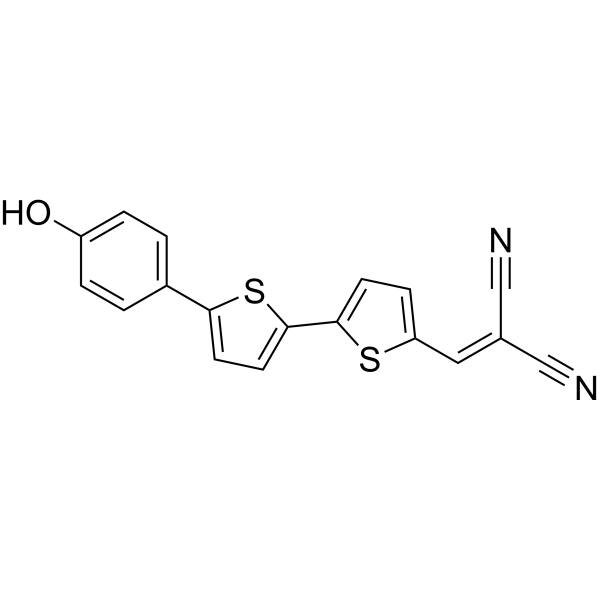
NIAD-4 is a blood-brain barrier permeable fluorophore for optical imaging of amyloid-β (Aβ) in the central nervous system (CNS) for Alzheimer’s disease (AD). NIAD-4 binds to the same Aβ site with the binding affinity (Ki) of 10 nM .
loading...
    loading...
Cat. No.: HY-165559
CAS No.: 2019994-90-0
Target:  

TRP Channel

Research Areas:  

Inflammation/Immunology

Trpvicin is a potent and subtype-selective TRPV3 inhibitor with IC50s of 0.41 and 0.22 μM for hTRPV3-WT and hTRPV3-G573S mutant, respectively. Trpvicin exhibits minimal effects on other TRP family members (such as TRPV1/2/4/5/6, TRPA1 and TRPM8). Trpvicin inhibits the TRPV3 channel by stabilizing it in a closed state via VSLD-PD binding. Trpvicin accesses additional binding sites inside the central cavity of the G573S mutant to remodel symmetry and block the channel. Trpvicin inhibits itch and hair loss in mouse models. Trpvicin can be used for study of inflammation and immunology .
loading...
    loading...
Cat. No.: HY-121944
CAS No.: 524-40-3
Purity:  99.81%
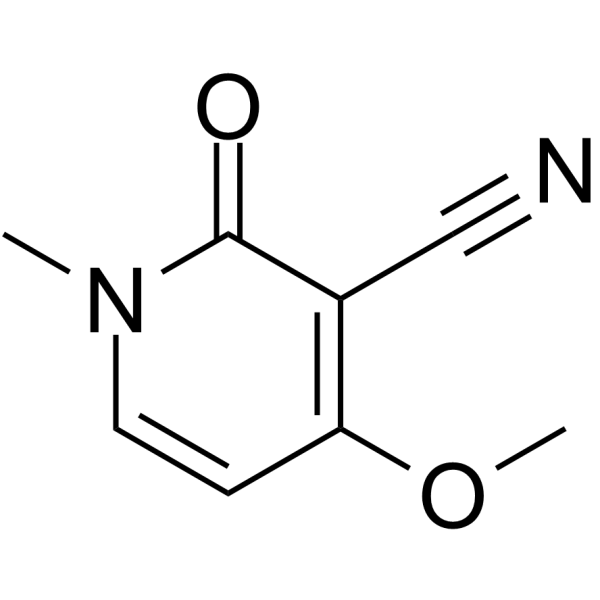
Ricinine is a central nervous system stimulant found in Ricinus communis. Ricinine binds near the benzodiazepine site of the GABAA receptor, reducing benzodiazepine binding affinity through an allosteric effect, and shows no interaction with AMPA, 5-HT1A, muscarinic receptors, or α1 adrenergic receptors. Ricinine improves memory consolidation in mice at low doses, while at high doses it induces seizures, an effect that is selectively inhibited by diazepam. Ricinine shortens the lifespan of Anopheles mosquitoes through sugar feeding and promotes the development of Plasmodium falciparum in mosquitoes . Ricinine is used in research related to epilepsy, amnesia, and malaria .
loading...
    loading...
Cat. No.: HY-114196
CAS No.: 2082752-83-6
Purity:  ≥98.0%
Synonyms: ZGN-1061
Target:  

MetAP

Research Areas:  

Metabolic Disease Cancer

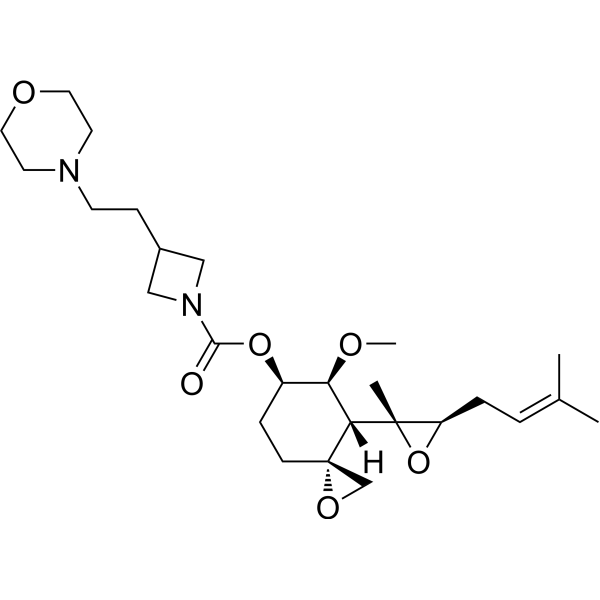
Aclimostat (ZGN-1061) is a methionine aminopeptidase 2 (MetAP2) inhibitor. Aclimostat exhibits anti-obesity, anti-diabetic and ovarian cancer-related activities, and does not readily distribute to the central nervous system. Aclimostat acts on the active site of MetAP2 via irreversible covalent binding, and blocks enzyme activity through interactions with His231 and His339. Aclimostat regulates gene expression, reduces fat mass, plasma glucose, insulin levels, LDL-C, hs-CRP and leptin levels, while increasing adiponectin levels. Aclimostat can be used in research related to type 2 diabetes, overweight, obesity and ovarian cancer .
loading...
    loading...
Cat. No.: HY-100982
CAS No.: 24587-49-3
Purity:  ≥98.0%
Synonyms: trans-4-Hydroxycrotonic acid; trans-γ-Hydroxycrotonic acid; T‐HCA
(E)-4-Hydroxycrotonic acid (trans-4-Hydroxycrotonic acid) is a semirigid linear analog of γ-Hydroxybutyric acid. (E)-4-Hydroxycrotonic acid can be present in the mammalian central nervous system. (E)-4-Hydroxycrotonic acid binds to high-affinity γ-Hydroxybutyric acid binding sites and displaces radioligands .
loading...
    loading...
Cat. No.: HY-115531
CAS No.: 1648707-58-7
Purity:  98.84%
Target:  

DNA/RNA Synthesis

Research Areas:  

Cancer

UNC-2170 is a functionally active, fragment-like ligand for 53BP1 (IC50=29 µM; Kd=22 µM). UNC-2170 shows at least 17-fold selectivity for 53BP1 as compared to nine other methyl-lysine (Kme) reader proteins. 53BP1 is a Kme binding protein that plays a central role in DNA Damage Repair (DDR) pathways and is recruited to sites of double-strand breaks (DSB) .
loading...
    loading...
Cat. No.: HY-118897
CAS No.: 2173992-60-2
Target:  

DNA/RNA Synthesis

Research Areas:  

Cancer

UNC-2170 maleate is the maleate salt form of UNC-2170 (HY-115531). UNC-2170 maleate is a selective inhibitor for the methyl-lysine binding protein 53BP1, with IC50 of 29 µM and Kd of 22 µM. UNC-2170 maleate shows at least 17-fold selectivity for 53BP1 as compared to nine other methyl-lysine (Kme) reader proteins. 53BP1 is a Kme binding protein that plays a central role in DNA Damage Repair (DDR) pathways and is recruited to sites of double-strand breaks (DSB) .
loading...
    loading...
Cat. No.: HY-106484
CAS No.: 89875-86-5
Synonyms: BAY-P 4495
Target:  

5-HT Receptor

Research Areas:  

Neurological Disease

Tiflucarbine (BAY-P 4495) is a tetrahydrothieno-7-carboline derivative. Tiflucarbine is a potent antidepressant agent that binds at central serotonin (5-HT) binding sites. Tiflucarbine is a nonselective 5-HT (5-HT1 and 5-HT2) agonist .
loading...
    loading...
Cat. No.: HY-107727
CAS No.: 679839-66-8
Research Areas:  

Neurological Disease

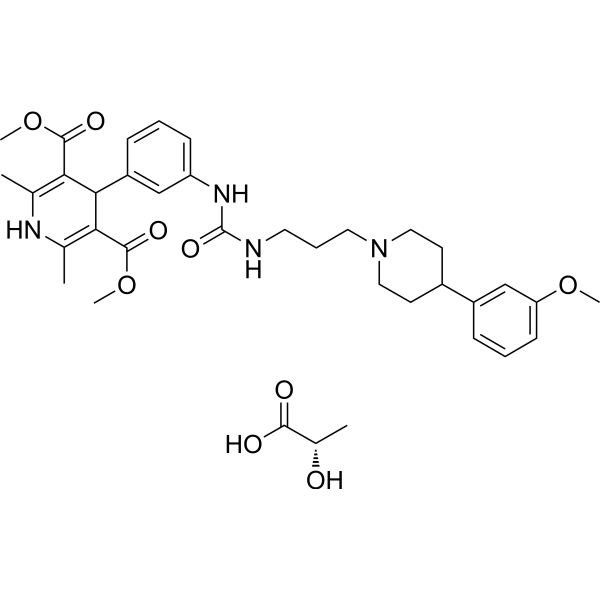
BMS-193885 (L-Lactic acid) is a potent, selective, and brain-penetrant neuropeptide Y1 receptor antagonist. BMS-193885 has a Ki value of 3.3 nM for the neuropeptide Y1 receptor, competitively acts on the neuropeptide Y binding site, and can reduce food intake and body weight through central Y1 inhibition .
loading...
    loading...
Cat. No.: HY-129931
CAS No.: 15893-46-6
Synonyms: H-Phe-Phe-NH2
Target:  

Neurokinin Receptor

Research Areas:  

Neurological Disease

Phenylalanylphenylalanylamide (H-Phe-Phe-NH₂) is a ligand for the substance P 1–7 (SP1-7) binding site with a Ki value of 1.5 nM. Phenylalanylphenylalanylamide exerts significant anti-allodynic and anti-hyperalgesic effects in animal models of neuropathic pain following central administratio. Phenylalanylphenylalanylamide shows no distinct effect after peripheral (intraperitoneal) administration. Phenylalanylphenylalanylamide can be used for research on pain-related diseases .
loading...
    loading...
Cat. No.: HY-121944R
CAS No.: 524-40-3
Ricinine (Standard) is the analytical standard of Ricinine (HY-121944). This product is intended for research and analytical applications. Ricinine is a central nervous system stimulant found in Ricinus communis. Ricinine binds near the benzodiazepine site of the GABAA receptor, reducing benzodiazepine binding affinity through an allosteric effect, and shows no interaction with AMPA, 5-HT1A, muscarinic receptors, or α1 adrenergic receptors. Ricinine improves memory consolidation in mice at low doses, while at high doses it induces seizures, an effect that is selectively inhibited by diazepam. Ricinine shortens the lifespan of Anopheles mosquitoes through sugar feeding and promotes the development of Plasmodium falciparum in mosquitoes . Ricinine is used in research related to epilepsy, amnesia, and malaria .
loading...
    loading...
Cat. No.: HY-121944S
CAS No.: 1313734-77-8
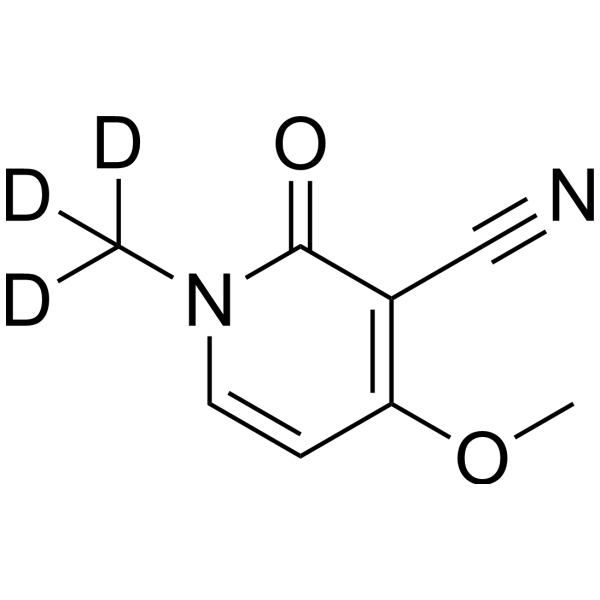
Ricinine-d3 is the d3-labeled Ricinine (HY-121944). Ricinine is a central nervous system stimulant found in Ricinus communis. Ricinine binds near the benzodiazepine site of the GABAA receptor, reducing benzodiazepine binding affinity through an allosteric effect, and shows no interaction with AMPA, 5-HT1A, muscarinic receptors, or α1 adrenergic receptors. Ricinine improves memory consolidation in mice at low doses, while at high doses it induces seizures, an effect that is selectively inhibited by diazepam. Ricinine shortens the lifespan of Anopheles mosquitoes through sugar feeding and promotes the development of Plasmodium falciparum in mosquitoes . Ricinine is used in research related to epilepsy, amnesia, and malaria .
loading...
    loading...
Cat. No.: HY-121285
CAS No.: 6495-46-1
Dioxadrol is an uncompetitive NMDA receptor (PCP binding site) antagonist, with a Ki value of 10.9 nM in pigs. Dioxadrol binds to the phencyclidine (PCP) binding site within the cation channel associated with the NMDA receptor, thereby blocking cation influx. Dioxadrol possesses local anesthetic, spasmolytic and central nervous system activities, including phencyclidine-like dissociative anesthetic properties. Dioxadrol can be used in the research of Alzheimer's disease, Parkinson's disease, Huntington's disease, HIV-associated dementia, multiple sclerosis, amyotrophic lateral sclerosis, neuropathic pain, ischemic stroke, central nervous system trauma, and epilepsy .
loading...
    loading...
Cat. No.: HY-187650
CAS No.: 2507890-46-0
Target:  

Serotonin Transporter

Research Areas:  

Neurological Disease

LuAF60097 is a serotonin transporter (SERT) ligand. LuAF60097 binds to the extracellular vestibule (S2 site) of SERT with high affinity and to the central binding site (S1) with lower affinity, triggering conformational changes that exert combined competitive and non-competitive inhibitory effects on serotonin reuptake. LuAF60097 is applicable to research related to depression and anxiety disorders .
loading...
    loading...
Cat. No.: HY-L928
7,105 compounds

G protein-coupled receptors (GPCRs) are membrane proteins in humans and one of the most important targets in drug discovery. Approximately 35% of launched drugs are targeted GPCRs, making them a crucial class of targets in drug discovery.

The orthosteric site of a GPCR is its endogenous ligand’s (such as neurotransmitters or hormones) binding site. This site plays a central role in signal transduction. Small molecules binding to this site typically contain a protonatable amino group, enabling the formation of salt bridges or hydrogen bonds with acidic residues in the binding pocket. In contrast, the allosteric site does not directly initiate signaling but modulates the signal intensity of the GPCR by altering or stabilizing the conformation of the orthosteric site. Small molecules binding to the allosteric site often contain multiple aromatic rings to occupy hydrophobic pockets and achieve their functional effects.

MCE has collected over 7,105 reported bioactive molecules targeting GPCRs, covering Class A, B, and C GPCRs. These small molecules were subjected to AI representation to extract 2D and 3D features. Subsequently, we do screening by AI score based on similarity to identify molecules in diversity library highly similar to the reported bioactive molecules in both 2D and 3D, with a threshold greater than 0.7. Further screening based on cLogP was applied to select molecules with good lipophilicity, which facilitates the binding of small molecules to GPCRs. This diversity library can be widely applied to the discovery of compounds targeting GPCR proteins.

Cat. No.: HY-A0177
CAS No.: 18053-31-1
Target:  

GABA Receptor

Research Areas:  

Inflammation/Immunology

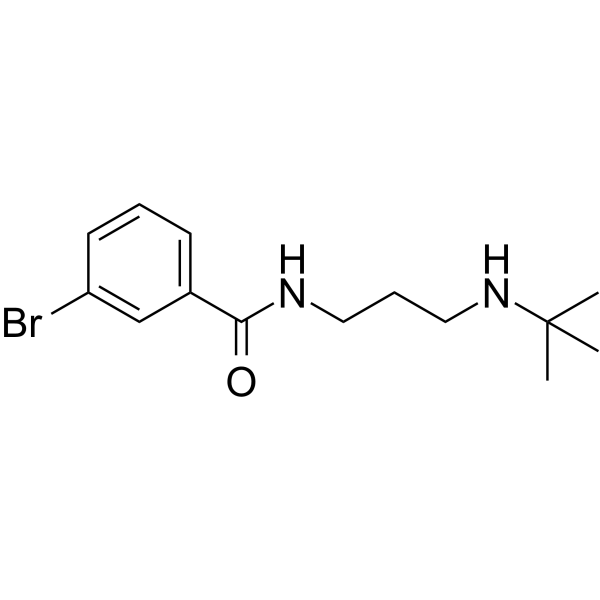
Fominoben is a type of benzamide-based antitussive agent. Fominoben works by acting on the central nervous system to increase alveolar ventilation, thereby improving the blood oxygen levels in patients with pulmonary diseases (COLD). Fominoben can bind to the benzodiazepine receptor binding sites in the brain and also has anti-anxiety and anti-convulsant effects. Fominoben can be used in research on hypoxemia.
loading...
    loading...
Cat. No.: HY-189042
CAS No.: 738562-57-7
Target:  

GABA Receptor

Research Areas:  

Neurological Disease

EF1500 is a potent human GABA transporter 1 (hGAT1) inhibitor and a lipophilic THPO analog. EF1500 occupies the binding site by forming a hydrogen bond with active residues of hGAT1 (such as Tyr139) through its exocyclic amino group, thereby blocking GABA reuptake. EF1500 can be used for research on central nervous system diseases .
loading...
    loading...
Cat. No.: HY-111263R
CAS No.: 868592-56-7
Research Areas:  

Others

NIAD-4 (Standard) is the analytical standard of NIAD-4 (HY-111263). This product is intended for research and analytical applications. NIAD-4 is a blood-brain barrier permeable fluorophore for optical imaging of amyloid-β (Aβ) in the central nervous system (CNS) for Alzheimer’s disease (AD). NIAD-4 binds to the same Aβ site with the binding affinity (Ki) of 10 nM .
loading...
    loading...

