27 Results for "

coenzyme Q

" in MedChemExpress (MCE) Product Catalog:
Products (27)

27 Results for "coenzyme Q" in MCE Product Catalog:

17
17 Publications Verification
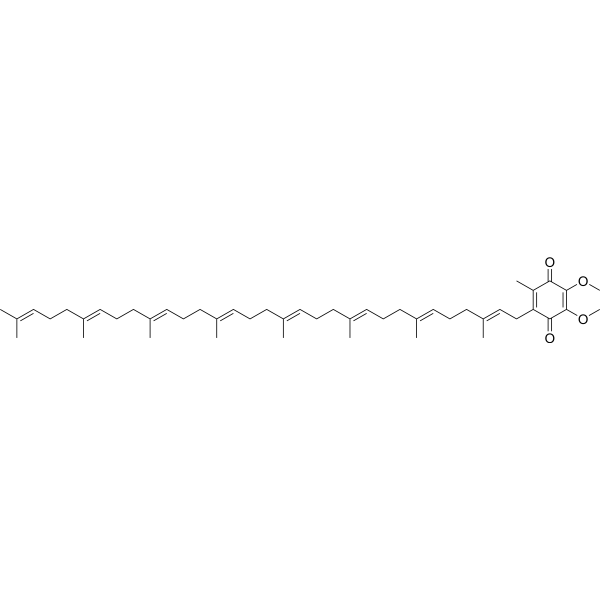
Cat. No.: HY-N0111
CAS No.: 303-98-0
Synonyms: CoQ10; Ubiquinone-10; Ubidecarenone
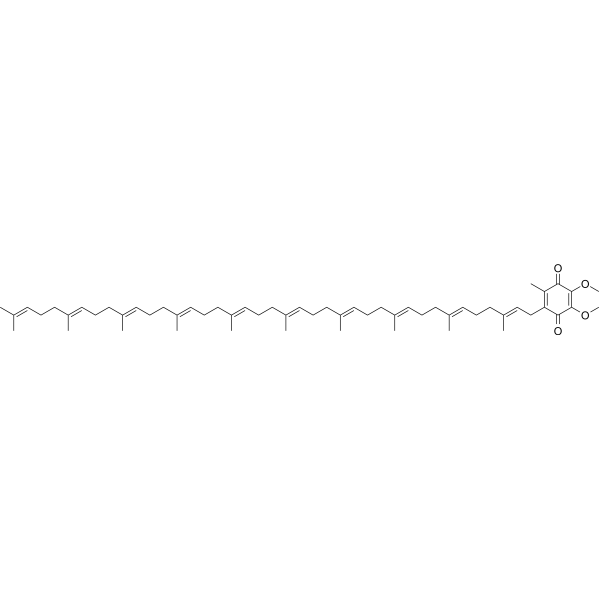
Coenzyme Q10 is an essential cofactor of the electron transport chain and a potent antioxidant agent.
loading...
    loading...
11
11 Cited Publications
Cat. No.: HY-N0303
CAS No.: 58186-27-9
Research Areas:  

Neurological Disease

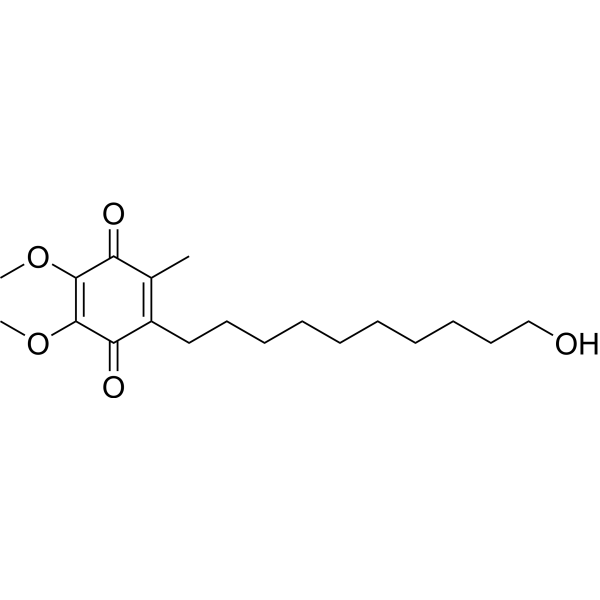
Idebenone, a well-appreciated mitochondrial protectant, exhibits protective efficacy against neurotoxicity and can be used for the research of Alzheimer's disease, Huntington's disease. Idebenone (oxidised form) has a dose-dependent inhibitory effect on the enzymatic metabolism of arachidonic acid in astroglial homogenates (IC50=16.65 μM) . Idebenone, a coenzyme Q10 analog and an antioxidant, induces apoptotic cell death in the human dopaminergic neuroblastoma SHSY-5Y cells . Idebenone quickly crosses the blood-brain barrier.
loading...
    loading...
2
2 Cited Publications
Cat. No.: HY-W016412
CAS No.: 605-94-7
Synonyms: CoQ0
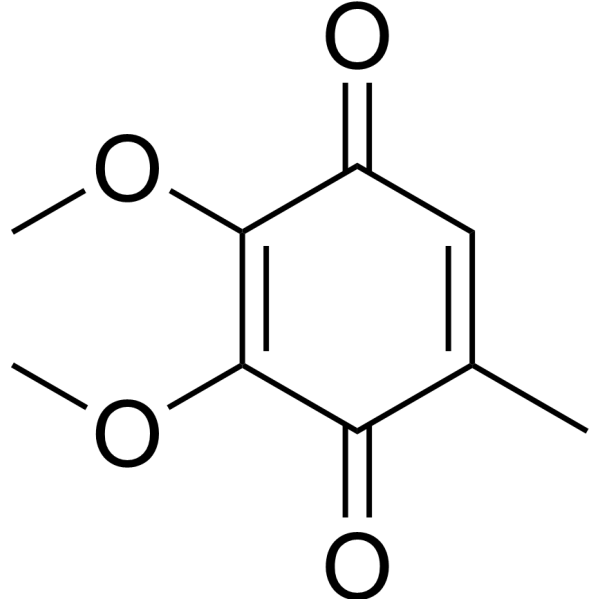
Coenzyme Q0 (CoQ0) is a potent, oral active ubiquinone compound can be derived from Antrodia cinnamomea. Coenzyme Q0 induces apoptosis and autophagy, suppresses of HER-2/AKT/mTOR signaling to potentiate the apoptosis and autophagy mechanisms. Coenzyme Q0 regulates NFκB/AP-1 activation and enhances Nrf2 stabilization in attenuation of inflammation and redox imbalance. Coenzyme Q0 has anti-angiogenic activity through downregulation of MMP-9/NF-κB and upregulation of HO-1 signaling .
loading...
    loading...
1
1 Cited Publications
Cat. No.: HY-101415
CAS No.: 303-97-9
Purity:  ≥98.0%
Synonyms: Ubiquinone Q9; CoQ9; Ubiquinone 9
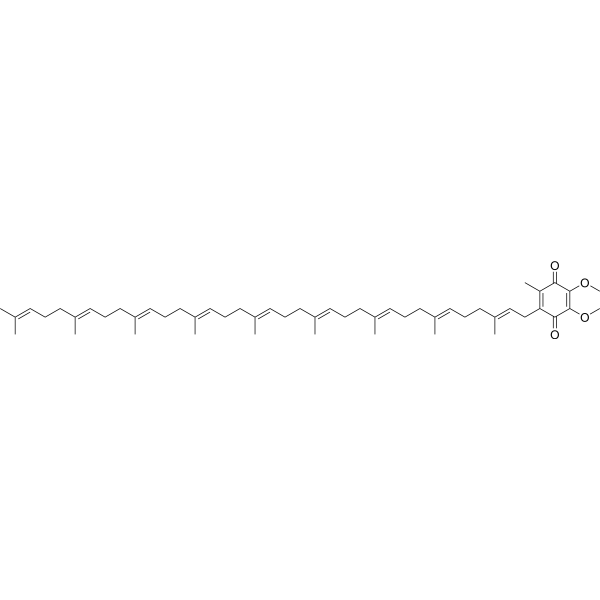
Coenzyme Q9 (Ubiquinone Q9), the major form of ubiquinone in rodents, is an amphipathic molecular component of the electron transport chain that functions as an endogenous antioxidant. Coenzyme Q9 attenuates the diabetes-induced decreases in antioxidant defense mechanisms. Coenzyme Q9 improves left ventricular performance and reduces myocardial infarct size and cardiomyocyte apoptosis .
loading...
    loading...
1
1 Cited Publications
Cat. No.: HY-121134
CAS No.: 55486-00-5
Purity:  ≥99.0%
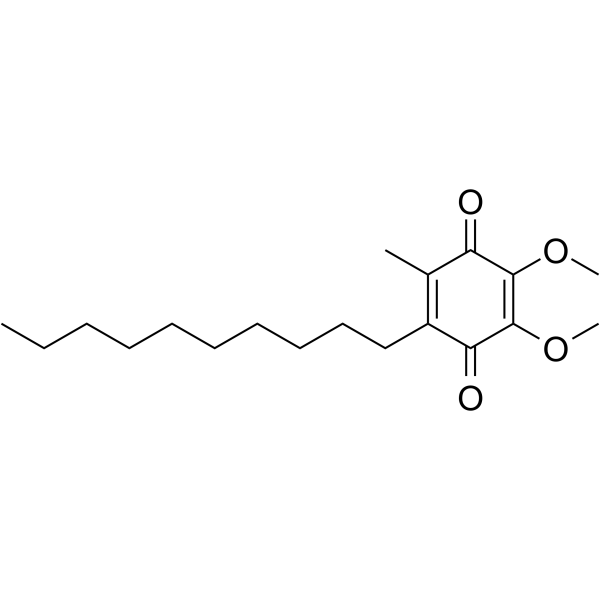
Decylubiquinone is an analog of ubiquinone (coenzyme Q10). Decylubiquinone blocks reactive oxygen species (ROS) production in response to glutathione depletion and inhibits activation of the mitochondrial permeability transition .
loading...
    loading...
Cat. No.: HY-113449
CAS No.: 727-81-1
Purity:  ≥99.0%
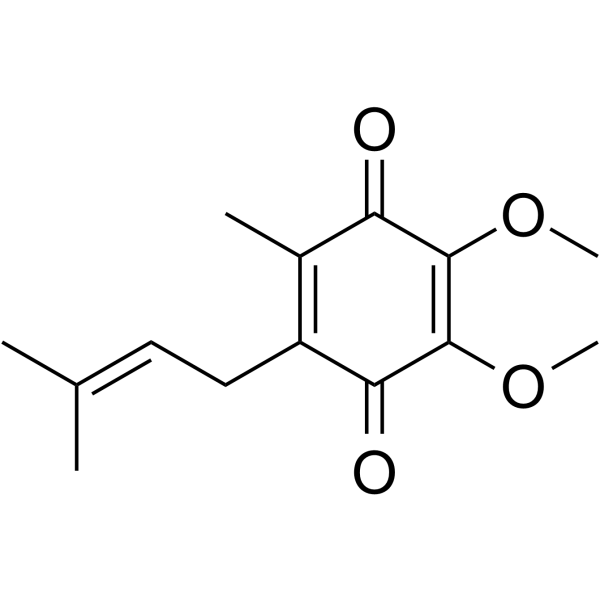
Ubiquinone-1 is an intermediate in the synthesis of Coenzyme Q. Ubiquinone-1 can be reduced by NADPH oxidase, hepatoma cells, Ascorbic acid (HY-B0166) .
loading...
    loading...
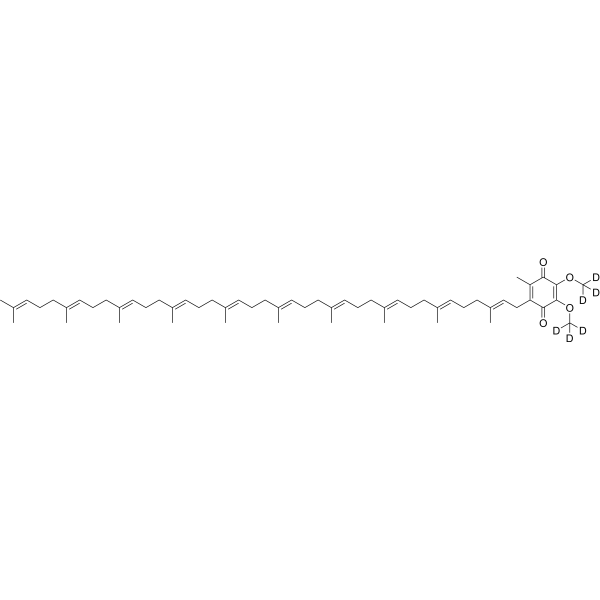
Cat. No.: HY-N0111S2
CAS No.: 2687960-97-8
Synonyms: CoQ10-d9; Ubiquinone-10-d9
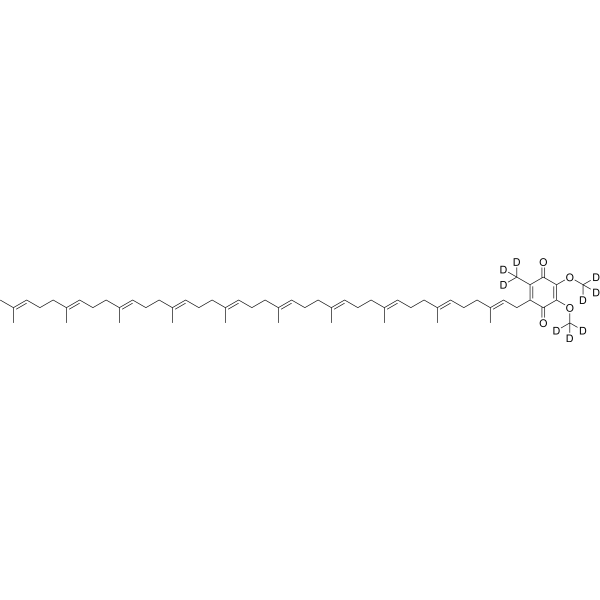
Coenzyme Q10-d9 is the deuterium labeled Coenzyme Q10. Coenzyme Q10 is an essential cofactor of the electron transport chain and a potent antioxidant agent.
loading...
    loading...
Cat. No.: HY-W012575
CAS No.: 89-86-1
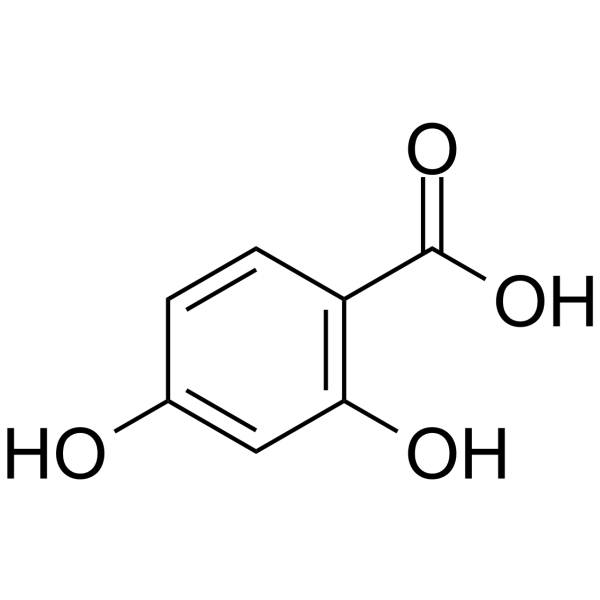
2,4-Dihydroxybenzoic acid is a degradation product of acid cherry anthocyanins during in vitro cell culture and an analogue of coenzyme Q precursor molecules. 2,4-Dihydroxybenzoic acid can improve the related symptoms of kidney diseases caused by ADCK4/Coq6 deficiency .
loading...
    loading...
Cat. No.: HY-B2011
CAS No.: 66332-96-5
Flutolanil is a succinate dehydrogenase complex inhibitor and fungicide. Flutolanil blocks electron transfer between the redox center of succinate dehydrogenase and coenzyme Q, inhibits mycelial oxygen consumption, and suppresses mycelial growth. Flutolanil induces acute and sublethal toxicity in zebrafish at different life stages. Flutolanil can be used in studies on plant disease control .
loading...
    loading...
Cat. No.: HY-N0111S
CAS No.: 110971-02-3
Synonyms: CoQ10-d6; Ubiquinone-10-d6
Coenzyme Q10-d6 is deuterium labeled Coenzyme Q10. Coenzyme Q10 is an essential cofactor of the electron transport chain and a potent antioxidant agent.
loading...
    loading...
Cat. No.: HY-N0111R
CAS No.: 303-98-0
Synonyms: CoQ10 (Standard); Ubiquinone-10 (Standard); Ubidecarenone (Standard)
Coenzyme Q10 (Standard) is the analytical standard of Coenzyme Q10. This product is intended for research and analytical applications. Coenzyme Q10 is an essential cofactor of the electron transport chain and a potent antioxidant agent.
loading...
    loading...
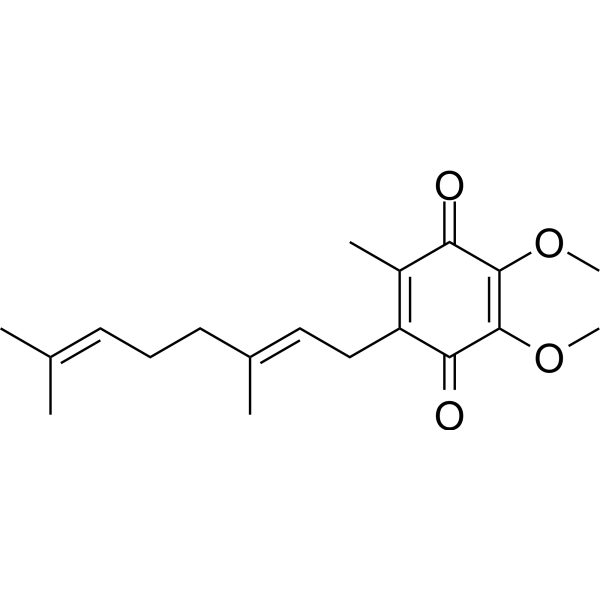
Cat. No.: HY-118075
CAS No.: 606-06-4
Coenzyme Q2 is a benzoquinone electron carrier in the mitochondrial electron transport chain and a p53-dependent apoptosis inducer. Coenzyme Q2 induces p53 phosphorylation at Ser15, promoting p53 accumulation and functional activation. Coenzyme Q2 induces ROS generation, caspase-3 activation, DNA fragmentation, phosphatidylserine externalization, mitochondrial permeability transition pore opening, and oxidative phosphorylation uncoupling. Coenzyme Q2 inhibits Complex I, Complex III, and Complex IV activities, disrupting electron transport and membrane potential generation. Coenzyme Q2 induces excessive mitochondrial proton leak in forebrain mitochondria. Coenzyme Q2 causes loss of righting reflex in mice, accompanied by slow-wave delta EEG activity and reversible loss of wakefulness. Coenzyme Q2 inhibits lipid peroxidation and scavenges superoxide radicals. Coenzyme Q2 is used in research on leukemia, myocardial ischemia-reperfusion injury, and mitochondrial encephalomyopathy .
loading...
    loading...
Cat. No.: HY-177839
Liposomal Coenzyme Q10 is an orally effective delivery system that encapsulates fat-soluble Coenzyme Q10 (CoQ10) (HY-N0111) via liposomal nanocarriers. Liposomal Coenzyme Q10 alleviates hepatic oxidative stress, attenuates hepatic inflammatory responses, reduces hepatocyte apoptosis, and ameliorates liver fibrosis. Liposomal Coenzyme Q10 activates the ferroptosis suppressor protein 1 (FSP1)/Coenzyme Q10 system, reduces the accumulation of malondialdehyde and ROS, and inhibits neuronal ferroptosis. Liposomal Coenzyme Q10 can be used in studies related to Propanoic acid (HY-W020017)-induced liver injury and subarachnoid hemorrhage .
loading...
    loading...
Cat. No.: HY-133033
CAS No.: 2579696-72-1
Purity:  99.98%
Research Areas:  

Metabolic Disease

COQ7-IN-1, a highly potent inhibitor of human coenzyme Q (COQ7), interferes with ubiquinone (UQ) synthesis. COQ7-IN-1 does not disturb physiological cell growth of human normal culture cells. COQ7-IN-1 can be used for the research of the balance between UQ supplementation pathways: de novo UQ synthesis and extracellular UQ uptake .
loading...
    loading...
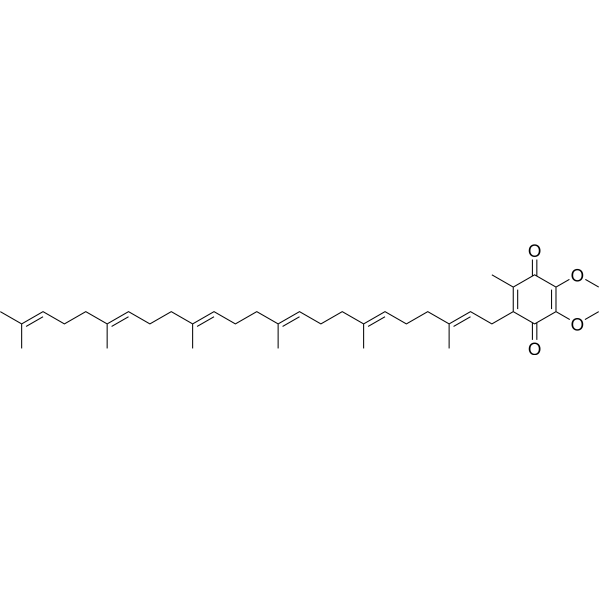
Cat. No.: HY-101415R
CAS No.: 303-97-9
Synonyms: Ubiquinone Q9 (Standard); CoQ9 (Standard); Ubiquinone 9 (Standard)
Coenzyme Q9 (Standard) is the analytical standard of Coenzyme Q9. This product is intended for research and analytical applications. Coenzyme Q9 (Ubiquinone Q9), the major form of ubiquinone in rodents, is an amphipathic molecular component of the electron transport chain that functions as an endogenous antioxidant. Coenzyme Q9 attenuates the diabetes-induced decreases in antioxidant defense mechanisms. Coenzyme Q9 improves left ventricular performance and reduces myocardial infarct size and cardiomyocyte apoptosis .
loading...
    loading...
Cat. No.: HY-N9610
CAS No.: 1065-31-2
Synonyms: Ubiquinone 30
Coenzyme Q6 (Ubiquinone 30) is a redox-active benzoquinone lipid and mitochondrial electron carrier. Coenzyme Q6 can be used in research on MASLD, mitochondrial diseases, pneumococcal diseases, and steroid-resistant nephrotic syndrome with FSGS .
loading...
    loading...
Cat. No.: HY-N9680
CAS No.: 2394-68-5
Synonyms: Ubiquinone 8
Coenzyme Q8 (Ubiquinone 8) is an isoprenoid quinone that mediates electron transfer within the aerobic respiratory chain and reduces oxidative stress. Coenzyme Q8 maintains bacterial respiratory function and enhances host resistance to bacterial infection. Coenzyme Q8 stimulates macrophage phagocytosis and increases antibody-producing cells. Coenzyme Q8 can be used in infectious disease research .
loading...
    loading...
Cat. No.: HY-W777283
CAS No.: 1189907-75-2
Idebenone- 13C,d3 is the deuterium labeled and 13C-labeled Idebenone (HY-N0303). Idebenone, a well-appreciated mitochondrial protectant, exhibits protective efficacy against neurotoxicity and can be used for the research of Alzheimer's disease, Huntington's disease. Idebenone (oxidised form) has a dose-dependent inhibitory effect on the enzymatic metabolism of arachidonic acid in astroglial homogenates (IC50=16.65 μM) . Idebenone, a coenzyme Q10 analog and an antioxidant, induces apoptotic cell death in the human dopaminergic neuroblastoma SHSY-5Y cells . Idebenone quickly crosses the blood-brain barrier.
loading...
    loading...
Cat. No.: HY-N0303R
CAS No.: 58186-27-9
Idebenone (Standard) is the analytical standard of Idebenone. This product is intended for research and analytical applications. Idebenone, a well-appreciated mitochondrial protectant, exhibits protective efficacy against neurotoxicity and can be used for the research of Alzheimer's disease, Huntington's disease. Idebenone (oxidised form) has a dose-dependent inhibitory effect on the enzymatic metabolism of arachidonic acid in astroglial homogenates (IC50=16.65 μM) . Idebenone, a coenzyme Q10 analog and an antioxidant, induces apoptotic cell death in the human dopaminergic neuroblastoma SHSY-5Y cells . Idebenone quickly crosses the blood-brain barrier.
loading...
    loading...
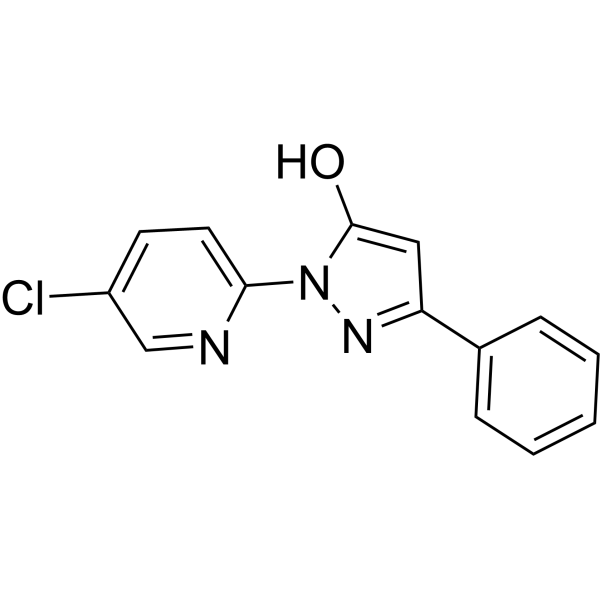
Cat. No.: HY-N14897
CAS No.: 190143-31-8
Pterulone is a coenzyme I: Coenzyme Q oxidoreductase inhibitor found in fungus Pterula SP.82168 .
loading...
    loading...

