
49 Results for "

conjugate uptake

" in MedChemExpress (MCE) Product Catalog:
Products (49)

49 Results for "conjugate uptake" in MCE Product Catalog:

6
6 Publications Verification
Cat. No.: HY-P5321
CAS No.: 152051-61-1
Target:  

FGFR

Research Areas:  

Cancer

bFGF (119-126) is a ligand of bFGF. The complex formed by bFGF (119-126) and bFGF can bind to FGFR1, while inhibiting the bFGF-FGFR1 interaction, FGFR1 phosphorylation and downstream signaling pathways. Therefore, bFGF (119-126) induces cell apoptosis and inhibits cell proliferation, migration, angiogenesis and metastasis. When conjugated with a carrier, bFGF (119-126) enhances cellular uptake via FGFR-mediated endocytosis and serves as an effective FGFR-targeted ligand. When used in combination with ultrasound and Doxorubicin (HY-15142A), bFGF (119-126) significantly enhances the inhibitory effect on tumors. bFGF (119-126) is applicable to research related to lung cancer, breast cancer, glioblastoma and ovarian cancer .
loading...
    loading...
3
3 Cited Publications
Cat. No.: HY-P5126
CAS No.: 1192362-32-5
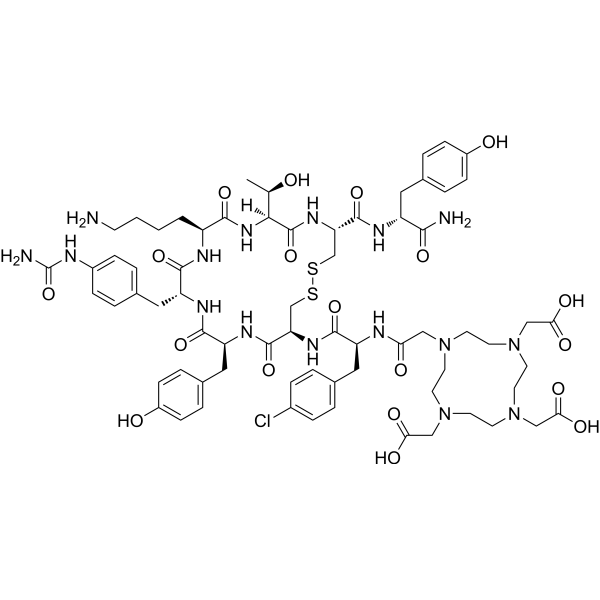
DOTA-LM3 is a somatostatin receptor (SSTR) antagonist. LM3 refers to p-Cl-Phe- cyclo(D-Cys-Tyr-D-4-amino-Phe(carbamoyl)-Lys-Thr-Cys)D-Tyr- NH2, as well as a somatostatin antagonist. DOTA-LM3 is often isotopically labeled for tracing tumors in vivo, such as 177Lu-DOTA-LM3 and 68 Ga-DOTA-LM3. 68 Ga-DOTA-LM3 shows favorable biodistribution, high tumor uptake, good tumor retention, and few safety concerns. 177Lu-DOTA-LM3 can be used for research in DOTATOC-negative liver metastases, such as pancreatic NET and extensive tumor thrombosis . DOTA-LM3 can be used for the synthesis/research of Radionuclide-Drug Conjugates (RDCs).
loading...
    loading...
3
3 Cited Publications
Cat. No.: HY-P5126A
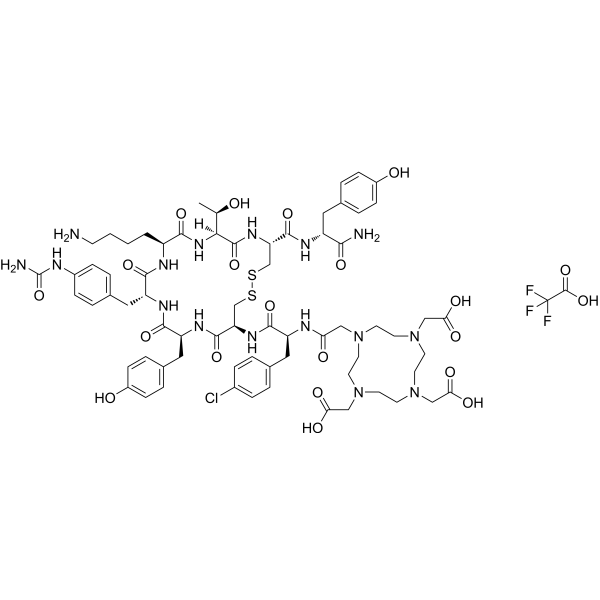
DOTA-LM3 TFA is a somatostatin receptor (SSTR) antagonist. LM3 refers to p-Cl-Phe- cyclo(D-Cys-Tyr-D-4-amino-Phe(carbamoyl)-Lys-Thr-Cys)D-Tyr- NH2, as well as a somatostatin antagonist. DOTA-LM3 TFA is often isotopically labeled for tracing tumors in vivo, such as 177Lu-DOTA-LM3 TFA and 68 Ga-DOTA-LM3 TFA. 68 Ga-DOTA-LM3 TFA shows favorable biodistribution, high tumor uptake, good tumor retention, and few safety concerns. 177Lu-DOTA-LM3 TFA can be used for research in DOTATOC-negative liver metastases, such as pancreatic NET and extensive tumor thrombosis . DOTA-LM3 (TFA) can be used for the synthesis/research of Radionuclide-Drug Conjugates (RDCs).
loading...
    loading...
1
1 Cited Publications
Cat. No.: HY-W127512
CAS No.: 546-18-9
Target:  

Drug Intermediate

Research Areas:  

Others

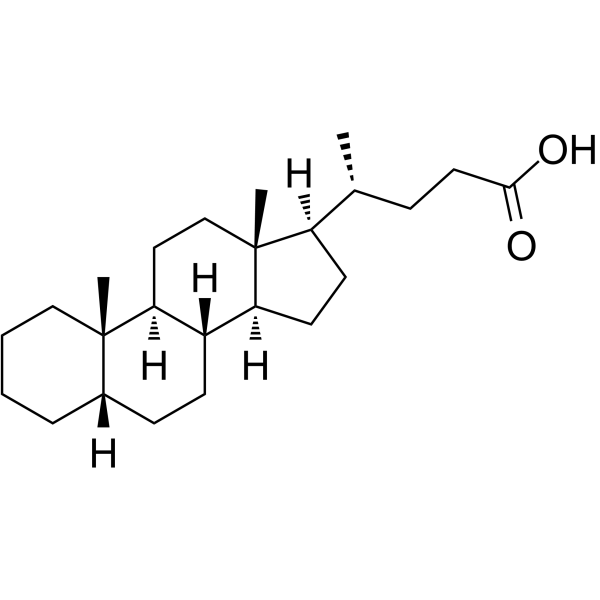
5β-Cholanic acid is a hydrophobic modifier used to modify polymer carriers. 5β-Cholanic acid can improve the acid stability, cell penetration efficiency and drug sustained release ability of nanocarriers, and optimize the oral effectiveness of delivered molecules. 5β-Cholanic acid can covalently bind to Glycol chitosan (GC) to form a GC-CA conjugate, which optimizes the hydrophobic anchoring ability of nanoparticles and enables them to be stably adsorbed on the surface of PLGA nanoparticles. Such nanoparticles can resist dissociation in the gastric acid environment and maintain positive charge to enhance endocytic uptake by intestinal epithelial cells (such as Caco-2 cells). 5β-Cholanic acid can be used in the development of drug delivery systems .
loading...
    loading...
1
1 Cited Publications
Cat. No.: HY-N7755
CAS No.: 14982-12-8
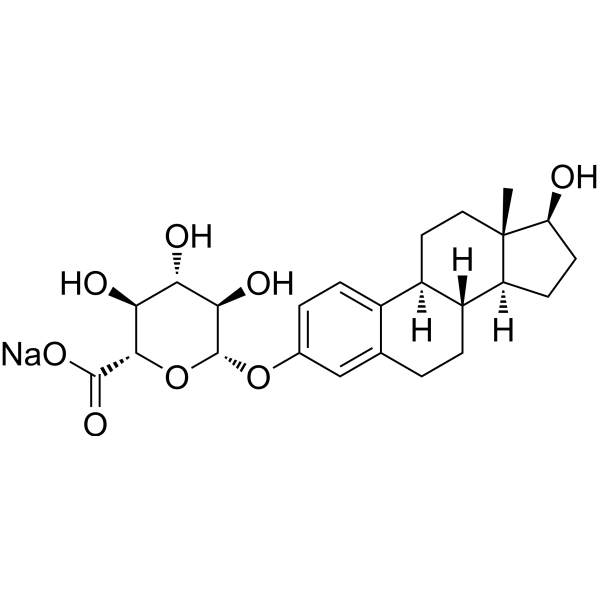
Estradiol 3-glucuronide sodium is an estrogen metabolite, which is a glucuronide conjugate formed by the catalysis of uridine diphosphate glucuronosyltransferase in tissues such as the liver from Estradiol (HY-B0141). Estradiol 3-glucuronide sodium is a potent substrate of Mrp2, with an S50 of 55.7 μM. Estradiol 3-glucuronide sodium achieves hepatobiliary transport in hepatocytes through basolateral uptake via OATP1B1, OATP1B3 and OATP2B1, as well as apical efflux via MRP2 and BCRP .
loading...
    loading...
1
1 Cited Publications
Cat. No.: HY-W585842
CAS No.: 15270-30-1
Estradiol 3-glucuronide is an estrogen metabolite, which is a glucuronide conjugate formed from Estradiol (HY-B0141) via catalysis by uridine diphosphate glucuronosyltransferases in tissues such as the liver. Estradiol 3-glucuronide is a potent substrate of Mrp2, with an S50 value of 55.7 μM. Estradiol 3-glucuronide achieves hepatobiliary transport in hepatocytes through basolateral uptake via OATP1B1, OATP1B3 and OATP2B1, as well as apical efflux via MRP2 and BCRP .
loading...
    loading...
Cat. No.: HY-172279A
Target:  

Liposome

Research Areas:  

Cancer

DSPE-PEG2000-TAT is a cell-penetrating peptide-modified PEGylated phospholipid conjugate and cellular uptake enhancer. DSPE-PEG2000-TAT forms via conjugation of Cys-TAT to DSPE-PEG2000-Mal. DSPE-PEG2000-TAT enhances liposomal cellular uptake and siRNA transfection efficiency in glomerular mesangial and macrophage cells. DSPE-PEG2000-TAT can be used for drug delivery .
loading...
    loading...
Cat. No.: HY-P5287
CAS No.: 393781-65-2
Research Areas:  

Cancer

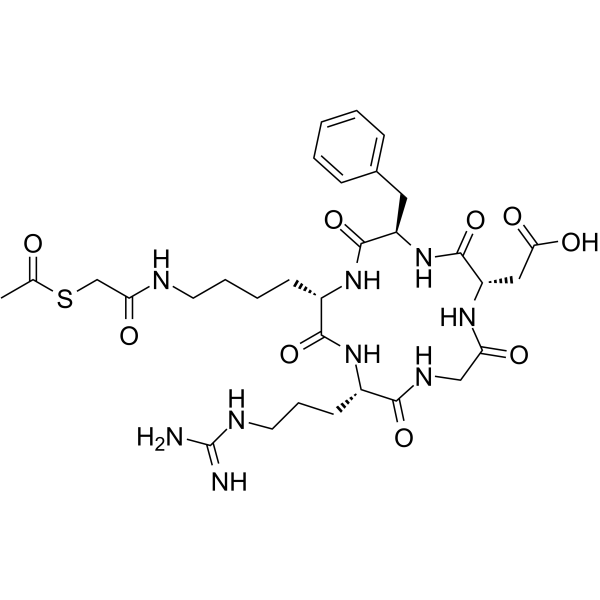
cRGDfK-thioacetyl ester is a selective αvβ3 integrin-binding peptide that mediates cellular uptake through integrins overexpressed on tumor cells. cRGDfK-thioacetyl ester is conjugated to maleimide-functionalized PLGA nanoparticles, which enhances nanoparticle uptake and improves accumulation and retention. cRGDfK-thioacetyl ester can be used in research related to tumor-targeted nanodelivery and cancer-targeted imaging .
loading...
    loading...
Cat. No.: HY-177204
DSPE-PEG2000-WLSEAGPVVTVRALRGTGSW is a polypeptide targeting tenascin-X (Tenascin-X) that can be conjugated with liposomes and exosomes. DSPE-PEG2000-WLSEAGPVVTVRALRGTGSW specifically binds to Tenascin-X on the surface of cardiomyocytes, mediates receptor-dependent uptake of nanocarriers, enhances targeted drug delivery of cargo to cardiomyocytes, and increases drug accumulation in cardiac tissue. DSPE-PEG2000-WLSEAGPVVTVRALRGTGSW protects cardiomyocytes treated with LPS, alleviates oxidative stress, repairs mitochondrial function, inhibits ferroptosis and apoptosis, and downregulates the secretion of pro-inflammatory cytokines at the same time. DSPE-PEG2000-WLSEAGPVVTVRALRGTGSW improves cardiac injury and pathological morphology in mice with sepsis-induced cardiomyopathy, restores GPX4 expression, and promotes the internalization of cardiomyocyte-derived exosomes, making it suitable for related research on sepsis-induced cardiomyopathy, myocardial ischemia-reperfusion injury, and other conditions .
loading...
    loading...
Cat. No.: HY-P4098
CAS No.: 1207092-86-1
SynB1 is a cell-penetrating peptide with blood-brain barrier permeability, derived from the antimicrobial peptide Protegrin 1. SynB1 enhances the cellular uptake efficiency and cytoplasmic localization level of conjugated constructs. SynB1 can be used in studies related to rabies and glioblastoma .
loading...
    loading...
Cat. No.: HY-P2483B
Target:  

Bacterial Proteasome

Octaarginine acetate is a cell-penetrating peptide and proteasome inhibitor. Octaarginine acetate exhibits mixed-type inhibition against 20S proteasome chymotrypsin-like, caspase-like, and trypsin-like activities, and inhibits 26S proteasome activity with decreased efficiency. Octaarginine acetate induces ubiquitin-conjugated protein accumulation, mediates HSPG-dependent cellular internalization via macropinocytosis, enhances liposomal cargo uptake and gene delivery. Octaarginine acetate can be used for the research of cervix carcinoma, collagen antibody-induced arthritis, and bacterial infections .
loading...
    loading...
Cat. No.: HY-P2483
CAS No.: 148796-86-5
Target:  

Proteasome Bacterial

Octaarginine is a cell-penetrating peptide and proteasome inhibitor. Octaarginine exhibits mixed-type inhibition against 20S proteasome chymotrypsin-like, caspase-like, and trypsin-like activities, and inhibits 26S proteasome activity with decreased efficiency. Octaarginine induces ubiquitin-conjugated protein accumulation, mediates HSPG-dependent cellular internalization via macropinocytosis, enhances liposomal cargo uptake and gene delivery. Octaarginine can be used for the research of cervix carcinoma, collagen antibody-induced arthritis, and bacterial infections .
loading...
    loading...
Cat. No.: HY-D2433
Glucose-PEG2000-Cy3 is a Cy3 (HY-D0822) labeled Glucose-PEG conjugate. The Cy3 fluorophore is commonly used in applications such as immunolabeling, nucleic acid labeling, fluorescence microscopy, and flow cytometry. Cy3 has an emission maximum around 562-570 nm. Glucose-PEG improves drug cellular uptake and reduces endosomal degradation, and can be used in drug delivery .
loading...
    loading...
Cat. No.: HY-P10781
CAS No.: 3056440-83-3
Research Areas:  

Cancer

PSMA-D5 has a binding affinity for PSMA with a Ki of 0.21 nM and can be used for PSMA tracing after radiolabeling. PSMA-D5 ([68Ga]-labeled) contains a DOTA chelator, allowing convenient labeling with therapeutic radionuclides such as 177Lu and 225Ac. PSMA-D5 ([68Ga]-labeled) shows excellent pharmacokinetic properties, exhibiting remarkable tumor uptake in 22Rv1 tumors . PSMA-D5 can be used for the synthesis/research of Radionuclide-Drug Conjugates (RDCs).
loading...
    loading...
Cat. No.: HY-158119A
CAS No.: 3036415-37-6
Synonyms: Felivotide mopaxetan
Target:  

PSMA

Research Areas:  

Cancer

PSMA-trillium (Felivotide mopaxetan) is a PSMA-targeted molecule that contains a highly specific PSMA-binding motif, an albumin-binding domain optimized for tumor uptake and retention, and a Macropa chelator conjugated to the α-emitter 225Ac. PSMA-trillium binds to albumin to prolong plasma retention time and binds to PSMA via its specific motif. 225Ac-PSMA-Trillium exhibits dose-dependent inhibition of LNCaP tumor growth in mice. PSMA-trillium can be used in research related to prostate cancer and metastatic castration-resistant prostate cancer .
loading...
    loading...
Cat. No.: HY-164725
CAS No.: 3023869-94-2
Research Areas:  

Cancer

FAPI-mFS is a selective fibroblast activation protein (FAP) inhibitor with an IC50 of 0.0014 μM against human FAP. Through its covalent binding property with FAP, FAPI-mFS enhances its uptake and retention time in cancer cells. When radiolabeled with 68Ga, FAPI-mFS serves as a PET/CT imaging agent with superior tumor-to-background tissue contrast and lesion detection capability. When radiolabeled with 177Lu or 225Ac, FAPI-mFS induces tumor regression and inhibition in preclinical models. FAPI-mFS can be used in studies related to cancer and radionuclide-conjugated drugs (RDC) .
loading...
    loading...
Cat. No.: HY-P10444
CAS No.: 3033865-40-3
Research Areas:  

Cancer

DOTA Conjugated JM#21 derivative 7 (compound Ligand-7) is a derivative of CXCR4 targeting peptide conjugated with DOTA and can be used to produce radioligands. Radiolabeled DOTA Conjugated JM#21 derivative 7, i.e., 177Lu-DOTA, has excellent CXCR4 tumor targeting. In vitro biodistribution results of 177Lu-DOTA showed very low uptake in all non-targeted organs except kidney . DOTA Conjugated JM#21 derivative 7 can be used for the synthesis/research of Radionuclide-Drug Conjugates (RDCs).
loading...
    loading...
Cat. No.: HY-136952
CAS No.: 1822331-55-4
p-SCN-Bn-HOPO is a bifunctional chelator that forms stable octadentate complexes with Zr (IV) and 89Zr 4+ via four 1,2-hydroxypyridone groups. p-SCN-Bn-HOPO conjugates with antibodies through the formation of thiourea bonds with lysine residues, and enables efficient 89Zr radiolabeling under mild conditions. p-SCN-Bn-HOPO inhibits bone uptake of free radiometals, stabilizes radiometal-antibody conjugates, and achieves PET imaging with low background and enhanced tumor-to-organ contrast. p-SCN-Bn-HOPO can be used in breast cancer-related research .
loading...
    loading...
Cat. No.: HY-W241345
CAS No.: 913542-71-9
Research Areas:  

Cancer

DOTA-bis(tert-butyl)ester is a DOTA-based metal chelator that can bind to radionuclides and is used to prepare radionuclide conjugates (RDCs). DOTA-bis(tert-butyl)ester can be conjugated with different salts to form different metal chelators, such as (HY-B1244) hydrochloride to obtain DOTA-MN2. DOTA-MN2 can be reacted with [67]Ga-citrate to obtain radiolabeling. When (67)Ga-DOTA-MN2 is incubated in phosphate buffer solution or mouse plasma for 24 hours, it does not undergo significant decomposition. In the biodistribution experiment of NFSa tumor mice, it has high tumor uptake and rapid plasma clearance, and is a good material for SPECT and PET studies.
loading...
    loading...
Cat. No.: HY-W1113135
CAS No.: 2828447-14-7
Research Areas:  

Others

Carboxymethyl-β-cyclodextrin sodium salt is a negatively charged β-cyclodextrin derivative, as well as a metal ion chelator and solubilizing reagent. Carboxymethyl-β-cyclodextrin sodium salt forms stable aqueous complexes with Ba 2+, Ca 2+, Cd 2+, Ni 2+, Pb 2+, Sr 2+, and Zn 2+ ions. Carboxymethyl-β-cyclodextrin sodium salt derived hydrogel carriers support oral insulin delivery via paracellular permeation across Caco-2 monolayers and produce sustained hypoglycemic effects in diabetic mice. Carboxymethyl-β-cyclodextrin sodium salt can be conjugated onto folate-modified BSA nanoparticles to boost folate receptor-mediated endocytosis, elevate intracellular anticancer drug uptake and trigger cell apoptosis. Carboxymethyl-β-cyclodextrin sodium salt can be utilized for chiral separation in capillary electrophoresis, development of nanoscale drug carriers and nucleic acid transfection research .
loading...
    loading...

