15 Results for "

contact toxicity

" in MedChemExpress (MCE) Product Catalog:
Products (15)

15 Results for "contact toxicity" in MCE Product Catalog:

2
2 Cited Publications
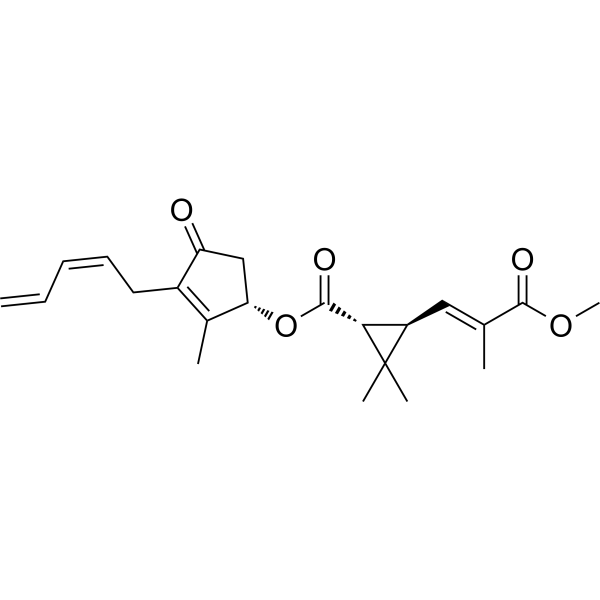
Cat. No.: HY-108170
CAS No.: 121-29-9
Purity:  31.27%
Pyrethrin II is an orally active insecticidal ester of chrysanthemum acid found in Chrysanthemum cinerariifolium and C. coccineum Willd., an active constituent of pyrethrum extract with low mammalian toxicity. Pyrethrin II exhibits antiparasitic activity. Pyrethrin II can be used for the research of allergic contact dermatitis and parasitic infections .
loading...
    loading...
1
1 Cited Publications
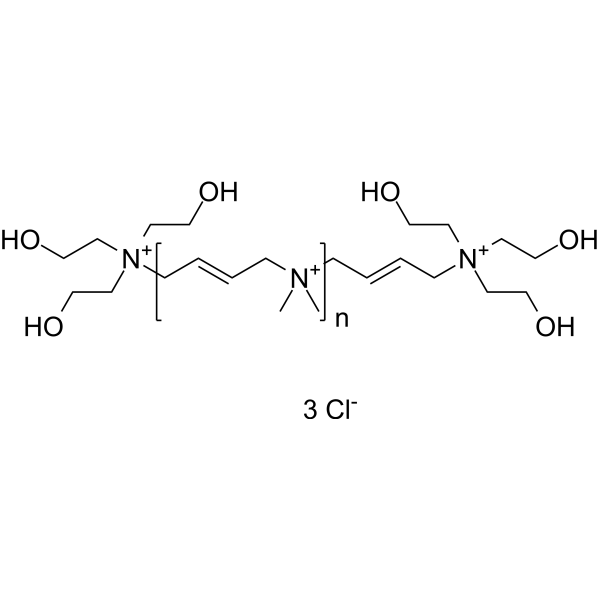
Cat. No.: HY-127032
CAS No.: 75345-27-6
Purity:  ≥99.0%
Synonyms: Polidronium chloride
Research Areas:  

Infection

Polyquaternium-1 (Polidronium chloride; PQ-1) is an antimicrobial preservative and an activator of NF-κB. Polyquaternium-1 targets bacterial cell membranes, commonly used in ophthalmic surgery. Polyquaternium-1 adsorbs to the surface of microbial membranes through its polycationic properties, destroying membrane integrity and inducing potassium ion leakage, leading to bacterial death. Polyquaternium-1 exerts antimicrobial effects at a concentration of 0.001% and has low toxicity to mammalian cells. Polyquaternium-1 can be used to prepare products such as glaucoma eye drops (Travoprost preparations containing PQ-1), artificial tears, and contact lens solutions to reduce the ocular surface toxicity of traditional preservatives such as benzalkonium chloride (HY-B2232) .
loading...
    loading...
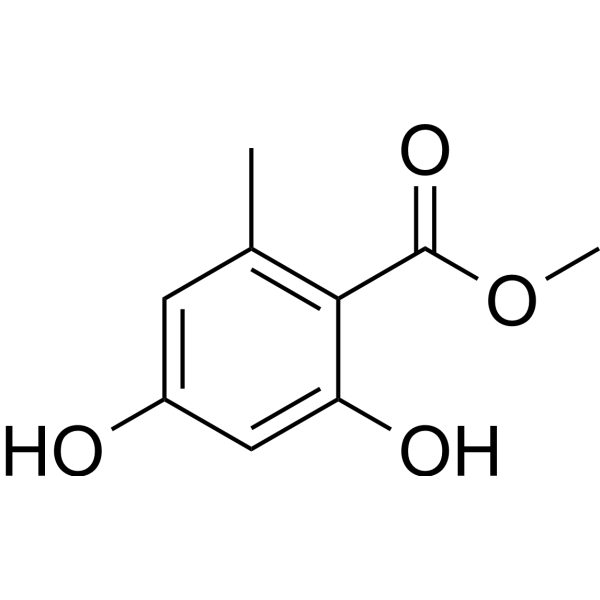
Cat. No.: HY-N3270
CAS No.: 3187-58-4
Methyl orsellinate acts as an antiviral agent and insecticide. Methyl orsellinate exhibits enzyme inhibitory activity, with an IC50 of 59.6 µM against porcine leukocyte 5-lipoxygenase (5-LOX); it inhibits soybean 15-lipoxygenase (15-LOX), and shows weak inhibitory activity against acetylcholinesterase (AChE) and glutathione S-transferase (GST). Methyl orsellinate displays contact toxicity against adult Drosophila suzukii. Methyl orsellinate shows anti-HSV-1 activity. Methyl orsellinate can be used in studies related to *Drosophila suzukii* infestation and HSV-1 infection .
loading...
    loading...
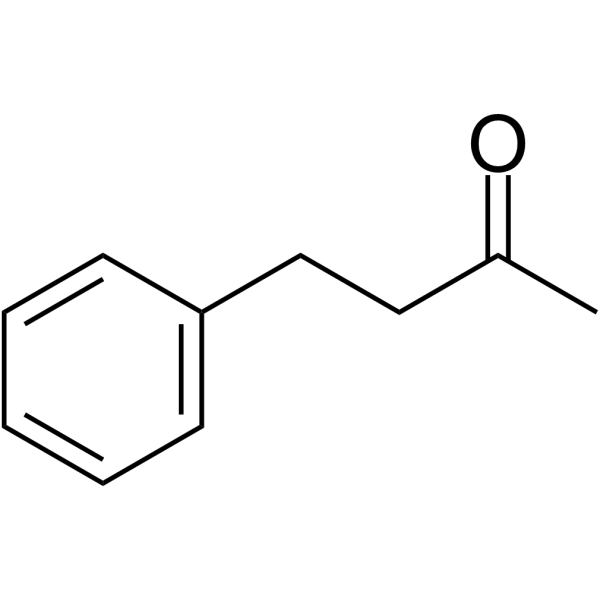
Cat. No.: HY-W015616
CAS No.: 2550-26-7
Synonyms: 4-Penylbutan-2-one
Benzylacetone (4-Penylbutan-2-one) is an aromatic compound. Benzylacetone is a mushroom tyrosinase inhibitor with an IC50 of 2.8 mM, a Ki of 1.25 mM for monophenolase and an IC50 of 0.6 mM, a Ki of 0.39 mM for diphenolase. Benzylacetone inhibits free mushroom tyrosinase and enzyme-substrate complex. Benzylacetone acts as an appetite enhancer via olfactory stimulation, reduces spontaneous locomotor activity, induces weight gain. Benzylacetone exhibits repellent, fumigant, and contact toxicity against Tribolium castaneum adults .
loading...
    loading...
Cat. No.: HY-138149
CAS No.: 106434-14-4
Synonyms: epi-Avermectin B1a
Target:  

Drug Metabolite

Research Areas:  

Infection

2-epi-Abamectin is a degradation product of Abamectin. It is toxic to the two-spotted spider mite in a contact assay with an LC50 value of 4 ppm, which is approximately 100-fold less potent than abamectin.
loading...
    loading...
Cat. No.: HY-133848
CAS No.: 83130-01-2
Synonyms: OK-135
Target:  

Insecticide

Research Areas:  

Infection

Alanycarb (OK-135) is a broad-spectrum oxime carbamate insecticide with contact and oral toxicity. Alanycarb is effective against a wide variety of insect pests and is a pro-insecticide. The principal active molecule produced by the biological modification of Alanycarb within target organisms is methomyl .
loading...
    loading...
Cat. No.: HY-N10100
CAS No.: 88728-58-9
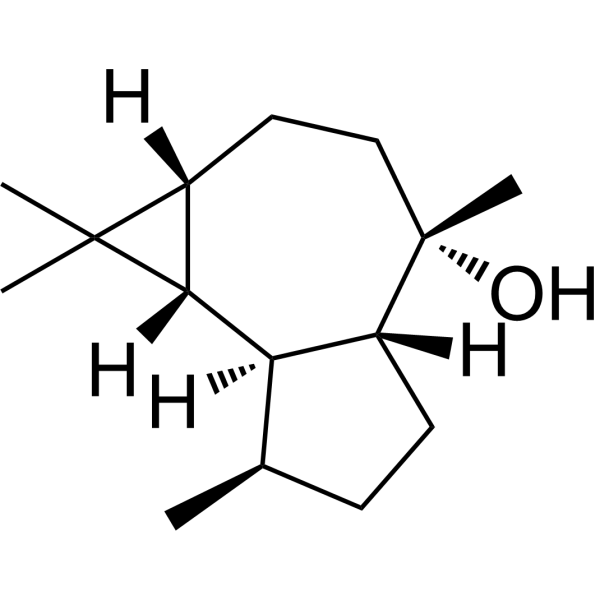
Epiglobulol is a natural product that can be isolated from Atalantia buxifolia. Epiglobulol is a principal components of essential oil which has significant contact toxicity against three stored-product insects .
loading...
    loading...
Cat. No.: HY-W335896
CAS No.: 15233-47-3
Target:  

Bacterial

Research Areas:  

Infection Inflammation/Immunology

4-(2-Octylamino)diphenylamine is an aromatic amine antioxidant, which is toxic to V. fischeri with an IC50 value of 0.68 mg/mL. 4-(2-Octylamino)diphenylamine induces skin sensitization and contact dermatitis in a local lymph node assay in mice. 4-(2-Octylamino)diphenylamine can be used as an additive in rubber .
loading...
    loading...
Cat. No.: HY-N3076
CAS No.: 27270-89-9
Synonyms: (-)-Phyllostine; Phyllostin
Phyllostine ((-)-Phyllostine) can be isolated from D. miriciae. Phyllostine exhibits strong antifeedant, contact toxicity, and oviposition deterrent activities against P. xylostella .
loading...
    loading...
Cat. No.: HY-W269352
CAS No.: 6175-49-1
Target:  

Insecticide

Research Areas:  

Infection

2-Dodecanone is an insecticide with repellent activity against specific insect species. 2-Dodecanone exhibits contact toxicity against adult Tribolium castaneum, Lasioderma serricorne and Liposcelis bostrychophila. 2-Dodecanone shows repellent effects against adult Lasioderma serricorne .
loading...
    loading...
Cat. No.: HY-135450
CAS No.: 271241-14-6
Dimefluthrin is an insecticide. Dimefluthrin exhibits contact toxicity against large red imported fire ant workers. Dimefluthrin undergoes horizontal transfer among red imported fire ant workers, causing secondary mortality in recipient workers. Dimefluthrin is a neurodevelopmental toxicant, which can reduces acetylcholinesterase activity, impairing neurotransmitter .
loading...
    loading...
Cat. No.: HY-W040536
CAS No.: 6440-58-0
Synonyms: Dimethyloldimethyl hydantoin
DMDM hydantoin (Dimethyloldimethyl hydantoin) is a hydantoin-derived formaldehyde-releasing preservative and allergen. DMDM hydantoin releases formaldehyde via hydrolysis in water, including under physiological pH conditions, and the release amount is affected by pH, concentration, composition, temperature and storage duration. DMDM hydantoin exerts bactericidal effects by mediating the cross-linking of proteins, RNA and DNA through the released formaldehyde, thereby inhibiting metabolism and cell division. DMDM hydantoin can induce allergic contact dermatitis directly, via the released formaldehyde, or through both pathways simultaneously. DMDM hydantoin is skin-irritating, and the released formaldehyde brings toxicological risks including carcinogenicity, mutagenicity and reproductive toxicity after entering the body. DMDM hydantoin can be used in studies related to allergic contact dermatitis .
loading...
    loading...
Cat. No.: HY-W028720
CAS No.: 3228-02-2
Target:  

Bacterial Fungal Parasite

Research Areas:  

Infection

4-Isopropyl-3-methylphenol acts as a biofilm inhibitor, Antibacterial agent, Antifungal agent, and Acaricide. 4-Isopropyl-3-methylphenol reduces the expression levels of biofilm-associated gtfB, gtfD, and gtfC genes. 4-Isopropyl-3-methylphenol disrupts ion and redox homeostasis in fungal cells, and its combination with Octylgallate enhances antifungal activity. 4-Isopropyl-3-methylphenol exhibits fumigant toxicity and direct contact toxicity against Dermatophagoides farinae and Dermatophagoides pteronyssinus. 4-Isopropyl-3-methylphenol is applicable to research related to dental caries and Aspergillus infections/contamination .
loading...
    loading...
Cat. No.: HY-N20639
CAS No.: 464-71-1
Synonyms: 3-Deoxycaryoptinol
Clerodin (3-Deoxycaryoptinol) is a natural diterpenoid compound that can be isolated from traditional Chinese medicinal plants such as Clerodendrum infortunatum. Clerodin exhibits caspase-3 regulation, apoptosis induction, cell cycle arrest, ROS induction and glutathione depletion effects, along with anti-cancer and antifeedant activities. It shows selective cytotoxicity against leukemia cells and breast cancer cells, but has no obvious toxicity to normal human blood cells and lymphocytes. Clerodin also reduces the feeding behavior of Helicoverpa armigera larvae on cabbage leaf discs, but has no significant contact toxicity to these larvae. Clerodin can be used in research related to acute monocytic leukemia and human breast cancer .
loading...
    loading...
Cat. No.: HY-W015616R
CAS No.: 2550-26-7
Synonyms: 4-Penylbutan-2-one (Standard)
Benzylacetone (4-Penylbutan-2-one) (Standard) is the analytical standard of Benzylacetone (HY-W015616). This product is intended for research and analytical applications. Benzylacetone is an aromatic compound. Benzylacetone is a mushroom tyrosinase inhibitor with an IC50 of 2.8 mM, a Ki of 1.25 mM for monophenolase and an IC50 of 0.6 mM, a Ki of 0.39 mM for diphenolase. Benzylacetone inhibits free mushroom tyrosinase and enzyme-substrate complex. Benzylacetone acts as an appetite enhancer via olfactory stimulation, reduces spontaneous locomotor activity, induces weight gain. Benzylacetone exhibits repellent, fumigant, and contact toxicity against Tribolium castaneum adults .
loading...
    loading...
  • 1

