
15 Results for "

decarboxylated

" in MedChemExpress (MCE) Product Catalog:
Products (15)

15 Results for "decarboxylated" in MCE Product Catalog:

Cat. No.: HY-P99653
CAS No.: 1929549-92-7
Synonyms: VAY-736

Target:  

TNF Receptor

Research Areas:  

Inflammation/Immunology Cancer

Ianalumab (VAY-736) is a human, decarboxylated antibody against BAFF-R. Ianalumab can block the interaction between BAFF and BAFF-R and antagonize the apoptosis protection mediated by BAFF. Ianalumab exerts antibody-dependent cytotoxic (ADCC), depending on effector cell activation mediated by immune receptor tyrosine activation motif (ITAM) .
loading...
    loading...
Cat. No.: HY-114118S1
Semaglutide-d8 tetraTFA is the deuterium labeled Semaglutide (HY-114118). Semaglutide is a long-acting, selective, competitive GLP-1R agonist that can penetrate the blood-brain barrier. After activating GLP-1R, Semaglutide promotes insulin secretion, inhibits gastric emptying and appetite, and at the same time enhances autophagy, inhibits oxidative stress and apoptosis. Semaglutide also regulates mitochondrial function and lipid metabolism (such as reducing de novo lipogenesis in the liver). Semaglutide has activities such as lowering blood sugar, reducing weight, neuroprotection (such as improving motor function in Parkinson's disease models, reducing α-synuclein aggregation) and improving hepatic steatosis. Semaglutide can be used for the study of neurodegenerative diseases and liver diseases such as type 2 diabetes, obesity, Parkinson's disease, metabolic associated fatty liver disease (MASLD), and cancer .
loading...
    loading...
Cat. No.: HY-N15317
CAS No.: 105369-89-9
Synonyms: β-Phocaecholic acid
Phocaecholic acid (β-Phocaecholic acid) is a bile acid found in duck bile. Phocaecholic acid can be excreted into bile and partially decarboxylated to nor-chenodeoxycholic acid in rats. Phocaecholic acid is promising for research of bile acid metabolism and related diseases .
loading...
    loading...
Cat. No.: HY-P3001
CAS No.: 9028-47-1
Research Areas:  

Metabolic Disease

Malate dehydrogenase (oxaloacetate-decarboxylating, NADP+) is a redox agent targeting metabolic pathways. Malate dehydrogenase (oxaloacetate-decarboxylating, NADP+) catalyzes the reduction of oxaloacetate to malate in leaves of higher plants. Malate dehydrogenase (oxaloacetate-decarboxylating, NADP+) is promising for research of metabolic diseases, such as diabetes, obesity .
loading...
    loading...
Cat. No.: HY-133158S
Purity:  94.71%
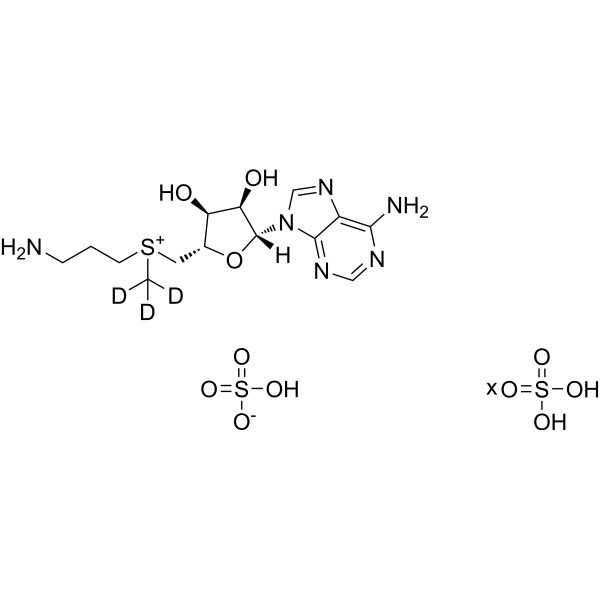
(S)-Adenosylmethionine decarboxylated-d3 (sulfuric) is the deuterium labeled (S)-Adenosylmethionine decarboxylated sulfuric .
loading...
    loading...
Cat. No.: HY-P3175
CAS No.: 9073-95-4
Synonyms: 6-Phosphogluconate dehydrogenase
Research Areas:  

Metabolic Disease

Phosphogluconate dehydrogenase (NADP, decarboxylating) (6-Phosphogluconate dehydrogenase) is an oxidative carboxylase that catalyses the oxidative decarboxylation of 6-phosphogluconate to ribulose 5-phosphate in the context of the oxidative part of the pentose phosphate pathway .
loading...
    loading...
Cat. No.: HY-135398
CAS No.: 1322062-57-6
Purity:  98.89%
Target:  

Bacterial

Research Areas:  

Infection Inflammation/Immunology

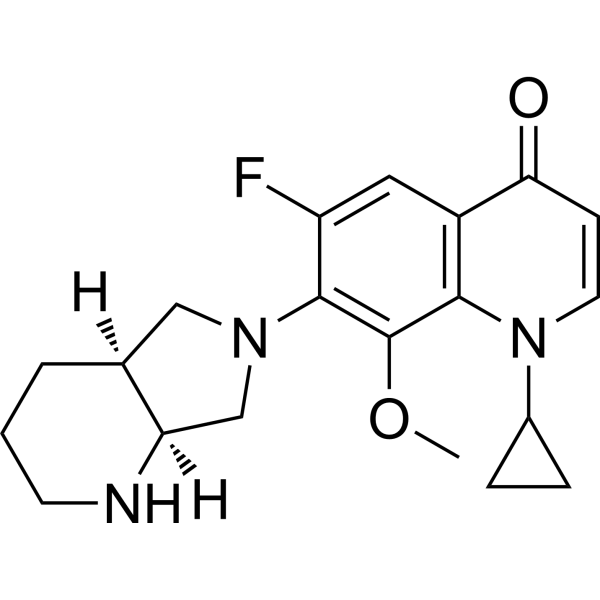
Decarboxy Moxifloxacin (compound 8) is a decarboxylated compound of Moxifloxacin. Moxifloxacin is an orally active 8-methoxyquinolone antimicrobial for use in acute bacterial sinusitis, acute bacterial exacerbations of chronic bronchitis, and community-acquired pneumonia .
loading...
    loading...
Cat. No.: HY-123706
CAS No.: 863126-96-9
Salinosporamide C (compound 4) is a decarboxylated pyrrole analog. Salinosporamide C is the secondary metabolite of the obligate marine actinomycete Salinispora tropical .
loading...
    loading...
Cat. No.: HY-E71544
Research Areas:  

Others

2-Hydroxy-3-oxoadipate synthase (EC 2.2.1.5): the bacterial enzyme requires thiamine diphosphate; the product decarboxylates to 5-hydroxy-4-oxopentanoate.
loading...
    loading...
Cat. No.: HY-P2809C
Research Areas:  

Metabolic Disease

Malic Dehydrogenase (oxaloacetate-decarboxylating), Chicken (EC 1.1.1.40) exists as two isoforms within eukaryotic cells, one that is expressed in the mitochondria and functions in the TCA cycle and one in the cytoplasm that converts malate from the mitochondria back into oxaloacetate.
loading...
    loading...
Cat. No.: HY-E71844A
Research Areas:  

Others

4-Hydroxymandelate oxidase (decarboxylating) (EC 1.1.3.19) is an oxidoreductase that can convert (S)-4-hydroxymandelate, O2 and H + into 4-hydroxybenzaldehyde, H2O2 and CO2.
loading...
    loading...
Cat. No.: HY-112027
CAS No.: 105394-83-0
Synonyms: Ciprofloxacin impurity E
Target:  

Bacterial

Research Areas:  

Infection

Decarboxy ciprofloxacin (Decarboxylated ciprofloxacin) is an antibacterial agent. Decarboxy ciprofloxacin displays antibacterial activities against Staphylococcus aureus, Staphylococcus epidermidis, Enterococcus faecalis, Bacillus subtilis, Enterobacter cloacae, Serratia marcescens and especially potent activity against Escherichia coli .
loading...
    loading...
Cat. No.: HY-133158B
Research Areas:  

Neurological Disease

S-Adenosylmethioninamine phosphate is a decarboxylated sulfonucleoside metabolite of S-adenosylmethionine. S-Adenosylmethioninamine phosphate serves as an aminopropyl donor in polyamine synthesis, promoting the generation of spermine and spermidine from Putrescine (1,4-Butanediamine) (HY-N2407). S-Adenosylmethioninamine phosphate can be used in neurotoxicity research .
loading...
    loading...
Cat. No.: HY-E71723
Research Areas:  

Others

3β-Hydroxysteroid-4α-carboxylate 3-dehydrogenase (Decarboxylating) (EC 1.1.1.170) catalyses the decarboxylation of the C-4 carbon and the dehydrogenation of a 3β hydroxyl at the C-3 carbon of 3β-hydroxysteroid-4α-carboxylates, and is involved in zymosterol and cholesterol biosynthesis.
loading...
    loading...
Cat. No.: HY-188168
CAS No.: 99630-95-2
Synonyms: FMMT
MDL 72394 (FMMT) is an orally active, blood-brain barrier-penetrant amino acid-based prodrug compound. MDL 72394 is decarboxylated by aromatic L-amino acid decarboxylase to generate the active metabolite MDL 72392 (HY-182727), which is a covalent irreversible MAO inhibitor. MDL 72394 is transported into the brain and synaptosomes via the L-neutral amino acid transport system and the norepinephrine transporter. MDL 72394 selectively inhibits MAO in noradrenergic and dopaminergic neurons without inhibiting serotonergic neurons. MDL 72394 increases hypothalamic extracellular 5-HT, tissue 5-HT, and pineal melatonin biosynthesis, and decreases 5-HIAA. MDL 72394 can be used in research related to MAO-mediated diseases, such as depression .
loading...
    loading...
  • 1

