10 Results for "

dopaminergic function

" in MedChemExpress (MCE) Product Catalog:
Products (10)

10 Results for "dopaminergic function" in MCE Product Catalog:

3
3 Cited Publications
Cat. No.: HY-141659
CAS No.: 2242582-40-5
Purity:  99.74%
Research Areas:  

Neurological Disease

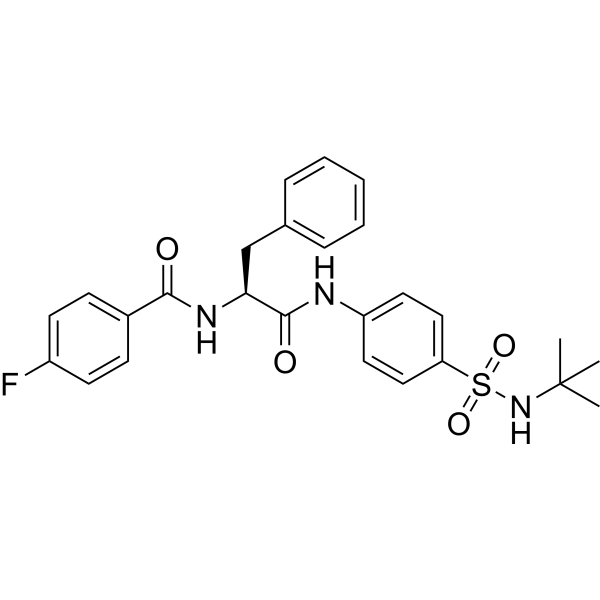
CMPD-39 is a selective non-covalent inhibitor of the ubiquitin-specific protease USP30 (IC50=~20 nM), with high selectivity over other DUB family members (1-100 μM). CMPD-39 inhibits the deubiquitinating activity of USP30, enhances the ubiquitination of mitochondrial proteins TOMM20 and SYNJ2BP; thus, CMPD-39 promotes phosphoubuitin accumulation, thereby accelerating mitochondrial autophagy (mitophagy) and peroxisomal autophagy (pexophagy). CMPD-39 significantly restores impaired mitochondrial function in dopaminergic neurons derived from Parkinson's disease patients .
loading...
    loading...
1
1 Cited Publications
Cat. No.: HY-155659
CAS No.: 3137918-83-0
Purity:  99.86%
Research Areas:  

Neurological Disease

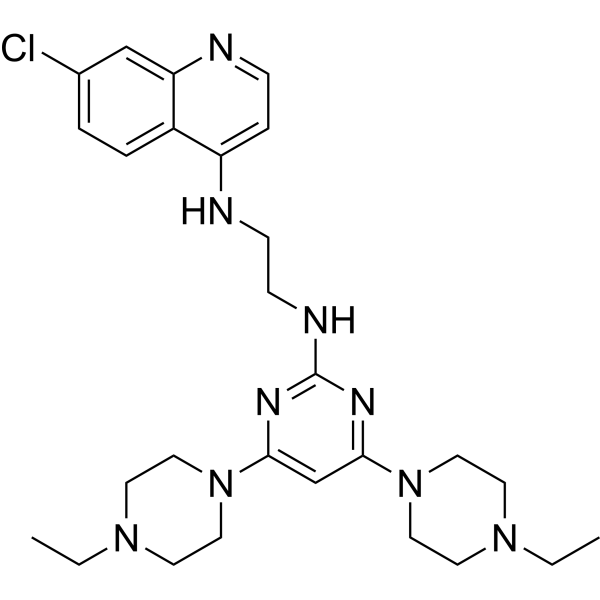
4A7C-301 is a blood-brain barrier-permeable Nurr1 agonist, with IC50 values of 48.22 nM and 107.71 nM for binding to Nurr1-LBD in the [ 3H]-CQ competition assay and TR-FRET assay, respectively. The EC50 of 4A7C-301 for activating Nurr1 transcriptional activity is 6.53 μM, and its EC50 in N27-A dopaminergic cells is approximately 0.2 μM. 4A7C-301 binds directly to Nurr1-LBD, enhances the transcriptional function of Nurr1, and restores the reduction of Nurr1 protein induced by MPP + or αSyn. 4A7C-301 alleviates oxidative stress and mitochondrial dysfunction, protects midbrain dopaminergic neurons, inhibits microglial activation, and restores impaired autophagic flux. 4A7C-301 can be used in studies related to neuroprotection and Parkinson's disease .
loading...
    loading...
Cat. No.: HY-141659A
Research Areas:  

Neurological Disease

(R)-CMPD-39 is the R enantiomer of CMPD-39 ( HY-141659 ). CMPD-39 is a selective non-covalent inhibitor of the ubiquitin-specific protease USP30 (IC50 =~20 nM), with high selectivity over other DUB family members (1-100 μM). CMPD-39 inhibits the deubiquitinating activity of USP30, enhances the ubiquitination of mitochondrial proteins TOMM20 and SYNJ2BP; thus, CMPD-39 promotes phosphoubuitin accumulation, thereby accelerating mitochondrial autophagy (mitophagy) and peroxisomal autophagy (pexophagy). CMPD-39 significantly restores impaired mitochondrial function in dopaminergic neurons derived from Parkinson's disease patients .
loading...
    loading...
Cat. No.: HY-112072
CAS No.: 75011-65-3
Synonyms: SB 7505 hydrochloride; SKF 100168 hydrochloride
Ibopamine (SB 7505) hydrochloride is an orally active dopamine derivative. Ibopamine hydrochloride exerts agonistic effects on α, β adrenergic receptors and dopaminergic receptors. Ibopamine hydrochloride can be hydrolyzed to produce the active metabolite Epinine. Ibopamine hydrochloride possesses positive inotropic and vasodilatory effects, which can improve hemodynamics and renal function in heart failure models. Ibopamine hydrochloride has good safety profile and can be used in the research of diseases such as congestive heart failure .
loading...
    loading...
Cat. No.: HY-103405A
CAS No.: 179333-18-7
Target:  

Dopamine Receptor

Research Areas:  

Neurological Disease

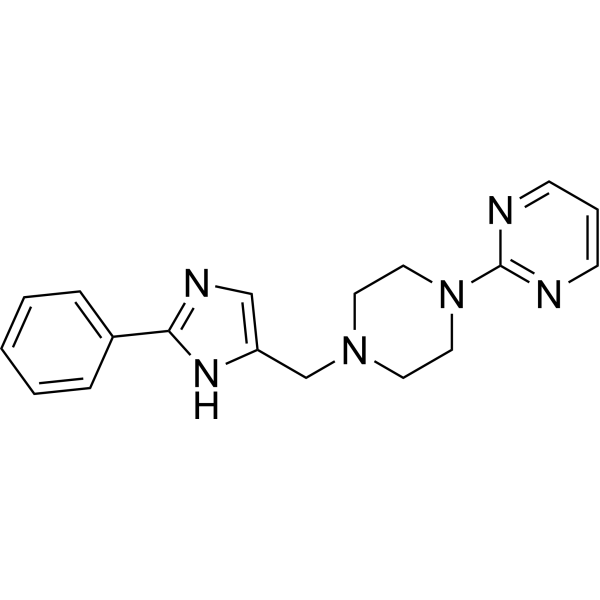
NGD 94-1 (dimaleate) is a potent and selective dopamine D4 receptor antagonist. NGD 94-1 (dimaleate) shows high affinity for the cloned human D4.2 receptor (Ki = 3.6 nM). NGD 94-1 (dimaleate) modulates the cognitive functions of the frontostriatal system and regulates dopaminergic transmission in Phencyclidine (PCP)-induced monkeys. NGD 94-1 (dimaleate) can be used for neurological disease research [1][2].
loading...
    loading...
Cat. No.: HY-W424918
CAS No.: 316-07-4
Target:  

Dopamine Receptor

Research Areas:  

Neurological Disease

Opromazine hydrochloride is an antipsychotic medication that exhibits sedative and antiemetic pharmacological effects, making it effective for treating psychiatric disorders such as schizophrenia and psychosis. Opromazine hydrochloride functions by reducing dopaminergic activity through the blockade of dopamine receptors in the brain. Opromazine hydrochloride has been analyzed for its metabolites in various microsomal enzymes, revealing differences in formation rates that underscore the variability of drug-metabolizing enzymes in human liver and placenta microsomes.
loading...
    loading...
Cat. No.: HY-103405
CAS No.: 178928-68-2
Target:  

Dopamine Receptor

Research Areas:  

Neurological Disease

NGD94-1 is a potent and selective dopamine D4 receptor antagonist. NGD94-1 shows high affinity for the cloned human D4.2 receptor (Ki = 3.6 nM). NGD94-1 modulates the cognitive functions of the frontostriatal system and regulates dopaminergic transmission in Phencyclidine (PCP)-induced monkeys. NGD94-1 can be used for neurological disease research [1][2].
loading...
    loading...
Cat. No.: HY-P10404
CAS No.: 2942277-55-4
Target:  

α-synuclein

Research Areas:  

Others Neurological Disease

PDpep1.3 is a peptide inhibitor of α-synuclein that disrupts the direct interaction between α-synuclein and CHarged Multivesicular body Protein 2B (CHMP2B). As a result, PDpep1.3 restores the degradation function of endosomes and lysosomes, reduces the protein level and aggregation of α-synuclei, and protects dopaminergic neurons from α-synuclei-mediated degeneration. PDpep1.3 can be used to study neurodegenerative diseases and protein-protein interactions .
loading...
    loading...
Cat. No.: HY-W1133231
CAS No.: 1879038-73-9
CE-103 is a selective, blood-brain barrier-permeable dopamine transporter (DAT) inhibitor with an IC50 of 14.73 μM. CE-103 blocks DAT-mediated dopamine reuptake and exhibits antagonistic activity against 5-HT1A. CE-103 reduces working memory errors in the radial arm maze test of rats, decreases the levels of complexes containing phosphorylated DAT (pDAT) and D1R in the hippocampus of rats, and increases the levels of complexes containing D2R and D3R simultaneously. CE-103 can be used in studies related to dopaminergic neurotransmission, working memory and cognitive function .
loading...
    loading...
Cat. No.: HY-182893
CAS No.: 1919889-97-6
SK-129 is a blood-brain barrier-permeable inhibitor of α-synuclein (αS) oligomers with a Kd of 221 nM. SK-129 preferentially binds to neurotoxic αS oligomers over physiological αS monomers, inhibits αS aggregation, blocks the interaction and co-aggregation of αS with tau protein, and prevents the maturation of αS-tau condensates into amyloid aggregates. SK-129 reduces ROS production, rescues dopaminergic neuron degeneration, improves motor function, restores endogenous dopamine synthesis, increases the number of Tyrosine Hydroxylase-positive neurons, prevents brain histopathological changes, alleviates neuroinflammation, and improves survival rates in relevant models. SK-129 can be used in research related to Parkinson's disease (PD) and Lewy body dementia (LBD) .
loading...
    loading...

