10 Results for "

epithelial cell lines

" in MedChemExpress (MCE) Product Catalog:
Products (10)

10 Results for "epithelial cell lines" in MCE Product Catalog:

Cat. No.: HY-157396
CAS No.: 2899209-55-1
Purity:  98.11%
Research Areas:  

Cancer

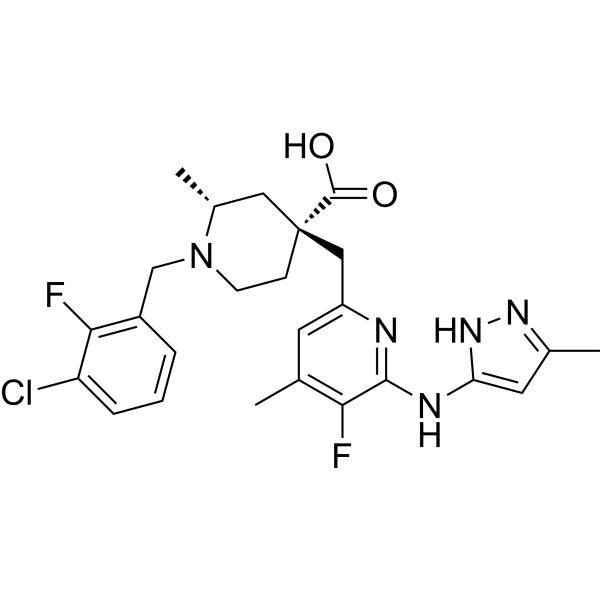
JAB-2485 is an orally active and selective Aurora kinase A (AURKA) inhibitor with an IC50 value of 0.327 nM. JAB-2485 exhibits inhibitory activity against various tumor cell lines such as neuroblastoma, triple-negative breast cancer, small cell lung cancer, and epithelial ovarian cancer. JAB-2485 can induce cell cycle arrest and apoptosis in tumor cells. JAB-2485 has antitumor activity .
loading...
    loading...
Cat. No.: HY-100923
CAS No.: 116700-36-8
Purity:  98.98%
Target:  

PKA 5-HT Receptor EGFR

Research Areas:  

Neurological Disease

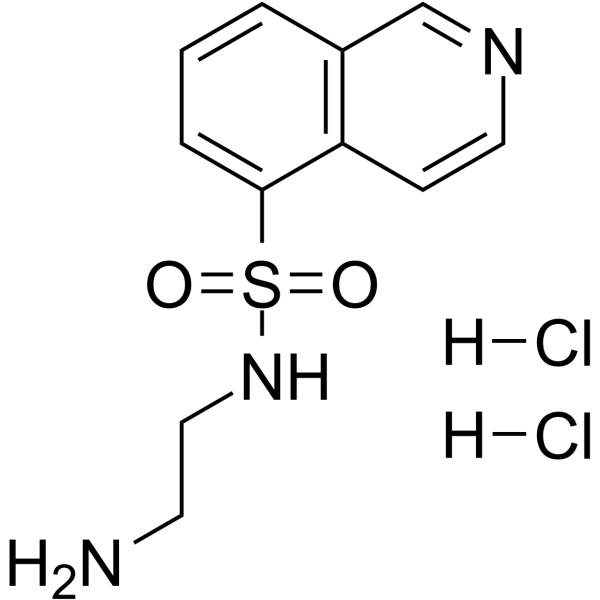
H-9 Dihydrochloride is a PKA (protein kinase) inhibitor. H-9 Dihydrochloride (10 μM) significantly reduces the excitatory response to 5-HT. H-9 Dihydrochloride also has a direct effect on pharyngeal activity. H-9 Dihydrochloride inhibits signal-transduction and cell growth in EGF (epidermal growth factor)-dependent epithelial cell lines .
loading...
    loading...
Cat. No.: HY-170813
CAS No.: 1358201-44-1
Target:  

CDK TGF-beta/Smad

Research Areas:  

Infection

P162-0948 is a selective CDK8 inhibitor with an IC50 value of 50.4 nM. P162-0948 reduces cell migration and protein expression of EMT-related proteins in A549 human alveolar epithelial cell lines. P162-0948 reduces phosphorylation of Smad, which suggests disruption of the TGF-β/Smad signaling pathway. P162-0948 is promising for research of pulmonary fibrosis .
loading...
    loading...
Cat. No.: HY-153858
CAS No.: 2470433-36-2
PHI-501 is a dual inhibitor targeting RAF/DDR. PHI-501 exhibits significant anti-proliferative effects in melanoma cell lines and significantly inhibits the colony formation of drug-resistant cells. PHI-501 strongly inhibits ERK and AKT phosphorylation. PHI-501 downregulates the gene sets in drug-resistant cells of TNFA-NFKB, IL6-JAK-STAT3, and KRAS signaling pathways as well as the epithelial-mesenchymal transition (EMT) signaling pathways. PHI-501 demonstrates significant anti-tumor effects in the SK-MEL3DR xenograft model. PHI-501 can be used for research on the problem of drug resistance in melanoma .
loading...
    loading...
Cat. No.: HY-174779
Target:  

mRNA

Research Areas:  

Cancer

Human AREG mRNA encodes the human amphiregulin (AREG) protein, a member of the epidermal growth factor family. AREG interacts with the EGF/TGF-alpha receptor to promote the growth of normal epithelial cells, and inhibits the growth of certain aggressive carcinoma cell lines. It also functions in mammary gland, oocyte and bone tissue development.
loading...
    loading...
Cat. No.: HY-172878
CAS No.: 3062141-62-9
Research Areas:  

Cancer

HDAC/PSMD14-IN-1 (Compound 8B) is a thiolutin derivative. HDAC/PSMD14-IN-1 is a orally active dual-target inhibitor of PSMD14/HDAC1 (IC50 238.7 nM/141.2 nM, respectively). HDAC/PSMD14-IN-1 has good cytotoxicity against ESCC cell lines (IC50: 30-250 nM) and effectively reverses epithelial-mesenchymal transition (EMT). HDAC/PSMD14-IN-1 can induce apoptosis. HDAC/PSMD14-IN-1 has anti-tumor activity in a KYSE30 cell mouse xenograft model. HDAC/PSMD14-IN-1 can be used in anti-esophageal cancer research .
loading...
    loading...
Cat. No.: HY-D3153
CAS No.: 2693397-68-9
PbQ is a tubulin inhibitor (with an IC50 of 5 μM against goat tubulin) and a fluorescent probe for cuprous ions Cu (I). PbQ can penetrate the membrane of peripheral blood mononuclear cells, form a stable 1:1 complex with Cu + ions, and exhibits low toxicity and good biocompatibility toward macrophage cell lines. In addition, PbQ promotes tubulin degradation and disrupts the microtubule network in lung epithelial cells without affecting actin. PbQ also possesses genotoxicity by forming DNA base adducts, and it can activate caspase-3 and apoptosis-related genes, induce loss of mitochondrial membrane potential, and trigger cell apoptosis. PbQ can be used in studies related to chronic obstructive pulmonary disease .
loading...
    loading...
Cat. No.: HY-187178
CAS No.: 1966932-74-0
Target:  

Histone Demethylase

Research Areas:  

Cancer

KDM2A/7-IN-1 is a lysine demethylase 2A (KDM2A) inhibitor with a human IC50 of 11 nM. KDM2A/7-IN-1 requires co-factor 2-oxoglutarate (2OG) for binding and occupies the H3K36me2 substrate pocket via a dimethylated lysine 36-mimicking group. KDM2A/7-IN-1 represses E2F-regulated genes, induces epithelial-mesenchymal transition, DNA repair, and mTOR pathways in specific cells, and selectively inhibits proliferation of ALT-positive cancer cell lines. KDM2A/7-IN-1 can be used for the research of ALT-positive cancers .
loading...
    loading...
Cat. No.: HY-12299G
CAS No.: 837422-57-8
Synonyms: Dual LCK/SRC inhibitor (GMP)
WH-4-023 GMP is WH-4-023 (HY-12299) produced by using GMP guidelines. GMP small molecules works appropriately as an auxiliary reagent for cell therapy manufacture. WH-4-023 (Dual LCK/SRC inhibitor) is a Lck/Src dual target inhibitor with functions in stem cell maintenance and differentiation regulation. WH-4-023 blocks epithelial-mesenchymal transition, supports the self-renewal of porcine embryonic stem cells, and inhibits their differentiation into mesoderm and endoderm. WH-4-023 is a key component of 3i/LAF medium, and enables the stable establishment and long-term maintenance of porcine pre-gastrulation epiblast stem cell lines. Removal of WH-4-023 reduces the expression of pluripotency factors in porcine and human extended pluripotent stem cells. WH-4-023 can be applied to relevant studies such as non-small cell lung cancer resistant to EGFR-TKIs .
loading...
    loading...
Cat. No.: HY-189570
CAS No.: 3127781-85-2
Target:  

PARP Caspase CDK Cadherin MMP

Research Areas:  

Cancer

TMLB-G9 is an orally active B3GAT3 inhibitor (human Kd = 0.72 μM). TMLB-G9 blocks glycosaminoglycan biosynthesis and inhibits chondroitin sulfate biosynthesis in hepatocellular carcinoma cells. TMLB-G9 induces apoptosis by upregulating cleaved PARP and cleaved caspase-3. TMLB-G9 induces G0/G1 cell cycle arrest by upregulating Rb and downregulating CDK1, CDK2, Cyclin A2, Cyclin E1, and phosphorylated Rb. TMLB-G9 inhibits migration and invasion by reversing epithelial-mesenchymal transition, manifested as upregulation of E-cadherin and downregulation of N-cadherin, vimentin, MMP-2, MMP-9, and ZEB1. TMLB-G9 inhibits colony formation. TMLB-G9 exhibits broad-spectrum antitumor activity against multiple cancer cell lines. TMLB-G9 can be used for research on hepatocellular carcinoma .
loading...
    loading...

