13 Results for "

eukaryotic expression

" in MedChemExpress (MCE) Product Catalog:
Products (13)

13 Results for "eukaryotic expression" in MCE Product Catalog:

2
2 Cited Publications
Cat. No.: HY-118660
CAS No.: 13803-65-1
Purity:  99.68%
Target:  

Antibiotic Bacterial

Research Areas:  

Infection

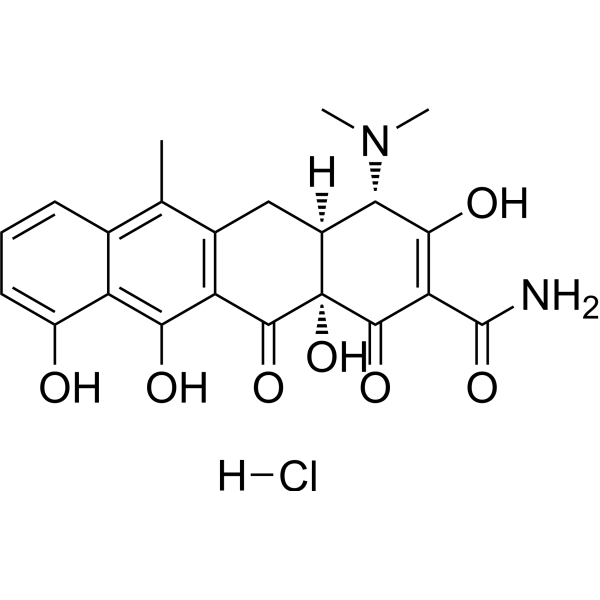
Anhydrotetracycline hydrochloride, a tetracycline biosynthetic precursor, is a potent competitive broad-spectrum tetracycline destructase enzymes inhibitor. Anhydrotetracycline hydrochloride is an effector for tetracycline controlled gene expression systems in eukaryotic cells .
loading...
    loading...
Cat. No.: HY-16366
CAS No.: 865783-99-9
Synonyms: ON 014185
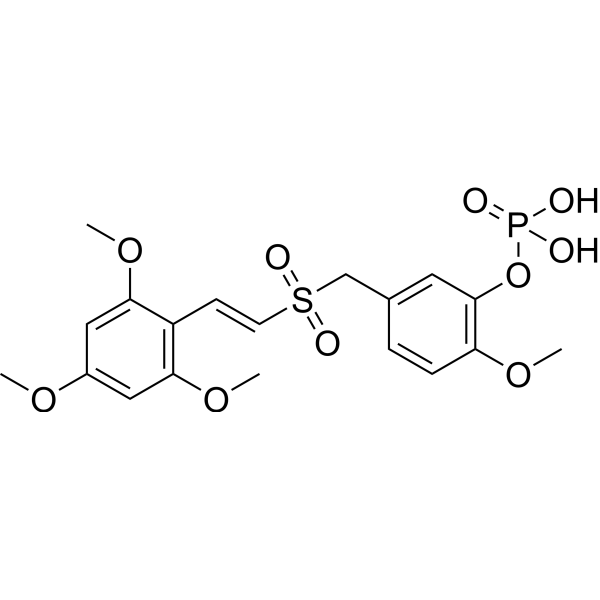
Briciclib (ON 014185) is a eukaryotic translation initiation factor 4E (eIF4E) inhibitor. Briciclib exhibits broad-spectrum anti-cancer activity, including in mantle cell leukemia, breast cancer, gastric cancer, and esophageal cancer cells. Briciclib reduces the expression of cyclin D1 and c-Myc, and enhances the expression of P53 and Cleaved Caspase 3 pro-apoptotic proteins. Briciclib can be used for the study of hematological system tumors and solid tumors .
loading...
    loading...
Cat. No.: HY-W250308A
Synonyms: Epsilon-polylysine hydrochloride (MV 2000-5000); ε-Polylysine hydrochloride (MV 2000-5000); ε-PL hydrochloride (MV 2000-5000)
ε-Poly-L-lysine (Epsilon-polylysine; ε-Polylysine) hydrochloride (MV 2000-5000) is a polycationic antibacterial agent with broad-spectrum activity against Gram-positive bacteria, Gram-negative bacteria, fungi, yeasts and specific bacteriophages. ε-Poly-L-lysine hydrochloride (MV 2000-5000) exerts bactericidal effects through mechanisms such as disrupting microbial membranes, inducing ROS production, inhibiting metabolism and spore germination. ε-Poly-L-lysine hydrochloride (MV 2000-5000) also regulates the expression of multiple key genes including sodA, oxyR and recA. ε-Poly-L-lysine hydrochloride (MV 2000-5000) exhibits properties such as low eukaryotic cytotoxicity, thermal stability and pH stability, and supports tissue regeneration and anti-tumor applications. ε-Poly-L-lysine hydrochloride (MV 2000-5000) can be applied in research fields including bacterial and fungal infections, diabetic ulcers, and methicillin-resistant Staphylococcus aureus infections .
loading...
    loading...
Cat. No.: HY-111522
CAS No.: 955900-27-3
Purity:  99.02%
Target:  

Sirtuin c-Myc

Research Areas:  

Cancer

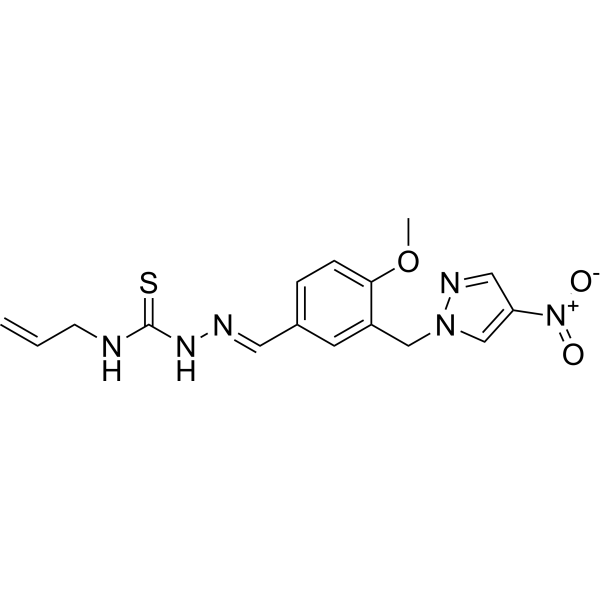
RK-9123016 is a potent inhibitor of SIRT2. RK-9123016 inhibits the enzymatic activity of SIRT2 with an IC50 value of 0.18 µM but not other human sirtuin members including SIRT1 and SIRT3 at 100 µM. RK-9123016 increases the acetylation level of eukaryotic translation initiation factor 5A (eIF5A), a physiological substrate of SIRT2, and reduces cell viability of human breast cancer cells accompanied with a decrease in c-Myc expression .
loading...
    loading...
Cat. No.: HY-P2977
CAS No.: 9027-60-5
Synonyms: Sialic acid aldolase (CgNal)
N-Acetylneuraminate lyase (CgNal) (Sialic acid aldolase (CgNal)) is a rate-limiting enzyme in bacteria metabolism that catalyzes the reversible aldol cleavage of sialic acid, and it regulates the overall metabolism of the bacterial sialic acid catabolic pathway. N-Acetylneuraminate lyase (CgNal) catalyzes the reversible condensation reaction of pyruvate and N-acetyl-d-mannosamine (ManNAc) to produce sialic acid N-acetylneuraminic acid (Neu5Ac). The protein expression of N-Acetylneuraminate lyase is downregulated at the translational level under the regulation of methyl methanesulfonate, and this change significantly impairs the adhesion and invasion abilities of bacteria to eukaryotic cells. N-Acetylneuraminate lyase is a key virulence-related protein in various pathogenic bacteria and is considered an antibiotic drug target. N-Acetylneuraminate lyase (CgNal) can be used in studies of invasive (extraintestinal) infectious diseases, Crohn's disease, and methicillin-resistant Staphylococcus aureus infections .
loading...
    loading...
Cat. No.: HY-122588A
Target:  

Antibiotic

Negamycin (hydrochloride) is a dipeptide antibiotic. Negamycin (hydrochloride) can restore dystrophin expression in skeletal and cardiac muscles in mdx Duchenne muscular dystrophy (DMD) murine model. Negamycin (hydrochloride) can bind to a partial sequence of the eukaryotic rRNA-decoding A-site. Negamycin (hydrochloride) can be studied in DMD research .
loading...
    loading...
Cat. No.: HY-118660R
CAS No.: 13803-65-1
Research Areas:  

Infection

Anhydrotetracycline (hydrochloride) (Standard) is the analytical standard of Anhydrotetracycline (hydrochloride). This product is intended for research and analytical applications. Anhydrotetracycline hydrochloride, a tetracycline biosynthetic precursor, is a potent competitive broad-spectrum tetracycline destructase enzymes inhibitor. Anhydrotetracycline hydrochloride is an effector for tetracycline controlled gene expression systems in eukaryotic cells .
loading...
    loading...
Cat. No.: HY-173645
Research Areas:  

Others

L-Anap methyl ester hydrochloride is the methyl ester form of the fluorescent unnatural amino acid L-ANAP (HY-101937). L-Anap methyl ester hydrochloride can be used effectively to generate UAA-containing proteins in a variety of eukaryotic expression systems .
loading...
    loading...
Cat. No.: HY-16366A
CAS No.: 865784-01-6
Synonyms: ON 014185 sodium
Briciclib (ON 014185) sodium is a eukaryotic translation initiation factor 4E (eIF4E) inhibitor. Briciclib sodium exhibits broad-spectrum anti-cancer activity, including in mantle cell leukemia, breast cancer, gastric cancer, and esophageal cancer cells. Briciclib sodium reduces the expression of cyclin D1 and c-Myc, and enhances the expression of P53 and Cleaved Caspase 3 pro-apoptotic proteins. Briciclib sodium can be used for the study of hematological system tumors and solid tumors .
loading...
    loading...
Cat. No.: HY-118569
CAS No.: 136440-70-5
Research Areas:  

Cancer

CP-115953 is an antitumor fluoroquinolone compound that targets eukaryotic topoisomerase II and Escherichia coli DNA gyrase. CP-115953 inhibits ATP hydrolysis and DNA relaxation by stimulating enzyme-mediated DNA cleavage, and enhances the expression of immune-related cytokines. CP-115953 is applicable for research on human cancers .
loading...
    loading...
Cat. No.: HY-178740
CAS No.: 179248-64-7
Target:  

Bacterial EGFR

Research Areas:  

Infection

GI261520A is a egfr/erbb2 dual inhibitor. GI261520A inhibits PhoQ phosphorylation dose-dependently. GI261520A can downregulate the activity levels of PhoP/PhoQ. GI261520A inhibits pagC reporter expression levels with an IC50 of 3.2 μM. GI261520A inhibits PhoQc autokinase activtiy by 80%. GI261520A can permeate the eukaryotic plasmatic and vascular cell membranes and reach intravacuolar Salmonella to block intramacrophage proliferation .
loading...
    loading...
Cat. No.: HY-183328
Target:  

MNK Bcl-2 Family

Research Areas:  

Cancer

MNK1/2-IN-11 is a potent, selective and orally active MNK1/2 inhibitor with MNK1 IC50 of 1.2 nM, MNK2 IC50 of 1.3 nM. MNK1/2-IN-11 reduces eukaryotic translation initiation factor 4E phosphorylation, decreases Mcl-1 and Cyclin D1 expression. MNK1/2-IN-11 inhibits tumor growth in mouse CT26 colorectal tumor models. MNK1/2-IN-11 can be used for the research of colorectal cancer .
loading...
    loading...
Cat. No.: HY-L267
1,226 compounds

Protein synthesis is a fundamental process that converts genetic information into functional proteins and is essential for maintaining cellular growth, proliferation, differentiation, and metabolic homeostasis. Protein synthesis is precisely regulated by a complex network of signaling pathways, including mTOR, PI3K/Akt, MAPK/ERK, and eIF (eukaryotic translation initiation factor)-mediated signaling. These pathways finely control cellular protein synthesis by regulating translation initiation, ribosomal activity, and the expression and phosphorylation status of key translation factors. Dysregulation of protein synthesis is closely associated with the development and progression of various diseases, including cancer, metabolic disorders, neurodegenerative diseases, and immune-related disorders. Therefore, key proteins, kinases, and translation regulators within these pathways are of significant value for research and drug development.

MCE offers 1,226 small-molecule compounds targeting key components of protein synthesis signaling pathways, covering multiple targets involved in protein synthesis and translational regulation, as well as diverse modes of target modulation and functions. By selectively modulating the activity or function of different pathway components, these compounds can be used to investigate protein synthesis and translational regulatory networks, elucidate the roles of specific targets in cellular physiology and disease processes, and support disease mechanism studies, potential drug target validation, candidate drug evaluation, and the exploration of therapeutic strategies.

  • 1

