29 Results for "

flight tunnel

" in MedChemExpress (MCE) Product Catalog:
Products (29)

29 Results for "flight tunnel" in MCE Product Catalog:

629
629 Publications Verification
Cat. No.: HY-10071
CAS No.: 146986-50-7
Purity:  99.46%
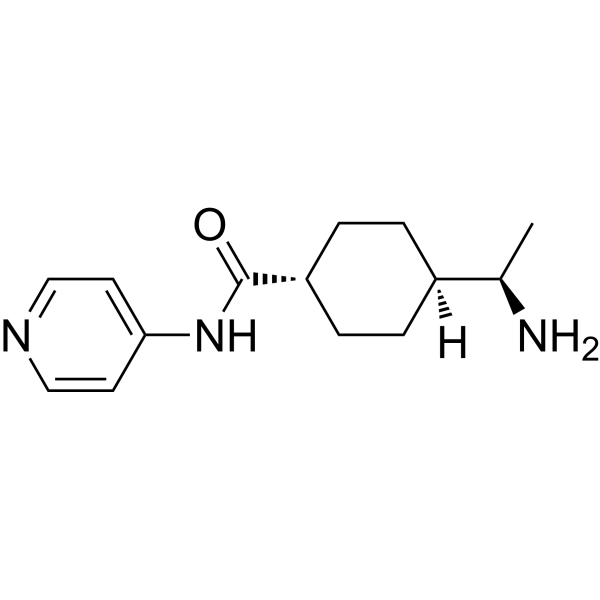
Y-27632 is a ROCK inhibitor with Ki values of 220 nM and 300 nM for ROCK1 and ROCK2, respectively. Y-27632 exerts anti-inflammatory and immunomodulatory effects in systemic lupus erythematosus models by inhibiting the ROCK/NF-κB pathway. Y-27632 enhances autophagy by inhibiting the AKT/mTOR pathway, thereby inducing apoptosis apoptosis in oral squamous cell carcinoma. Y-27632 induces the formation of tunneling nanotubes in ARPE-19 cells and significantly enhances mitochondrial transfer through these channels. Y-27632 promotes neurite outgrowth in PC12 cells by activating the Rac1/NOX1/ROS/AKT/PAK1 signaling cascade .
loading...
    loading...
629
629 Publications Verification
Cat. No.: HY-10071A
CAS No.: 331752-47-7
Y-27632 hydrochloride hydrate is a ROCK inhibitor with Ki values of 220 nM and 300 nM for ROCK1 and ROCK2, respectively. Y-27632 hydrochloride hydrate exerts anti-inflammatory and immunomodulatory effects in systemic lupus erythematosus models by inhibiting the ROCK/NF-κB pathway. Y-27632 hydrochloride hydrate enhances autophagy by inhibiting the AKT/mTOR pathway, thereby inducing apoptosis apoptosis in oral squamous cell carcinoma. Y-27632 hydrochloride hydrate induces the formation of tunneling nanotubes in ARPE-19 cells and significantly enhances mitochondrial transfer through these channels. Y-27632 hydrochloride hydrate promotes neurite outgrowth in PC12 cells by activating the Rac1/NOX1/ROS/AKT/PAK1 signaling cascade .
loading...
    loading...
14
14 Cited Publications
Cat. No.: HY-107641
CAS No.: 28166-41-8
Purity:  99.92%
Synonyms: α-Cyano-4-hydroxycinnamate
Research Areas:  

Metabolic Disease

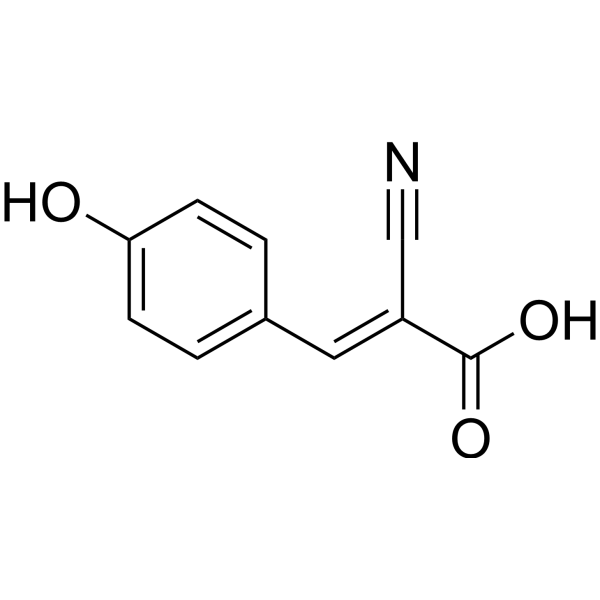
α-Cyano-4-hydroxycinnamic acid (α-Cyano-4-hydroxycinnamate) is a potent and non-competitive inhibitor of monocarboxylate transporters (MCTs). α-Cyano-4-hydroxycinnamic acid inhibits mitochondrial pyruvate transporter with a Ki of 6.3 μM. α-Cyano-4-hydroxycinnamic acid is used as a matrix to facilitate peptide ionization in matrix-assisted laser desorption/ionization time-of-flight (MALDI-TOF) mass spectrometry applications .
loading...
    loading...
1
1 Cited Publications
Cat. No.: HY-W027446
CAS No.: 65-22-5
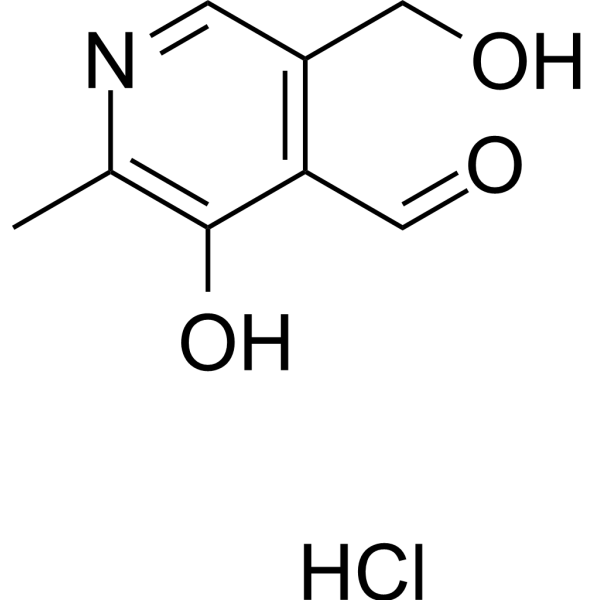
Pyridoxal hydrochloride, the hydrochloride form of Pyridoxal (HY-107469), is a newly developed neuroprotective agent. Pyridoxal hydrochloride is one of the major forms of vitamin B6. Pyridoxal hydrochloride is solvolyzed in methanol to form pyridoxal monomethylacetal. Pyridoxal is phosphorylated by pyridoxal kinase to Pyridoxal phosphate (HY-B1744). Pyridoxal is oxidized by the liver to 4-Pyridoxic acid (HY-113493) which is excreted in the urine. Pyridoxal hydrochloride is proming for research of carpal tunnel syndrome (CTS) .
loading...
    loading...
1
1 Cited Publications
Cat. No.: HY-107469
CAS No.: 66-72-8
Purity:  99.61%
Synonyms: Pyridoxaldehyde
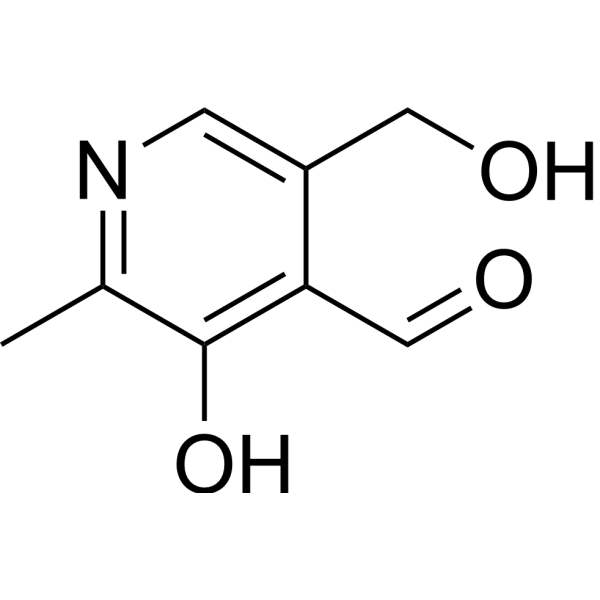
Pyridoxal is a neuroprotectant. Pyridoxal is one of the main forms of vitamin B6. Pyridoxal is phosphorylated by pyridoxal kinase to pyridoxal phosphate (HY-B1744). Pyridoxal is oxidized by the liver to 4-pyridoxic acid (HY-113493) and excreted in the urine. Pyridoxal has shown promise in the study of carpal tunnel syndrome (CTS) .
loading...
    loading...
1
1 Cited Publications
Cat. No.: HY-107469R
CAS No.: 66-72-8
Synonyms: Pyridoxaldehyde (Standard)
Pyridoxal (Standard) is the analytical standard of Pyridoxal. This product is intended for research and analytical applications. Pyridoxal is a neuroprotectant. Pyridoxal is one of the main forms of vitamin B6. Pyridoxal is phosphorylated by pyridoxal kinase to pyridoxal phosphate (HY-B1744). Pyridoxal is oxidized by the liver to 4-pyridoxic acid (HY-113493) and excreted in the urine. Pyridoxal has shown promise in the study of carpal tunnel syndrome (CTS)[1][2][3].
loading...
    loading...
1
1 Cited Publications
Cat. No.: HY-P73580
Purity:  ≥ 95%, as determined by reducing SDS-PAGE.
Synonyms: TTR; Transthyretin; PALB; CTS1; HsT2651; CTS; Prealbumin, Amyloidosis Type I; ATTR; TBPA; Epididymis Luminal Protein 111; Thyroxine-Binding Prealbumin; Carpal tunnel Syndrome 1; TTR Protein; Prealbumin; AMYLD1; HEL111; TTN
Species:  
Mouse
Source:  
HEK293
loading...
    loading...
Cat. No.: HY-Y0030A
CAS No.: 874-24-8
Synonyms: 3-HPA
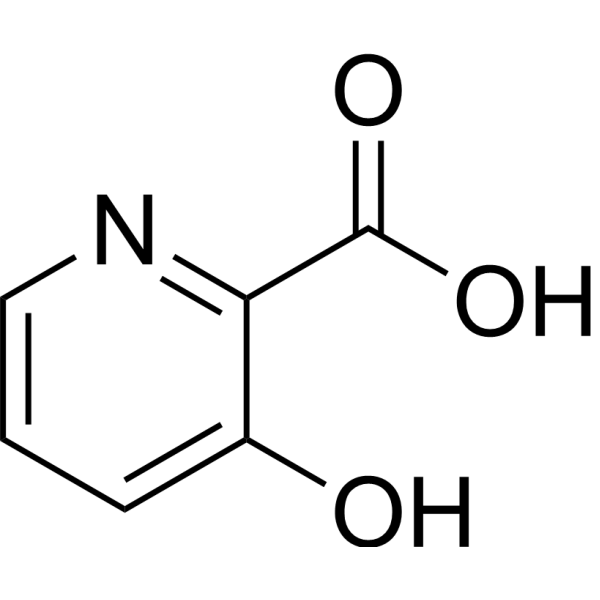
3-Hydroxypicolinic acid, matrix substance for MALDI-MS is a matrix. 3-Hydroxypicolinic acid, matrix substance for MALDI-MS coordinates with metal ions such as copper to form complexes with cytotoxic and antimycobacterial activity. 3-Hydroxypicolinic acid, matrix substance for MALDI-MS is used for the analysis of oligodeoxynucleotides in matrix-assisted laser desorption ionization time-of-flight mass spectrometry (MALDI-TOF MS). 3-Hydroxypicolinic acid, matrix substance for MALDI-MS is useful for nucleic acid analysis and anti-tuberculosis compound development .
loading...
    loading...
Cat. No.: HY-P3570
CAS No.: 98968-94-6
Synonyms: Lom-AKH-II
Target:  

Endogenous Metabolite

Research Areas:  

Metabolic Disease

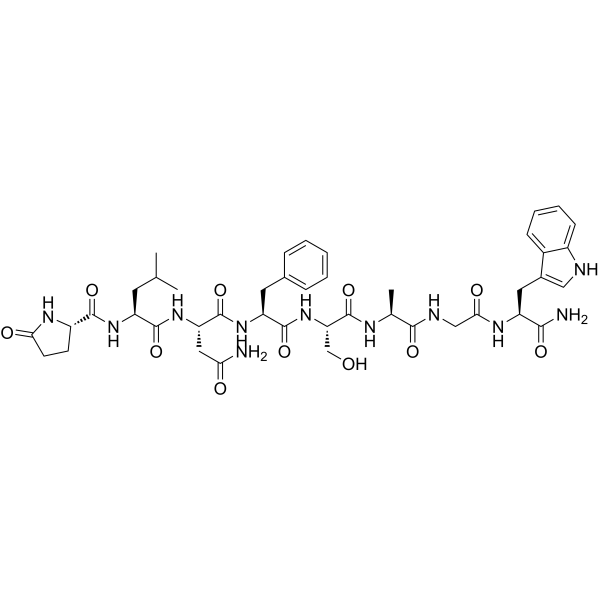
Adipokinetic hormone II (Locusta migratoria) (Lom-AKH-II) is a insect adipokinetic hormone (AKH), enhances fat body cAMP levels in vitro. Insect adipokinetic hormones (AKHs) controls flight-directed mobilization of carbohydrate and lipid from fat body stores, which depends on AKH receptor(s) coupling to cAMP formation and glycogen phosphorylase activation via the stimulatory guanine nucleotide-binding protein (Gs) .
loading...
    loading...
Cat. No.: HY-149241
CAS No.: 2951854-02-5
Purity:  99.41%
Target:  

SHP2

Research Areas:  

Cancer

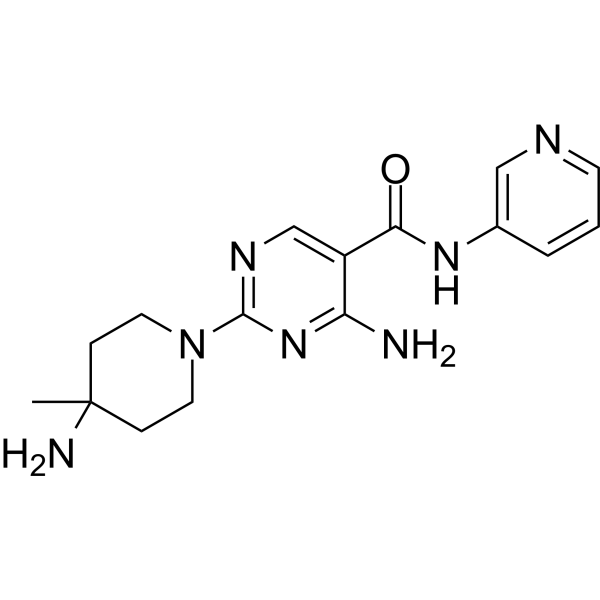
SHP2-IN-13 is a highly selective and orally active SHP2 “tunnel site” allosteric inhibitor with an IC50 of 83.0 nM. SHP2-IN-13 has the potential for cancers bearing RTK oncogenic drivers and SHP2-related diseases research.
loading...
    loading...
Cat. No.: HY-P3572
CAS No.: 61627-67-6
Synonyms: Lom-AKH-I
Target:  

Endogenous Metabolite

Research Areas:  

Endocrinology

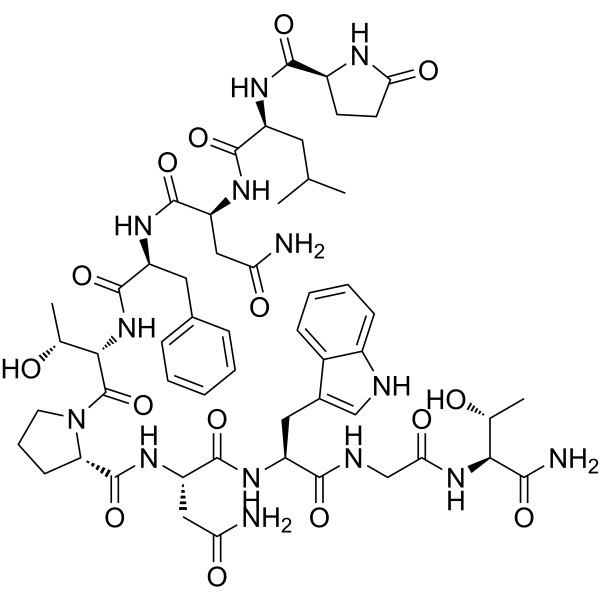
Adipokinetic hormone I (Locusta migratoria) (Lom-AKH-I) is a insect adipokinetic hormone (AKH), enhances fat body cAMP levels in vitro. Insect adipokinetic hormones (AKHs) controls flight-directed mobilization of carbohydrate and lipid from fat body stores, which depends on AKH receptor(s) coupling to cAMP formation and glycogen phosphorylase activation via the stimulatory guanine nucleotide-binding protein (Gs) .
loading...
    loading...
Cat. No.: HY-115527
CAS No.: 902891-37-6
Target:  

SHP2

Research Areas:  

Cancer

SHP244 is a conformational inhibitor targeting the "latch allosteric site" (site 2) of the SHP2 protein with an IC50 value for SHP2 WT of 60 μM. SHP244 has no significant effect on the level of p-ERK alone. SHP244 combined with RMC-4550 (HY-116009) ("tunnel site" site 1 inhibitor) can reduce p-ERK and inhibit the rebound of p-ERK, thereby reducing drug resistance. SHP244 can be used to study drug resistance in FGFR-driven cancers .
loading...
    loading...
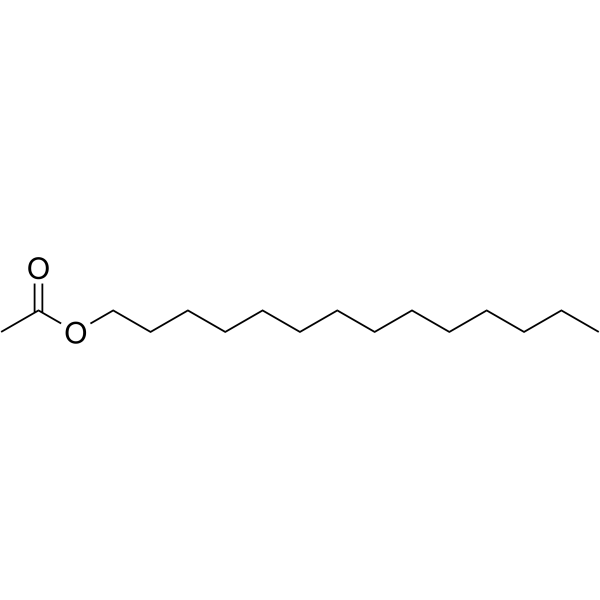
Cat. No.: HY-W042284
CAS No.: 638-59-5
Synonyms: Myristyl acetate
Tetradecyl (Myristyl) acetate is a native sex pheromone component of Yponomeuta rorellus. Tetradecyl acetate elicits orientation behaviour, upwind flight, and landing at the odour source in male Yponomeuta rorellus. Tetradecyl acetate can be used in research on insecticides .
loading...
    loading...
Cat. No.: HY-157469
Synonyms: NPD3064
Target:  

HIV

Research Areas:  

Infection

TNT-i (NPD3064) is an inhibitor targeting M-Sec. TNT-i inhibits M-Sec-induced tunneling nanotube (TNT) formation reversibly. TNT-i reduces wild-type HIV-1 production in macrophages and M-Sec-expressing T cells. TNT-i shows low cytotoxic effects on macrophages and T cells. TNT-i can be used for the research of HIV-1 infection .
loading...
    loading...
Cat. No.: HY-165127
CAS No.: 20197-09-5
Synonyms: (+)-Octopinic acid
Target:  

Others

Research Areas:  

Others

Octopinic acid ((+)-Octopinic acid) is a biomarker (opine) for plant crown gall or hairy root disease detected by ultra-performance liquid chromatography-electrospray ionization quadrupole time-of-flight mass spectrometry with activity useful for disease diagnosis and analysis.
loading...
    loading...
Cat. No.: HY-166051
CAS No.: 68820-32-6
Synonyms: Z4-11Al; (Z)-4-Undecenal
Research Areas:  

Others

4 (Z)-Undecenal (Z4-11Al; (Z)-4-Undecenal) is a volatile aldehyde sex pheromone produced by female Drosophila melanogaster, acting as an agonist to activate the Drosophila olfactory receptor Or69aB and eliciting flight attraction and courtship behavior in Drosophila. 4 (Z)-Undecenal also activates human OR2W1, binding to its binding site through hydrophobic interactions and hydrogen bonds. 4 (Z)-Undecenal can be used in research related to olfactory receptors and insect pheromones .
loading...
    loading...
Cat. No.: HY-W778833
CAS No.: 62972-93-4
Target:  

Others

(Z)-11-Octadecen-1-ol is a marking secretion deposited by wasps on repeated flight paths, isolated from the paired labial glands of North American male bumblebees .
loading...
    loading...
Cat. No.: HY-183782
Target:  

Antibiotic Bacterial

Research Areas:  

Infection

SA1103064 is a potent antibiotic with antibacterial activity against multiple resistant bacterial strains. SA1103064 binds to the bacterial ribosome's nascent peptide exit tunnel. SA1103064 can be used for the research of bacterial infections .
loading...
    loading...
Cat. No.: HY-183936
Target:  

SHP2 p38 MAPK ERK

Research Areas:  

Cancer

SDUY127 is a bivalent SHP2 inhibitor with an IC50 value of 16 nM. SDUY127 binds simultaneously to the tunnel allosteric site and latch allosteric site of SHP2 at a 1:1 stoichiometric ratio, stabilizes the protein in an inactive conformation, and induces sustained inhibition of the MAPK signaling pathway. SDUY127 can be used in research related to leukemia and hepatocellular carcinoma .
loading...
    loading...
Cat. No.: HY-189684
Target:  

CETP

Research Areas:  

Cardiovascular Disease

CETP-IN-5 is a CETP inhibitor with an IC50 of 75.54 nM. CETP-IN-5 is predicted by computer simulation to bind the central hydrophobic tunnel and restrict the lipid transfer pathway, thereby inhibiting neutral lipid transfer. CETP-IN-5 shows an inhibitory effect that increases with increasing N-alkyl ester chain length, with the longest-chain N-alkyl ester exhibiting the highest activity. CETP-IN-5 can be used for research on cardiovascular diseases .
loading...
    loading...

