229 Results for "

fluorescent imaging probe

" in MedChemExpress (MCE) Product Catalog:
Products (229)

229 Results for "fluorescent imaging probe" in MCE Product Catalog:

38
38 Publications Verification
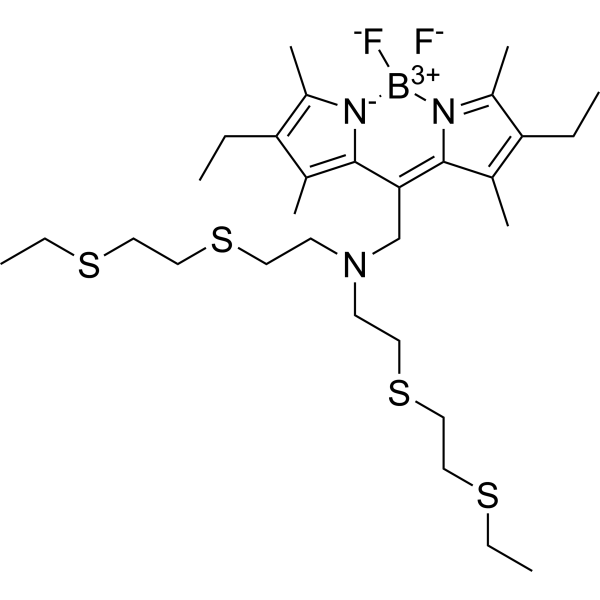
Cat. No.: HY-141511
CAS No.: 874748-20-6
Purity:  97.74%
Coppersensor-1 (CS1) is a membrane-permeable fluorescent dye. Coppersensor-1 has a picomolar affinity for Cu + with high selectivity over competing cellular metalions. Coppersensor-1 as a probe, can selective and sensitive detection of copper(I) ions (Cu +) in biological samples, including live cells. Coppersensor-1 can be used for the research of imaging of severe diseases such as cancer, cardiovascular disorders and neurogenerative diseases .
loading...
    loading...
14
14 Cited Publications
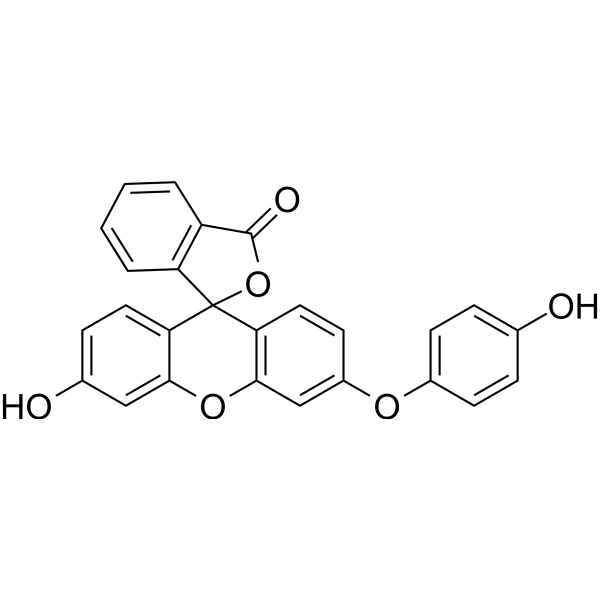
Cat. No.: HY-111330
CAS No.: 359010-69-8
Purity:  99.91%
Synonyms: HPF; 3'-p-(Hydroxyphenyl) fluorescein
Hydroxyphenyl Fluorescein (HPF) is a stable ROS fluorescent probe dye. Hydroxyphenyl Fluorescein has stronger specificity and stability than H2DCFDA (HY-D0940). Hydroxyphenyl Fluorescein can produce strong green fluorescence through hydroxyl radical reaction with intracellular peroxynitroso. Hydroxyphenyl Fluorescein can be applied for fluorescence microscopy, high-throughput imager, luciferase microplate reader or flow cytometry. Ex/Em=490/515 nm .
loading...
    loading...
11
11 Cited Publications
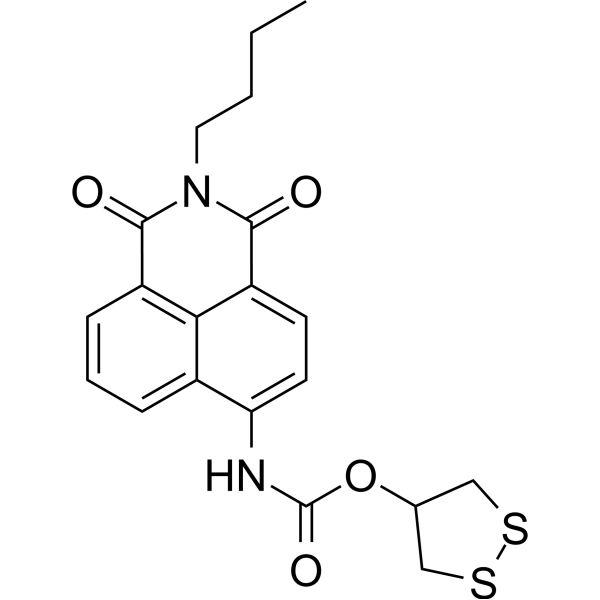
Cat. No.: HY-115640
CAS No.: 1513848-14-0
Purity:  95.02%
Target:  

TrxR

Research Areas:  

Others

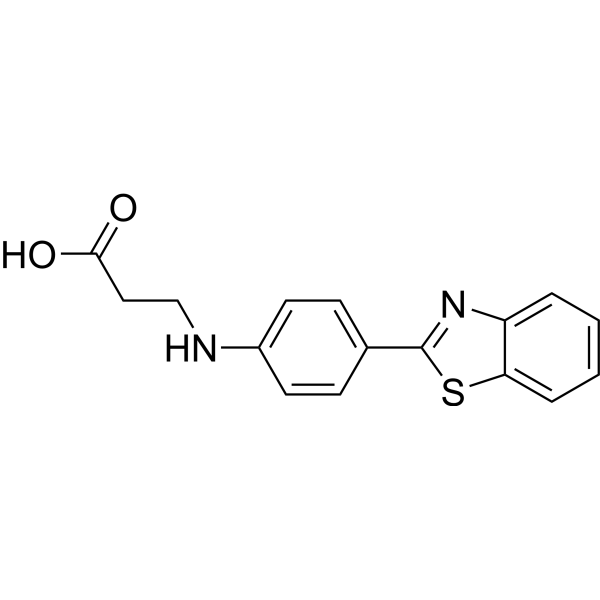
TRFS-green is a highly selective off−on fluorescent probe for imaging selenoprotein thioredoxin reductase (TrxR) in living cells. TRFS-green has the maximum absorbance at around 373 nm. After it is activated by TrxR, the maximum absorbance shifts to around 440 nm .
loading...
    loading...
7
7 Cited Publications
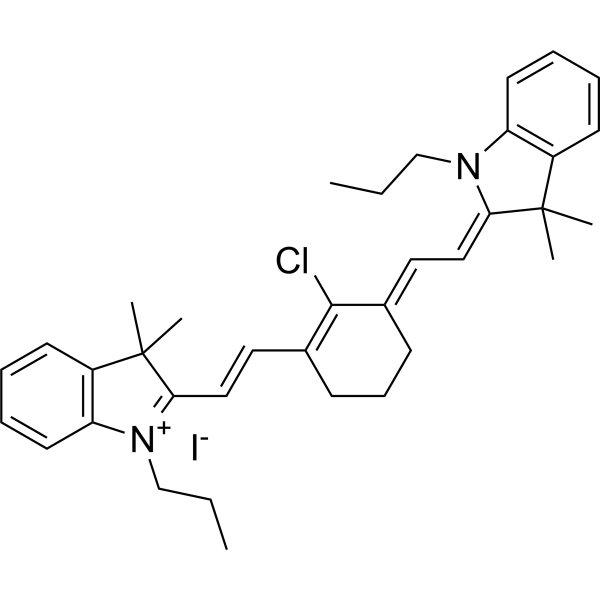
Cat. No.: HY-D1063
CAS No.: 207399-07-3
IR-780 is a near-infrared fluorescent probe for in vivo imaging of tumor cells. IR-780 is transported into tumor cells via OATPs and ABCB10, with uptake dependent on glycolytic activity and plasma membrane potential. IR-780 preferentially accumulates in tumor cell mitochondria, including those of drug-resistant cancer cells, without chemical conjugation. IR-780 generates reactive oxygen species (ROS), induces hyperthermia and apoptosis, inhibits tumor growth and recurrence, and modulates HSP70 expression upon ultrasound or 808 nm laser exposure. IR-780 acts as a sonosensitizer, photodynamic and photothermal agent, and drug delivery carrier, with low acute imaging-dose toxicity and rapid vital organ clearance. IR-780 can be used for the research of cancer, such as breast cancer, lung cancer, and non-small cell lung cancer (NSCLC) .
loading...
    loading...
3
3 Cited Publications
Cat. No.: HY-D1583
CAS No.: 2360411-64-7
Synonyms: DBCO-Cy5 hexafluorophosphate; Cyanine5 dibenzocyclooctyne hexafluorophosphate
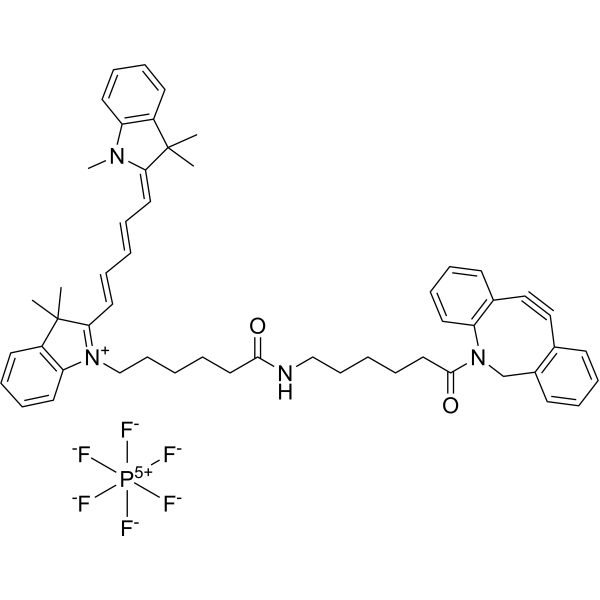
Cyanine5 DBCO (DBCO-Cy5) hexafluorophosphate is a low-toxicity azide reactive probe (NIR fluorescent dye), for imaging azide-labeled biomolecules via a copper-free "click-through" reaction. Cyanine5 DBCO hexafluorophosphate has no apparent cytotoxicity or animal toxicity and shows no damage to the physiological functions of cells other than the target cells (azide-labeled cells). Cyanine5 DBCO hexafluorophosphate can be used to label and track cells in vitro and in vivo (Ex=635 nm, Em=650-700 nm) .
loading...
    loading...
2
2 Cited Publications
Cat. No.: HY-130015
Purity:  98.99%
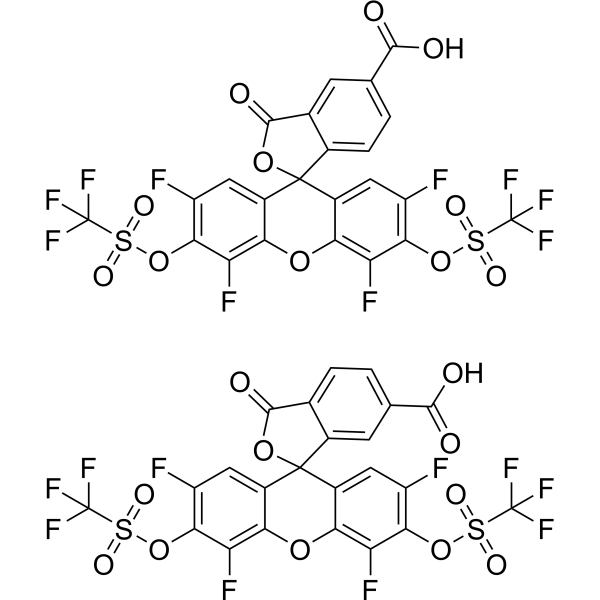
HKSOX-1 (5/6-mixture) is a fluorescent probe which is used for imaging and detection of endogenous superoxide in live cells and in vivo. HKSOX-1 (5/6-mixture) exhibits excellent selectivity and sensitivity towards superoxide anion radical (Ex/Em = 509/534 nm) .
loading...
    loading...
2
2 Cited Publications
Cat. No.: HY-D1265
CAS No.: 2929446-76-2
Synonyms: HClO-green
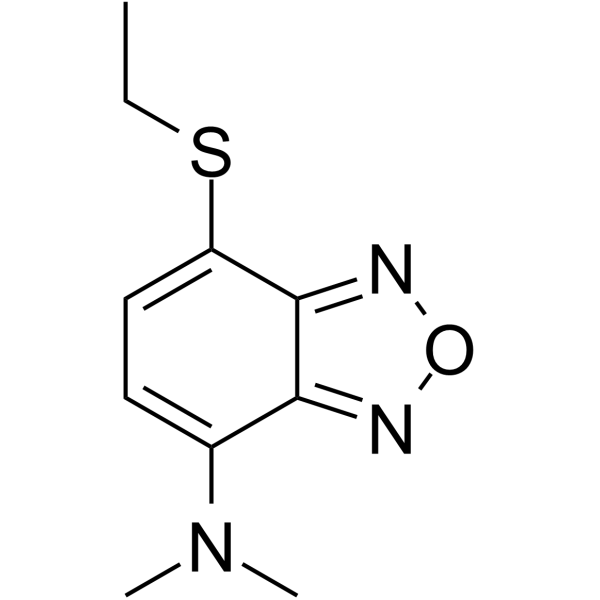
EtS-DMAB (HClO-green) is a fluorescent probe, which can selectively detect hypochlorous acid (HOCl) (λex=440 nm, λem=610 nm). EtS-DMAB is applied to image exogenous and endogenous HOCl in live cells .
loading...
    loading...
2
2 Cited Publications
Cat. No.: HY-D1412
CAS No.: 1448846-35-2
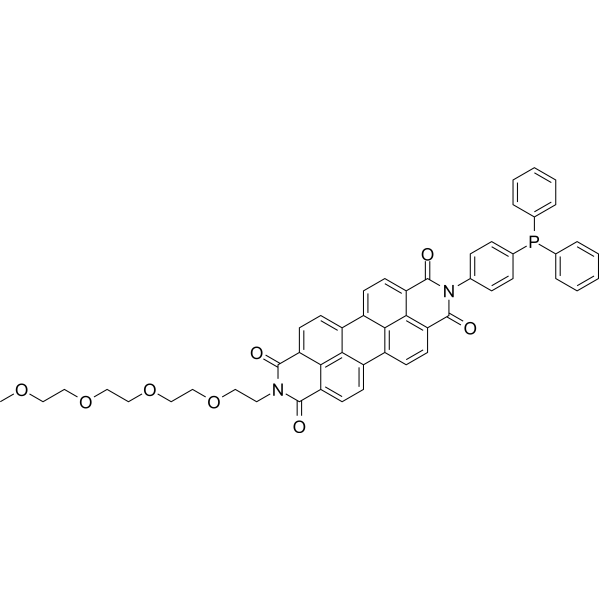
LPd peroxida probe-1, a marker of ferroptosis, is a useful fluorescent probe for investigating the roles of lipid peroxidation in a variety of cell pathophysiologies. LPd peroxida probe-1 reduces lipid hydroperoxides to lipid alcohols and is used for imaging lipid hydroperoxides in living cells .
loading...
    loading...
2
2 Cited Publications
Cat. No.: HY-156404
CAS No.: 1449483-78-6
Purity:  99.04%
PM-1, a derivative of Thioflavin-T (ThT; HY-D0218), is a small but highly specific plasma membrane (PM) fluorescent dye for specific and long-time membrane imaging of living and fixed cells. PM-1 is embedded directly into the cell membrane and exhibits a very long retention time on the plasma membrane with a half-life of approximately 15 h. PM-1 can be used in combination with protein labeling probes to study ectodomain shedding and endocytosis processes of cell surface proteins .
loading...
    loading...
1
1 Cited Publications
Cat. No.: HY-D1041
CAS No.: 1622335-40-3
Synonyms: ICG-OSu
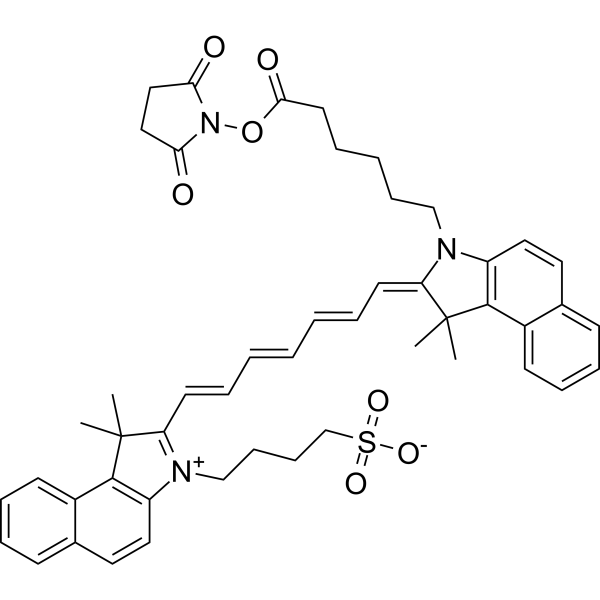
ICG NHS ester (ICG-OSu) is a near-infrared fluorescent agent ICG derivative. ICG NHS ester is amine-reactive and has been widely used to design in vivo imaging probes .
loading...
    loading...
1
1 Cited Publications
Cat. No.: HY-D1464
CAS No.: 1622250-38-7
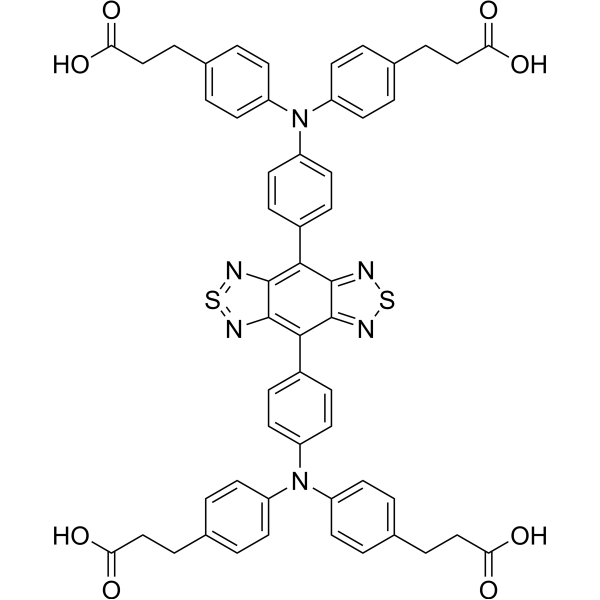
CH1055 is a near-infrared II (NIR-II) fluorescent dye that can be used as a fluorescent probe for in vivo imaging. CH1055 can be conjugated with antibodies or ligands for specific imaging (for example the tumor imaging) .
loading...
    loading...
1
1 Cited Publications
Cat. No.: HY-D1244
CAS No.: 1043865-37-7
CO probe 1 (probe 2) is a highly efficient fluorescent CO probe (Ex=493 nm) with an allyl ether reaction site. In the presence of PdCl₂, CO reduces Pd 2+ to Pd 0, triggering a Tsuji-Trost reaction that removes the allyl protecting group, releases fluorescein, and generates a significant fluorescence signal. CO probe 1 has high selectivity, rapid response (fluorescence enhancement of 150 times within 20 minutes), and low cytotoxicity, and can be used for real-time imaging of CO in living cells. CO probe 1 may be used to study pathological mechanisms involving CO signaling regulation, such as inflammation, vascular disease, or cancer .
loading...
    loading...
1
1 Cited Publications
Cat. No.: HY-D1719
CAS No.: 95837-47-1
Target:  

Fluorescent Dye

Research Areas:  

Others

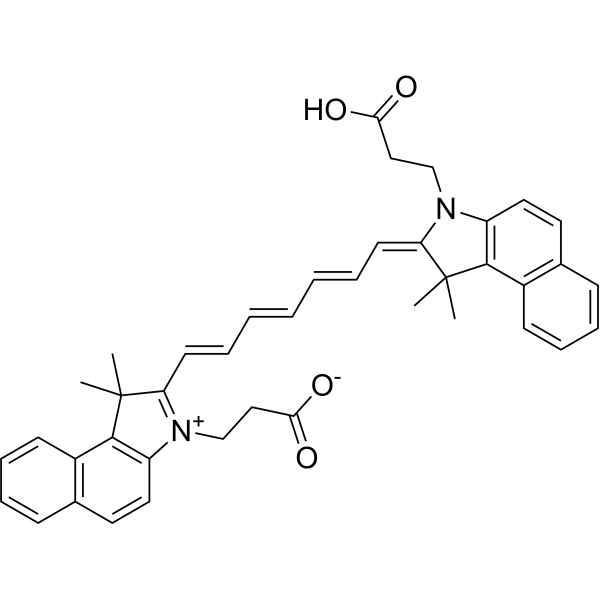
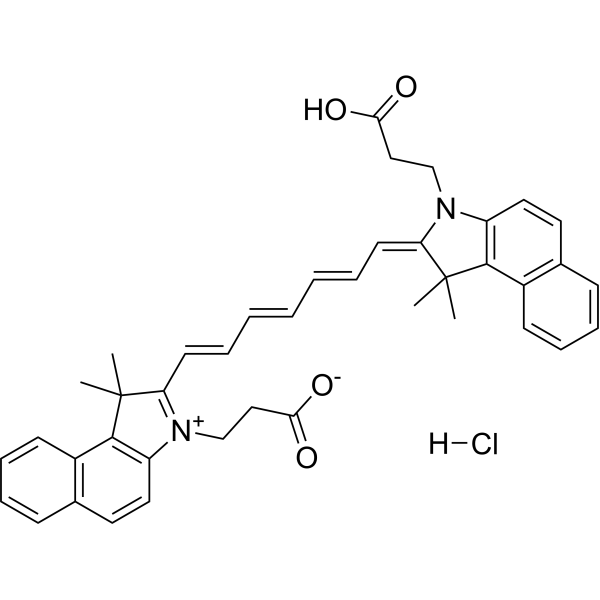
Cypate, a cyanine dye, is a near infrared (NIR) fluorescent probe for in vivo tumor imaging .
loading...
    loading...
1
1 Cited Publications
Cat. No.: HY-D0029
CAS No.: 27599-63-9
Synonyms: 5(6)-AFM; Fluoresceinamine mixed isomers
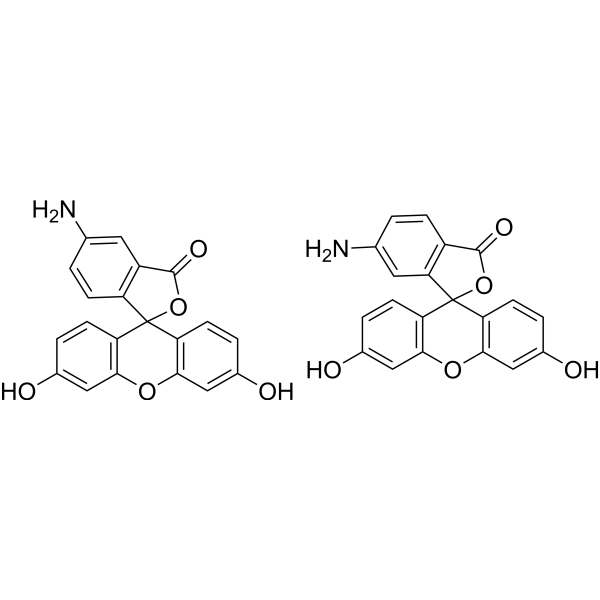
5(6)-Aminofluorescein (5(6)-AFM) is an amino-containing fluorescein dye primarily used for biomolecular labeling, fluorescence imaging, and as a precursor for the synthesis of fluorescent probes (Ex/Em = 495/515 nm).
loading...
    loading...
1
1 Cited Publications
Cat. No.: HY-D1719A
Target:  

Fluorescent Dye

Research Areas:  

Cancer

Cypate is a near-infrared fluorescent dye that belongs to the family of photosensitizers. Cypate has high photostability and optical properties, and is often used in near-infrared optical imaging, as well as optical imaging, tumor marking, and drug delivery. In addition, Cypate is also used as a molecular probe and combined with targeting molecules (such as CBT or small interfering RNA) to achieve efficient detection and imaging of specific cells or tissues .
loading...
    loading...
1
1 Cited Publications
Cat. No.: HY-D1464A
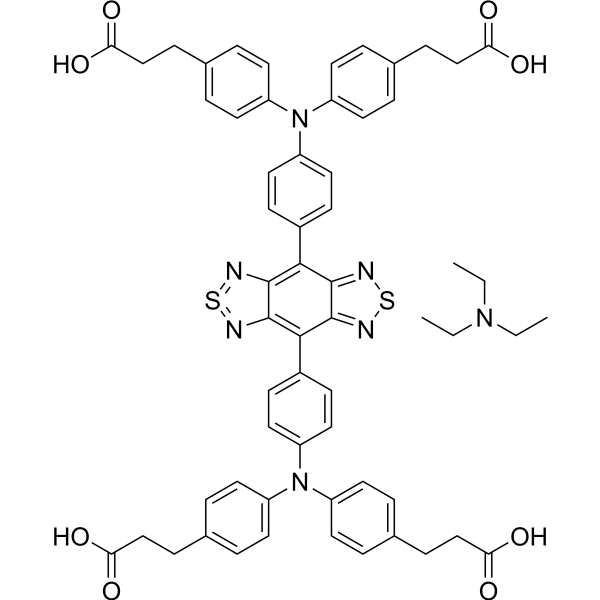
CH1055 triethylamine is a near-infrared II (NIR-II) fluorescent dye that can be used as a fluorescent probe for in vivo imaging. CH1055 triethylamine can be conjugated with antibodies or ligands for specific imaging (for example the tumor imaging) .
loading...
    loading...
1
1 Cited Publications
Cat. No.: HY-D3004
CAS No.: 1888323-45-2
GSH Tracker Probe (CPDSA) is a cyanine-based fluorescent probe with a NIR emission that is specific for GSH (excitation: 635 nm; emission: 655-755 nm). CPDSA can monitor and image GSH levels in live cells and in vivo .
loading...
    loading...
1
1 Cited Publications
Cat. No.: HY-D3025
Synonyms: HSA-FITC
Target:  

Fluorescent Dye

Research Areas:  

Cancer

Human Serum Albumin-FITC (HSA-FITC) is a green fluorescent probe prepared by covalent conjugation of FITC with human serum albumin (HSA), with excitation/emission wavelengths of 488/505-550 nm. Human Serum Albumin-FITC (HSA-FITC) can be used to track nanotube conjugates taken up via caveolae-mediated endocytosis initiated by Gp60 receptor binding, and can also non-covalently adsorb to oxidized multi-walled carbon nanotubes. Human Serum Albumin-FITC (HSA-FITC) is widely applied in macrophage imaging, scavenger receptor targeting, and hepatoma cell imaging .
loading...
    loading...
1
1 Cited Publications
Cat. No.: HY-100335
CAS No.: 1022899-36-0
Purity:  ≥98.0%
Target:  

Fluorescent Dye Btk

Research Areas:  

Cancer

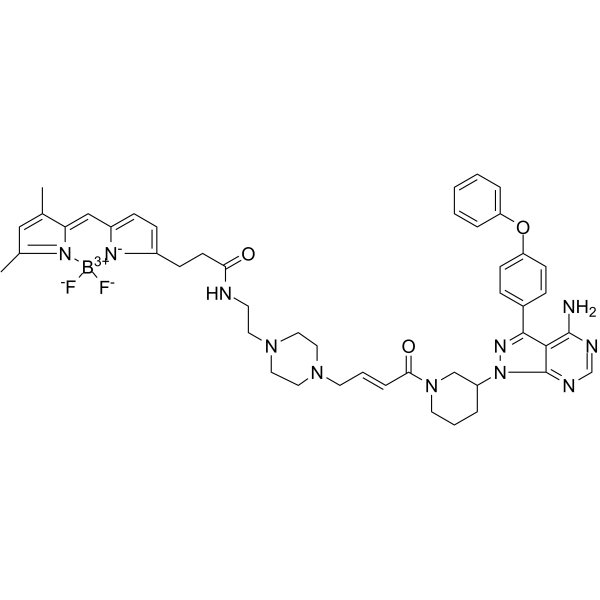
PCI-33380 is a fluorescent probe ( (Ex=532 nm, Em=555 nm). PCI-33380 consists of a (BTK) inhibitor PCI-32765 (HY-10997) attaching with a Bodipy-FL fluorophore via a piperazine linker. PCI-33380 binds predominantly to Btk in B cell lysates with cell permeable activity. PCI-33380 can be used for imaging live cancer cells such as non-Hodgkin lymphoma research
loading...
    loading...
Cat. No.: HY-145746
CAS No.: 1782950-80-4
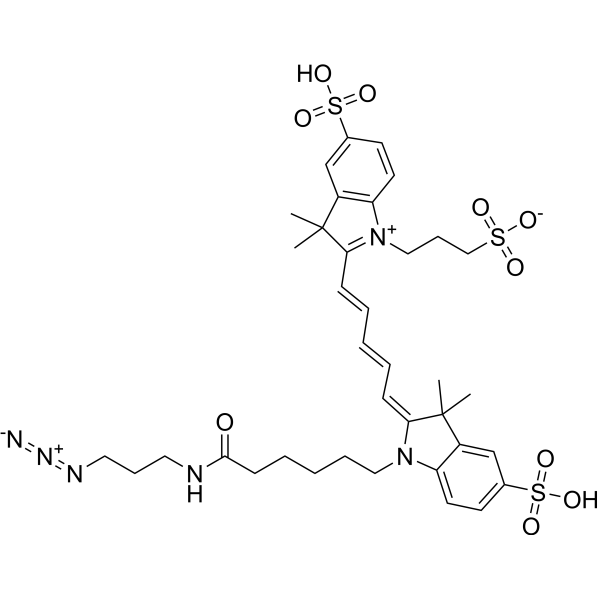
Sulfo-Cy5 azide is a near-infrared fluorescent probe with favorable click chemistry reactivity. Sulfo-Cy5 azide enables fluorescence imaging, tissue and cellular visualization of PD-L1 in tumors, and site-specific modification of anti-PD-L1 antibodies. Sulfo-Cy5 azide has been employed for RNA labeling and imaging. Sulfo-Cy5 azide can be conjugated to targeting agents for fluorescence imaging in atherosclerosis and breast cancer models (Ex/Em = 645/670 nm) .
loading...
    loading...

