15 Results for "

genome editing

" in MedChemExpress (MCE) Product Catalog:
Products (15)

15 Results for "genome editing" in MCE Product Catalog:

2
2 Cited Publications
Cat. No.: HY-19334
CAS No.: 159182-43-1
Target:  

Adrenergic Receptor

Research Areas:  

Endocrinology Cancer

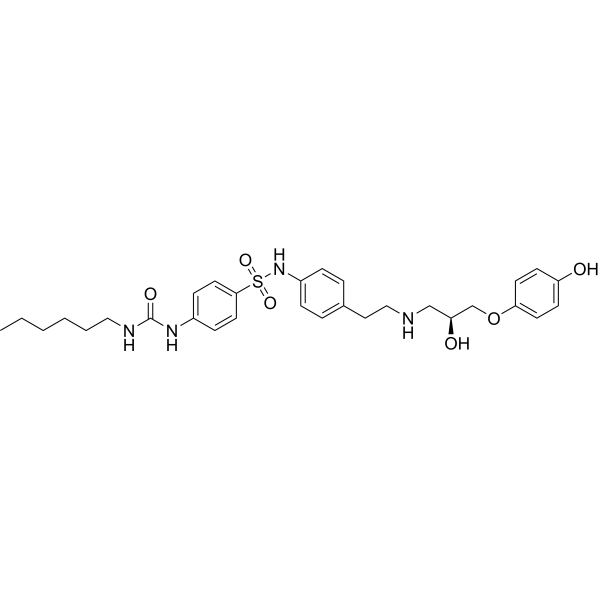
L755507 is a potent, selective agonist of β3-AR with an IC50 of 35 nM. L755507 enhances the homology-directed repair (HDR)-mediated genome editing .
loading...
    loading...
1
1 Cited Publications
Cat. No.: HY-159078
CAS No.: 2607139-80-8
Purity:  98.42%
Target:  

DNA/RNA Synthesis

Research Areas:  

Cancer

PolQi1 is a selective inhibitor targeting the Polθ domain of DNA polymerase. PolQi1 inhibits the Polθ-mediated microhomology end joining (TMEJ/alt-EJ) pathway, reducing insertion/deletion (Indels) and imprecise editing events during DNA repair. PolQi1 can enhance the efficiency and accuracy of homology-directed repair (HDR) or Prime editing, and reduce off-target effects; and in combination with DNA-PK inhibitor AZD-7648 (HY-111783), exert efficient genome editing capabilities with dual pathway regulation. PolQi1 can be mainly used in gene editing research (such as CRISPR-Cas9 or Prime editing system optimization) to improve the precision editing efficiency of difficult-to-edit cells (such as primary hepatocytes and mouse embryos) .
loading...
    loading...
Cat. No.: HY-P5307
Synonyms: INF7-A5K-TAT
Research Areas:  

Others

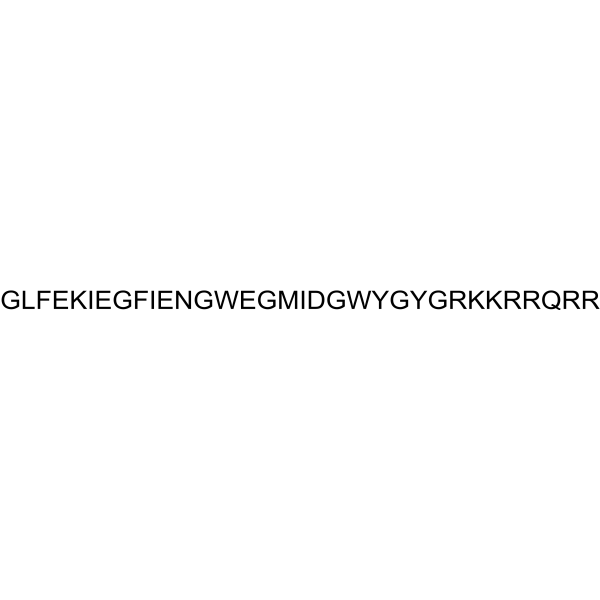
Peptide A5K (INF7-A5K-TAT) is an amphiphilic peptide derived from the HA2-TAT fusion scaffold. Peptide A5K can non-covalently bind to CRISPR ribonucleoproteins and efficiently deliver them to cells, such as primary human T cells, B cells, and NK cells. Peptide A5K enables low-toxicity, precise, and multiplex genome editing, holding great application potential in the field of cell therapy .
loading...
    loading...
Cat. No.: HY-139306
CAS No.: 2490668-30-7
Purity:  ≥98.0%
Target:  

Liposome

Research Areas:  

Inflammation/Immunology

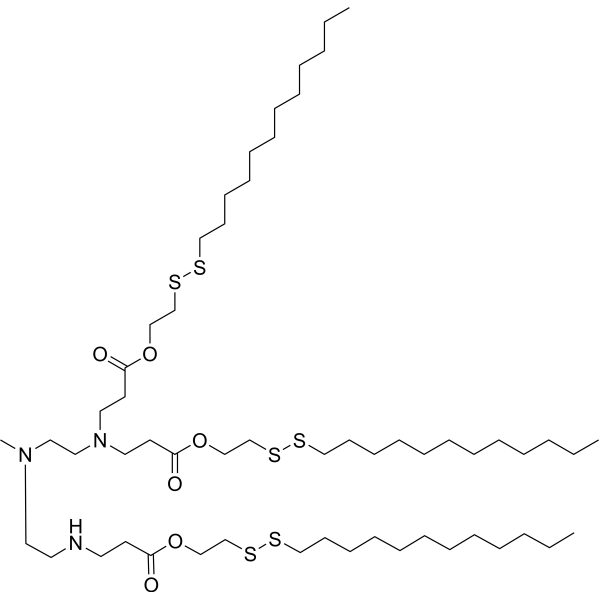
BAMEAO16B is a lipid nanoparticle. BAMEAO16B integrated with disulfide bonds, can efficiently deliver Cas9 mRNA and sgRNA into cells while releasing RNA in response to the reductive intracellular environment for genome editing. BAMEAO16B can be used for the research of gene editing .
loading...
    loading...
Cat. No.: HY-P10999
Synonyms: P55
Research Areas:  

Others

INF7TAT-P55 (P55) is a polypeptide derived from INF7TAT (HY-P11000) with G1K, G20L and Y22N mutations. INF7TAT-P55 serves as a delivery carrier to deliver preassembled CRISPR ribonucleases into cells for genome editing .
loading...
    loading...
Cat. No.: HY-P11000
Research Areas:  

Others

INF7TAT is an amphipathic cell-penetrating peptide that mediates intracellular delivery of CRISPR ribonucleoproteins. INF7TAT achieves endosomal escape via the INF7 fragment and cell binding via the TAT fragment. It enables intracellular delivery into primary human T cells and hematopoietic stem and progenitor cells, facilitating gene knockout and AAV-mediated homology-directed repair. INF7TAT can be used for genome editing-related research .
loading...
    loading...
Cat. No.: HY-P5307A
Synonyms: INF7-A5K-TAT acetate
Research Areas:  

Others

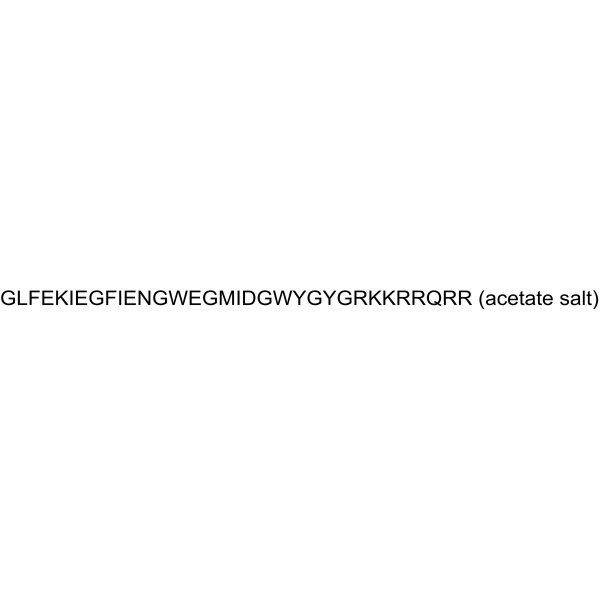
Peptide A5K (INF7-A5K-TAT) acetate is an amphiphilic peptide derived from the HA2-TAT fusion scaffold. Peptide A5K acetate can non-covalently bind to CRISPR ribonucleoproteins and efficiently deliver them to cells, such as primary human T cells, B cells, and NK cells. Peptide A5K acetate enables low-toxicity, precise, and multiplex genome editing, holding great application potential in the field of cell therapy .
loading...
    loading...
Cat. No.: HY-174499
Target:  

mRNA

Research Areas:  

Others

Cas9 Nickase D10A mRNA expresses a version of the Streptococcus pyogenes SF370 Cas9 protein (CRISPR Associated Protein 9) that contains a D10A amino acid substitution. This mRNA also contains a C-terminal nuclear localization signal followed by a HA tag.Cas9 functions as part of the CRISPR (clustered regularly interspaced short palindromic repeats) genome editing system. In the CRISPR system, an RNA guide sequence targets the site of interest and the Cas9 protein is employed to perform the DNA cleavage. While wild-type Cas9 creates a double-stranded break at the target site, Cas9 nickase creates a single-stranded break. This favors homology-directed repair and decreases the occurrence of non-homologous end joining.
loading...
    loading...
Cat. No.: HY-165604
CAS No.: 2639634-82-3
Target:  

Liposome

Research Areas:  

Others

C14-490 is an ionizable cationic lipid used for the formulation of lipid nanoparticles (LNPs) for mRNA delivery. C14-490 LNPs can be surface-functionalized with CD45 antibodies to enable targeted delivery to hematopoietic stem cells (HSCs), mediate efficient mRNA delivery and CRISPR-Cas9 gene editing in fetal HSCs in utero, with potent and durable genome modulation in HSCs and their progeny. C14-490 is a key component of the Systematically optimized Targeted Editing Machinery (STEM) LNPs for in vivo HSC gene editing applications .
loading...
    loading...
Cat. No.: HY-185956
Target:  

mRNA

Research Areas:  

Others

eSpCas9 mRNA (N1-methyl-pseudouridine) is a high-fidelity version of SpCas9 with lower off-target rates while maintaining high targeted genome editing efficiency.
loading...
    loading...
Cat. No.: HY-185965
Target:  

mRNA

Research Areas:  

Others

MAD7 mRNA (N1-methyl-pseudouridine) encodes the nuclease MAD7. MAD7 requires only crRNA to achieve gene editing and can specifically target AT-rich regions in the genome. Furthermore, MAD7 cuts DNA through mismatch cleavage.
loading...
    loading...
Cat. No.: HY-L244
767 compounds

In this era of rapid advancement in gene-editing technology, the CRISPR-Cas system, with its powerful programmability, is leading a transformation in life sciences research. It enables efficient and precise targeted modification of an organism's genome, providing a robust tool for studying gene function, treating genetic diseases, and improving crop varieties. However, bottlenecks such as insufficient editing efficiency, low homologous directed repair efficiency, and potential off-target risks remain major challenges in achieving precise genetic modifications and developing gene therapies.

To overcome these limitations, the MCE High-Efficiency Gene Editing Compound Library systematically includes 767 small molecules that are known or have the potential to enhance gene-editing efficiency. These compounds work by targeting and modulating the DNA damage repair network, mechanistically inhibiting non-homologous end joining, promoting homologous directed repair, or regulating chromatin states and cellular responses, thereby significantly optimizing editing outcomes. This library is suitable for developing "CRISPR-small molecule" combination therapy strategies, improving gene-editing efficiency, and providing a powerful tool for in-depth research into the mechanisms of DNA damage repair in gene editing.

Cat. No.: HY-P10999A
Synonyms: P55 acetate
Research Areas:  

Others

INF7TAT-P55 acetate (P55 acetate) is a polypeptide derived from INF7TAT (HY-P11000) with G1K, G20L and Y22N mutations. INF7TAT-P55 acetate serves as a delivery carrier to deliver preassembled CRISPR ribonucleases into cells for genome editing .
loading...
    loading...
Cat. No.: HY-K1043A

MCE Polyamine Supplement (1000×) can be used as a component of the CEPT Cocktail in combination with Emricasan, Chroman 1, and trans-ISRIB to enhance the survival of pluripotent stem cells (PSCs) and promote single-cell clonal expansion. In addition, this supplement improves the viability of PSCs and their differentiated derivatives during cryopreservation, organoid culture, single-cell cloning, and genome editing, thereby enhancing the robustness and reproducibility of downstream applications.

loading...
    loading...
Cat. No.: HY-P11000A
Research Areas:  

Others

INF7TAT acetate is an amphipathic cell-penetrating peptide that mediates intracellular delivery of CRISPR ribonucleoproteins. INF7TAT acetate achieves endosomal escape via the INF7 fragment and cell binding via the TAT fragment. It enables intracellular delivery into primary human T cells and hematopoietic stem and progenitor cells, facilitating gene knockout and AAV-mediated homology-directed repair. INF7TAT acetate can be used for genome editing-related research .
loading...
    loading...
  • 1

