43 Results for "

glass

" in MedChemExpress (MCE) Product Catalog:
Products (43)

43 Results for "glass" in MCE Product Catalog:

Cat. No.: HY-NP161
Synonyms: MAP
Mussel Adhesive Protein (MAP) is a mussel-derived mucin. Mussel Adhesive Protein can be formulated into a waterproof, eco-safe adhesive that bonds materials such as glass, plastic, metal and wood to bones or teeth, biological organisms, and other chemicals or molecules .
loading...
    loading...
Cat. No.: HY-W013807
CAS No.: 109-43-3
Synonyms: Dibutyl decanedioate
Research Areas:  

Others

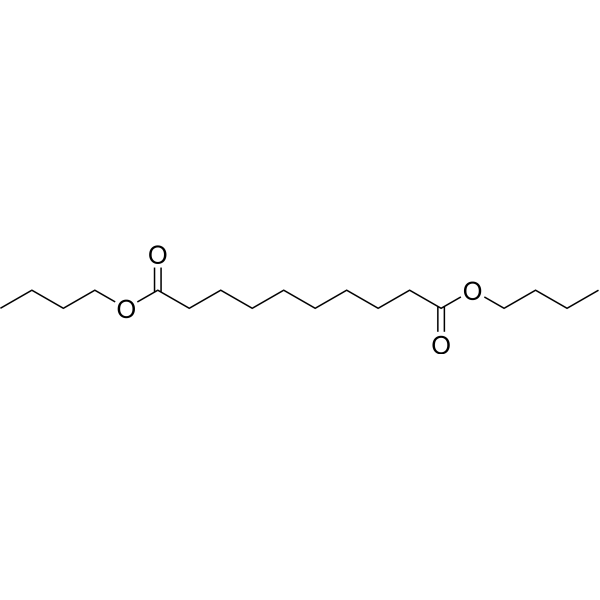
Dibutyl sebacate (Dibutyl decanedioate) is a PVC eco-friendly plasticizer. Dibutyl sebacate plasticizes Eudragit RS 30D, reducing the glass transition temperature and minimum film-forming temperature for sustained-release coatings, with no aging effect .
loading...
    loading...
Cat. No.: HY-W1123939C
Silane-PEG5000-COOH can be used to modify proteins, peptides and other materials with active groups. The carboxyl group (-COOH) can easily form a stable amide bond with the amino group, and can also form an ester bond with the hydroxyl group. Silane-functionalized PEG (Silane-PEG-X) can be used to modify glass, silicon, etc .
loading...
    loading...
Cat. No.: HY-W248118
CAS No.: 121461-69-6
Synonyms: PM556
Target:  

Fluorescent Dye

Research Areas:  

Others

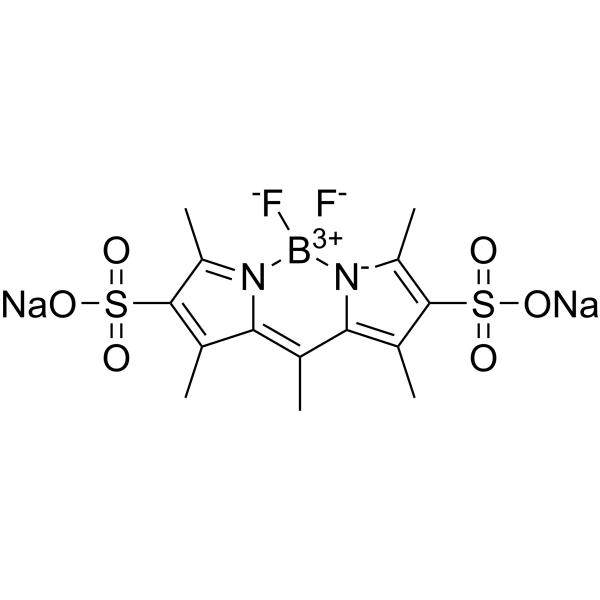
Pyrromethene 556 (PM556) is a fluorescent dipyrromethene-BF2 complex laser dye. Pyrromethene 556 enables immediate and reversible color changes in conventional glass ionomer restorative materials, while it does not cause persistent, visually detectable color changes in other restorative materials .
loading...
    loading...
Cat. No.: HY-W013807R
CAS No.: 109-43-3
Synonyms: Dibutyl decanedioate (Standard)
Research Areas:  

Others

Dibutyl sebacate (Standard) (Dibutyl decanedioate (Standard)) is the analytical standard of Dibutyl sebacate (HY-W013807). This product is intended for research and analytical applications. Dibutyl sebacate (Dibutyl decanedioate) is a PVC eco-friendly plasticizer. Dibutyl sebacate plasticizes Eudragit RS 30D, reducing the glass transition temperature and minimum film-forming temperature for sustained-release coatings, with no aging effect .
loading...
    loading...
Cat. No.: HY-174955B
mPEG5000-Silane is a PEG derivative containing silane that can be used to modify glass, silicon or other surfaces by reacting the hydroxyl groups with ethoxy (methoxy) silane .
loading...
    loading...
Cat. No.: HY-125830
CAS No.: 1664293-06-4
Research Areas:  

Others

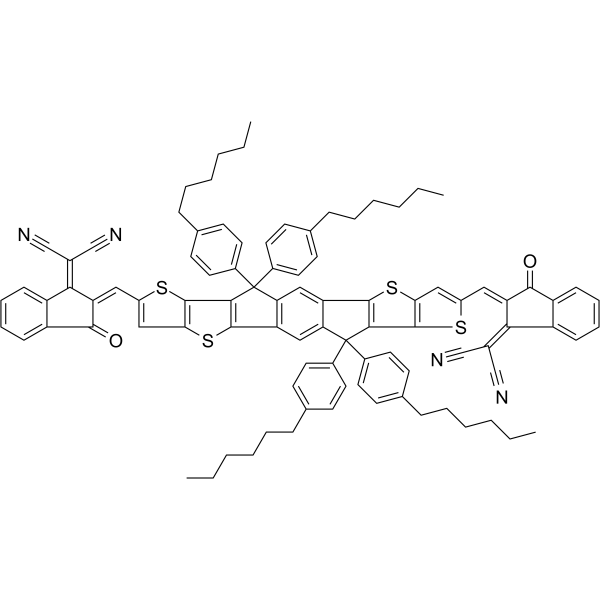
ITIC, non-fullerene acceptor, is an indacenodithienothiophene-based postfullerene electron acceptor, crystallizes in a profoundly different way as compared to fullerenes. ITIC has a superior thermal stability and undergoes a glass-crystal transition considerably below its high Tg of 180 °C.
loading...
    loading...
Cat. No.: HY-174955A
Research Areas:  

Others

mPEG2000-Silane is a PEGylated methoxy polyethylene glycol silane surface passivation reagent. mPEG2000-Silane is used on the glass surface of the iNTA measurement chamber and on the chamber coverslip prior to SARS-CoV-2 measurement .
loading...
    loading...
Cat. No.: HY-D1545
CAS No.: 6252-76-2
Synonyms: Acid Violet 9
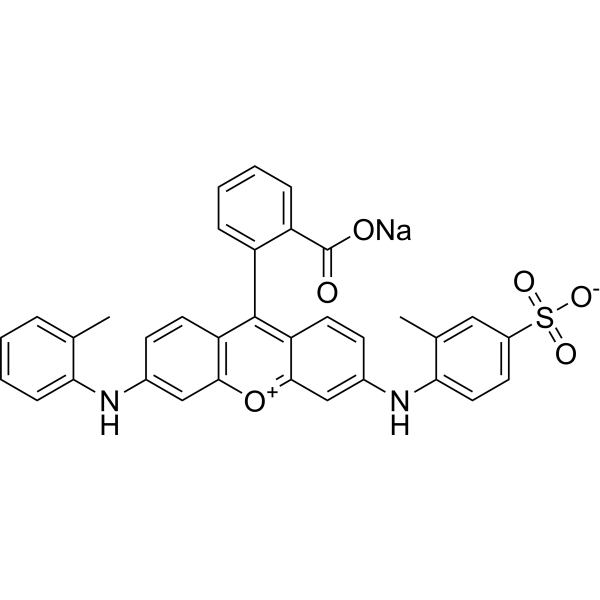
Violamine R (Acid Violet 9) is a potent fluorophore. Violamine R shows environment and temperature-dependent photoluminescence (PL) intermittency in poly(vinyl alcohol) (PVOH) and potassium acid phthalate (KAP). Violamine R can be used to measure the temperatures spanning the glass-transition temperature (Tg) of the polymer host by the fluorescence intermittency or blinking in poly(vinyl alcohol) (PVA) .
loading...
    loading...
Cat. No.: HY-W034392
CAS No.: 927429-61-6
Stewart-Grubbs catalyst is an effective catalyst for the cross-metathesis of olefins with a large number of allylic substituents. In addition, ChemBeads are chemically coated glass beads that improve flowability and chemical homogeneity, making them ideal for automated solid dispensing and high-throughput experiments. Notably, the manufacture of ChemBeads does not require additional chemicals or surfactants, allowing for precise dispensing of sub-milligram amounts of catalyst.
loading...
    loading...
Cat. No.: HY-174970D
Synonyms: Silane-PEG3400-azide
Silane-PEG3400-N3 (Silane-PEG3400-azide) is a PEG derivative composed of silane, PEG units, and azide groups, which can be used to modify glass, silicon, or other surfaces by reacting hydroxyl groups with ethoxy (methoxy) silanes. Silane-PEG3400-N3 contains an azide group and can undergo copper-catalyzed azide-alkyne cycloaddition (CuAAc) with molecules containing alkyne groups. It can also undergo ring strain-driven alkyne-azide cycloaddition (SPAAC) with molecules containing DBCO or BCN groups .
loading...
    loading...
Cat. No.: HY-173249
Poly-L-lysine, succinylated (MW >50000) is a cationic polymer that can be used to fix cells on glass substrates or negatively charged substrates, and succinylation modification can be used for subsequent coupling.
loading...
    loading...
Cat. No.: HY-174955
mPEG1000-Silane is a PEG derivative containing silane that can be used to modify glass, silicon or other surfaces by reacting the hydroxyl groups with ethoxy (methoxy) silane .
loading...
    loading...
Cat. No.: HY-174958A
6-Arm-PEG600-Silane is a silane-modified PEG derivative that can be used to modify glass, silicon or other surfaces by reacting hydroxyl groups with ethoxy (methoxy) silane. PEG can inhibit nonspecific surface binding .
loading...
    loading...
Cat. No.: HY-174958B
6-Arm-PEG1000-Silane is a silane-modified PEG derivative that can be used to modify glass, silicon or other surfaces by reacting hydroxyl groups with ethoxy (methoxy) silane. PEG can inhibit nonspecific surface binding .
loading...
    loading...
Cat. No.: HY-174971C
4-Arm-PEG20000-Silane is a silane-modified PEG derivative that can be used to modify glass, silicon or other surfaces by reacting hydroxyl groups with ethoxy (methoxy) silane. PEG can inhibit nonspecific surface binding .
loading...
    loading...
Cat. No.: HY-173241
Poly-L-lysine-Ahx-FITC (MW 15000-30000) is a cationic polymer, which is a polylysine modified with FITC (HY-66019). Poly-L-lysine-Ahx-FITC (MW 15000-30000) is used to fix cells on glass substrates or negatively charged substrates for subsequent labeling and localization experiments.
loading...
    loading...
Cat. No.: HY-173241A
Poly-L-lysine-Ahx-FITC (MW 30000-70000) is a cationic polymer, which is a polylysine modified with FITC (HY-66019). Poly-L-lysine-Ahx-FITC (MW 30000-70000) is used to fix cells on glass substrates or negatively charged substrates for subsequent labeling and localization experiments.
loading...
    loading...
Cat. No.: HY-W1123939
Silane-PEG-COOH (MW 1000) can be used to modify proteins, peptides and other materials with active groups. The carboxyl group (-COOH) can easily form a stable amide bond with the amino group, and can also form an ester bond with the hydroxyl group. Silane-functionalized PEG (Silane-PEG-X) can be used to modify glass, silicon, etc .
loading...
    loading...
Cat. No.: HY-174969
Alkyne-PEG1000-Silane is a PEG derivative composed of silane, PEG, and alkynyl groups. Alkyne-PEG1000-Silane is a click chemistry reagent. It contains an Alkyne group, which can undergo copper-catalyzed azide-alkyne cycloaddition reaction (CuAAc) with molecules containing an Azide group. The Silane group enables Alkyne-PEG1000-Silane to modify surfaces such as glass and silicon .
loading...
    loading...

