18 Results for "

grass weed

" in MedChemExpress (MCE) Product Catalog:
Products (18)

18 Results for "grass weed" in MCE Product Catalog:

Cat. No.: HY-B2050
CAS No.: 1582-09-8
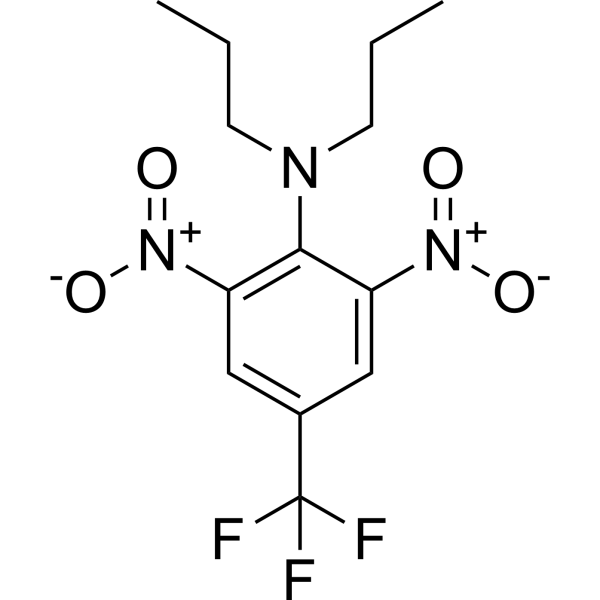
Trifluralin is a selective, preemergence, soil-applied herbicide providing control of many important annual grass and broadleaf weed species. Trifluralin prevents weed growth by inhibiting root development through the interruption of mitosis. Trifluralin binds to tubulin and results in the failure of spindle apparatus and cell plate formation. Trifluralin inhibits radicle development on roots. Trifluralin inhibits cell mitosis. Trifluralin is considered to be neurotoxic and haematotoxic .
loading...
    loading...
Cat. No.: HY-136375
CAS No.: 21725-46-2
Purity:  99.73%
Research Areas:  

Others

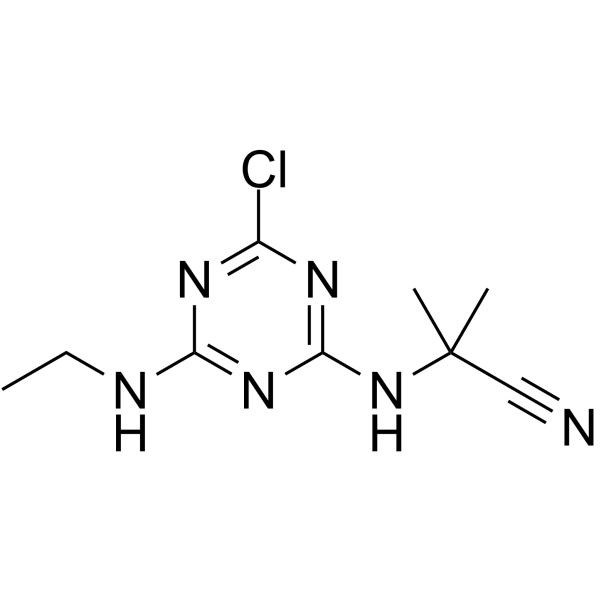
Cyanazine, a triazine herbicide cyanazine, is used to control a variety of grass weeds and broadleaf weed. Cyanazine is proved non-genotoxic .
loading...
    loading...
Cat. No.: HY-135745
CAS No.: 122836-35-5
Purity:  99.92%
Research Areas:  

Others

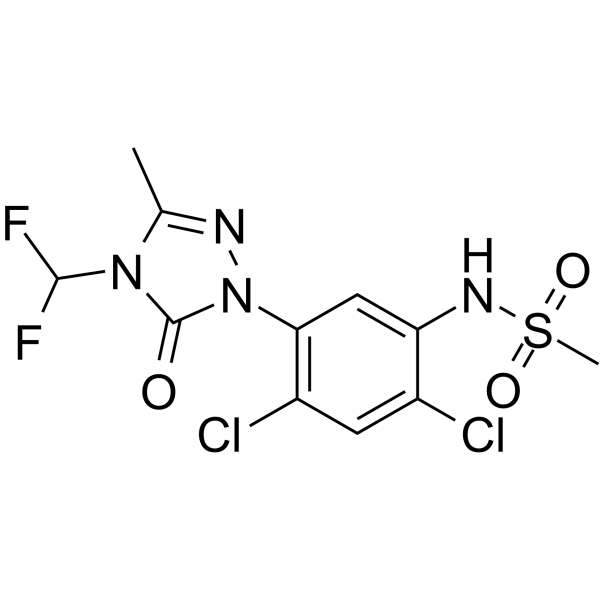
Sulfentrazone is a phenyl triazolinone herbicide used for control of certain broadleaf and grass weed species. Sulfentrazone inhibits protoporphyrinogen oxidase, resulting in the disruption of lipid cell membranes .
loading...
    loading...
Cat. No.: HY-136633R
CAS No.: 447399-55-5
Research Areas:  

Others

Pyroxasulfone (Standard) is the analytical standard of Pyroxasulfone. This product is intended for research and analytical applications. Pyroxasulfone is a broad-spectrum pyrazole herbicide used primarily for all-season residual weed control in corn and soybeans. Pyroxasulfone is active against a variety of annual grasses and some broad-leaved weeds, and can be absorbed through roots and stems to inhibit early seedling growth of sensitive plants. Pyroxasulfone can be used to study herbicide effects and weed resistance .
loading...
    loading...
Cat. No.: HY-136375S
CAS No.: 1190003-29-2
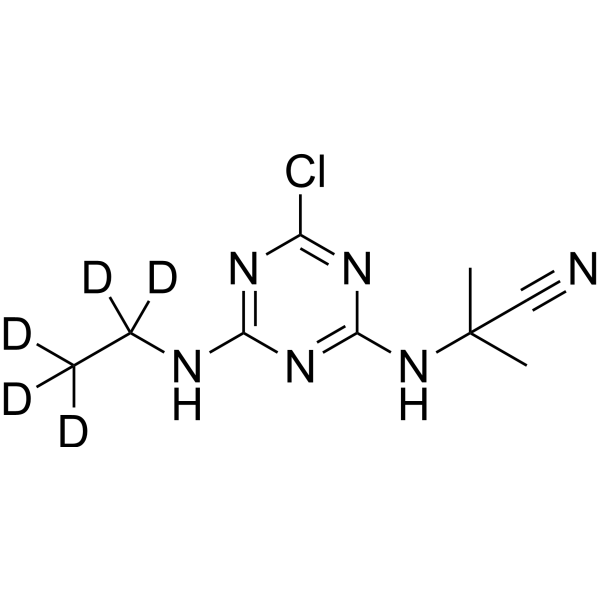
Cyanazine-d5 is deuterium labeled Cyanazine. Cyanazine, a triazine herbicide cyanazine, is used to control a variety of grass weeds and broadleaf weed. Cyanazine is proved non-genotoxic .
loading...
    loading...
Cat. No.: HY-136375R
CAS No.: 21725-46-2
Research Areas:  

Others

Cyanazine (Standard) is the analytical standard of Cyanazine. This product is intended for research and analytical applications. Cyanazine, a triazine herbicide cyanazine, is used to control a variety of grass weeds and broadleaf weed. Cyanazine is proved non-genotoxic .
loading...
    loading...
Cat. No.: HY-135745R
CAS No.: 122836-35-5
Research Areas:  

Others

Sulfentrazone (Standard) is the analytical standard of Sulfentrazone. This product is intended for research and analytical applications. Sulfentrazone is a phenyl triazolinone herbicide used for control of certain broadleaf and grass weed species. Sulfentrazone inhibits protoporphyrinogen oxidase, resulting in the disruption of lipid cell membranes .
loading...
    loading...
Cat. No.: HY-117142
CAS No.: 94051-08-8
Research Areas:  

Others

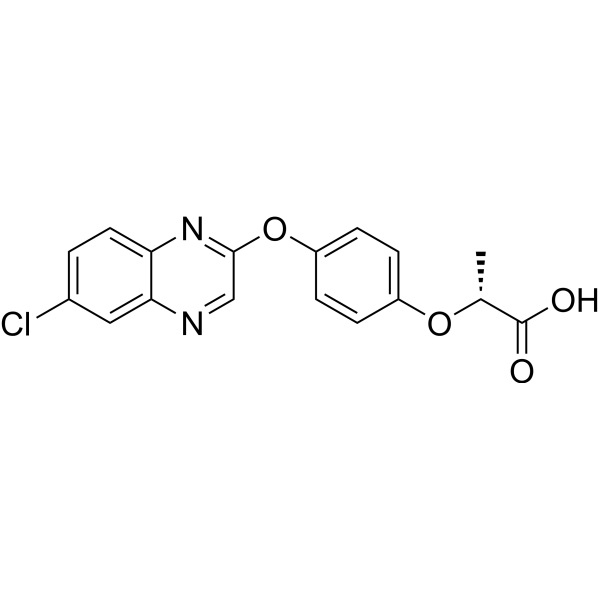
Quizalofop-P is absorbed through weed stems and leaves, conducts upward and downward in plants, accumulates at the top and intermediate meristems, inhibits cellular fatty acid synthesis, and makes weeds necrotic. Quizalofop-P is highly selective between grass weeds and dicotyledonous crops .
loading...
    loading...
Cat. No.: HY-B2050S
CAS No.: 347841-79-6
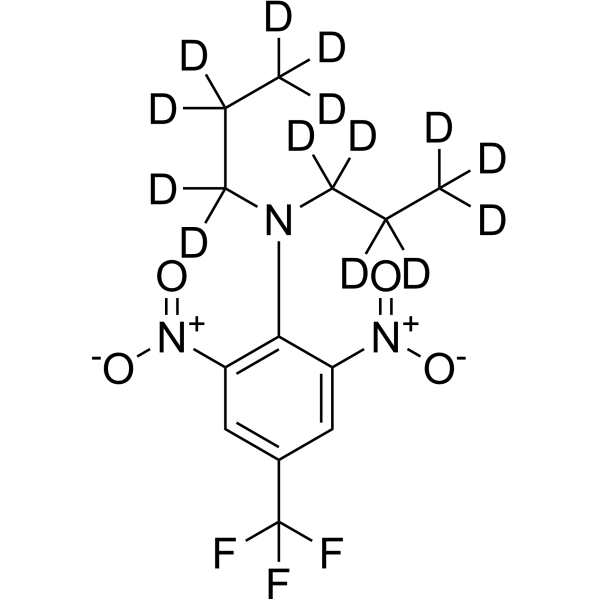
Trifluralin-d14 is the deuterium labeled Trifluralin. Trifluralin is a selective, preemergence, soil-applied herbicide providing control of many important annual grass and broadleaf weed species. Trifluralin prevents weed growth by inhibiting root development through the interruption of mitosis. Trifluralin binds to tubulin and results in the failure of spindle apparatus and cell plate formation. Trifluralin inhibits radicle development on roots. Trifluralin inhibits cell mitosis. Trifluralin is considered to be neurotoxic and haematotoxic .
loading...
    loading...
Cat. No.: HY-B2050R
CAS No.: 1582-09-8
Research Areas:  

Others

Trifluralin (Standard) is the analytical standard of Trifluralin. This product is intended for research and analytical applications. Trifluralin is a selective, preemergence, soil-applied herbicide providing control of many important annual grass and broadleaf weed species. Trifluralin prevents weed growth by inhibiting root development through the interruption of mitosis. Trifluralin binds to tubulin and results in the failure of spindle apparatus and cell plate formation. Trifluralin inhibits radicle development on roots. Trifluralin inhibits cell mitosis. Trifluralin is considered to be neurotoxic and haematotoxic .
loading...
    loading...
Cat. No.: HY-W874850
CAS No.: 15457-05-3
Target:  

Herbicide

Fluorodifen is a selective herbicide with the activity of inhibiting weed growth. Fluorodifen can effectively control the growth of various annual and perennial broadleaf weeds and some grass weeds, and is widely used in the field management of various crops. By acting on the photosynthesis of plants and the regulation of their growth hormones, Fluorodifen ensures the healthy growth and harvest of crops.
loading...
    loading...
Cat. No.: HY-117142R
CAS No.: 94051-08-8
Research Areas:  

Others

Quizalofop-P (Standard) is the analytical standard of Quizalofop-P. This product is intended for research and analytical applications. Quizalofop-P is absorbed through weed stems and leaves, conducts upward and downward in plants, accumulates at the top and intermediate meristems, inhibits cellular fatty acid synthesis, and makes weeds necrotic. Quizalofop-P is highly selective between grass weeds and dicotyledonous crops .
loading...
    loading...
Cat. No.: HY-187659
CAS No.: 38725-95-0
Research Areas:  

Others

Diethatyl is a pre-planting and pre-emergence herbicide, which is a metabolite of diethatyl-ethyl. Diethatyl reduces competition by inhibiting weed growth, and is mainly used to control annual grass weeds, broadleaf weeds and Cyperus rotundus in crop fields such as sugar beet, spinach and cotton. Diethatyl can be used in research related to agricultural weed control .
loading...
    loading...
Cat. No.: HY-W841955
CAS No.: 55807-46-0
Synonyms: SSH-41
Target:  

Herbicide

Research Areas:  

Others

Monisouron (SSH-41) is a herbicide. Monisouron shows post-emergence control effects on various broad-leaved and grass weeds, and selectivity for barley, pea and maize. Monisouron is promising for research of weed control .
loading...
    loading...
Cat. No.: HY-W014793R
CAS No.: 41394-05-2
Research Areas:  

Others

Metamitron (Standard) is the analytical standard of Metamitron (HY-W014793). This product is intended for research and analytical applications. Metamitron is a triazone herbicide that can be used for pre- and post-emergence weed control of broadleaf weeds and grasses in sugar beet .
loading...
    loading...
Cat. No.: HY-189463
Target:  

Herbicide

Research Areas:  

Others

PPO-IN-27 is an NtPPO inhibitor (IC50 = 14.31 nM) that exerts herbicidal activity by inhibiting protoporphyrinogen oxidase in chlorophyll and heme biosynthesis, and is effective against both broadleaf weeds and grass weeds. PPO-IN-27 can be used for research on weed control .
loading...
    loading...
Cat. No.: HY-W874850R
CAS No.: 15457-05-3
Fluorodifen (Standard) is the analytical standard of Fluorodifen. This product is intended for research and analytical applications. Fluorodifen is a selective herbicide with the activity of inhibiting weed growth. Fluorodifen can effectively control the growth of various annual and perennial broadleaf weeds and some grass weeds, and is widely used in the field management of various crops. By acting on the photosynthesis of plants and the regulation of their growth hormones, Fluorodifen ensures the healthy growth and harvest of crops.
loading...
    loading...
Cat. No.: HY-184988
CAS No.: 3123222-14-7
Target:  

Herbicide HPPD

Research Areas:  

Metabolic Disease

HPPD-IN-10 is an inhibitor of Arabidopsis thaliana 4-hydroxyphenylpyruvate dioxygenase (HPPD), with an IC50 of 0.06 μM and a Kd of 0.265 μM. HPPD-IN-10 blocks the HPPD-mediated catalytic conversion of 4-hydroxyphenylpyruvate, downregulates the biosynthesis of plastoquinone and tocopherol, induces weed bleaching, and inhibits root and shoot growth. HPPD-IN-10 can be used in herbicide-related research on gramineous and broadleaf weeds in farmlands, such as barnyard grass and purslane .
loading...
    loading...
  • 1

