10 Results for "

homeostatic

" in MedChemExpress (MCE) Product Catalog:
Products (10)

10 Results for "homeostatic" in MCE Product Catalog:

54
54 Publications Verification
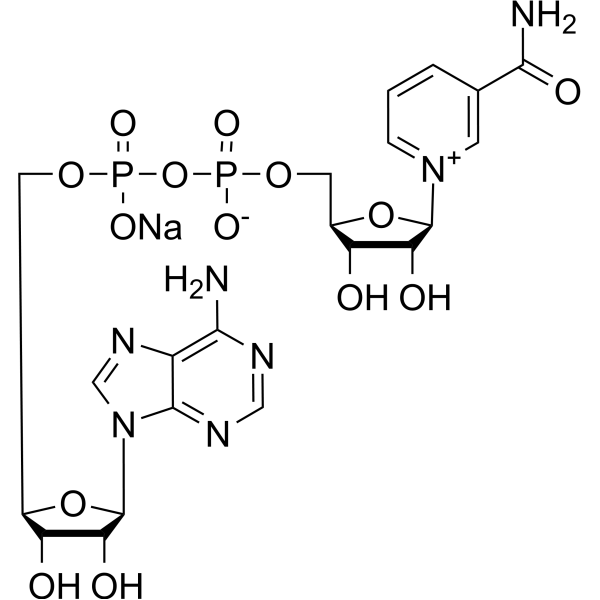
Cat. No.: HY-B0445A
CAS No.: 20111-18-6
Synonyms: β-DPN sodium; β-NAD sodium; β-Nicotinamide Adenine Dinucleotide sodium
NAD sodium is an orally effective cofactor and homeostatic regulator. NAD sodium can be reduced to β-nicotinamide adenine dinucleotide (NADH) during coupling with reactions that oxidize organic substrates. NAD sodium can be converted to β-nicotinamide adenine dinucleotide (NADH) and passes to the inside of mitochondria, which indirectly generates ATP. NAD sodium can be used for the research of non-alcoholic fatty liver disease, obesity, and glucose intolerance .
loading...
    loading...
1
1 Cited Publications
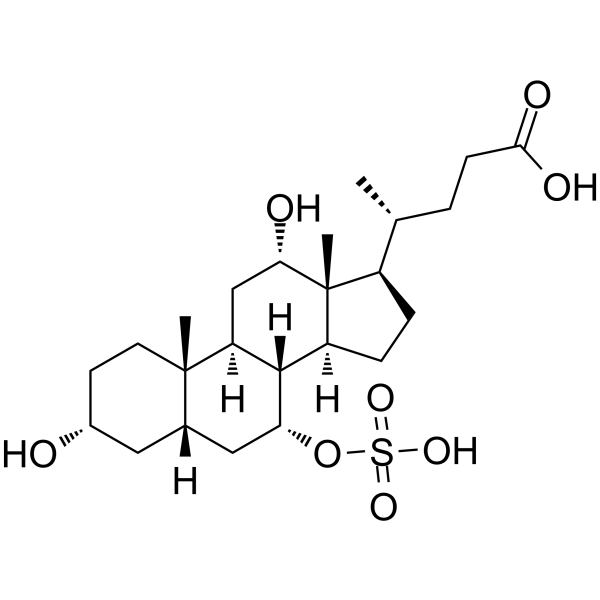
Cat. No.: HY-126855
CAS No.: 60320-05-0
Purity:  99.92%
Synonyms: 7-Sulfocholic acid
Cholic acid 7-sulfate (7-Sulfocholic acid) is a selective agonist targeting TGR5 (EC50=0.17 μM) and a ligand for MHC class I-related protein (MR1). As a gut-restricted TGR5 agonist, cholic acid 7-sulfate binds to TGR5 on enteroendocrine L cells, induces GLP-1 secretion, and improves glucose tolerance in a TGR5-dependent manner. Cholic acid 7-sulfate also acts as an endogenous ligand for MR1, promoting the survival of mucosal-associated invariant T cells MAIT and the expression of homeostatic gene signatures, affecting MAIT cell development and function. Cholic acid 7-sulfate is mainly used in the research of diabetes and MAIT cell-related immune regulation .
loading...
    loading...
1
1 Cited Publications
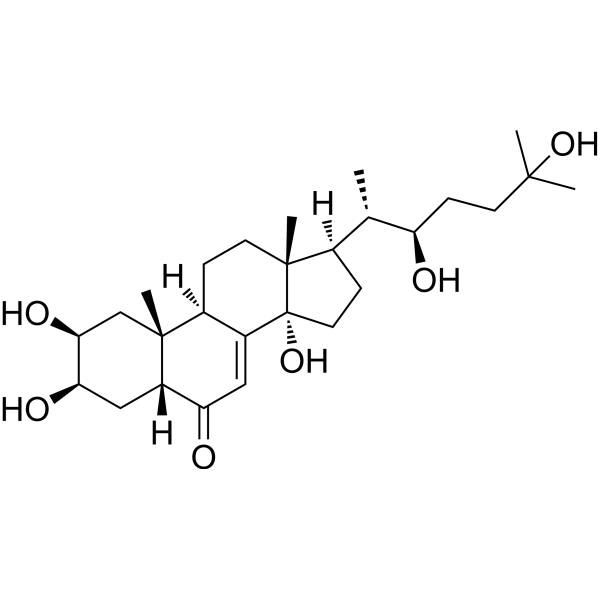
Cat. No.: HY-N0179
CAS No.: 3604-87-3
Synonyms: α-Ecdysone
Ecdysone (α-Ecdysone), a major steroid hormone in insects and herbs, triggers mineralocorticoid receptor (MR) activation and induces cellular apoptosis. Ecdysone plays essential roles in coordinating developmental transitions and homeostatic sleep regulation through its active metabolite 20-hydroxyecdysone (Crustecdysone; 20E; HY-N6979) .
loading...
    loading...
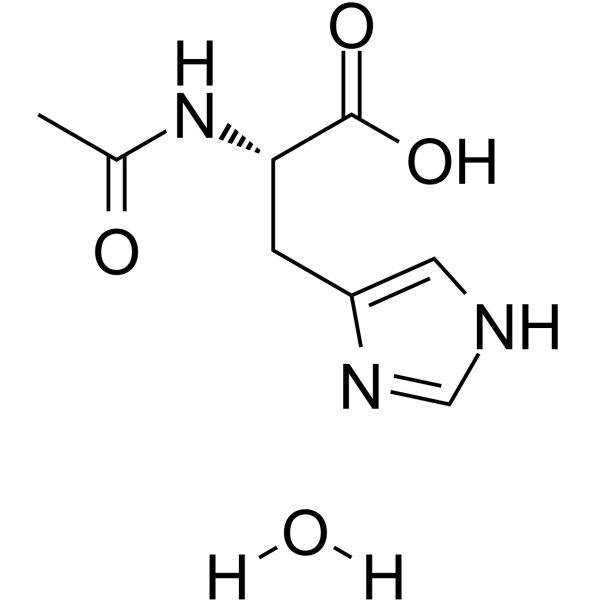
Cat. No.: HY-W014180
CAS No.: 39145-52-3
N-Acetylhistidine monohydrate is a compatible osmolyte in the brain, retina, and lens of poikilothermic vertebrates, and binds to E. coli HisJ with a Kd of 27 μM. N-Acetylhistidine monohydrate participates in the regulatory volume decrease process under hypotonic stress, assists cells in restoring homeostatic volume, and acts as a gradient-driven molecular water pump, exerting a protective effect against hypotonic swelling. N-Acetylhistidine monohydrate can be used in combination with glutamate to inhibit the cobalt-resistant postsynaptic component in the electroretinogram. N-Acetylhistidine monohydrate reduces Ca 2+-induced growth inhibition and restores cell growth. N-Acetylhistidine monohydrate can be used in research related to cataracts, diabetic distal symmetric polyneuropathy, and stroke .
loading...
    loading...
Cat. No.: HY-W588263
CAS No.: 57105-48-3
Synonyms: IAGlu
Target:  

Drug Derivative

Research Areas:  

Others

Indole-3-acetyl glutamate (IAGlu) is a derivative of the plant hormone indole-3-acetic acid (IAA). As a conjugated form of IAA, Indole-3-acetyl glutamate involves in the transport, storage, and homeostatic regulation of IAA within the plant. Indole-3-acetyl glutamate can be used for research into the effects of plant hormones on the growth and development of plants .
loading...
    loading...
Cat. No.: HY-W095697
CAS No.: 2497-02-1
N-Acetylhistidine is a compatible osmolyte in the brain, retina, and lens of poikilothermic vertebrates, and binds to E. coli HisJ with a Kd of 27 μM. N-Acetylhistidine participates in the regulatory volume decrease process under hypotonic stress, assists cells in restoring homeostatic volume, and acts as a gradient-driven molecular water pump, exerting a protective effect against hypotonic swelling. N-Acetylhistidine can be used in combination with glutamate to inhibit the cobalt-resistant postsynaptic component in the electroretinogram. N-Acetylhistidine reduces Ca 2+-induced growth inhibition and restores cell growth. N-Acetylhistidine can be used in research related to cataracts, diabetic distal symmetric polyneuropathy, and stroke .
loading...
    loading...
Cat. No.: HY-W588263S1
Synonyms: IAGlu-d4
Indole-3-acetyl glutamate-d4 (IAGlu-d4) is deuterium labeled Indole-3-acetyl glutamate. Indole-3-acetyl glutamate (IAGlu) is a derivative of the plant hormone indole-3-acetic acid (IAA). As a conjugated form of IAA, Indole-3-acetyl glutamate involves in the transport, storage, and homeostatic regulation of IAA within the plant. Indole-3-acetyl glutamate can be used for research into the effects of plant hormones on the growth and development of plants .
loading...
    loading...
Cat. No.: HY-126855S
CAS No.: 1332881-66-9
Synonyms: 7-Sulfocholic acid-d4
Cholic acid 7-sulfate-d4 (7-Sulfocholic acid-d4) is the deuterium labeled Cholic acid 7-sulfate (HY-126855). Cholic acid 7-sulfate is a selective agonist targeting TGR5 (EC50=0.17 μM) and a ligand for MHC class I-related protein (MR1). As a gut-restricted TGR5 agonist, cholic acid 7-sulfate binds to TGR5 on enteroendocrine L cells, induces GLP-1 secretion, and improves glucose tolerance in a TGR5-dependent manner. Cholic acid 7-sulfate also acts as an endogenous ligand for MR1, promoting the survival of mucosal-associated invariant T cells MAIT and the expression of homeostatic gene signatures, affecting MAIT cell development and function. Cholic acid 7-sulfate is mainly used in the research of diabetes and MAIT cell-related immune regulation .
loading...
    loading...
Cat. No.: HY-L265
562 compounds

Cholesterol is a crucial lipid that maintains cell membrane structure, serves as a precursor for the synthesis of steroid hormones and bile acids, and plays an important role in cell signal transduction and membrane function regulation. Intracellular cholesterol levels are precisely controlled by multiple processes, including synthesis, uptake, transport, esterification, storage, and efflux. Dysregulation of cholesterol metabolism is closely associated with diseases such as atherosclerosis, fatty liver disease, metabolic syndrome, and various cancers.

The Cholesterol Metabolism Compound Library contains 562 compounds and focuses on cholesterol metabolism and homeostatic regulation. It provides an efficient tool for mechanistic studies of cholesterol metabolism and for drug discovery in metabolism‑related diseases.

Cat. No.: HY-W014180R
CAS No.: 39145-52-3
N-Acetylhistidine monohydrate (Standard) is the analytical standard of N-Acetylhistidine (monohydrate) (HY-W014180). This product is intended for research and analytical applications. N-Acetylhistidine monohydrate is a compatible osmolyte in the brain, retina, and lens of poikilothermic vertebrates, and binds to E. coli HisJ with a Kd of 27 μM. N-Acetylhistidine monohydrate participates in the regulatory volume decrease process under hypotonic stress, assists cells in restoring homeostatic volume, and acts as a gradient-driven molecular water pump, exerting a protective effect against hypotonic swelling. N-Acetylhistidine monohydrate can be used in combination with glutamate to inhibit the cobalt-resistant postsynaptic component in the electroretinogram. N-Acetylhistidine monohydrate reduces Ca 2+-induced growth inhibition and restores cell growth. N-Acetylhistidine monohydrate can be used in research related to cataracts, diabetic distal symmetric polyneuropathy, and stroke .
loading...
    loading...

