12 Results for "

hyperactivation

" in MedChemExpress (MCE) Product Catalog:
Products (12)

12 Results for "hyperactivation" in MCE Product Catalog:

5
5 Cited Publications
Cat. No.: HY-N2255
CAS No.: 25127-29-1
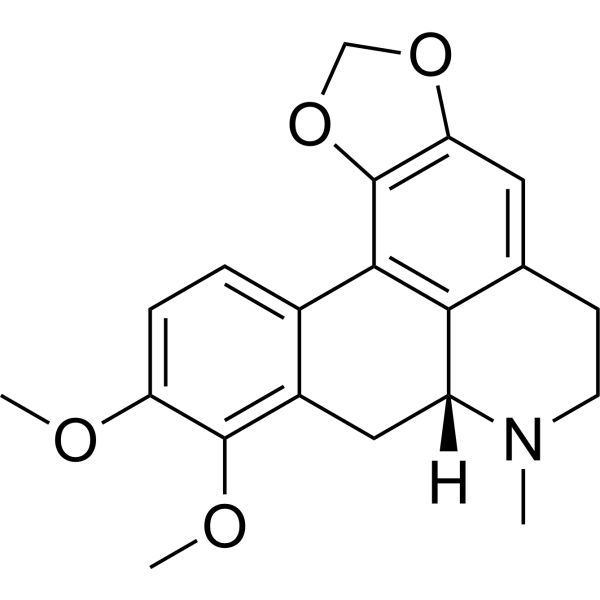
Crebanine is an isoquinoline-like alkaloid that can be derived from Stephania. Crebanine is an antagonist of the α7-nAChR with an IC50 of 19.1 μM. Crebanine suppresses the proliferation, migration, and invasion of cancer cells, triggers reactive oxygen species (ROS) burst, and promotes apoptosis. Crebanine inhibits the AKT/FoxO3a, NF-κB and MAPK signaling pathways. Crebanine attenuates NOX2 hyperactivation, exhibits antioxidant properties by reducing reactive oxygen species and peroxidation in microglia cells. Crebanine inhibits voltage-dependent Na + current in guinea-pig ventricular myocytes. Crebanine has high inhibitory activity against gram-positive animal pathogenic bacteria. Crebanine ameliorates ischemia-reperfusion brain damage in middle cerebral artery occlusion and reperfusion (MCAO/R) rats. Crebanine significantly improves Scopolamine (HY-N0296)-induced cognitive deficits in ICR mice. Crebanine can be used for the study of hepatocellular carcinoma (HCC), cerebral ischemia and Alzheimer's disease .
loading...
    loading...
3
3 Cited Publications
Cat. No.: HY-N8518
CAS No.: 63335-25-1
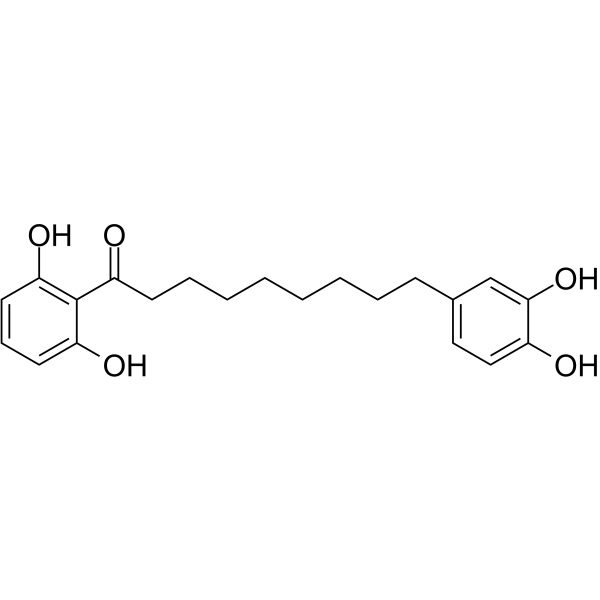
Malabaricone C is an orally active and noncompetitive sphingomyelin synthase (SMS) inhibitor with IC50 values of 3 μM and 1.5 μM for SMS 1 and SMS 2, respectively. Malabaricone C reduces body weight gain, improves glucose tolerance, and decreases lipid accumulation in the liver, showing significant prevention of high fat diet-induced fatty liver in mice. Malabaricone C has anti-inflammatory effects, which is found in the fruits of Myristica cinnamomea King. Malabaricone C is promising for research of obesity and immunological disorders caused due to hyper-activation of T-cells .
loading...
    loading...
Cat. No.: HY-141891
CAS No.: 1359431-16-5
Purity:  98.28%
Target:  

Wnt E1/E2/E3 Enzyme

Research Areas:  

Cancer

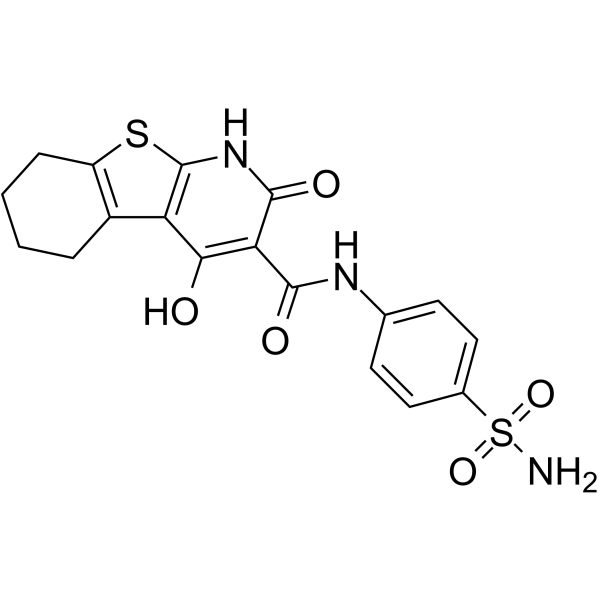
M435-1279 is a UBE2T inhibitor. M435-1279 inhibits the Wnt/β-catenin signaling pathway hyperactivation through blocking UBE2T-mediated degradation of RACK1 .
loading...
    loading...
Cat. No.: HY-162565
CAS No.: 3086536-23-1
Target:  

STK33 CDK RET

Research Areas:  

Endocrinology

CDD-2807 is a blood-testis barrier-penetrant STK33 inhibitor (Kd = 0.02 nM). CDD-2807 acts by impairing sperm motility and hyperactivation, while inhibiting off-target kinases such as CLK4 (Kd = 0.9 nM), CLK2 (Ki = 1.3 nM), RET (Ki = 0.3 nM), and CLK1 (Ki = 3.1 nM). CDD-2807 can be used in research on reversible male contraception .
loading...
    loading...
Cat. No.: HY-119121
CAS No.: 951135-00-5
Target:  

TRP Channel

Research Areas:  

Neurological Disease

JNJ-38893777 is an orally active and highly selective transient receptor potential vanilloid type 1 (TRPV1) channel antagonist. JNJ-38893777 inhibits neuronal hyperactivation and reduces inflammatory hyperalgesia. JNJ-38893777 is promising for research of migraine headaches, neuropathic and inflammatory pain .
loading...
    loading...
Cat. No.: HY-W744699
CAS No.: 1438-66-0
Synonyms: (+)-Larixol
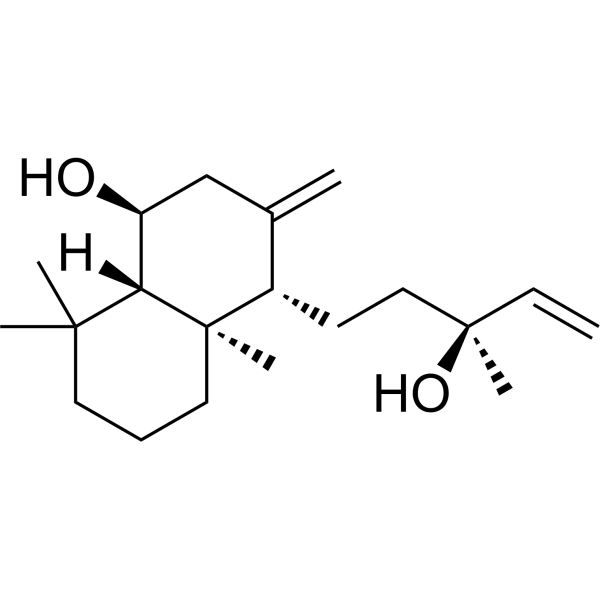
Larixol is an fMLP inhibitor and also inhibits Src kinase, ERK1/2, p38 and AKT phosphorylation signals in immune regulation. Larixol can interfere with the interaction between the βγ subunit of the fMLP receptor Gi protein and its downstream molecules, thereby inhibiting fMLP-induced respiratory burst. Larixol inhibits fMLP (0.1 μM)-induced superoxide anion production (IC50: 1.98 μM), cathepsin G release (IC50: 2.76 μM), and chemotaxis. Larixol improves neutrophil hyperactivation and reduces inflammation or tissue damage. A series of Larixol derivatives were found to have inhibitory effects on FSGS-related TRPC6 functional mutants .
loading...
    loading...
Cat. No.: HY-178284
Target:  

Complement System

Research Areas:  

Inflammation/Immunology

Factor B-IN-7 (Compound (I)) is a selective Factor B inhibitor. Factor B-IN-7 inhibits Factor B-C3b interaction to suppress complement hyperactivation. Factor B-IN-7 is promising for research of paroxysmal nocturnal hemoglobinuria (PNH), C3 glomerulopathy, and age-related macular degeneration (AMD) associated with complement-mediated diseases .
loading...
    loading...
Cat. No.: HY-N8518R
CAS No.: 63335-25-1
Malabaricone C is an orally active and noncompetitive sphingomyelin synthase (SMS) inhibitor with IC50 values of 3 μM and 1.5 μM for SMS 1 and SMS 2, respectively. Malabaricone C reduces body weight gain, improves glucose tolerance, and decreases lipid accumulation in the liver, showing significant prevention of high fat diet-induced fatty liver in mice. Malabaricone C has anti-inflammatory effects, which is found in the fruits of Myristica cinnamomea King. Malabaricone C is promising for research of obesity and immunological disorders caused due to hyper-activation of T-cells .
loading...
    loading...
Cat. No.: HY-P992321

Target:  

TNF Receptor NF-κB STAT

Research Areas:  

Cancer

BAY-356, a potent TWEAK receptor agonist, is an aglycosylated anti-TWEAK receptor antibody. BAY-356 triggers TWEAKR hyperactivation, activates NFκB and STAT1 pathways, and undergoes TWEAKR-dependent internalization. BAY-356 can be used for the research of colorectal cancer, bladder cancer, non-small cell lung cancer and pancreatic cancer[1][2].
loading...
    loading...
Cat. No.: HY-182246
CAS No.: 1301757-19-6
Target:  

PARP

MC2050 is a selective PARP-1 inhibitor with an IC50 of 119 nM. MC2050 functionally inhibits PARP-1 activity, including hyperactivation induced by oxidative stress, and reduces the poly (ADP-ribosyl) ation level of histone H1. MC2050 protects neuroblastoma cells from oxidative stress-mediated cell death induced by hydrogen peroxide. MC2050 is applicable to research related to neuroblastoma and Burkitt lymphoma .
loading...
    loading...
Cat. No.: HY-185978
CAS No.: 2133456-91-2
Target:  

GABA Receptor

Research Areas:  

Neurological Disease

GL-II-73 is a selective, orally active and blood-brain barrier permeable positive allosteric modulator of α5GABAA receptor, acting on the benzodiazepine-binding site of GABAA receptors. The binding selectivity of GL-II-73 for the α5 subtype is 6-, 11- and 12.5-fold higher than that for the α2, α1 and α3 subtypes, respectively . GL-II-73 reverses pilocarpine-induced hyperactivation of dopamine neurons in the ventral tegmental area, improves working memory and pyramidal neuron dendritic morphology in 5xFAD mice, but does not reduce β-amyloid load . GL-II-73 can be used in research related to Alzheimer's disease and temporal lobe epilepsy with comorbid psychosis .
loading...
    loading...
Cat. No.: HY-210438
Research Areas:  

Cancer

L013 is an orally active and selective NRF2 PROTAC degrader. L013 directly binds to the NRF2 protein and promotes NRF2 ubiquitination and UPS-related degradation through a Cullin-dependent, CRBN-related process. L013 inhibits RNA polymerase II transcriptional elongation and downregulates NFE2L2 transcript levels. L013 selectively reduces NRF2 protein/mRNA and inhibits proliferation/colony formation in esophageal squamous cell carcinoma cells with NRF2 hyperactivation. L013 inhibits tumor growth in the KYSE150 esophageal squamous cell carcinoma xenograft mouse model and reduces intratumoral NRF2 and Ki-67 protein levels. L013 can be used for research on esophageal squamous cell carcinoma and lung squamous cell carcinoma .
loading...
    loading...
  • 1

