9 Results for "

iron chelation

" in MedChemExpress (MCE) Product Catalog:
Products (9)

9 Results for "iron chelation" in MCE Product Catalog:

6
6 Publications Verification
Cat. No.: HY-N0928
CAS No.: 500-44-7
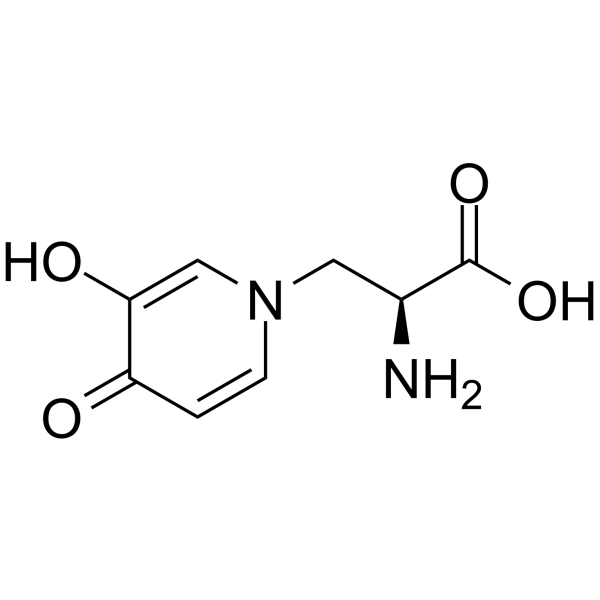
Mimosine, a tyrosine analog , can act as an antioxidant by its potent iron-binding activity . Mimosine is a known chelator of Fe(III) . Mimosine induces apoptosis through metal ion chelation, mitochondrial activation and ROS production in human leukemic cells . Anti-cancer, antiinflammation.
loading...
    loading...
4
4 Cited Publications
Cat. No.: HY-B1159
CAS No.: 4008-48-4
Synonyms: 8-Hydroxy-5-nitroquinoline; 5-Nitro-8-quinolinol
Research Areas:  

Infection Cancer

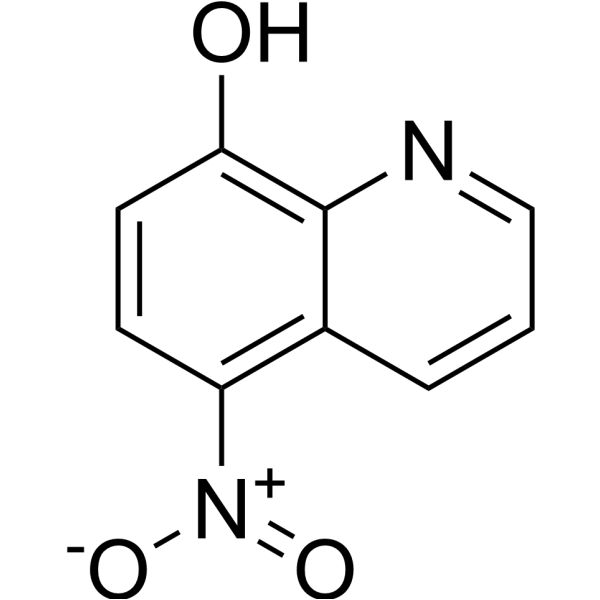
Nitroxoline (8-Hydroxy-5-nitroquinoline), an antibiotic, is an orally active antibiofilm agent. Nitroxoline reduces the formation and induces the dispersal of Pseudomonas aeruginosa biofilms by chelation of iron and zinc. Nitroxoline can be used for the urinary tract infections and cancer research .
loading...
    loading...
1
1 Cited Publications
Cat. No.: HY-124452
CAS No.: 26605-16-3
Purity:  95.00%
Synonyms: Desferrioxamine E; Nocardamin
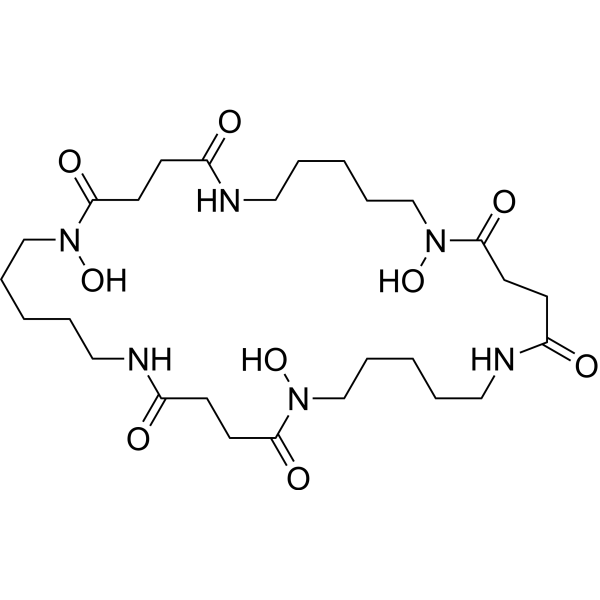
Nocardamine (Desferrioxamine E; Nocardamin) is a cyclic trihydroxamate siderophore with iron ion chelation, antioxidant, antibacterial and other activities. Nocardamine is synthesized by Pseudomonas stutzeri under iron-deficient conditions, and excessive iron ions significantly inhibit its biosynthesis process. Nocardamine increases the level of phosphorylated ERK protein, promotes nuclear translocation of β-catenin, and restores the downregulated expression of SIRT1 protein. Nocardamine alleviates cellular oxidative stress, reduces ROS content, and simultaneously repairs the ability to form mineralized nodules and the expression of osteogenic markers. Nocardamine induces FoxA gene transcription and protein expression to assist Pseudomonas aeruginosa in iron ion uptake; it also selectively inhibits the proliferation of mycobacteria. Nocardamine induces spindle-shaped morphological changes in BM-N4 insect cells, and sufficient iron ions inhibit this cellular morphological change. Nocardamine is suitable for research related to bacterial infections .
loading...
    loading...
Cat. No.: HY-162386
CAS No.: 324530-92-9
Research Areas:  

Cancer

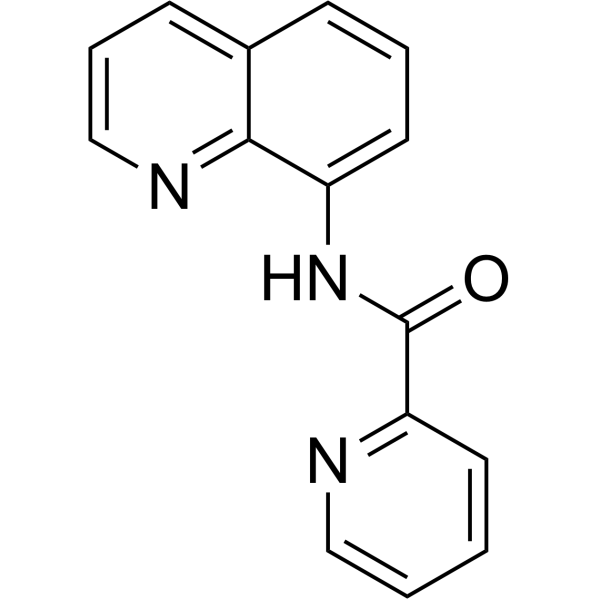
UM4118 is a potent copper-selective non-genotoxic copper ionophore that induces cuproptosis in acute myeloid leukemia cells. UM4118 exhibits stronger activity against SF3B1G12C mutant acute myeloid leukemia cells. UM4118 transports extracellular copper into cells, elevates intracellular and mitochondrial copper levels, and triggers lipoylated DLAT aggregation, proteotoxic stress, iron-sulfur cluster protein depletion, reduced lipoylated protein levels, and maximal mitochondrial respiratory damage. UM4118 cytotoxicity can be enhanced by supplementation with extracellular copper, abolished by copper chelation, and shows synthetic lethal effects in the absence of iron-sulfur cluster biosynthesis/transport genes. UM4118 can be used for the study of acute myeloid leukemia .
loading...
    loading...
Cat. No.: HY-B1610K
Sodium Citrate Buffer, 0.5M, pH 5.5 is a metal chelator and buffering agent. Sodium Citrate Buffer, 0.5M, pH 5.5 requires oxygen to participate in the oxidation process to reduce pink defects in cooked ground turkey, and it does not function via heme iron chelation or iron complex interaction. When mixed with 50% (by vol.) 1,3-dimethylimidazolium methyl sulfate, Sodium Citrate Buffer, 0.5M, pH 5.5 can serve as an aqueous buffering medium to maintain the catalytic efficiency of the hyperthermophilic β-glycosidase CelB for lactose hydrolysis at 80°C, while also acting as a reaction medium for CelB-catalyzed lactose hydrolysis and galactosyltransferase assays .
loading...
    loading...
Cat. No.: HY-B1159R
CAS No.: 4008-48-4
Synonyms: 8-Hydroxy-5-nitroquinoline (Standard); 5-Nitro-8-quinolinol (Standard)
Nitroxoline (Standard) is the analytical standard of Nitroxoline. This product is intended for research and analytical applications. Nitroxoline (8-Hydroxy-5-nitroquinoline), an antibiotic, is an orally active antibiofilm agent. Nitroxoline reduces the formation and induces the dispersal of Pseudomonas aeruginosa biofilms by chelation of iron and zinc. Nitroxoline can be used for the urinary tract infections and cancer research .
loading...
    loading...
Cat. No.: HY-118543
CAS No.: 863421-32-3
Purity:  99.37%
Research Areas:  

Cardiovascular Disease

TM6089 is a unique Prolyl Hydroxylase (PHD) inhibitor which stimulates HIF activity without iron chelation and induces angiogenesis and exerts organ protection against ischemia. Local administration of TM6089 enhances angiogenesis, and oral administration stimulates HIF activity in transgenic rats expressing a hypoxia-responsive reporter vector .
loading...
    loading...
Cat. No.: HY-P11637
Target:  

Fluorescent Dye

Research Areas:  

Neurological Disease

Mitochondrial-targeted peptide BP19 is a fluorescent probe for the selective measurement of labile iron in the mitochondriairon. Mitochondrial-targeted peptide BP19 exhibits iron-selective sensing activity with mitochondrial accumulation, reduced fluorescence in iron-loaded cells, and fluorescence reinstatement upon iron chelation. Mitochondrial-targeted peptide BP19 evaluates mitochondrial labile iron levels in cultured fibroblasts with Friedreich's ataxia .
loading...
    loading...
Cat. No.: HY-165465
CAS No.: 887774-94-9
Target:  

Bacterial

Research Areas:  

Infection

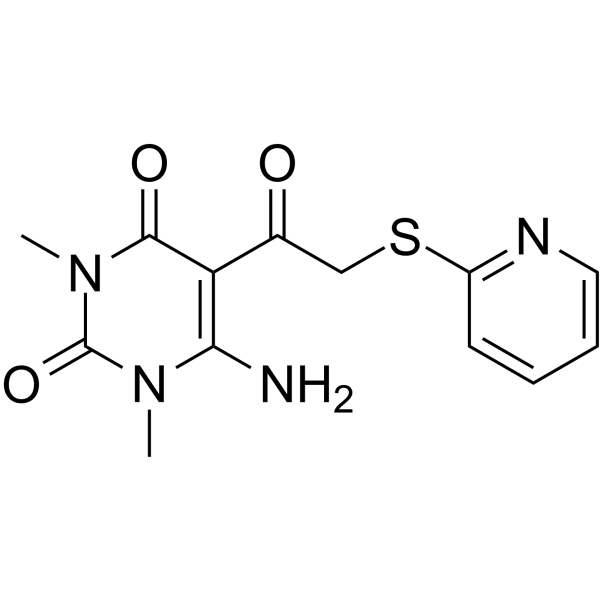
Apo6619 is an iron chelator with antibacterial activity that inhibits a variety of common bacteria associated with hospital-acquired infections. Apo6619 inhibits the growth of relevant bacterial strains in cation-adjusted Mueller-Hinton broth and RPMI 1640 tissue culture medium. Apo6619 can be used in antibacterial research on hospital-acquired infection-related bacteria based on the iron chelation mechanism .
loading...
    loading...

