9 Results for "

ketoses

" in MedChemExpress (MCE) Product Catalog:
Products (9)

9 Results for "ketoses" in MCE Product Catalog:

  • Categories Recommended:
    More
Cat. No.: HY-N4112
CAS No.: 13074-06-1
Synonyms: 1-Deoxy-D-galactitol
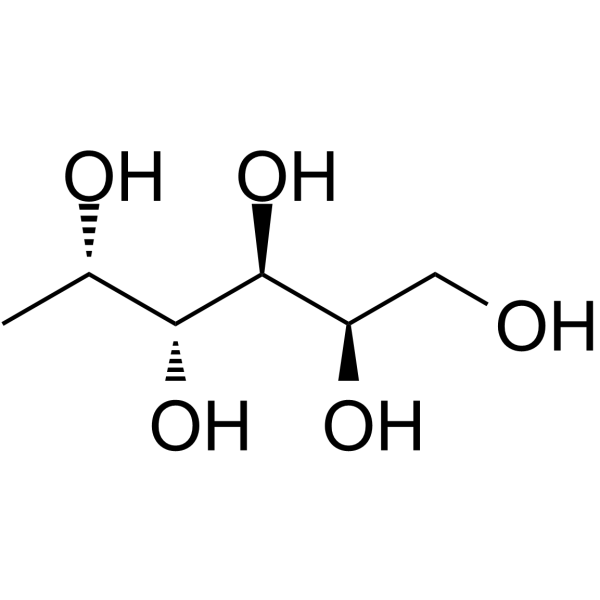
L-Fucitol (1-Deoxy-D-galactitol) is a type of sugar alcohol that can be found in Nutmeg. L-Fucitol can be used as a raw material to prepare L-Fuco-4-ketose for pharmaceutical purposes .
loading...
    loading...
Cat. No.: HY-W010341
CAS No.: 1452-63-7
Research Areas:  

Others

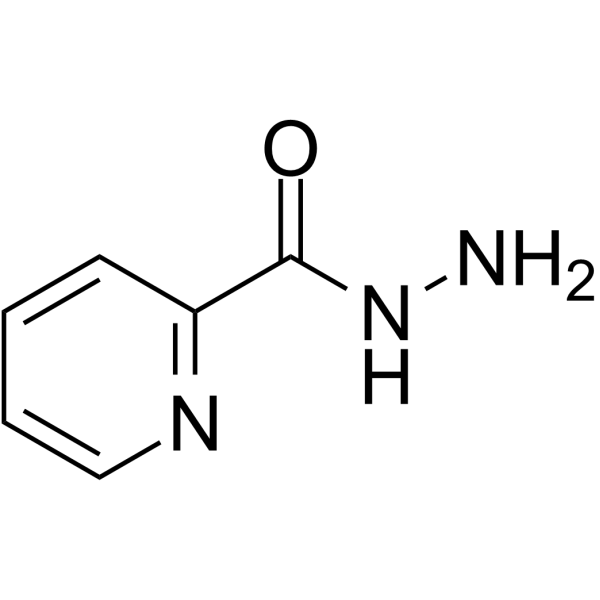
2-Pyridinecarbohydrazide is a versatile heterocyclic building block widely used in medicinal chemistry and coordination chemistry, and it finds extensive applications in various synthetic fields. 2-Pyridinecarbohydrazide reacts with the reducing end of carbohydrates to enhance mass spectrometry ionization efficiency, enabling isomer-specific identification of monosaccharides, disaccharides, ketoses/aldoses, and quantitative mass spectrometry imaging of biological tissues .
loading...
    loading...
Cat. No.: HY-E70022
CAS No.: 9031-25-8
Target:  

Others

Research Areas:  

Others

D-Mannose isomerase (PsMaSeAF) is a carbohydrate isomerase catalyzing the reversible isomerization of d-mannose to d-fructose. D-Mannose isomerase (PsMaSeAF) belongs to the N-acylglucosamine 2-epimerase (AGE) superfamily along with AGE, cellobiose 2-epimerase (CE), and aldose-ketose isomerase (AKI) .
loading...
    loading...
Cat. No.: HY-N4112R
CAS No.: 13074-06-1
Synonyms: 1-Deoxy-D-galactitol (Standard)
L-Fucitol (1-Deoxy-D-galactitol) (Standard) is the analytical standard of L-Fucitol. This product is used for research and analytical applications. L-Fucitol is a sugar alcohol that can be found in nutmeg (Nutmeg). L-Fucitol can be used as a precursor in the preparation of L-Fuco-4-ketose for pharmaceutical purposes.
loading...
    loading...
Cat. No.: HY-N7054
CAS No.: 488-38-0
Synonyms: D-Volemitol
Volemitol (D-Volemitol) is a seven-carbon sugar alcohol that fulfills several important physiological functions in certain species of the genus Primula. Volemitol is the major nonstructural carbohydrate in leaves of all stages of development. Volemitol functions as a photosynthetic product, phloem translocate (phloem-mobile), and storage carbohydrate. Volemitol biosynthesis proceeds by a novel, NADPH-dependent, ketose reductase (sedoheptulose reductase) .
loading...
    loading...
Cat. No.: HY-158335
Target:  

Parasite

Research Areas:  

Infection

DXR-IN-1 (Compound 13E) is an inhibitor of 1-deoxy-D-ketose 5-phosphate reductoisomerase (DXR). DXR-IN-1 is highly selective for P. falciparum DXR (IC50=0.030 μM). DXR-IN-1 inhibits the growth of P. falciparum by binding to the active site of DXR and blocking its catalytic activity .
loading...
    loading...
Cat. No.: HY-P2726A
Aldolase, Spinach (EC 4.1.2.13) is an enzyme catalyzing a reversible reaction that splits the aldol, fructose 1,6-bisphosphate, into the triose phosphates dihydroxyacetone phosphate (DHAP) and glyceraldehyde 3-phosphate (G3P). Aldolase, Spinach (EC 4.1.2.13) can also produce DHAP from other (3S,4R)-ketose 1-phosphates such as fructose 1-phosphate and sedoheptulose 1,7-bisphosphate.
loading...
    loading...
Cat. No.: HY-W719703
Synonyms: A6P sodium; Allu6P sodium; D-Psicose-6-phosphate sodium
Target:  

Bacterial

Research Areas:  

Infection

D-Allulose-6-phosphate (A6P; Allu6P) sodium is a phosphorylated six-carbon ketose, which serves as the product/substrate of the enzymatic reaction catalyzed by Escherichia coli Type B ribose-5-phosphate isomerase (RpiB). EcRpiB catalyzes the reversible isomerization between All6P and Allu6P (All6P ⇌ Allu6P). D-Allulose-6-phosphate sodium can be used in the research of tuberculosis .
loading...
    loading...
Cat. No.: HY-E71166
Research Areas:  

Others

1,5-Anhydro-D-fructose reductase (1,5-Anhydro-D-mannitol-forming) (EC 1.1.1.292) belongs to the GFO/IDH/MocA protein family. It can also reduce 1,5-Anhydro-D-fructose-2,3-diketooses and 2-keto aldoses (called ketones), such as D-glucose ketone (D-arabino-hexose-2-ketoose) and 6-deoxy-D-glucose ketone. It cannot reduce common aldoses and ketoses, nor can it reduce non-glucose aldehydes and ketones.
loading...
    loading...

