19 Results for "

light-activated

" in MedChemExpress (MCE) Product Catalog:
Products (19)

19 Results for "light-activated" in MCE Product Catalog:

1
1 Cited Publications
Cat. No.: HY-107004A
CAS No.: 161262-45-9
Purity:  99.86%
Synonyms: S-59
Research Areas:  

Inflammation/Immunology

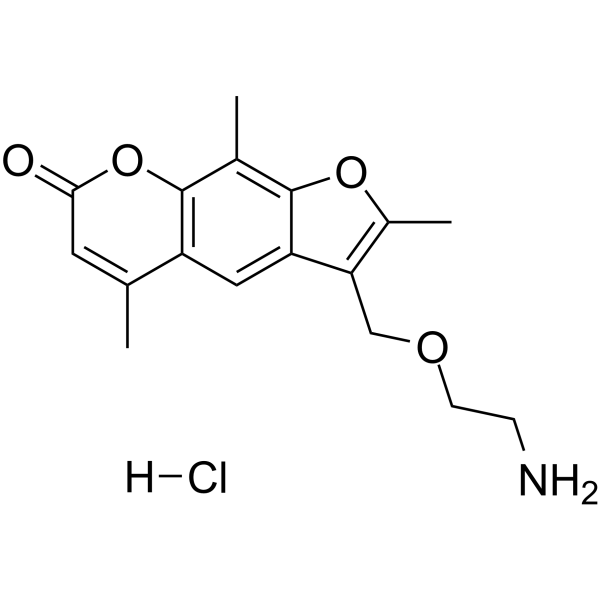
Amotosalen hydrochloride (S-59) is a light-activated, DNA-, RNA-crosslinking psoralen compound, which is used to neutralise pathogens. Light-activated Amotosalen binds and permanently crosslinks DNA, preventing replication and thus stopping proliferation of donor T cells. Amotosalen can be used for the study of blood system pathogen reduction technology and graft-versus-host disease (GVHD) .
loading...
    loading...
1
1 Cited Publications
Cat. No.: HY-D0853
CAS No.: 1253643-88-7
Synonyms: H-L-Photo-lysine
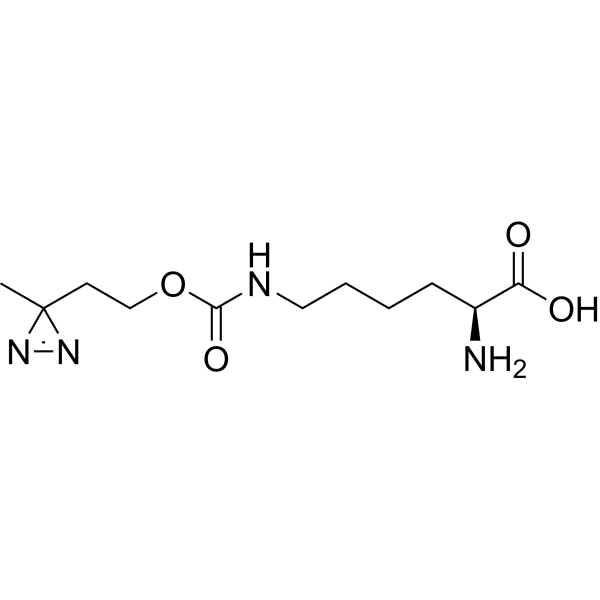
DiAzKs (H-L-Photo-lysine) is a diazirine-containing lysine amino acid and is a photo-cross-linker. DiAzKs can site-selective incorporated into proteins and is used to crosslink protein-protein interactions in vitro and in living cells. DiAzKs acts as a UV light-activated photo-crosslinking probe .
loading...
    loading...
1
1 Cited Publications
Cat. No.: HY-D0853A
CAS No.: 2421187-79-1
Synonyms: H-L-Photo-lysine hydrochloride
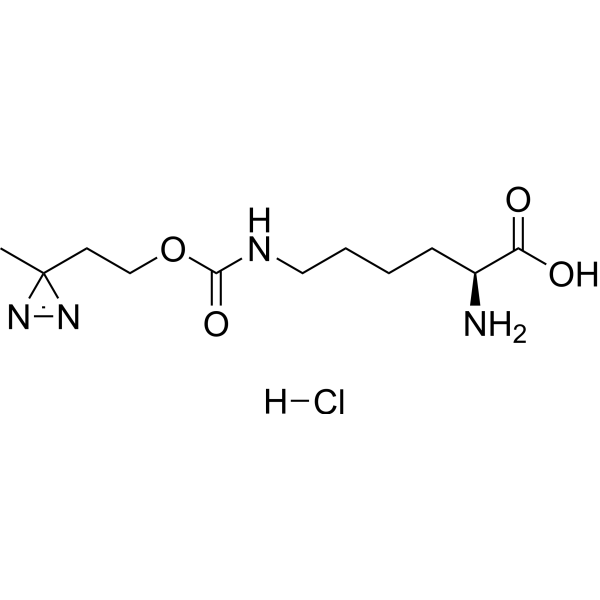
DiAzKs (H-L-Photo-lysine) hydrochloride is a diazirine-containing lysine amino acid and is a photo-cross-linker. DiAzKs hydrochloride can site-selective incorporated into proteins and is used to crosslink protein-protein interactions in vitro and in living cells. DiAzKs hydrochloride acts as a UV light-activated photo-crosslinking probe .
loading...
    loading...
Cat. No.: HY-W041343
CAS No.: 611-95-0
Synonyms: Benzoylbenzoicacid
Research Areas:  

Infection

4-(Phenylcarbonyl)benzoic acid is a photooxidant. Upon light activation, 4-(Phenylcarbonyl)benzoic acid forms an electrophilic aromatic ketone that acts as an oxidant in organic synthesis or biological systems. 4-(Phenylcarbonyl)benzoic acid has been used in the study of amino acid oxidation, as well as the synthesis of photoactivated antibacterial and antiviral compounds 1 2 3.
loading...
    loading...
Cat. No.: HY-124086
CAS No.: 1417436-52-2
Target:  

5-HT Receptor

Research Areas:  

Neurological Disease

BHQ-O-5HT is a light-activated caged 5-HT protected by a BHQ group. When exposed to light at 365 or 740 nm, BHQ-O-5HT releases 5-HT through 1 or 2 photon excitation, respectively. BHQ-O-5HT can be manipulated in space and time to explore the role of 5-HT in regulating mood, appetite, memory, learning, and other cognitive functions .
loading...
    loading...
Cat. No.: HY-157084
Target:  

ROS Kinase Bacterial

Research Areas:  

Infection

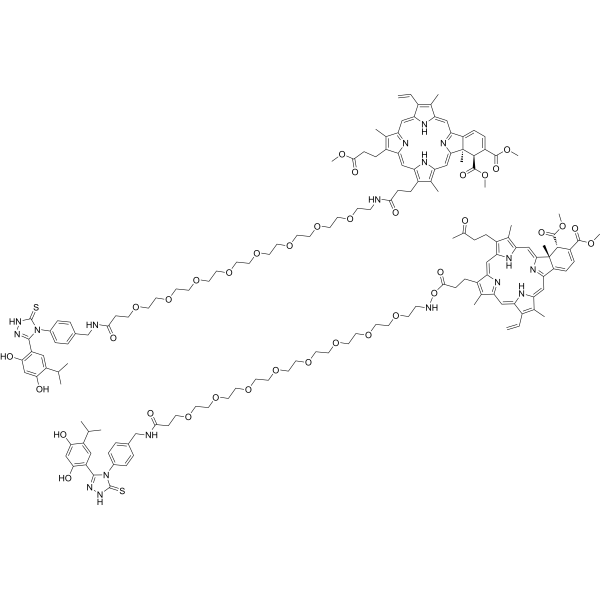
HS-291 is a HtpG inhibitor of Borrelia burgdorferi (Bb). HS-291 contains BX-2819 (high affinity for Bb HtpG), PEG linker, and Verteporfin (HY-B0146) (a photoactive toxin).HS-291 produces reactive oxygen species under light activation to oxidize HtpG and a discrete protein subset near chaperone proteins and can quickly and irreversibly inactivate Bb .
loading...
    loading...
Cat. No.: HY-N16417
CAS No.: 24512-87-6
Elsinochrome C is a photosensitizer. Elsinochrome C relies on light activation to generate reactive oxygen species (ROS) such as singlet oxygen (1O2), inducing apoptosis or directly disrupting pathogen structures. Elsinochrome C is promising for research of skin cancers, HIV-associated infections, and refractory skin diseases .
loading...
    loading...
Cat. No.: HY-178115
MB-Buf is a conjugation of methylene blue (HY-14536) and bufalin (HY-N0877) . MB-Buf can targeting degrade GPX4 upon light activation. MB-Buf can induce cell apoptosis, ferroptosis, and ROS production. MB-Buf can be used for the research of cancer, such as breast cancer .
loading...
    loading...
Cat. No.: HY-107004
CAS No.: 161262-29-9
Synonyms: S-59 free base
Research Areas:  

Inflammation/Immunology

Amotosalen (S-59 (free base)) is a light-activated, DNA and RNA-crosslinking psoralen compound, which is used to neutralise pathogens. Light-activated Amotosalen binds and permanently crosslinks DNA, preventing replication and thus stopping proliferation of donor T cells. Amotosalen can be used for the study of blood system pathogen reduction technology and graft-versus-host disease (GVHD) .
loading...
    loading...
Cat. No.: HY-151116
CAS No.: 1059177-03-5
Target:  

Apoptosis

Research Areas:  

Cancer

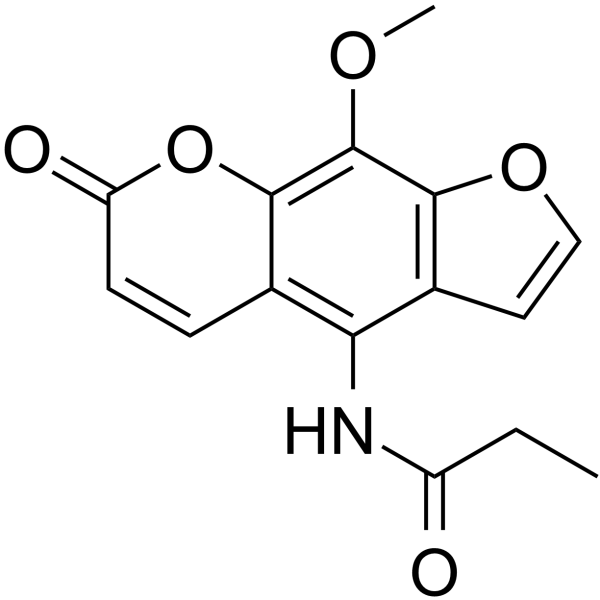
HER2-IN-10 is a psoralen derivative. HER2-IN-10 has anti-breast cancer activity and light-activated cytotoxicity. HER2-IN-10 induces apoptosis .
loading...
    loading...
Cat. No.: HY-151118
Target:  

Apoptosis

Research Areas:  

Cancer

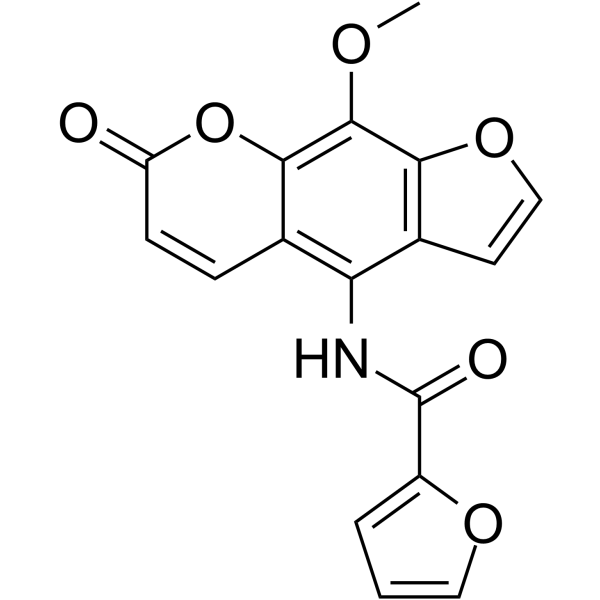
HER2-IN-11 is a psoralen derivative. HER2-IN-11 has anti-breast cancer activity and light-activated cytotoxicity. HER2-IN-11 induces apoptosis .
loading...
    loading...
Cat. No.: HY-164125
CAS No.: 1404341-61-2
Target:  

Ser/Thr Protease SnRK

Research Areas:  

Others

6-O-Bis[1-(2-nitrophenyl)-ethoxyphosphoryl]-D-trehalose is an important signaling molecule that regulates carbon utilization and growth in plants. 6-O-Bis[1-(2-nitrophenyl)-ethoxyphosphoryl]-D-trehalose releases T6P through light activation, which can stimulate starch synthesis and promote plant growth by inhibiting SnRK1, a protein kinase involved in energy conservation and survival. 6-O-Bis[1-(2-nitrophenyl)-ethoxyphosphoryl]-D-trehalose can be used to study plant growth and metabolism .
loading...
    loading...
Cat. No.: HY-107004AR
CAS No.: 161262-45-9
Synonyms: S-59 (Standard)
Amotosalen hydrochloride (Standard) (S-59 (Standard)) is the analytical standard of Amotosalen (hydrochloride) (HY-107004A). This product is intended for research and analytical applications. Amotosalen hydrochloride (S-59) is a light-activated, DNA-, RNA-crosslinKing psoralen compound, which is used to neutralise pathogens. Light-activated Amotosalen binds and permanently crosslinks DNA, preventing replication and thus stopping proliferation of donor T cells. Amotosalen can be used for the study of blood system pathogen reduction technology and graft-versus-host disease (GVHD) .
loading...
    loading...
Cat. No.: HY-123661
CAS No.: 1627580-82-8
Target:  

Endogenous Metabolite

Research Areas:  

Neurological Disease

MIPS1455 is a light-activated M1 muscarinic acetylcholine receptor ligand with irreversible binding activity to the allosteric site of the receptor. MIPS1455 is a drug target under investigation for the suppression of cognitive deficits and may become a valuable molecular tool for further investigation of allosteric interactions of the receptor .
loading...
    loading...
Cat. No.: HY-180540
Target:  

DNA Methyltransferase

Research Areas:  

Neurological Disease Cancer

MGMT-IN-1 (Compound 2) is a light-activated MGMT inhibitor. MGMT-IN-1 can effectively enhance the cytotoxicity of Temozolomide (TMZ) (HY-17364) only under light conditions, significantly increasing the DNA damage caused by TMZ. MGMT-IN-1 can be used for the study of chordoma .
loading...
    loading...
Cat. No.: HY-176859
Target:  

Apoptosis

Research Areas:  

Cancer

[Ru(dpp)(bpy)(mtmp)](PF6)2 (Compound 5) is a trisheteroleptic ruthenium complex. [Ru(dpp)(bpy)(mtmp)](PF6)2 has a light-activated anticancer activity. [Ru(dpp)(bpy)(mtmp)](PF6)2 can selectively cleave off upon green light irradiation, thereby releasing a phototoxic ruthenium-based photoproduct that binds to nuclear DNA, induces DNA damage and apoptosis in cancer cells. [Ru(dpp)(bpy)(mtmp)](PF6)2 can be used for phototherapy of cancers like conjunctival melanoma research .
loading...
    loading...
Cat. No.: HY-179655
Target:  

HDAC

Research Areas:  

Cancer

ST17 is a light-activatable ST13 prodrug. ST17 readily releases ST13 upon irradiation. ST13 is a selective, slow- and tight-binding HDAC1/HDAC2 inhibitor with antiproliferative activity. ST17 can be used in the research of melanoma and breast cancer .
loading...
    loading...
Cat. No.: HY-189567
Research Areas:  

Cancer

TBP-EQ is a cationic aggregation-induced emission photosensitizer and luminogen that enables bright red aggregation-state fluorescence imaging. TBP-EQ generates reactive oxygen species (ROS) via Type I/II pathways under light irradiation. TBP-EQ undergoes light-triggered translocation from the plasma membrane to mitochondria, enhancing penetration and mitochondrial enrichment, and induces oxidative plasma membrane damage, increased permeability, as well as mitochondrial oxidative stress, dysfunction, and depolarization. TBP-EQ exhibits photodynamic cytotoxicity against breast cancer cells, and intratumoral injection followed by light activation inhibits tumor growth. TBP-EQ preferentially accumulates in breast cancer cells and prolongs tumor retention while reducing off-target fluorescence. TBP-EQ can be used for breast cancer-related research .
loading...
    loading...
Cat. No.: HY-D3438
Target:  

Fluorescent Dye

Research Areas:  

Others

Photoswitchable PM8 is a fluorescent probe used for super-resolution imaging of the plasma membrane. Photoswitchable PM8 functions through a light-induced Z/E isomerization mechanism: in the hydrophobic cell membrane environment, the Z isomer forms a planar intramolecular charge transfer state stabilized by an intramolecular hydrogen bond, which restricts conformational freedom, reduces nonradiative decay, and produces bright fluorescence; in contrast, the E isomer lacks this hydrogen bond, has increased conformational freedom, and exhibits a fluorescence-quenched state. The fluorescence of Photoswitchable PM8 can be switched "on/off" by visible light: activation with 405 nm light forms the fluorescent Z isomer, and switching with 561 nm light converts it to the nonfluorescent E isomer. In the membrane environment, Photoswitchable PM8 enables single-molecule localization for super-resolution imaging. Due to solvent-induced quenching and aggregation, Photoswitchable PM8 has negligible fluorescence in aqueous solution, but upon binding to the hydrophobic membrane environment it produces bright fluorescence, enabling high signal-to-noise ratio imaging without washing .
loading...
    loading...
  • 1

