

34 Results for "

linker cleavage

" in MedChemExpress (MCE) Product Catalog:
Products (34)

34 Results for "linker cleavage" in MCE Product Catalog:

26
26 Publications Verification
Cat. No.: HY-13817
CAS No.: 314245-33-5
Purity:  99.30%
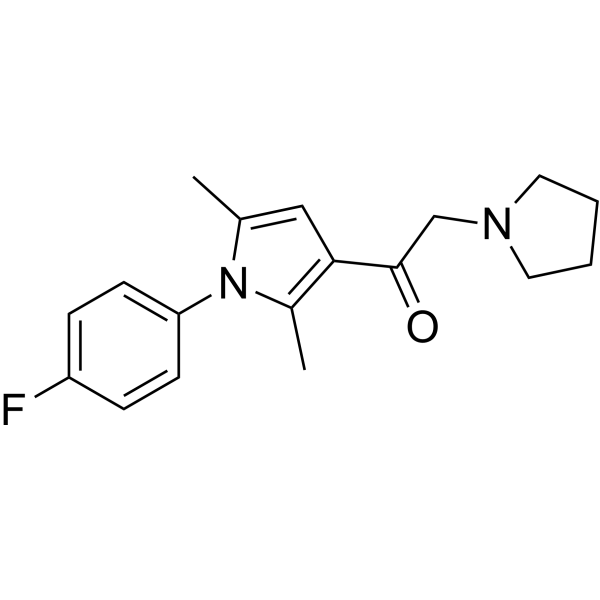
IU1 is a selective, reversible USP14 inhibitor with an IC50 of 4-5 μM. IU1 binds USP14’s catalytic cleft to block deubiquitinase activity. IU1 induces calpain-dependent Tau cleavage, causes ATP deficits, reduces E1~Ub thioester levels and 26S proteasome assembly. IU1 enhances 26S proteasome chymotrypsin-like activity, modulates LC3B-dependent autophagy flux, reduces cancer cell proliferation and migration, and blocks G0/G1 to S phase cell cycle transition in follicular thyroid cancer cells. IU1 activates autophagy-lysosomal and ubiquitin-proteasome pathways, triggers apoptosis, and reduces cervical cancer cell growth. IU1 enhances degradation of proteasome substrates linked to neurodegenerative disease, accelerates oxidized protein degradation, and increases oxidative stress resistance. IU1 can be used for the research of Alzheimer’s disease, follicular thyroid cancer, ischemic stroke, cervical cancer, and neurodegenerative disease .
loading...
    loading...
3
3 Cited Publications
Cat. No.: HY-139979
CAS No.: 2851040-81-6
Purity:  99.73%
Target:  

Deubiquitinase

Research Areas:  

Cancer

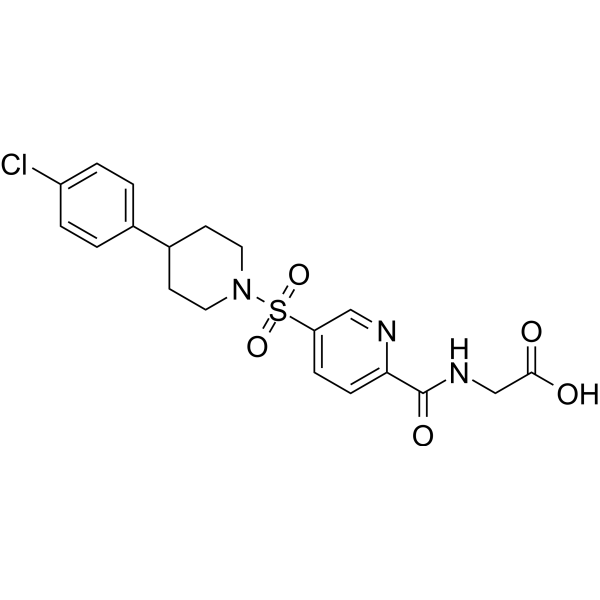
USP5-IN-1 (compound 64) is a selective competitive inhibitor of USP5 zinc finger ubiquitin binding domain (ZnF-UBD) (KD=2.8 μM). USP5-IN-1 competitively blocks the binding of ubiquitin to ZnF-UBD, inhibits the catalytic activity of USP5, and thus hinders the hydrolysis of ubiquitin chains. USP5-IN-1 can inhibit USP5 cleavage of Lys48-linked diubiquitin substrates in vitro and is a potential USP5 chemical probe and potential inhibitor of USP5-related cancers.
loading...
    loading...
2
2 Cited Publications
Cat. No.: HY-P2929
CAS No.: 83534-39-8
Research Areas:  

Cancer

PNGase F, a glycosidase, catalyzes the cleavage of an internal glycoside bond in an oligosaccharide. PNGase F removes nearly all N-linked oligosaccharides from glycoproteins. PNGase F can release N-glycans from glycoproteins in glycoanalytical workflows .
loading...
    loading...
2
2 Cited Publications
Cat. No.: HY-P2929A
CAS No.: 83534-39-8
Target:  

Glycosidase

Research Areas:  

Cancer

PNGase F-Fast is a glycosidase that catalyzes the cleavage of internal glycosidic bonds in oligosaccharides. PNGase F-Fast removes almost all N-linked oligosaccharides from glycoproteins. PNGase F-Fast can release N-glycans from glycoproteins in the sugar analysis workflow. The cleavage site is: the glycosidic bond between the innermost N-acetylglucosamine and asparagine. PNGase F-Fast is an improved reagent that allows for rapid deglycosylation of antibodies and antibody fusions within minutes .
loading...
    loading...
2
2 Cited Publications
Cat. No.: HY-P2929C
CAS No.: 83534-39-8
Research Areas:  

Cancer

PNGase F (Lyophilized), a glycosidase, catalyzes the cleavage of an internal glycoside bond in an oligosaccharide. PNGase F (Lyophilized) removes nearly all N-linked oligosaccharides from glycoproteins. PNGase F (Lyophilized) can release N-glycans from glycoproteins in glycoanalytical workflows .
loading...
    loading...
2
2 Cited Publications
Cat. No.: HY-P2929D
CAS No.: 83534-39-8
Target:  

Glycosidase

Research Areas:  

Cancer

PNGase F (MS grade), a glycosidase, catalyzes the cleavage of an internal glycoside bond in an oligosaccharide. PNGase F (MS grade) removes nearly all N-linked oligosaccharides from glycoproteins. PNGase F (MS grade) can be used for MS analysis .
loading...
    loading...
1
1 Cited Publications
Cat. No.: HY-115733
CAS No.: 108005-94-3
Purity:  98.27%
Synonyms: (Rac)-Z-Phe-Phe-FMK
Target:  

Cathepsin

Research Areas:  

Cancer

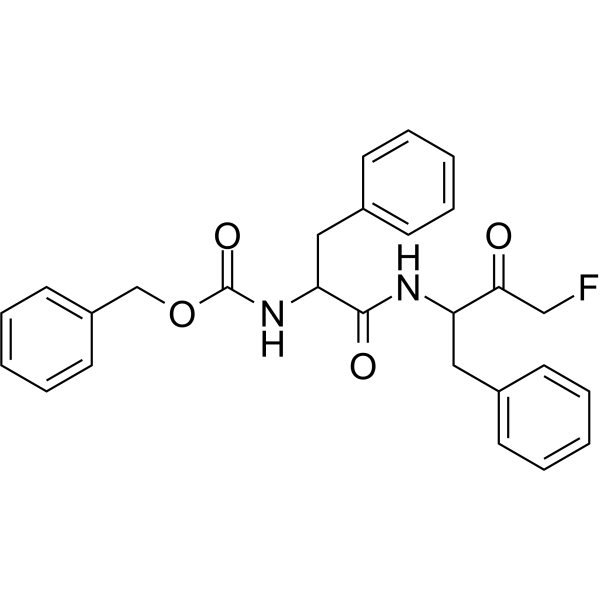
Cathepsin L-IN-2 ((Rac)-Z-Phe-Phe-FMK) is a Cathepsin L (CTSL) inhibitor. Cathepsin L-IN-2 inhibits CTSL enzymatic activity, supporting the mechanism by which CTSL mediates T-DXd linker cleavage and payload release. Cathepsin L-IN-2 is used in studies on Cathepsin L-dependent ADC payload release and breast cancer-related mechanisms .
loading...
    loading...
Cat. No.: HY-164729
FZ-AD005 is a DLL3-targeting antibody-drug conjugate (ADC) with high selectivity, composed of the anti-DLL3 antibody FZ-A038 (HY-P990896), a dipeptide linker (Val-Ala), and DXd (HY-13631D). The Kd value of FZ-AD005 for human DLL3 ranges from 13.29 to 58.3 pmol/L. After binding to DLL3 on the cell surface, FZ-AD005 mediates endocytosis, and the payload DXd is released via cleavage by lysosomal cathepsins. DXd inhibits topoisomerase TopI to induce double-strand DNA breaks, cell cycle arrest and apoptosis, and FZ-AD005 exhibits bystander killing activity against adjacent DLL3-negative cells. FZ-AD005 shows stable circulation in vivo, has good tolerance and acceptable pharmacokinetic profiles in rats and cynomolgus monkeys, and effectively inhibits the growth of DLL3-expressing tumor cells. FZ-AD005 serves as a promising candidate molecule for research on small cell lung cancer and human neuroendocrine prostate cancer .
loading...
    loading...
Cat. No.: HY-153188
CAS No.: 2597343-08-1
Purity:  99.80%
Target:  

PROTACs Apoptosis IRAK

Research Areas:  

Cancer

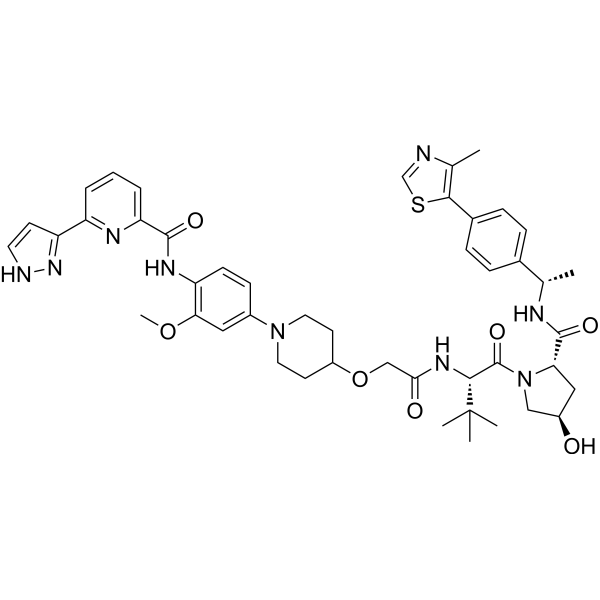
JNJ-1013 is a potent and selective IRAK1 PROTAC degrader with an IC50s of 72, 443, 1071 nM for IRAK1, IRAK4, VHL FP respectively. JNJ-1013 induces apoptosis and increases the expression of cleavaged PARP. JNJ-1013 decreases the expression IRAK1, p-IKBα, pSTAT3(Tyr705) (Pink: ligand for target protein (HY-138834); black: linker (HY-Y1760); Blue: E3 ligase ligand (HY-112078)) .
loading...
    loading...
Cat. No.: HY-P3208B
CAS No.: 72561-05-8
Research Areas:  

Others

Endoproteinase Lys-C (MS grade) is a hydrolase that cleaves peptide bonds at the carboxyl side of lysine residues. Endoproteinase Lys-C (MS grade) causes non-specific hydrolysis of peptide bonds linked to the carboxyl groups of non-lysine residues, resulting in partial cleavage at these sites .
loading...
    loading...
Cat. No.: HY-P2871
CAS No.: 9025-35-8
Synonyms: EC 3.2.1.22
Target:  

Glycosidase

Research Areas:  

Metabolic Disease

α-Galactosidase, Aspergillus niger (EC 3.2.1.22), that is, α-galactosidase, is a glycoside hydrolase that widely exists in animals, plants and microorganisms, and is often used in biochemical research. α-Galactosidase catalyzes the hydrolysis of α-1,6-linked terminal galactose residues, including galactooligosaccharides, galactomannans, and galactolipids. Catalyzes many catabolic processes including cleavage of glycoproteins, glycolipids and polysaccharides .
loading...
    loading...
Cat. No.: HY-P99238
CAS No.: 2095467-30-2

Target:  

ADC Antibodies

Research Areas:  

Inflammation/Immunology Cancer

Rolinsatamab is a IgG1κ type chimeric antibody targeting to PRLR (prolactin receptor). Rolinsatamab can be conjugated with pyrrolobenzodiazepine (PDB) dimer SGD-1882 (HY-101127) via a cleavable maleimidocaproyl type linker, to form an antibody-drug conjugate, Rolinsatamab talirine. One Rolinsatamab talirine has an average of 2 site-specific drug attachment engineered cysteines (S239C). The linker equips the valine-alanine dipeptide, as cathepsine B cleavage site. on an average of 2 site-specific drug attachment engineered cysteines (S239C) .
loading...
    loading...
Cat. No.: HY-W109224
CAS No.: 4265-59-2
Research Areas:  

Cancer

3,3'-(Propane-2,2-diylbis (sulfanediyl)) dipropionic acid is a ROS-sensitive cleavable linker. 3,3'-(Propane-2,2-diylbis (sulfanediyl)) dipropionic acid is stable under physiological conditions, but undergoes cleavage in the ROS-rich tumor microenvironment, enabling the release of conjugated Camptothecin (CPT) (HY-16560). 3,3'-(Propane-2,2-diylbis (sulfanediyl)) dipropionic acid can be used in the research of cervical cancer .
loading...
    loading...
Cat. No.: HY-160774
CAS No.: 1022094-34-3
Val-Cit-PABC-DOX is an ε-poly-L-lysine-based drug conjugate, serving as a drug-linker conjugate for ADC. It is formed by conjugating Doxorubicin (HY-15142), an inhibitor of DNA topoisomerase I and topoisomerase II, with Val-Cit-PABC. Val-Cit-PABC-DOX relies on the self-cleavable PABC spacer to enable Cathepsin B-mediated linker cleavage and release of free Doxorubicin (HY-15142A). Val-Cit-PABC-DOX can be used in cancer-related research .
loading...
    loading...
Cat. No.: HY-34611
CAS No.: 25691-37-6
Synonyms: N-Boc-L-2,4-diaminobutyric acid; Boc-Dab-OH
Target:  

Drug Intermediate ASCT

Research Areas:  

Neurological Disease Cancer

Boc-L-2,4-Diaminobutyric acid (N-Boc-L-2,4-diaminobutyric acid; Boc-Dab-OH) is a versatile synthetic starting material with a cleavable protecting group. Boc-L-2,4-Diaminobutyric acid not only reduces the backbone cleavage rate by protecting the side-chain γ-amino group, but also triggers intramolecular cyclization of self-immolative linkers under acidic cleavage conditions, thus constructing stimuli-responsive materials. Boc-L-2,4-Diaminobutyric acid is also an important building block for bioactive molecules. It can be used in the synthesis of ASCT2 (SLC1A5) inhibitors and carboxynorspermine, and can also serve as an internal standard to support the quantitative detection of specific intracellular amino acids by UPLC-QQQ-MS .
loading...
    loading...
Cat. No.: HY-P6023
Target:  

Factor Xa

Research Areas:  

Cardiovascular Disease

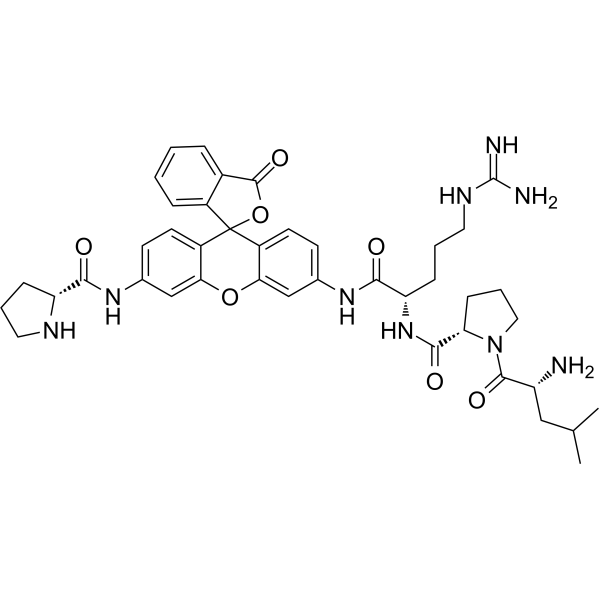
D-Leu-Pro-Arg-Rh110-D-Pro is a substrate for Factor Xa I (FXIa) with binding affinity. D-Leu-Pro-Arg-Rh110-D-Pro consists of Rhodamine 110 (HY-D0817) linked to a peptide chain through a cleavable bond. Cleavable bond cleavage enhances fluorophore intensity. D-Leu-Pro-Arg-Rh110-D-Pro can be used to detect FXIa activity .
loading...
    loading...
Cat. No.: HY-129349
CAS No.: 1116085-99-4
Purity:  96.24%
Target:  

ADC Linkers

Research Areas:  

Cancer

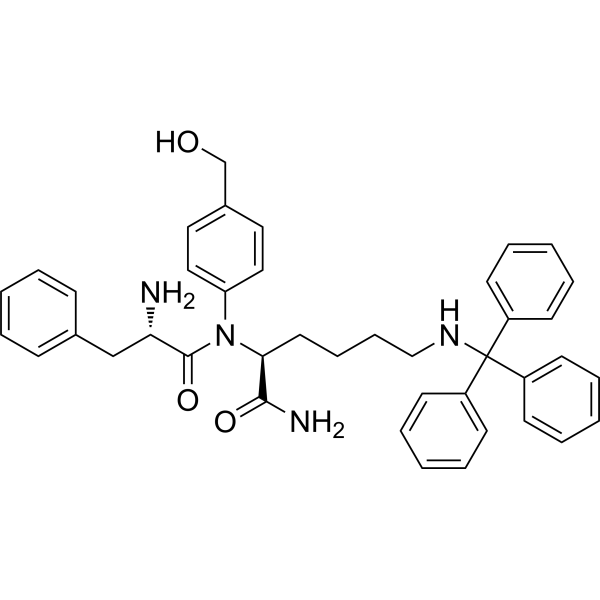
Phe-Lys(Trt)-PAB is a cathepsin B substrate, and a cleavable ADC linker. Phe-Lys(Trt)-PAB acts as a lysosomally cleavable substrate for cysteine protease cathepsin B, with cleavage enabling linked anticancer drug release via self-immolative spacer . Phe-Lys(Trt)-PAB can be used for synthesis of ADCs .
loading...
    loading...
Cat. No.: HY-150177
CAS No.: 3672-15-9
Mannose 6 phosphate is an essential precursor for mannosyl glycoconjugates, including lipid-linked oligosaccharides (LLO; glucose3mannose9GlcNAc2-P-P-dolichol) used for protein N-glycosylation. Mannose 6 phosphate causes specific LLO cleavage. Mannose 6 phosphate causes specific degradation of G3M9Gn2-P-P-Dol. Complexes containing Mannose 6 phosphate can remodel the dermal collagen network, improve skin biomechanical properties, and reverse visible signs of aging. Mannose 6 phosphate can be used in research related to skin aging .
loading...
    loading...
Cat. No.: HY-P6023A
Target:  

Factor Xa

Research Areas:  

Cardiovascular Disease

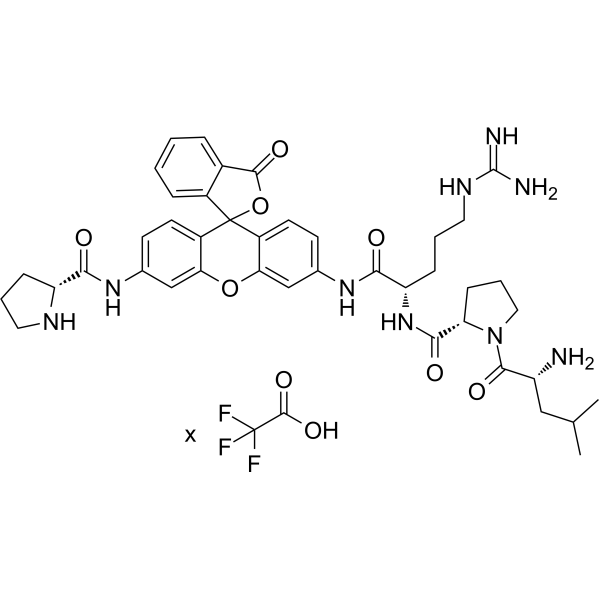
D-Leu-Pro-Arg-Rh110-D-Pro TFA is a substrate for Factor Xa I (FXIa) with binding affinity. D-Leu-Pro-Arg-Rh110-D-Pro TFA consists of Rhodamine 110 (HY-D0817) linked to a peptide chain through a cleavable bond. Cleavable bond cleavage enhances fluorophore intensity. D-Leu-Pro-Arg-Rh110-D-Pro TFA can be used to detect FXIa activity .
loading...
    loading...
Cat. No.: HY-169324
CAS No.: 2921735-91-1
Synonyms: Mal-Exo-EEVC-Exatecan
Research Areas:  

Cancer

APL-1092 is an EEVC linker-payload conjugate composed of exatecan, a stabilizer that prevents premature payload release, and a cleavage substrate for cathepsin B . APL-1092 resists premature payload release mediated by human neutrophil elastase and carboxylesterase, maintains payload stability in mouse plasma, and retains cathepsin B-mediated cleavage activity in target cells . APL-1092 exhibits dose-dependent tumor growth inhibition in xenograft mice . APL-1092 can be used in gastric cancer-related research .
loading...
    loading...

