
191 Results for "

lipid bilayers

" in MedChemExpress (MCE) Product Catalog:
Products (191)

191 Results for "lipid bilayers" in MCE Product Catalog:

11
11 Publications Verification
Cat. No.: HY-109506
CAS No.: 63-89-8
Purity:  99.91%
Synonyms: 129Y83
Category:  

Lipids

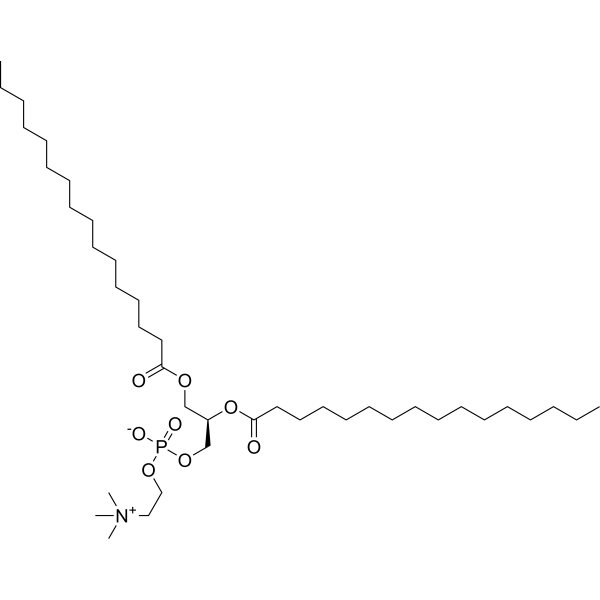
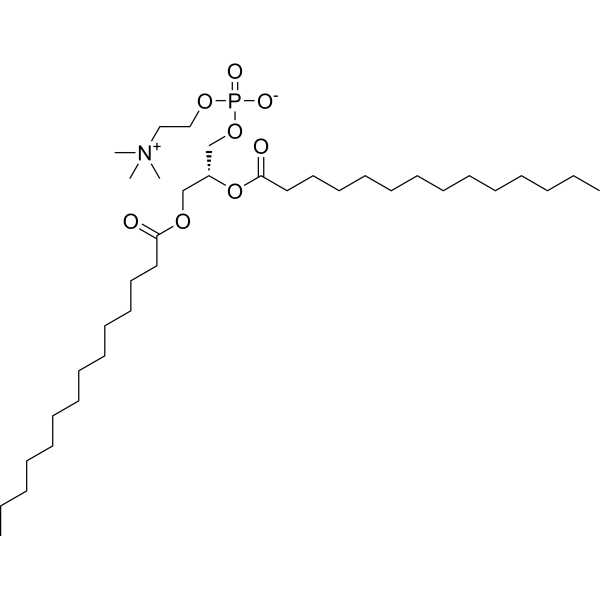
DPPC (129Y83) is a phosphoglyceride that can be used to prepare lipid monolayers, bilayers, and liposomes. DPPC is the main lipid component of pulmonary surfactant. Dppc-liposome can be effectively used as a delivery vector to induce an immune response against GSL antigen in mice .
loading...
    loading...
11
11 Publications Verification
Cat. No.: HY-P1902
CAS No.: 115722-23-1
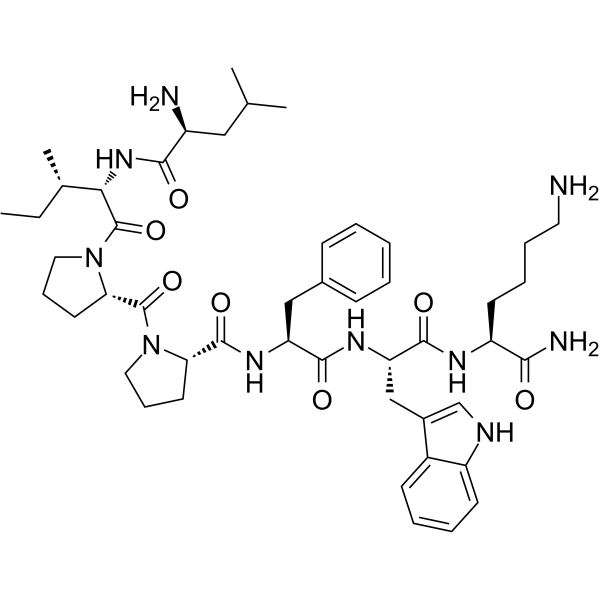
Cardiotoxin Analog (CTX) IV (6-12) is a membrane active peptide that specifically targets negatively charged phospholipid membranes (such as phosphatidylserine and phosphatidylinositol). Cardiotoxin Analog (CTX) IV (6-12) was discovered in the venom of the Taiwan cobra. Cardiotoxin Analog (CTX) IV (6-12) is a chemically synthesized snake venom cardiotoxin that binds to cell membranes and embeds into lipid bilayers through hydrophobic interactions and electrostatic attraction, thereby destroying the stability of membrane structure. Cardiotoxin Analog (CTX) IV (6-12) can induce membrane lipid disorder and cell lysis, exhibiting hemolysis and cytotoxicity .
loading...
    loading...
11
11 Publications Verification
Cat. No.: HY-P1902A
CAS No.: 2918768-05-3
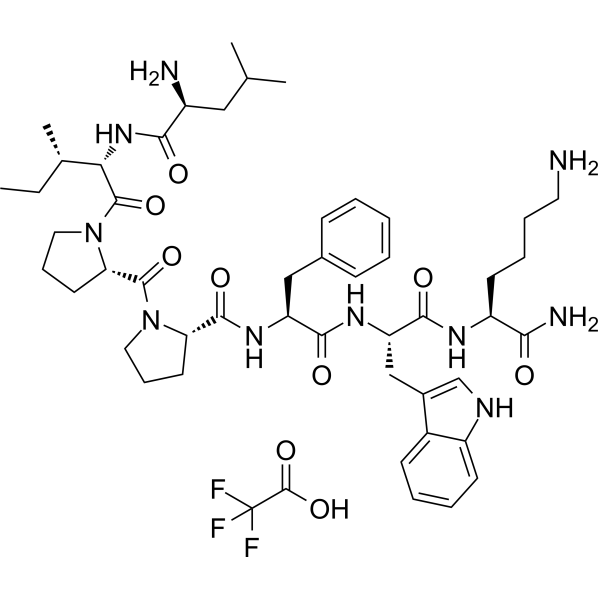
Cardiotoxin Analog (CTX) IV (6-12) TFA is a membrane active peptide that specifically targets negatively charged phospholipid membranes (such as phosphatidylserine and phosphatidylinositol). Cardiotoxin Analog (CTX) IV (6-12) TFA was discovered in the venom of the Taiwan cobra. Cardiotoxin Analog (CTX) IV (6-12) TFA is a chemically synthesized snake venom cardiotoxin that binds to cell membranes and embeds into lipid bilayers through hydrophobic interactions and electrostatic attraction, thereby destroying the stability of membrane structure. Cardiotoxin Analog (CTX) IV (6-12) TFA can induce membrane lipid disorder and cell lysis, exhibiting hemolysis and cytotoxicity .
loading...
    loading...
7
7 Cited Publications
Cat. No.: HY-129555
CAS No.: 252023-70-4
Purity:  98.96%
Surfactin is a potent cyclic lipopeptide biosurfactants consists of four isomers (Surfactin A, B, C and D), which mediates flux of mono-and divalent cations, such as calcium, across lipid bilayer membranes. Surfactin can act as an antimicrobial adjuvant with anti-bacterial, anti-fungal, antimycoplasma and hemolytic effects . Surfactin also has antiviral activity against a variety of enveloped viruses .
loading...
    loading...
3
3 Cited Publications
Cat. No.: HY-141571
CAS No.: 67254-28-8
Purity:  98.70%
Synonyms: Dioleoylphosphatidylglycerol sodium
Target:  

Liposome

Research Areas:  

Others

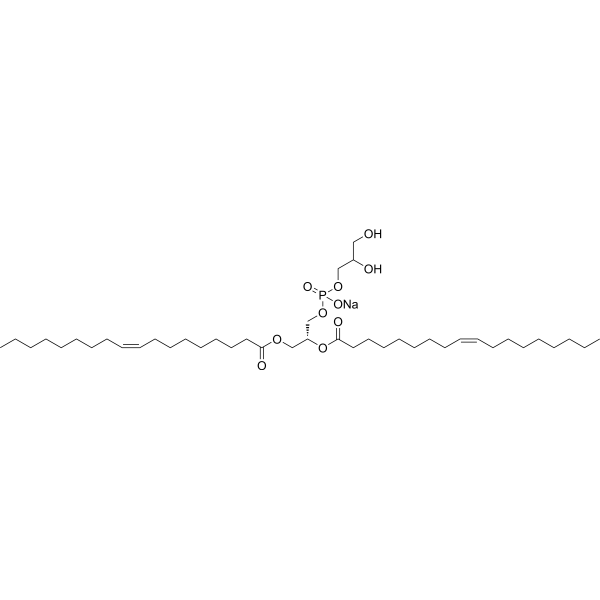
DOPG sodium is a naturally occurring anionic phospholipid, containing oleic acid (18:1) inserted at the sn-1 and sn-2 positions. DOPG can form a lipid bilayer in an aqueous solution and is used in the generation of micelles, liposomes, and other artificial membranes. DOPG also exhibits anti-inflammatory properties .
loading...
    loading...
3
3 Cited Publications
Cat. No.: HY-130462
CAS No.: 26853-31-6
Purity:  99.98%
Synonyms: POPC
Category:  

Lipids

Target:  

Liposome

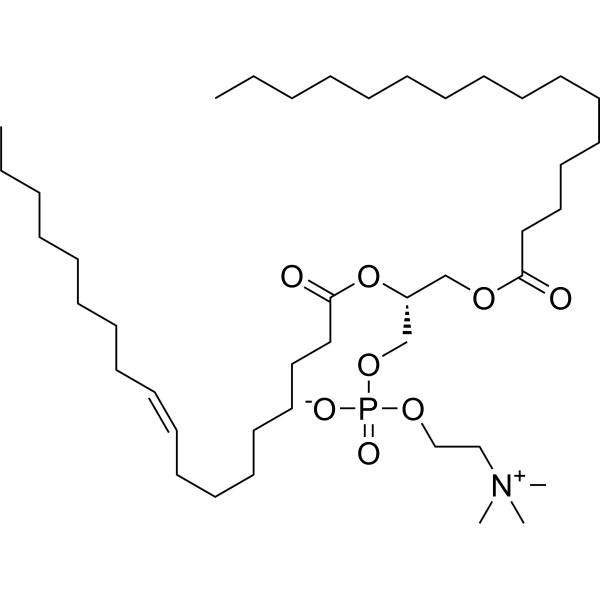
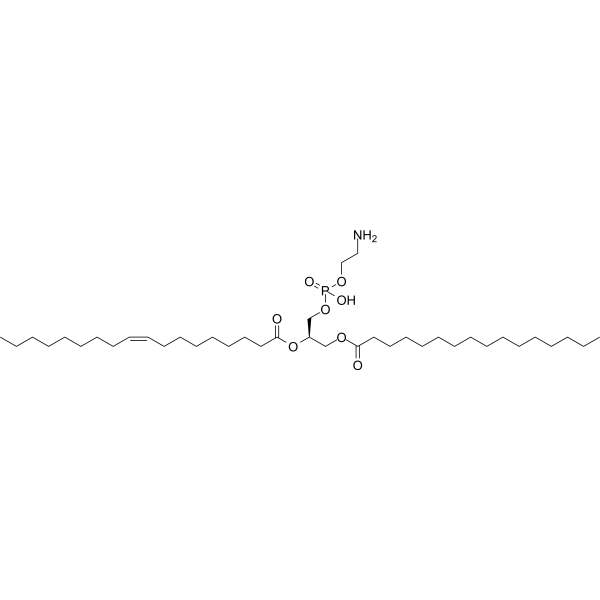
1-Palmitoyl-2-oleoyl-sn-glycero-3-PC (POPC), a phospholipid, is a major component of biological membranes. 1-Palmitoyl-2-oleoyl-sn-glycero-3-PC is used for the preparation of liposomes and studying the properties of lipid bilayers .
loading...
    loading...
3
3 Cited Publications
Cat. No.: HY-135416
CAS No.: 98072-47-0
Streptolysin O is a cholesterol-targeting, thiol-activated pore-forming toxin. Streptolysin O binds to cholesterol via its C-terminal domain 4, oligomerizes to form arc-shaped or ring-shaped structures, inserts amphipathic helices into the lipid bilayer, and forms transmembrane β-barrel pores, resulting in cell permeabilization. Streptolysin O enables controllable cell membrane permeabilization, fluorescent probe delivery, and exogenous molecule uptake .
loading...
    loading...
2
2 Cited Publications
Cat. No.: HY-109541
CAS No.: 18194-24-6
Purity:  ≥98.0%
Synonyms: DMPC; 1,2-Dimyristoyl-sn-glycero-3-phosphocholine; Dimyristoyl phosphatidylcholine
Target:  

Liposome

Research Areas:  

Cancer

Colfosceril miristate (DMPC) is a synthetic phospholipid. Colfosceril miristate has antiproliferative effects on various tumors. Colfosceril miristate is used to study lipid monolayers, bilayers and drug delivery .
loading...
    loading...
2
2 Cited Publications
Cat. No.: HY-P5712
CAS No.: 113-73-5
Synonyms: Gramicidin soviet
Research Areas:  

Infection

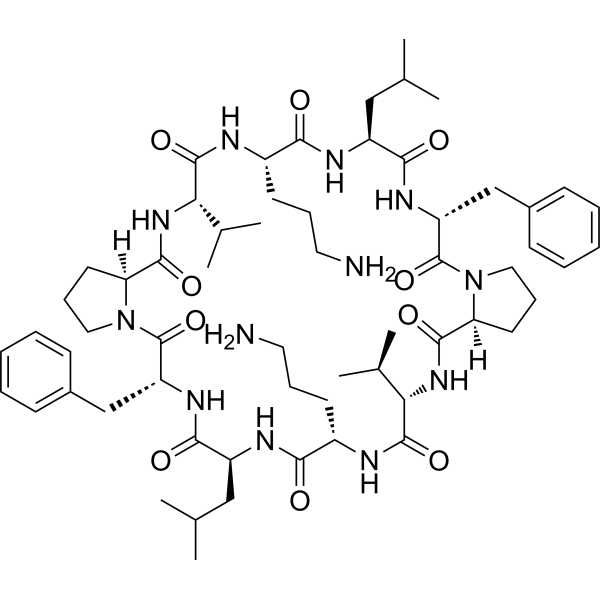
Gramicidin S (Gramicidin soviet) is a cationic cyclic peptide antibiotic that selectively targets bacterial cell membranes and has anticancer activity. Gramicidin S also exerts antibacterial activity by destroying membrane integrity and interfering with membrane protein function. Gramicidin S inserts into the phospholipid bilayer through hydrophobic amino acid residues, specifically binds to negatively charged membrane lipids and disrupts membrane structure, thereby inhibiting cell division and cell wall synthesis, and ultimately causing bacterial death. Gramicidin S also inhibits ion channels, with IC50s of 41 μM, 24 μM, and 3 μM for Na +/K +-ATPase, tobacco leaf plasma membrane Mg 2+/K +-ATPase, and rat heart plasma membrane Ca 2+-ATPase, respectively .
loading...
    loading...
1
1 Cited Publications
Cat. No.: HY-156630
CAS No.: 2055939-68-7
Purity:  ≥98.0%
Target:  

Liposome

Research Areas:  

Others

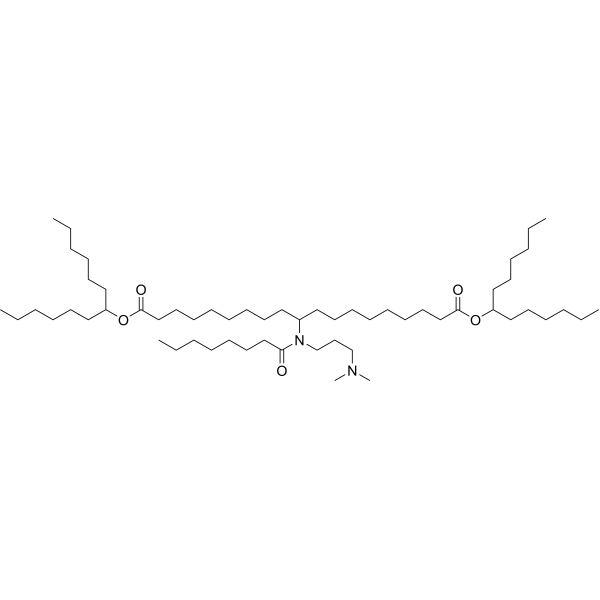
Ionizable lipid-1 (compound II-10) is an ionizable lipid (pKa=6.16) that can be used to prepare lipid nanoparticles (LNP) with bilayer structure .
loading...
    loading...
1
1 Cited Publications
Cat. No.: HY-B1243
CAS No.: 550-83-4
Target:  

Sodium Channel

Research Areas:  

Neurological Disease

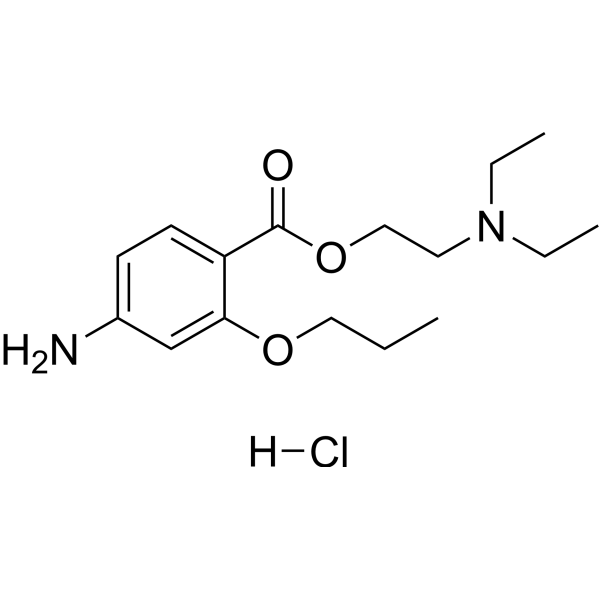
Propoxycaine hydrochloride is a voltage-gated sodium channel inhibitor. Propoxycaine hydrochloride delays monophasic A spike action potential recovery. Propoxycaine hydrochloride increases bulk lateral, rotational, and annular lipid fluidity in neuronal membrane lipid bilayers, with greater inner monolayer fluidization, and induces membrane protein clustering. Propoxycaine hydrochloride can be used for the research of pain .
loading...
    loading...
1
1 Cited Publications
Cat. No.: HY-157624
CAS No.: 96998-01-5
Purity:  ≥99.0%
Synonyms: 18:0-22:6 PE
Target:  

Liposome

Research Areas:  

Others

1-Stearoyl-2-docosahexaenoyl-sn-glycero-3-phosphoethanolamine (18:0-22:6 PE) is a lipid compound that can be used for liposome preparation. Liposomes are the main component of vesicles with concentric phospholipid bilayer membranes, which can be used to construct drug delivery systems for anti-cancer and anti-infection fields. Highly polar water-soluble loads can be captured in the internal aqueous space of liposomes, while lipophilic loads can be distributed into the lipid bilayer and become part of the lipid bilayer. Especially for the delivery of antisense oligonucleotides, it can overcome the problems of inefficient cellular uptake and rapid loss in the body.
loading...
    loading...
1
1 Cited Publications
Cat. No.: HY-109506S9
CAS No.: 65277-91-0
Purity:  ≥95.0%
Synonyms: 129Y83-13C2
DPPC-13C2 is a deuterated labeled DPPC . DPPC (129Y83) is a phosphoglyceride that can be used to prepare lipid monolayers, bilayers, and liposomes. DPPC is the main lipid component of pulmonary surfactant. Dppc-liposome can be effectively used as a delivery vector to induce an immune response against GSL antigen in mice .
loading...
    loading...
1
1 Cited Publications
Cat. No.: HY-111550
CAS No.: 342795-08-8
Purity:  99.85%
Target:  

Ras MDM-2/p53

Research Areas:  

Cancer

Bragsin2 is a potent, selective and noncompetitive nucleotide exchange factor BRAG2 inhibitor, with an IC50 of 3 μM. Bragsin2 binds at the interface between the PH domain of BRAG2 and the lipid bilayer, leads BRAG2 unable to activate lipidated Arf GTPase. Bragsin2 affects breast cancer stem cells .
loading...
    loading...
1
1 Cited Publications
Cat. No.: HY-148978
CAS No.: 321883-23-2
Purity:  99.62%
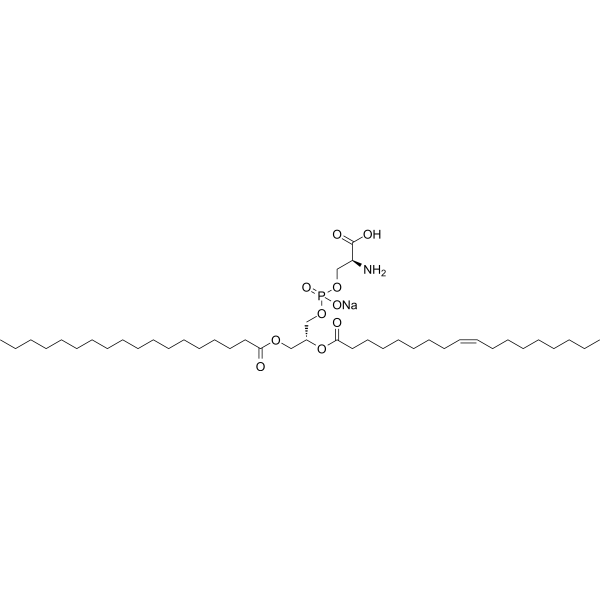
18:0,18:1 PS sodium is the dominant phosphatidylserine subtype in cells, exosomes and HIV particles. It is abundant in the brain and is essential for maintaining membrane structure, lipid raft organization and intracellular trafficking. 18:0,18:1 PS sodium mediates interleaflet membrane coupling through cholesterol-dependent interactions with very long-chain sphingolipids, and can induce the clustering of glycosylphosphatidylinositol-anchored proteins. In addition, clusters formed by the binding of 18:0,18:1 PS sodium to cholesterol not only facilitate the proper distribution of cholesterol in lipid bilayers, but also effectively protect cholesterol from oxidative damage .
loading...
    loading...
1
1 Cited Publications
Cat. No.: HY-148978A
CAS No.: 124262-93-7
Research Areas:  

Metabolic Disease

18:0,18:1 PS is the dominant phosphatidylserine subtype in cells, exosomes and HIV particles. It is abundant in the brain and is essential for maintaining membrane structure, lipid raft organization and intracellular trafficking. 18:0,18:1 PS mediates interleaflet membrane coupling through cholesterol-dependent interactions with very long-chain sphingolipids, and can induce the clustering of glycosylphosphatidylinositol-anchored proteins. In addition, clusters formed by the binding of 18:0,18:1 PS to cholesterol not only facilitate the proper distribution of cholesterol in lipid bilayers, but also effectively protect cholesterol from oxidative damage .
loading...
    loading...
1
1 Cited Publications
Cat. No.: HY-135416A
CAS No.: 98072-47-0
Purity:  ≥96.0%
Recombinant Streptolysin O is a cholesterol-targeting, thiol-activated pore-forming toxin. Recombinant Streptolysin O binds to cholesterol via its C-terminal domain 4, oligomerizes to form arc-shaped or ring-shaped structures, inserts amphipathic helices into the lipid bilayer, and forms transmembrane β-barrel pores, resulting in cell permeabilization. Recombinant Streptolysin O enables controllable cell membrane permeabilization, fluorescent probe delivery, and exogenous molecule uptake .
loading...
    loading...
1
1 Cited Publications
Cat. No.: HY-W583868
CAS No.: 26662-94-2
Synonyms: 1,2-POPE; 16:0-18:1 PE
Target:  

Liposome

Research Areas:  

Others

1-Palmitoyl-2-oleoyl-sn-glycero-3-PE (1,2-POPE; 16:0-18:1 PE) is a phosphatidylethanolamine (PE) lipid. 1-Palmitoyl-2-oleoyl-sn-glycero-3-PE can induce lipid bilayer to form a hexagonal phase (HII) structure in an acidic environment and promote membrane fusion. 1-Palmitoyl-2-oleoyl-sn-glycero-3-PE can enhance the endosomal escape ability of lipid nanoparticles (LNPs) and improve the cellular delivery efficiency of nucleic acid drugs such as mRNA. 1-Palmitoyl-2-oleoyl-sn-glycero-3-PE can be used for LNP carrier targeting of gene therapy and mRNA vaccines .
loading...
    loading...
1
1 Cited Publications
Cat. No.: HY-140739A
CAS No.: 185844-12-6
Target:  

Liposome

Research Areas:  

Neurological Disease Cancer

DSPE-PEG2000-Maleimide free acid is a phospholipid-PEG conjugate. DSPE-PEG2000-Maleimide free acid utilizes the amphiphilicity of DSPE to insert into the lipid bilayer of liposomes or nanoparticles. DSPE-PEG2000-Maleimide free acid covalently couples to the sulfhydryl (-SH) of ligands (such as antibodies, peptides, or proteins) via thiol-maleimide click chemistry, giving the particles targeting capabilities. DSPE-PEG2000-Maleimide free acid can be used in the researches of breast cancer, lymphoma, and inherited retinal degeneration .
loading...
    loading...
Cat. No.: HY-W441011
CAS No.: 1383932-86-2
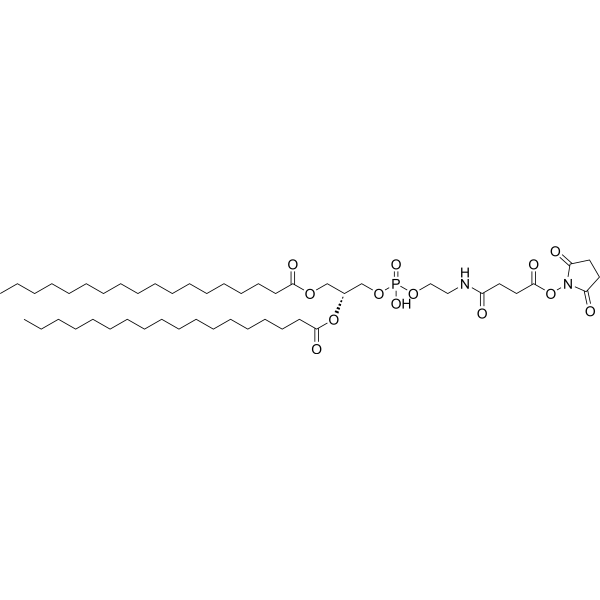
DSPE-NHS is a bioconjugation phospholipid molecule with two hydrophobic lipid tails. DSPE-NHS is a self-assembling reagent which forms lipid bilayer in aqueous solution. The NHS-ester is reactive with N-terminal of protein/peptide or other amine molecule to form a stable amide linkage. DSPE-NHS labels antibodies. DSPE-NHS can be used to prepare liposomes as agent nanocarrier .
loading...
    loading...

