



43 Results for "

malignant B cells

" in MedChemExpress (MCE) Product Catalog:
Products (43)

43 Results for "malignant B cells" in MCE Product Catalog:

9
9 Cited Publications
Cat. No.: HY-10966
CAS No.: 405554-55-4
Purity:  99.77%
Target:  

Raf Apoptosis

Research Areas:  

Neurological Disease Cancer

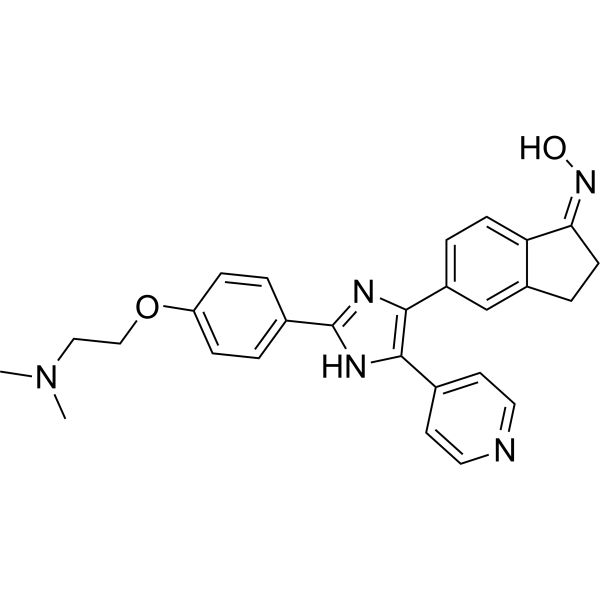
SB-590885 is a BRAF/c-Raf kinase inhibitor that selectively targets B-Raf, and it amplifies the ERK/MAPK signaling pathway in RAS-activated cells. SB-590885 effectively inhibits the malignant proliferation, transformation and tumorigenicity of oncogenic B-Raf cells; it also induces the proliferation of erythroid progenitor cells, delays their differentiation and promotes hemoglobin synthesis, thereby improving ineffective erythropoiesis and reducing apoptosis. SB-590885 exerts a synergistic effect with TGF-β inhibitors and glucocorticoids, significantly promoting the formation of erythroid colonies in cells from patients with Diamond-Blackfan anemia (DBA). SB-590885 is mainly used in relevant studies on DBA, cisplatin-induced myelosuppression-related anemia, and pan-cancers such as melanoma and colorectal cancer .
loading...
    loading...
8
8 Cited Publications
Cat. No.: HY-14197A
CAS No.: 17780-75-5
Purity:  99.92%
Synonyms: M&B 9302 hydrochloride
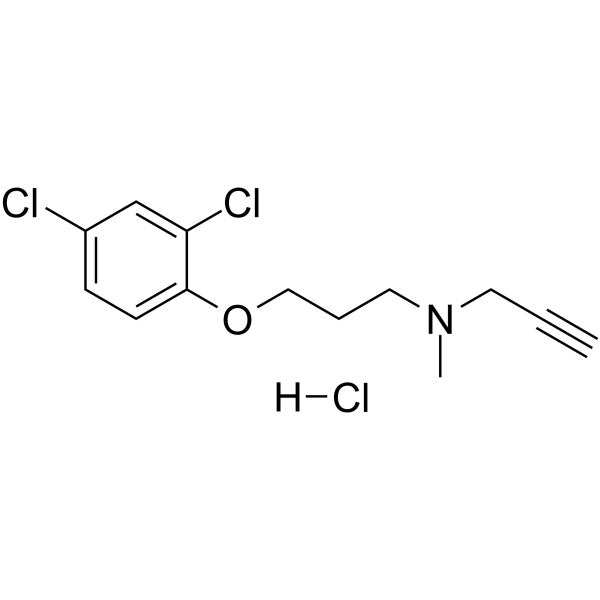
Clorgyline hydrochloride (M&B 9302 hydrochloride) is a selective, irreversible monoamine oxidase A (MAO-A) inhibitor that can cross the blood-brain barrier and exhibits activity against the 5-HT Receptor at very high doses. Clorgyline hydrochloride regulates monoamine neurotransmitter levels, the release of dopamine and acetylcholine, the uptake and effects of Tyramine (HY-W007606), noradrenergic function, circadian locomotor activity rhythms, feeding behavior, and body weight. Clorgyline hydrochloride induces tumor-suppressive transcriptional programs, secretory differentiation, androgen signaling regulation, Bcl-2 expression, and radioprotective effects in non-malignant cells. Clorgyline hydrochloride is used in the research of high-grade prostate cancer, Huntington's disease, major affective disorder, radiation-induced normal tissue toxicity, and obesity .
loading...
    loading...
8
8 Cited Publications
Cat. No.: HY-14197
CAS No.: 17780-72-2
Purity:  99.76%
Synonyms: M&B 9302
Clorgyline (M&B 9302) is a selective, irreversible monoamine oxidase A (MAO-A) inhibitor that can cross the blood-brain barrier and exhibits activity against the 5-HT Receptor at very high doses. Clorgyline regulates monoamine neurotransmitter levels, the release of dopamine and acetylcholine, the uptake and effects of Tyramine (HY-W007606), noradrenergic function, circadian locomotor activity rhythms, feeding behavior, and body weight. Clorgyline induces tumor-suppressive transcriptional programs, secretory differentiation, androgen signaling regulation, Bcl-2 expression, and radioprotective effects in non-malignant cells. Clorgyline is used in the research of high-grade prostate cancer, Huntington's disease, major affective disorder, radiation-induced normal tissue toxicity, and obesity .
loading...
    loading...
7
7 Cited Publications
Cat. No.: HY-N1435
CAS No.: 114482-86-9
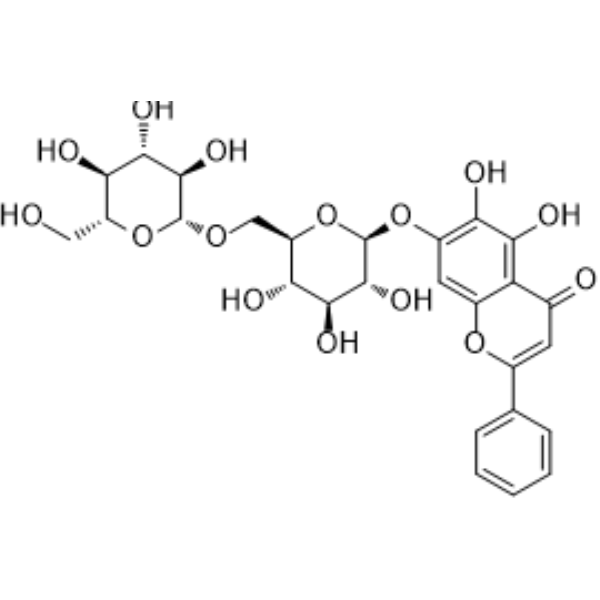
Oroxin B (OB) is a BBB-permeable flavonoid isolated from traditional Chinese herbal medicine Oroxylum indicum (L.) Vent. Oroxin B (OB) possesses obvious inhibitory effect and induces early apoptosis rather than late apoptosis on liver cancer cells through upregulation of PTEN, down regulation of COX-2, VEGF, PI3K, and p-AKT. Oroxin B (OB) selectively induces tumor-suppressive ER stress in malignant lymphoma cells .
loading...
    loading...
6
6 Cited Publications
Cat. No.: HY-147308
CAS No.: 1215011-08-7
Purity:  99.05%
Synonyms: PCLX-001
Research Areas:  

Cancer

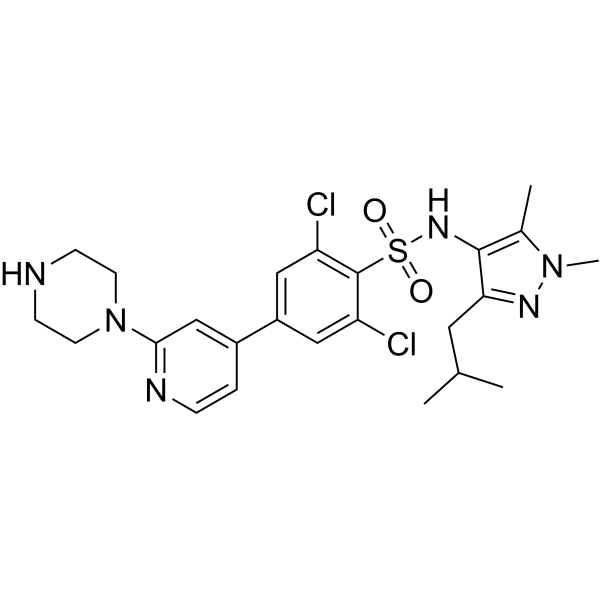
Zelenirstat is an orally acitve, small-molecule, dual N-myristoyltransferase (NMT) inhibitor, with IC50s of 5 nM (NMT1) and 8 nM (NMT2), respectively. Zelenirstat can induce cell apoptosis, has anti-cancer activity, inhibits early B cell receptor (BCR) signaling, and can be used to study malignant lymphoma .
loading...
    loading...
4
4 Cited Publications
Cat. No.: HY-P2336A
Target:  

Melanocortin Receptor

Research Areas:  

Cancer

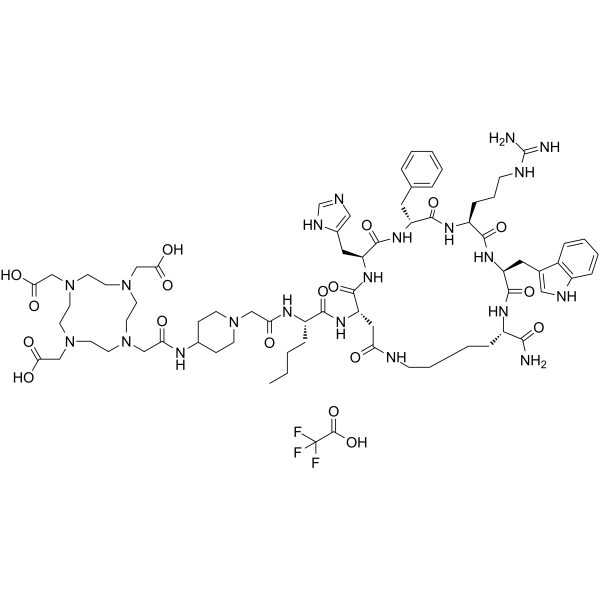
CCZ01048 TFA, a α-MSH analogue, exhibits high binding affinity to melanocortin 1 receptor (MC1R) with a Ki of 0.31 nM. CCZ01048 TFA shows rapid internalization into B16F10 melanoma cells and high in vivo stability. CCZ01048 TFA is a promising candidate for PET imaging of malignant melanoma .
loading...
    loading...
3
3 Cited Publications
Cat. No.: HY-129390
CAS No.: 1655504-04-3
Purity:  99.97%
Synonyms: ICP-022
Target:  

Btk

Research Areas:  

Cancer

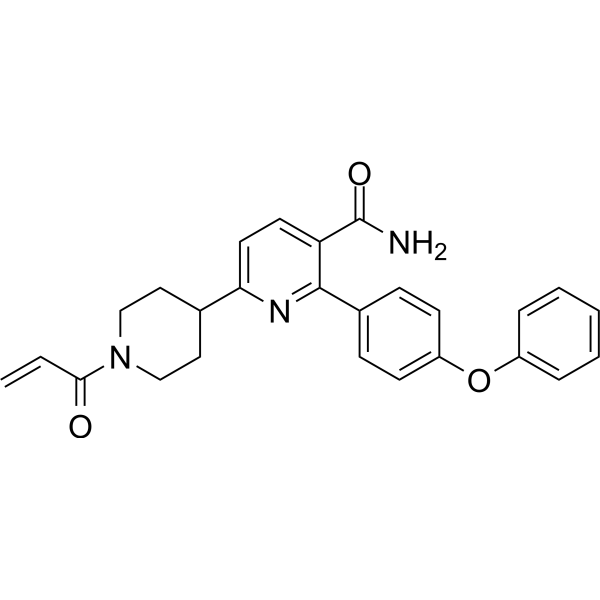
Orelabrutinib (ICP-022) is a potent, orally active, and irreversible Bruton's tyrosine kinase (BTK) inhibitor with potential antineoplastic activity. Orelabrutinib prevents both the activation of the B-cell antigen receptor (BCR) signaling pathway and BTK-mediated activation of downstream survival pathways, inhibiting the growth of malignant B-cells that overexpress BTK .
loading...
    loading...
1
1 Cited Publications
Cat. No.: HY-P99024
CAS No.: 2229047-91-8
Synonyms: RO7082859; RG-6026

Target:  

CD20 CD3

Research Areas:  

Inflammation/Immunology Cancer

Glofitamab (RO7082859) is a T-cell-engaging bispecific antibody possessing a novel 2:1 structure with bivalency for CD20 on B cells and monovalency for CD3 on T cells. Glofitamab leads to T-cell activation, proliferation, and tumor cell killing upon binding to CD20 on malignant cells. Glofitamab induces durable complete remissions in relapsed or refractory B-Cell non-Hodgkin lymphoma (B-NHL) .
loading...
    loading...
1
1 Cited Publications
Cat. No.: HY-P99033
CAS No.: 1905409-39-3
Synonyms: BTCT-4465A; RG-7828; RO7030816
Target:  

CD20 CD3

Research Areas:  

Cancer

Mosunetuzumab (BTCT-4465A) is a full-length, fully humanized immunoglobulin G1 (IgG1) T-cell-dependent bispecific (TDB) antibody targeting CD20 (B cells) and CD3 (T cells). Mosunetuzumab redirects T cells to engage and eliminate malignant B cells and can be used for the research of relapsed or refractory (R/R) B-cell non-Hodgkin lymphomas (B-NHLs). The Fc region of Mosunetuzumab incorporates a "knob-into-hole" structural modification and an N297G point mutation to achieve heterodimerization and eliminate Fc glycosylation, thereby effectively silencing antibody effector functions .
loading...
    loading...
1
1 Cited Publications
Cat. No.: HY-108551
CAS No.: 179324-22-2
Purity:  ≥95.0%
Synonyms: Z-Leu-Leu-LeuB(OH)2; ZL3B
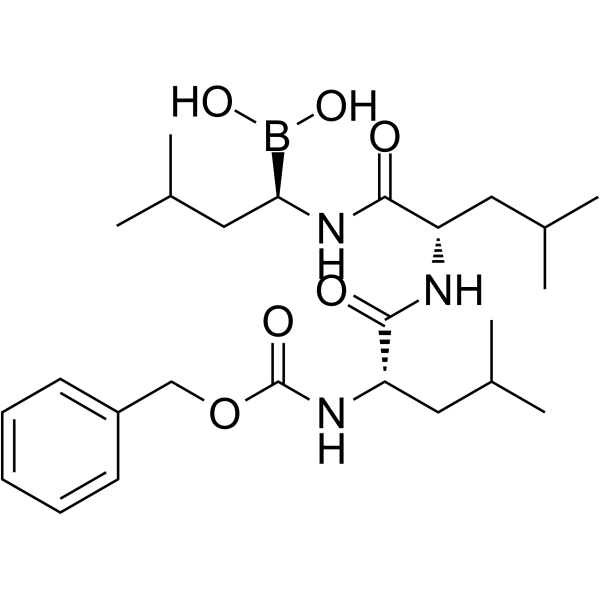
MG-262 (Z-Leu-Leu-LeuB(OH)2; ZL3B) is a reversible proteasome inhibitor. MG-262 down-regulates VEGF receptor Flt-1. MG-262 inhibits cell growth and induces apoptosis in malignant cells. MG-262 induces reactive oxygen species (ROS). MG-262 can be used for anti-cancer study .
loading...
    loading...
1
1 Cited Publications
Cat. No.: HY-NP0182
Synonyms: PNA (Biotinylated)
Target:  

Fluorescent Dye

Research Areas:  

Cancer

Peanut Agglutinin (PNA) Biotinylated is a biotinylated lectin that specifically recognizes and binds to the Galβ1-3GalNAc sequence, thereby targeting SPESP1 and TF blood group antigens. As an acrosome-specific marker, Peanut Agglutinin Biotinylated stains mouse spermatocytes and sperm acrosomes with high specificity, and this binding depends not only on SPESP1 but also recognizes other testicular acrosomal glycoproteins. Peanut Agglutinin Biotinylated accurately identifies TF antigens in Reed-Sternberg cells, histiocytosis X cells, and esophageal squamous cell carcinoma, without cross-reacting with non-specific cells. Peanut Agglutinin Biotinylated maintains staining stability in both B-5 and formalin fixatives, and serves as an important tool for the study of Hodgkin's disease, histiocytosis X, and various malignant tumors .
loading...
    loading...
1
1 Cited Publications
Cat. No.: HY-13747
CAS No.: 13909-09-6
Purity:  ≥98.0%
Research Areas:  

Cancer

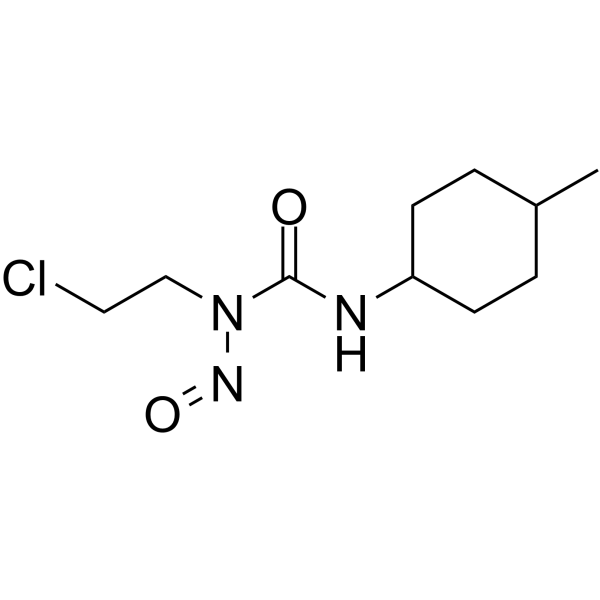
Semustine is an orally active, blood-brain barrier permeable antitumor alkylating agent with a binding affinity of 1.53 × 10 3 M -1 for guanine and thymine residues in bovine DNA. Semustine undergoes major groove-directed alkylation at guanine residues to form O6-chloroethylguanine and N1-O6-ethanoguanine adducts, and generates dG-dC interstrand crosslinks. Semustine induces partial B- to C-type transition of DNA, base stacking and helical structure distortion, mild dehydration, as well as partial DNA double-strand unwinding. Semustine can be used in research related to Lewis lung cancer, leukemia, Hodgkin's lymphoma, malignant melanoma, glioma, and diffuse large B-cell lymphoma .
loading...
    loading...
Cat. No.: HY-P4073
CAS No.: 1075214-55-9
Synonyms: GRN1005; Paclitaxel trevatide
Research Areas:  

Cancer

ANG1005 (Paclitaxel trevatide) is a brain-penetrating peptide-drug conjugate. ANG1005, a taxane derivative, consists of three paclitaxel (HY-B0015) molecules covalently linked to Angiopep-2, designed to cross the blood-brain and blood-cerebrospinal barriers and to penetrate malignant cells via low density lipoprotein receptor-related protein (LRP1) transport system .
loading...
    loading...
Cat. No.: HY-P99034
CAS No.: 1622075-65-3

Target:  

CD22

Research Areas:  

Cancer

Moxetumomab is a CD22-targeting monoclonal antibody that forms the component of Moxetumomab Pasudotox, a recombinant CD22-targeting immunotoxin. Moxetumomab binds to CD22 on malignant B cells and delivers the PE38 toxin domain to tumor cells. Moxetumomab can be used in research on relapsed or refractory hairy cell leukemia .
loading...
    loading...
Cat. No.: HY-W035709
CAS No.: 485-65-4
Synonyms: Dihydrocinchonine
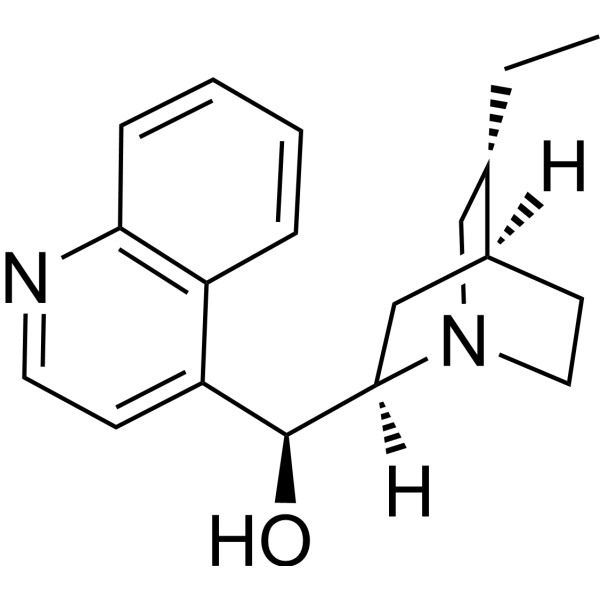
Hydrocinchonine (Dihydrocinchonine) is a multidrug resistance (MDR)-reversal agent. Hydrocinchonine directly inhibits the function and expression of P-gp, which is the mechanism by which it reverses MDR. Hydrocinchonine exerts synergistic apoptotic effect with Paclitaxel (HY-B0015) in MES-SA/DX5 cells. Hydrocinchonine can be used for the study of gynecological malignant tumors (such as uterine sarcoma) with drug resistance caused by excessive expression of P-gp .
loading...
    loading...
Cat. No.: HY-113326
CAS No.: 540-04-5
Synonyms: trans-Phytoene
Phytoene (trans-Phytoene) is a carotene pigment. Phytoene is the precursor of all carotenoids. Phytoene is the predominant PT isomer in most carotenogenic organisms. Phytoene can delay the skin tumors appearance and reduce their number in mice that are induced the tumors with UV-B light. Phytoene leads to protection against oxidative stress and malignant transformation. Phytoene inhibits the proliferation of breast cancer cells .
loading...
    loading...
Cat. No.: HY-79602
CAS No.: 70-55-3
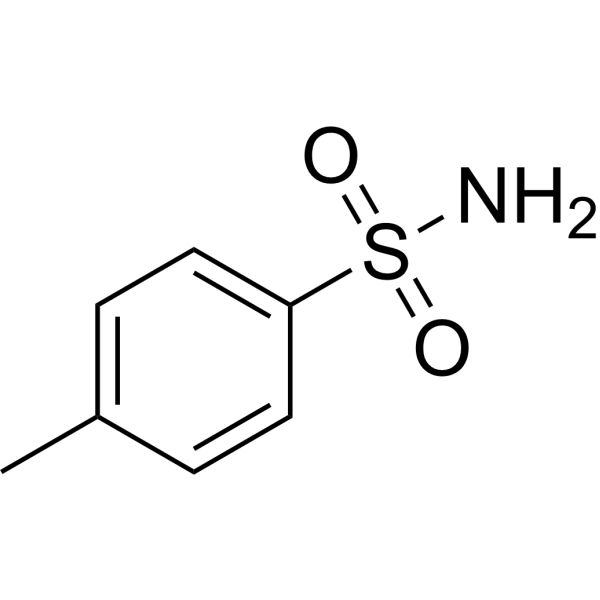
p-Toluenesulfonamide is a small-molecule anticancer agent and plasticizer. p-Toluenesulfonamide exerts antitumor activity by inducing lysosomal membrane permeabilization, cathepsin B release and lysosome-mediated cell death. p-Toluenesulfonamide modulates cholesterol distribution in lipid rafts of tumor cell membranes and the Akt/mTOR/p70S6K pathway. p-Toluenesulfonamide shows activity against various cancers including hepatocellular carcinoma, non-small cell lung cancer and tongue squamous cell carcinoma; intrapleural injection effectively reduces malignant pleural effusion without causing pleural adhesion. p-Toluenesulfonamide is also the main degradation product of the disinfectant Chloramine-T (HY-B0959) in water. p-Toluenesulfonamide facilitates the localization of fluorescent probes to the endoplasmic reticulum. p-Toluenesulfonamide can be used in cancer-related research .
loading...
    loading...
Cat. No.: HY-B0722R
CAS No.: 56-92-8
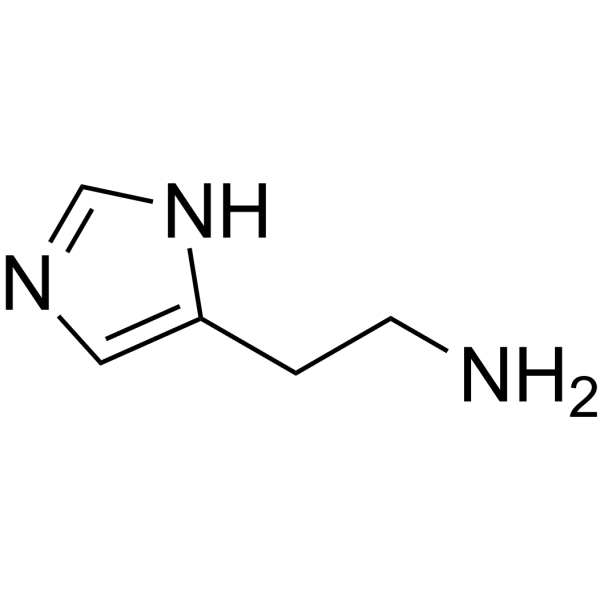
Histamine dihydrochloride (Standard) is the analytical standard of Histamine dihydrochloride (HY-B0722). This product is intended for research and analytical applications. Histamine dihydrochloride is the agonist for histamine receptor and a vasodilator. Histamine dihydrochloride is an organic nitrogen compound that participates in local immune responses, regulates intestinal physiological functions, and acts as a neurotransmitter. Histamine dihydrochloride affects p38 MAPK/Akt signaling pathway, exhibits antitumor, antioxidant and anti-inflammatory activities. Histamine dihydrochloride can be used in the research of acute myeloid leukemia, malignant melanoma, and renal cell carcinoma .
loading...
    loading...
Cat. No.: HY-B1204R
CAS No.: 51-45-6
Synonyms: Ergamine (Standard)
Histamine (Standard) is the analytical standard of Histamine (HY-B1204). This product is intended for research and analytical applications. Histamine is the agonist for histamine receptor and a vasodilator. Histamine is an organic nitrogen compound that participates in local immune responses, regulates intestinal physiological functions, and acts as a neurotransmitter. Histamine affects p38 MAPK/Akt signaling pathway, exhibits antitumor, antioxidant and anti-inflammatory activities. Histamine can be used in the research of acute myeloid leukemia, malignant melanoma, and renal cell carcinoma .
loading...
    loading...
Cat. No.: HY-P991225

Target:  

Fc Receptor (FcR) CD20

Research Areas:  

Inflammation/Immunology Cancer

BI-1206 is a recombinant and antagonistic human monoclonal antibody targeting FcγRIIB (CD32B). BI-1206 can block CD20 internalization induced by Rituximab (HY-P9913) itself or combined with others including Ibrutinib (HY-10997), Venetoclax (HY-15531), and CHOP. BI-1206 can enhance or recover the activity of Rituximab or other anti-CD20 monoclonal antibodies. BI-1206 has cytolytic activity against malignant B cells. BI-1206 can be studied for cancer research such as mantle cell lymphoma (MCL) .
loading...
    loading...

