
32 Results for "

mastitis

" in MedChemExpress (MCE) Product Catalog:
Products (32)

32 Results for "mastitis" in MCE Product Catalog:

2
2 Cited Publications
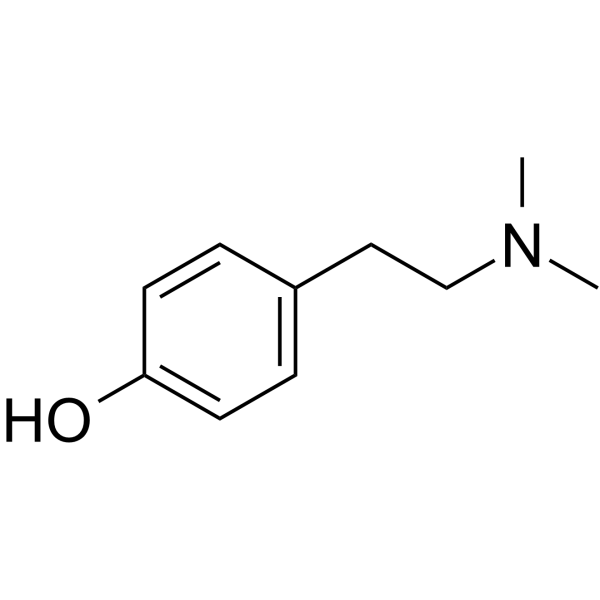
Cat. No.: HY-N0113
CAS No.: 539-15-1
Synonyms: Ordenina; Peyocactine
Hordenine (Ordenina; Peyocactine) is a multifunctional alkaloid with oral activity and blood-brain barrier penetration. Hordenine inhibits LPS-induced phosphorylation of p38, JNK, ERK1/2, p65, IκB, and AKT, prevents p65 nuclear translocation, and suppresses inflammatory cytokines and mediators. Hordenine promotes M2 macrophage polarization, restores blood-milk barrier integrity, alleviates oxidative stress by reducing ROS and MDA, and attenuates LPS-induced lung injury and pulmonary edema. Hordenine inhibits cAMP production, CREB phosphorylation, and MITF expression, thereby suppressing melanin synthesis in melanocytes and reconstructed epidermis. Hordenine activates the Wnt/β-catenin signaling pathway, promotes dermal papilla cell proliferation and hair shaft elongation, and accelerates hair regeneration. Hordenine activates DRD2, acts as a D3R partial agonist, α2A-AR full agonist, and 5-HT2A-R antagonist, and inhibits SERT and DAT. Hordenine inhibits α-synuclein accumulation and ameliorates motor deficits in Parkinson's disease models. Hordenine limits alcohol intake, reduces relapse drinking behavior, and modulates alcohol-induced conditioned place preference. Hordenine can be used for research on mastitis, skin pigmentation, acute lung injury, foodborne diseases, hair loss, Parkinson's disease, bacterial infections, and alcohol use disorder .
loading...
    loading...
2
2 Cited Publications
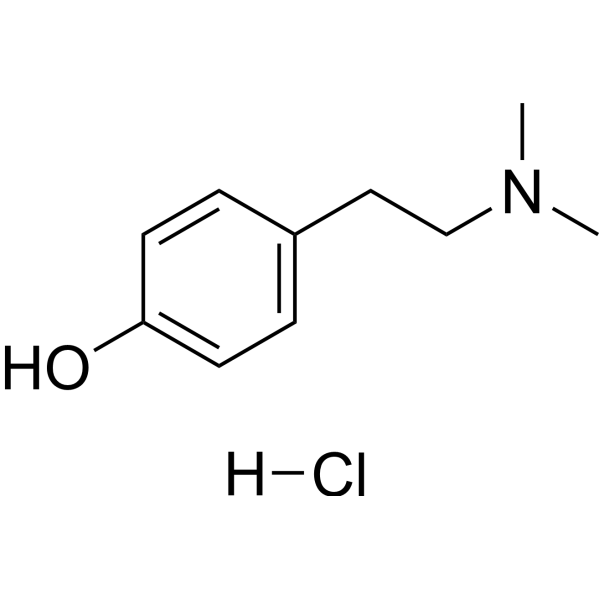
Cat. No.: HY-N0113B
CAS No.: 6027-23-2
Synonyms: Ordenina hydrochloride; Peyocactine hydrochloride
Hordenine hydrochloride (Ordenina hydrochloride; Peyocactine hydrochloride) is a multifunctional alkaloid with oral activity and blood-brain barrier penetration. Hordenine hydrochloride inhibits LPS-induced phosphorylation of p38, JNK, ERK1/2, p65, IκB, and AKT, prevents p65 nuclear translocation, and suppresses inflammatory cytokines and mediators. Hordenine hydrochloride promotes M2 macrophage polarization, restores blood-milk barrier integrity, alleviates oxidative stress by reducing ROS and MDA, and attenuates LPS-induced lung injury and pulmonary edema. Hordenine hydrochloride inhibits cAMP production, CREB phosphorylation, and MITF expression, thereby suppressing melanin synthesis in melanocytes and reconstructed epidermis. Hordenine hydrochloride activates the Wnt/β-catenin signaling pathway, promotes dermal papilla cell proliferation and hair shaft elongation, and accelerates hair regeneration. Hordenine hydrochloride activates DRD2, acts as a D3R partial agonist, α2A-AR full agonist, and 5-HT2A-R antagonist, and inhibits SERT and DAT. Hordenine hydrochloride inhibits α-synuclein accumulation and ameliorates motor deficits in Parkinson's disease models. Hordenine hydrochloride limits alcohol intake, reduces relapse drinking behavior, and modulates alcohol-induced conditioned place preference. Hordenine hydrochloride can be used for research on mastitis, skin pigmentation, acute lung injury, foodborne diseases, hair loss, Parkinson's disease, bacterial infections, and alcohol use disorder .
loading...
    loading...
1
1 Cited Publications
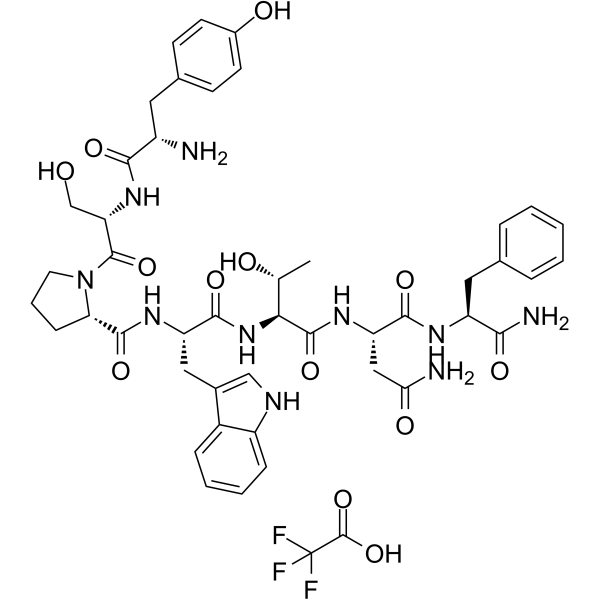
Cat. No.: HY-P1452A
CAS No.: 2703745-76-8
Target:  

Bacterial

Research Areas:  

Infection

RNAIII-inhibiting peptide (TFA) is a potent inhibitor of Staphylococcus aureus, effective in the diseases such as cellulitis, keratitis, septic arthritis, osteomylitis and mastitis.
loading...
    loading...
Cat. No.: HY-121389
CAS No.: 629-54-9
Purity:  ≥97.0%
Synonyms: Palmitamide
Hexadecanamide (Palmitamide) is a fatty acid amide that has orally active anti-allergic, antioxidant, and neuroprotective effects. Hexadecanamide exerts protective effects in Staphylococcus aureus- and SARA-induced mastitis. Hexadecanamide suppresses S. aureus-induced activation of the NF-κB pathway and improves blood-milk barrier integrity. Hexadecanamide activates PPARα. Hexadecanamide enhances sperm motility in vitro. Hexadecanamide can be studied in research for mastitis and asthenozoospermia .
loading...
    loading...
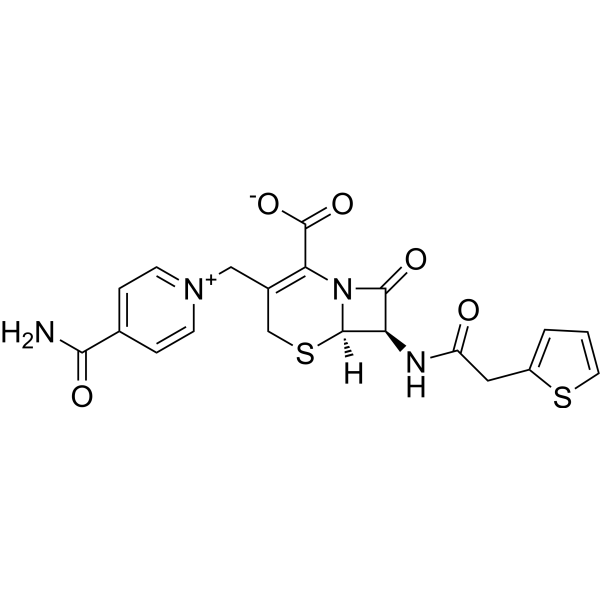
Cat. No.: HY-B1252
CAS No.: 5575-21-3
Target:  

Antibiotic Bacterial

Research Areas:  

Infection Inflammation/Immunology

Cefalonium is a first-generation cephalosporin bactericidal antimicrobial agent. Cefalonium can be used in studies related to bovine mastitis, Staphylococcus aureus-induced mastitis and intramammary infections .
loading...
    loading...
Cat. No.: HY-P5523A
iE-DAP dihydrochloride is a Nod1 agonist. iE-DAP dihydrochloride activates NOD1, which in turn activates the NF-κB signaling pathway and MLCK signaling pathway, inducing cellular inflammatory responses and tight junction disruption. iE-DAP dihydrochloride downregulates the expression of ZO-1 and Occludin genes. iE-DAP dihydrochloride increases the secretion of IL-6, GRO-α, MCP-1, IL-8 and MIP-1β in term human trophoblast cell cultures. iE-DAP dihydrochloride triggers preterm birth in pregnant mice, reduces fetal body weight, and induces fetal inflammation. iE-DAP dihydrochloride can be used in studies related to mastitis and preterm birth .
loading...
    loading...
Cat. No.: HY-W007479
CAS No.: 24677-78-9
2,3-Dihydroxybenzaldehyde is a derivative of Gentisaldehyde (HY-N1673), as well as an Antibacterial and anticancer agent. 2,3-Dihydroxybenzaldehyde inhibits the synthesis of DNA, RNA and proteins. It exhibits antibacterial activity against 172 Staphylococcus aureus isolates from bovine mastitis, with an MIC50 of 500 mg/L. 2,3-Dihydroxybenzaldehyde can be used in the research of bovine mastitis and L1210 mouse leukemia .
loading...
    loading...
Cat. No.: HY-126818
CAS No.: 120882-22-6
Purity:  ≥85.0%
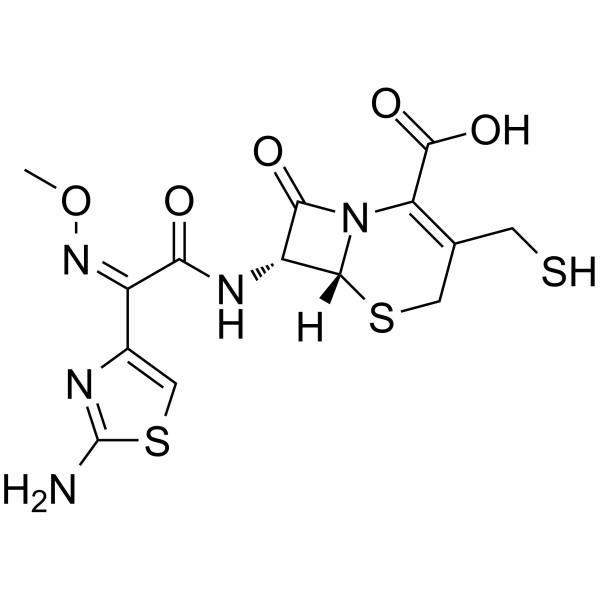
Desfuroylceftiofur is an antibacterial agent and the active metabolite of Ceftiofur sodium (HY-B0898) with an intact β-lactam ring. Desfuroylceftiofur exhibits inhibitory activity against Gram-negative and Gram-positive pathogenic bacteria of veterinary interest in vitro. Desfuroylceftiofur can be used in the research of bovine respiratory disease, porcine respiratory disease, equine lymphadenitis, bovine mastitis, turkey colibacillosis, suppurative arthritis and respiratory infections .
loading...
    loading...
Cat. No.: HY-P5523
CAS No.: 592520-07-5
iE-DAP is a Nod1 agonist. iE-DAP activates NOD1, which in turn activates the NF-κB signaling pathway and MLCK signaling pathway, inducing cellular inflammatory responses and tight junction disruption. iE-DAP downregulates the expression of ZO-1 and Occludin genes. iE-DAP increases the secretion of IL-6, GRO-α, MCP-1, IL-8 and MIP-1β in term human trophoblast cell cultures. iE-DAP triggers preterm birth in pregnant mice, reduces fetal body weight, and induces fetal inflammation. iE-DAP is applicable to research related to mastitis and preterm birth .
loading...
    loading...
Cat. No.: HY-P4984
CAS No.: 137593-46-5
Target:  

Endogenous Metabolite

Research Areas:  

Infection

Toxic Shock Syndrome Toxin-1 (TSST-1) (58-78) is a superantigen exotoxin produced by Staphylococcus aureus. Toxic Shock Syndrome Toxin-1 (TSST-1) (58-78) binds to TCR and MHC II outside the antigen-presenting site, thereby inducing unconventional polyclonal lymphocyte activation, excessive cytokine production, rapid shock, multiple organ failure syndrome and even death. Toxic Shock Syndrome Toxin-1 (TSST-1) (58-78) exacerbates mammary gland inflammation and further induces mastitis. Toxic Shock Syndrome Toxin-1 (TSST-1) (58-78) is thermostable and can be transmitted to humans via food, causing toxic shock syndrome. Toxic Shock Syndrome Toxin-1 (TSST-1) (58-78) can be used in studies related to toxic shock syndrome and staphylococcal food poisoning .
loading...
    loading...
Cat. No.: HY-N0113S
CAS No.: 1346598-66-0
Synonyms: Ordenina-d6; Peyocactine-d6
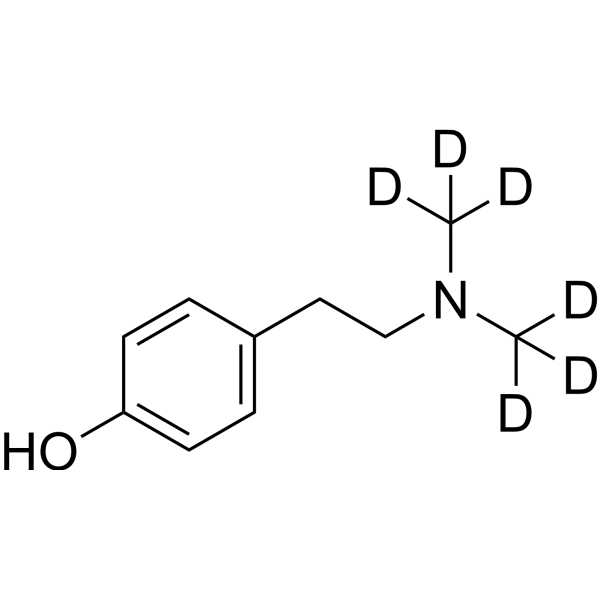
Hordenine-d6 (Ordenina-d6; Peyocactine-d6) is the deuterated-labeled Hordenine (HY-N0113). Hordenine (Ordenina; Peyocactine) is a multifunctional alkaloid with oral activity and blood-brain barrier penetration. Hordenine inhibits LPS-induced phosphorylation of p38, JNK, ERK1/2, p65, IκB, and AKT, prevents p65 nuclear translocation, and suppresses inflammatory cytokines and mediators. Hordenine promotes M2 macrophage polarization, restores blood-milk barrier integrity, alleviates oxidative stress by reducing ROS and MDA, and attenuates LPS-induced lung injury and pulmonary edema. Hordenine inhibits cAMP production, CREB phosphorylation, and MITF expression, thereby suppressing melanin synthesis in melanocytes and reconstructed epidermis. Hordenine activates the Wnt/β-catenin signaling pathway, promotes dermal papilla cell proliferation and hair shaft elongation, and accelerates hair regeneration. Hordenine activates DRD2, acts as a D3R partial agonist, α2A-AR full agonist, and 5-HT2A-R antagonist, and inhibits SERT and DAT. Hordenine inhibits α-synuclein accumulation and ameliorates motor deficits in Parkinson's disease models. Hordenine limits alcohol intake, reduces relapse drinking behavior, and modulates alcohol-induced conditioned place preference. Hordenine can be used for research on mastitis, skin pigmentation, acute lung injury, foodborne diseases, hair loss, Parkinson's disease, bacterial infections, and alcohol use disorder .
loading...
    loading...
Cat. No.: HY-131989
CAS No.: 104557-24-6
Purity:  ≥97.0%
Synonyms: Deacetylcephapirin sodium
Target:  

Bacterial

Research Areas:  

Infection

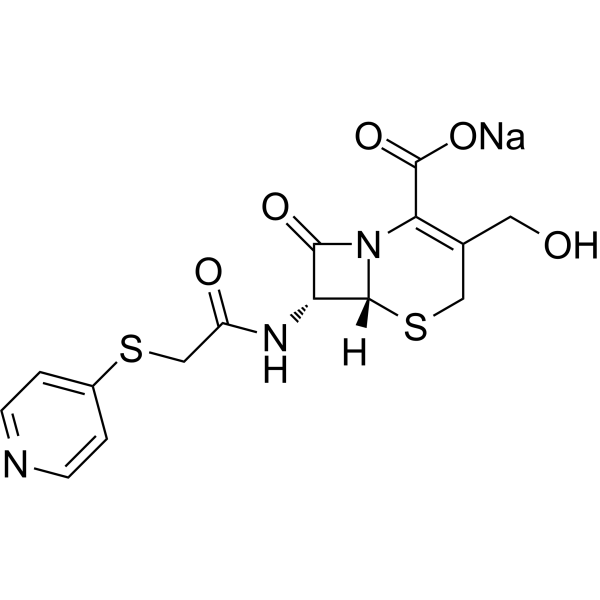
Desacetylcephapirin (Deacetylcephapirin) sodium is an active metabolite of Cephapirin (HY-A0153A). Desacetylcephapirin sodium has antimicrobial against S. aureus and coagulase-negative staphylococci mastitis pathogen .
loading...
    loading...
Cat. No.: HY-130079
CAS No.: 54-35-3
Synonyms: Penicillin G procaine
Target:  

Bacterial

Research Areas:  

Infection

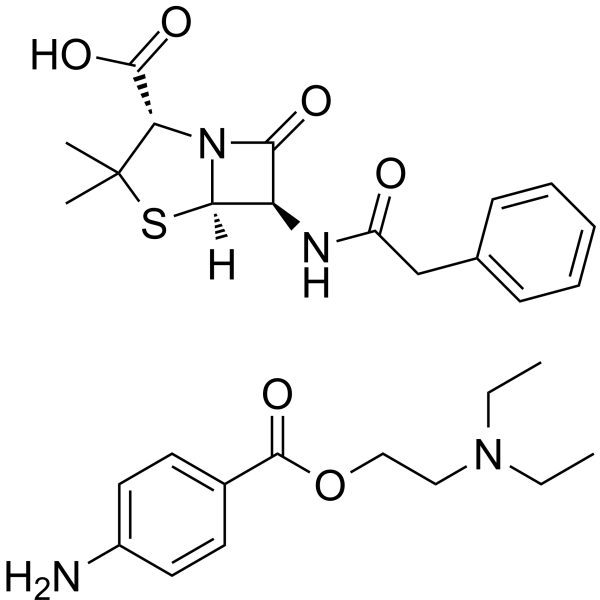
Procaine benzylpenicillin (Penicillin G procaine) is an antimicrobial agent. Procaine benzylpenicillin shows inhibitory activity against gram-positive bacteria and synergistic activity with Neomycin (HY-B0470). Procaine benzylpenicillin can be used in the study of bovine mastitis in animal husbandry .
loading...
    loading...
Cat. No.: HY-106597
CAS No.: 79548-73-5
Research Areas:  

Infection

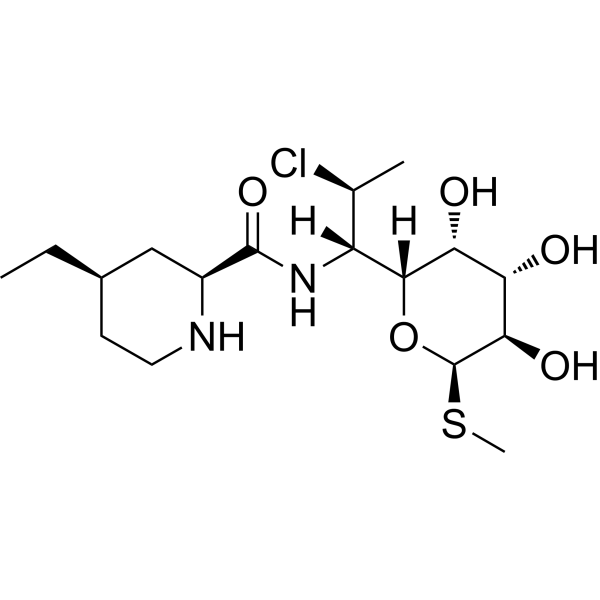
Pirlimycin is an orally active lincosamide Antibiotic, Clindamycin (HY-B1455) analog, and antimalarial agent. Pirlimycin inhibits Plasmodium growth. Pirlimycin exhibits antibacterial activity against various aerobic bacteria, particularly Staphylococcus and Streptococcus species. Pirlimycin can be used for research on bovine mastitis .
loading...
    loading...
Cat. No.: HY-B1252A
CAS No.: 1486466-27-6
Target:  

Antibiotic Bacterial

Research Areas:  

Infection Inflammation/Immunology

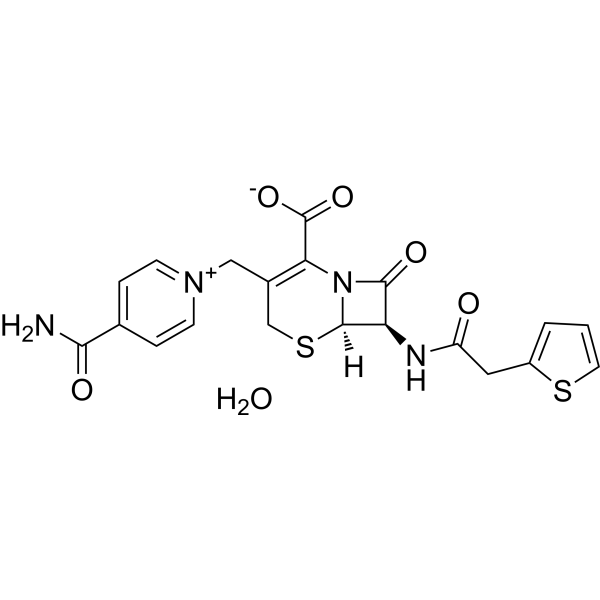
Cefalonium hydrate is a first-generation cephalosporin bactericidal antimicrobial agent. Cefalonium hydrate can be used in studies related to bovine mastitis, Staphylococcus aureus-induced mastitis and intramammary infections .
loading...
    loading...
Cat. No.: HY-B1252B
CAS No.: 1385046-35-4
Target:  

Antibiotic Bacterial

Research Areas:  

Infection Inflammation/Immunology

Cefalonium dihydrate is a first-generation cephalosporin bactericidal antimicrobial agent. Cefalonium dihydrate can be used in studies related to bovine mastitis, Staphylococcus aureus-induced mastitis and intramammary infections .
loading...
    loading...
Cat. No.: HY-B1252AS
Cefalonium-d4 hydrate is the deuterated-labeled Cefalonium hydrate (HY-B1252A). Cefalonium hydrate is a first-generation cephalosporin bactericidal antimicrobial agent. Cefalonium hydrate can be used in studies related to bovine mastitis, Staphylococcus aureus-induced mastitis and intramammary infections .
loading...
    loading...
Cat. No.: HY-B1252R
CAS No.: 5575-21-3
Cefalonium (Standard) is the analytical standard of Cefalonium (HY-B1252). This product is intended for research and analytical applications. Cefalonium is a first-generation cephalosporin bactericidal antimicrobial agent. Cefalonium can be used in studies related to bovine mastitis, Staphylococcus aureus-induced mastitis and intramammary infections .
loading...
    loading...
Cat. No.: HY-B1252BR
CAS No.: 1385046-35-4
Cefalonium dihydrate (Standard) is the analytical standard of Cefalonium dihydrate (HY-B1252B). This product is intended for research and analytical applications. Cefalonium dihydrate is a first-generation cephalosporin bactericidal antimicrobial agent. Cefalonium dihydrate can be used in studies related to bovine mastitis, Staphylococcus aureus-induced mastitis and intramammary infections .
loading...
    loading...
Cat. No.: HY-125868
CAS No.: 808-71-9
Target:  

Antibiotic Bacterial

Research Areas:  

Infection

Penethamate hydriodide is a diethylaminoethyl ester prodrug of benzylpenicillin that can be used to study bovine mastitis via the intramuscular route .
loading...
    loading...

