16 Results for "

metaphase

" in MedChemExpress (MCE) Product Catalog:
Products (16)

16 Results for "metaphase" in MCE Product Catalog:

10
10 Publications Verification
Cat. No.: HY-124955
CAS No.: 1362911-19-0
Purity:  99.94%
Target:  

APC

Research Areas:  

Cancer

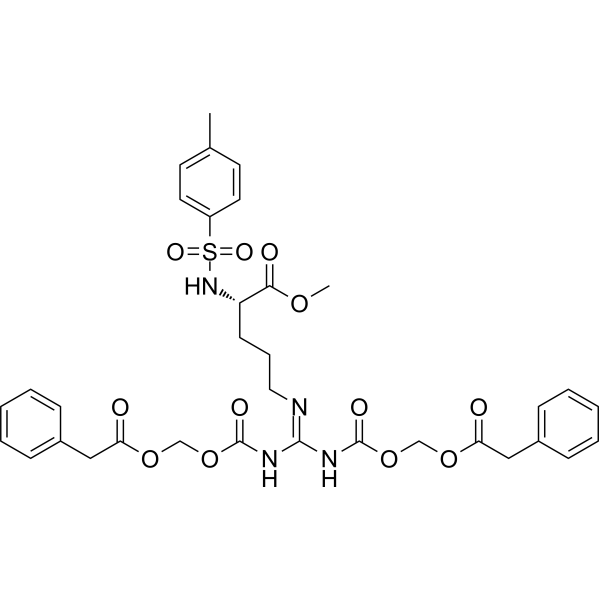
proTAME, a cell-permeable proagent form of TAME, is an anaphase promoting complex/cyclosome (APC/C) inhibitor. proTAME causes cell cycle arrest in metaphase .
loading...
    loading...
1
1 Cited Publications
Cat. No.: HY-13033
CAS No.: 1269815-17-9
Purity:  98.97%
Synonyms: CDK inhibitor II
Target:  

CDK

Research Areas:  

Endocrinology

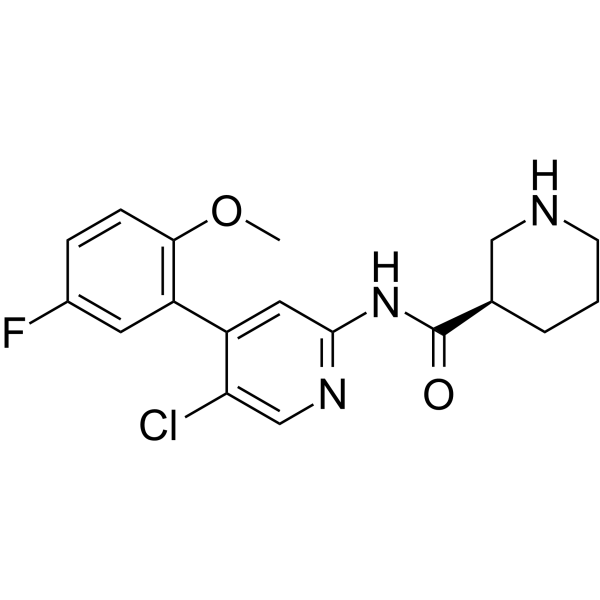
CDK-IN-2 is a specific CDK9 inhibitor with an IC50 of less than 8 nM. CDK-IN-2 reduces the phosphorylation level of H3S10. CDK-IN-2 decreases the transition rate of spermatocytes from prophase to metaphase I .
loading...
    loading...
1
1 Cited Publications
Cat. No.: HY-124757
CAS No.: 932359-76-7
Purity:  99.87%
Target:  

Proteasome Mitosis

Research Areas:  

Cancer

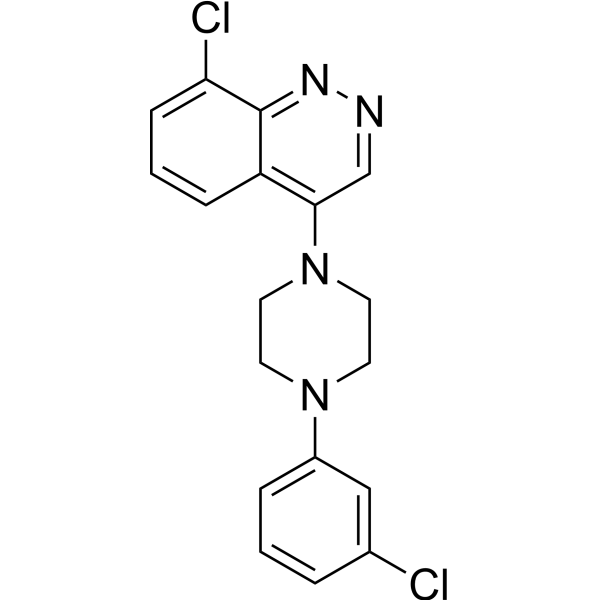
FiVe1 is a vimentin (VIM) inhibitor. FiVe1 binds to the rod domain of VIM, causing metaphase VIM disassembly and hyperphosphorylation at Ser56, ultimately leading to mitotic catastrophe, multinucleation, and loss of stemness. FiVe1 has anticancer activity against soft tissue sarcomas. FiVe1 increases the sensitivity of ovarian cancer to Cisplatin (HY-17394). FiVe1 can be used for researches of mesenchymal cancers (including breast cancer and soft tissue sarcoma) and ovarian cancers .
loading...
    loading...
Cat. No.: HY-119357
CAS No.: 33016-12-5
Purity:  99.78%
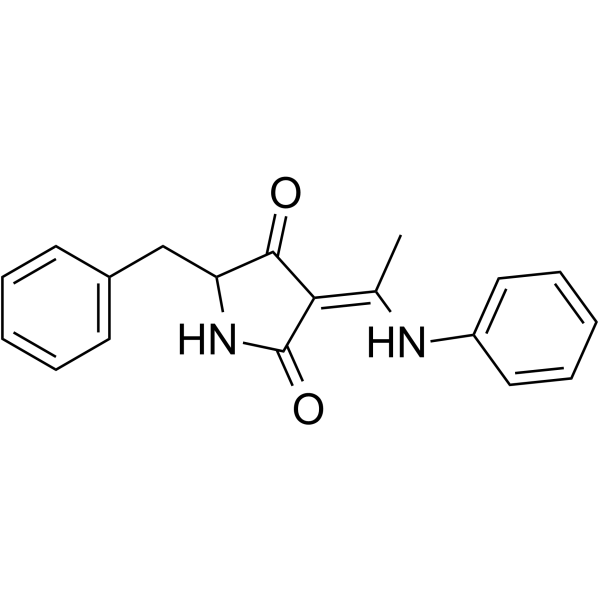
TN-16 is a Microtubule polymerization inhibitor. TN-16 induces G2/M cell cycle arrest, metaphase mitotic arrest and Apoptotic cell death in cells, and blocks late Autophagic flux by inhibiting autophagosome-lysosome fusion. TN-16 suppresses tumor growth in syngeneic mouse breast cancer models. TN-16 can be used in research related to neuroblastoma, cervical cancer, breast cancer and other tumors .
loading...
    loading...
Cat. No.: HY-N7710
CAS No.: 64284-64-6
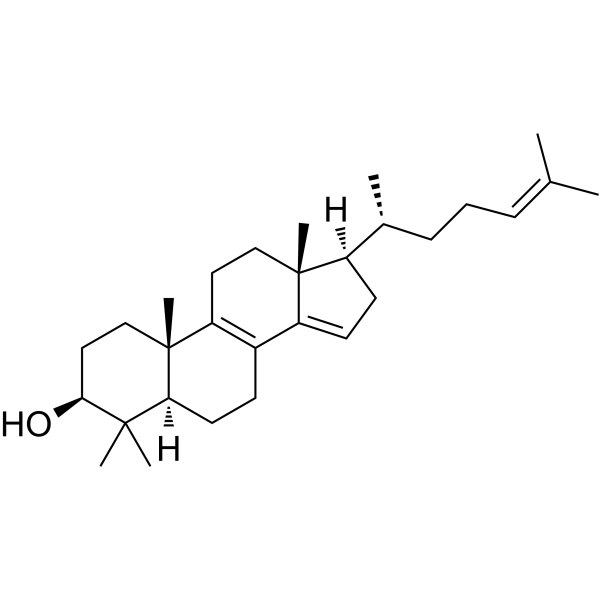
FF-MAS is a potent meiotic maturation agonist. FF-MAS promotes meiotic maturation and preimplantation development of mouse oocytes maturing in vitro. FF-MAS promotes the completion of meiotic maturation to metaphase II (MII) and improves competence to complete the 2-cell stage to blastocyst transition .
loading...
    loading...
Cat. No.: HY-N11071
CAS No.: 3627-51-8
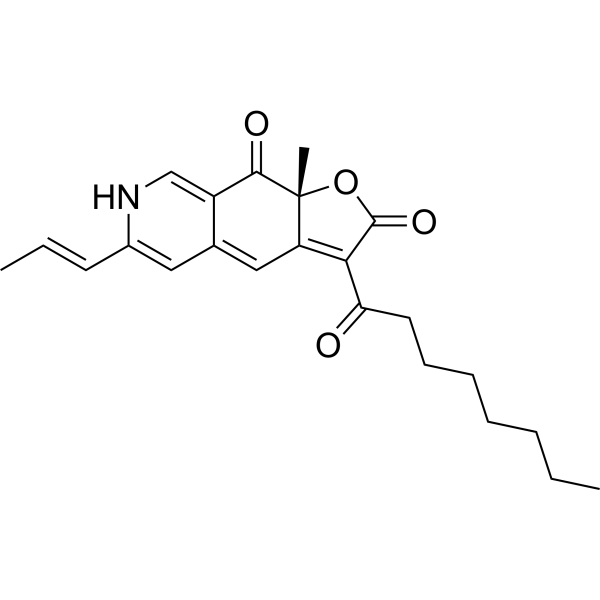
Monascorubramine is a metabolite derived from Monascus with antibacterial, cytotoxic and antimitotic activities. Monascorubramine interferes with mitotic spindle tubulin, triggers metaphase mitotic arrest, induces abnormal c‑mitosis division, and exerts antimitotic effects. Monascorubramine exhibits antibacterial activity and inhibits both Gram-positive and Gram-negative bacteria. Monascorubramine can be used in studies related to bacterial infections .
loading...
    loading...
Cat. No.: HY-101741
CAS No.: 256934-83-5
Synonyms: A-289099
Research Areas:  

Cancer

A-259745 is an orally active antimitotic agent that binds to the colchicine-binding site of tubulin. A-259745 exhibits potent in vitro cytotoxic activity against both multi-drug-resistant and non-multi-drug-resistant cancer cell lines, with ED50 values of 0.018 μM against HCT-15 and 0.028 μM against NCI-H460 cell lines. A-259745 inhibits tubulin polymerization, disrupts the dynamic equilibrium of the mitotic spindle, arrests dividing cells in metaphase, and subsequently induces apoptosis. A-259745 shows dose-dependent antitumor efficacy in murine tumor models. A-259745 can be used for the study of cancer .
loading...
    loading...
Cat. No.: HY-119169
CAS No.: 84697-22-3
Synonyms: R 46846
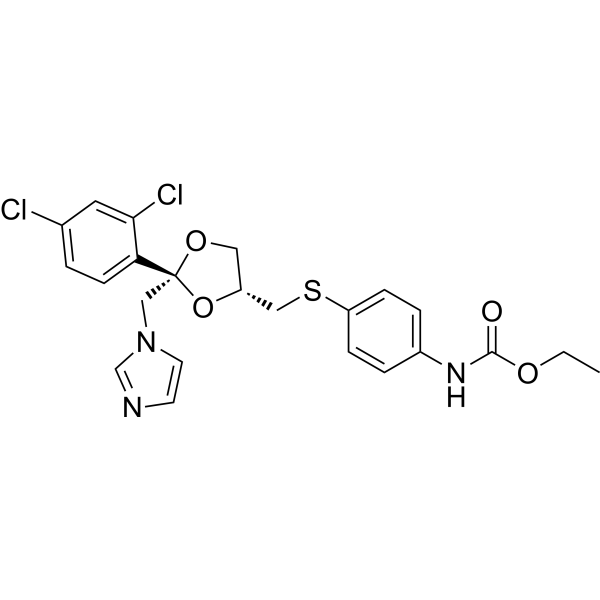
Tubulozole (R 46846) is an orally active inhibitor of tubulin polymerization with an ID50 of 0.34 μM. Tubulozole induces activation of the Chk1 kinase and phosphorylation of ERK1/2, which is required for microtubule formation. Tubulozole arrests Mitosis at the metaphase stage. Tubulozole causes cells to accumulate in the radiosensitive mitotic phase of the cell cycle. Tubulozole exerts anticancer activity against colon cancer. Tubulozole produces a radiosensitizing effect in mouse tumor models and enhances the tumor growth delay effect when combined with γ-ray irradiation. Tubulozole is used in studies related to colon cancer, fascioliasis, MO4 fibrosarcoma, and Lewis lung carcinoma .
loading...
    loading...
Cat. No.: HY-126778
CAS No.: 15228-71-4
Synonyms: Leurosidine
Vinrosidine (Leurosidine) is a mitotic spindle microtubule inhibitor with antitumor activity. Vinrosidine regulates tubulin dynamics at microtubule plus ends, disrupts mitotic spindle function, and blocks cell cycle progression at metaphase. Vinrosidine exhibits antitumor activity in multiple in vivo xenograft models. Vinrosidine can be used in cancer-related research .
loading...
    loading...
Cat. No.: HY-Z16793
CAS No.: 6877-25-4
Synonyms: Colchicine impurity H
Cornigerine (Colchicine impurity H) is an antimitotic agent and tubulin antagonist. Cornigerine inhibits tubulin polymerization, blocks colchicine binding to tubulin, and stimulates tubulin-dependent GTP hydrolysis. Cornigerine induces metaphase arrest in leukemia cells and exhibits toxic activity against leukemia cells. Cornigerine can be used in research on mouse leukemia .
loading...
    loading...
Cat. No.: HY-187736
CAS No.: 64420-40-2
Research Areas:  

Infection Cancer

R34803 is an orally effective Microtubule inhibitor and antiparasitic agent. R34803 impedes directional migration by interfering with the cytoplasmic microtubule complex, and causes metaphase arrest to inhibit the growth of cancer cell aggregates while preventing their invasion into other tissues. R34803 exhibits activity against a variety of parasites. R34803 can be used for research on fibrosarcoma and helminthiasis .
loading...
    loading...
Cat. No.: HY-125106
CAS No.: 1446399-26-3
Target:  

Mitosis Apoptosis Kinesin

Research Areas:  

Cancer

CENP-E-IN-1 is a CENP-E inhibitor. CENP-E-IN-1 acts as a Mitotic arrest inducer and Apoptosis inducer, which causes abnormal alignment of chromosomes on the metaphase plate, activates the spindle assembly checkpoint and triggers apoptosis. CENP-E-IN-1 exhibits anti-tumor activity in colorectal adenocarcinoma xenograft models. CENP-E-IN-1 can be used in cancer-related research .
loading...
    loading...
Cat. No.: HY-119200
CAS No.: 111112-18-6
Target:  

Endogenous Metabolite

Research Areas:  

Cancer

LY-195448 hydrochloride is a phenethanolamine that exhibits anti-tumour activity across various murine tumour models. LY-195448 hydrochloride acts by blocking cells at metaphase. LY-195448 hydrochloride has demonstrated a lack of "standard" side effects commonly associated with cancer treatments, such as myelosuppression and gastrointestinal toxicity. LY-195448 hydrochloride was evaluated in a phase I trial, where it showed only mild and reversible side effects like hypotension, tachycardia, and tremor.
loading...
    loading...
Cat. No.: HY-185483
AMG-172 is an antibody-drug conjugate (ADC) composed of a fully human IgG1 monoclonal anti-CD27L antibody conjugated to DM1 (HY-19792) via the non-cleavable linker MCC. AMG-172 releases the intracellular active component Lysine-MCC-DM through catabolism. Lysine-MCC-DM inhibits the assembly and disassembly dynamics of Microtubule and induces cell arrest at metaphase. AMG-172 can be used for research on relapsed/refractory clear cell renal cell carcinoma .
loading...
    loading...
Cat. No.: HY-N21831
CAS No.: 489-21-4
Sarkomycin is a glutathione-targeting cytotoxic agent and antibacterial agent. Sarkomycin forms an addition product with glutathione, thereby reducing intracellular glutathione levels. Sarkomycin can induce cytoplasmic vacuolation, mitochondrial damage, cytoplasmic deformation, metaphase arrest, chromosomal abnormalities, nuclear degeneration, and nuclear fragmentation; it also modulates amino acid metabolism. Sarkomycin also inhibits anaerobic fermentation in affected cells in mice and inhibits cell growth in tissue culture, leading to the disappearance of mitotic cells, cell degeneration, and cell detachment from the glass surface. Sarkomycin can be used in research related to Yoshida ascites tumor, Ehrlich ascites tumor, Ehrlich carcinoma, and Yoshida rat sarcoma .
loading...
    loading...
Cat. No.: HY-119169A
CAS No.: 83086-73-1
Synonyms: R 46846 hydrochloride
Tubulozole hydrochloride (R 46846 hydrochloride) is an orally active inhibitor of tubulin polymerization with an ID50 of 0.34 μM. Tubulozole hydrochloride induces activation of the Chk1 kinase and phosphorylation of ERK1/2, which is required for microtubule formation. Tubulozole hydrochloride arrests Mitosis at the metaphase stage. Tubulozole hydrochloride causes cells to accumulate in the radiosensitive mitotic phase of the cell cycle. Tubulozole hydrochloride exerts anticancer activity against colon cancer. Tubulozole hydrochloride produces a radiosensitizing effect in mouse tumor models and enhances the tumor growth delay effect when combined with γ-ray irradiation. Tubulozole hydrochloride is used in studies related to colon cancer, fascioliasis, MO4 fibrosarcoma, and Lewis lung carcinoma .
loading...
    loading...
  • 1

